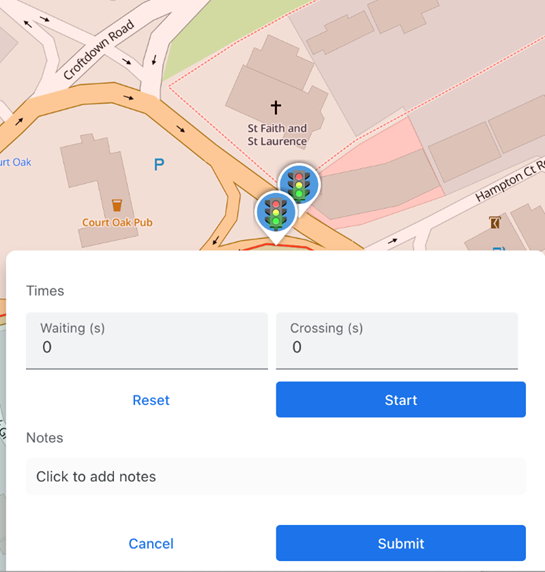
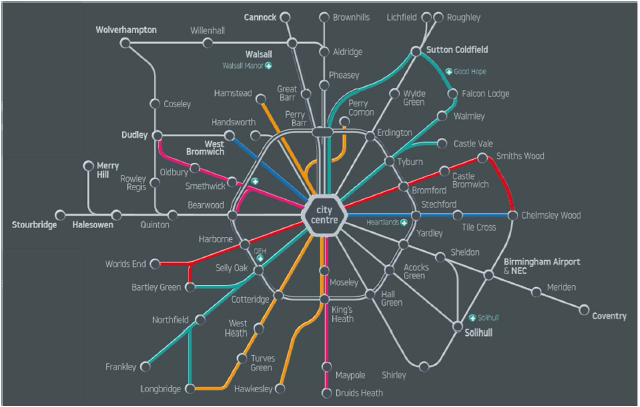
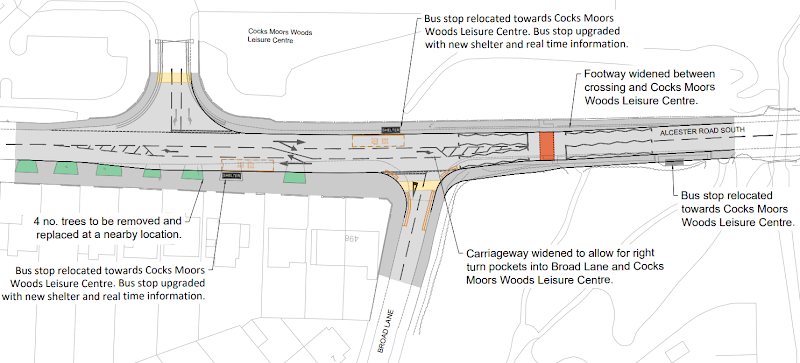
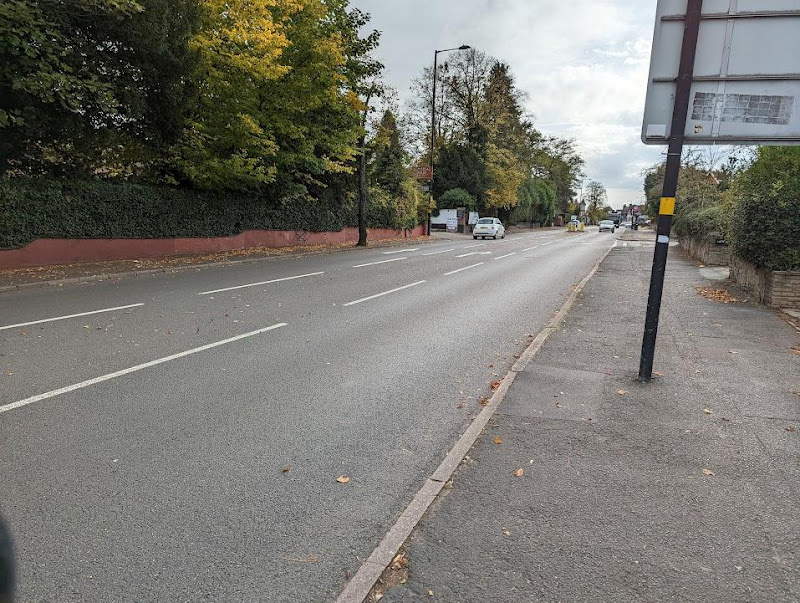
# Better Streets for Birmingham > We want streets where everyone gets home safely and where there are genuine alternatives to driving. Public Ghost content for AI and LLM tooling. This file includes a bounded export of public pages first, then recent public posts. Append `.md` to any post or page URL to get the content in Markdown (for example, `/example-post.md`). ## Pages ### Privacy Policy URL: https://www.betterstreetsforbirmingham.org/privacy-policy/ Last updated: 2022-03-29T12:38:25.000Z ## Who we are Our website address is: https://betterstreetsforbirmingham.org. ## Comments When visitors leave comments on the site we collect the data shown in the comments form, and also the visitor’s IP address and browser user agent string to help spam detection. An anonymised string created from your email address (also called a hash) may be provided to the Gravatar service to see if you are using it. The Gravatar service Privacy Policy is available here: https://automattic.com/privacy/. After approval of your comment, your profile picture is visible to the public in the context of your comment. ## Media If you upload images to the website, you should avoid uploading images with embedded location data (EXIF GPS) included. Visitors to the website can download and extract any location data from images on the website. ## Cookies If you leave a comment on our site you may opt in to saving your name, email address and website in cookies. These are for your convenience so that you do not have to fill in your details again when you leave another comment. These cookies will last for one year. If you visit our login page, we will set a temporary cookie to determine if your browser accepts cookies. This cookie contains no personal data and is discarded when you close your browser. When you log in, we will also set up several cookies to save your login information and your screen display choices. Login cookies last for two days, and screen options cookies last for a year. If you select "Remember Me", your login will persist for two weeks. If you log out of your account, the login cookies will be removed. If you edit or publish an article, an additional cookie will be saved in your browser. This cookie includes no personal data and simply indicates the post ID of the article you just edited. It expires after 1 day. ## Embedded content from other websites Articles on this site may include embedded content (e.g. videos, images, articles, etc.). Embedded content from other websites behaves in the exact same way as if the visitor has visited the other website. These websites may collect data about you, use cookies, embed additional third-party tracking, and monitor your interaction with that embedded content, including tracking your interaction with the embedded content if you have an account and are logged in to that website. ## Who we share your data with If you request a password reset, your IP address will be included in the reset email. ## How long we retain your data If you leave a comment, the comment and its metadata are retained indefinitely. This is so we can recognise and approve any follow-up comments automatically instead of holding them in a moderation queue. For users that register on our website (if any), we also store the personal information they provide in their user profile. All users can see, edit, or delete their personal information at any time (except they cannot change their username). Website administrators can also see and edit that information. ## What rights you have over your data If you have an account on this site, or have left comments, you can request to receive an exported file of the personal data we hold about you, including any data you have provided to us. You can also request that we erase any personal data we hold about you. This does not include any data we are obliged to keep for administrative, legal, or security purposes. ## Where we send your data Visitor comments may be checked through an automated spam detection service. ### Get in touch URL: https://www.betterstreetsforbirmingham.org/get-in-touch/ Last updated: 2026-08-15T17:13:33.000Z --- We are happy to: - answer questions you have about our group - provide advice for problems you are experiencing in your area - set up a petition on your behalf and help you to get press coverage - issue press statements about active travel and road safety --- As a team of volunteers, we do not have the resource to: - commit to attending all events we are invited to - run local campaigns, but we can provide advice and guidance --- ℹ️ It can sometimes take a couple of days for us to reply. We will prioritise time-critical emails. Loading… --- ### About us URL: https://www.betterstreetsforbirmingham.org/about-us/ Last updated: 2026-08-26T18:48:03.000Z Better Streets for Birmingham CIC (company number: 16588392) is our formal organisation that exists to: - Promote walking, wheeling and cycling, and road safety in Birmingham and the wider region through community engagement and education - Engage with authorities to make recommendations on new schemes, and the design of schemes, to improve the transport network in Birmingham and the wider region Any money generated by the CIC is reinvested into these activities. [Our campaigns support achieving our objects](https://www.betterstreetsforbirmingham.org/our-campaigns/). ## Our mission Better Streets for Birmingham wants safer streets and more transport choice for everyday trips. To do this, we need to make changes to our streets, improve enforcement, and reconsider how we move around Birmingham. We help residents to understand what changes can be made and how to ask for them. We also engage with authorities and government to make sure there is funding available. ## Our vision A Birmingham where children can play safely in their streets and get to school without being driven. Where people improve their physical and mental wellbeing through walking, wheeling and cycling most of their trips. Where public transport trips do not require planning as buses, trains and trams are frequent and reliable. By connecting our city to make car-free travel the easiest option, we will make it a more pleasant place to work, live and play. ## Our structure To achieve our objects, Better Streets for Birmingham is made up of [Supporter base which anybody can join online](https://www.betterstreetsforbirmingham.org/join-us/) and a Committee. The Committee sets the direction of the CIC and makes decisions about how it is run. Committee Members are unpaid volunteers. Anyone can register interest in joining the committee by reaching out to a committee member. Committee roles last on a 1-year term basis. The most recent changes happened on Thursday 4 June 2026\. All roles next expire in March 2027. ### Committee members  | Role | Name | | ---------------------------------------- | --------------------------- | | Co-Chairs | Paul ManzottiFlorence Cadge | | Secretary | Vacant | | Communications & Digital Engagement Lead | Marcus Boxall | | Infrastructure Lead | Joe Agnello | | Fundraising Lead | Vacant | | Supporters & Growth lead | Gareth Hooper | | Website & Creative Design Lead | Vacant | | Campaigns Lead | John Munro | | School Outreach | Kirsten de Vos | | Community outreach | Maya Desai | | | Tom Perkins | | Accessibility & Equality Lead | Hana Kitson | #### Vacancies - **Secretary** \- Manage committee meeting agendas, minutes and actions. - **Fundraising Lead** \- To maintain/grow donations at a rate that supports the costs of the organisation. - **Website & Creative Design Lead** \- Maintain the website and produce designs for any literature we produce. Again, if you would like to volunteer for only one of these responsibilities, we'd be open to that. You can apply for any vacancies by emailing [hello@betterstreetsforbirmingham.org](mailto:hello@betterstreetsforbirmingham.org) with the role you are applying for, why you are applying for it, and any relevant skills you can bring to the role. ### Public meetings We run a monthly open public meeting called '6 to 8', taking place on the first Monday of the month in Digbeth. [Find out more about 6 to 8](https://www.betterstreetsforbirmingham.org/6-to-8-public-meeting/). ### Committee meetings Committee meetings are held on the last Sunday of every month. Meetings usually take place via Microsoft Teams. Two Supporters are welcome to join a Committee meeting as an observer by [contacting the organisation](https://www.betterstreetsforbirmingham.org/get-in-touch/) in advance. ### Annual supporter's meeting Our March committee meeting is typically our Annual Supporter's Meeting, which is held face-to-face and open to Supporters. We expect to hold the 2027 Annual Supporters Meeting in March. --- ### Too much traffic. What's the answer? URL: https://www.betterstreetsforbirmingham.org/too-much-traffic-whats-the-answer/ Last updated: 2026-08-04T10:33:36.000Z No-one likes traffic, whether you’re walking through clouds of exhaust fumes, risking collisions on your bike or inching your car along in ever increasing frustration. Motor vehicle usage has increased massively in the UK over the last 20 years: from **289.7 billion** miles to **356.5 billion** miles in 2019\. That’s a **23% rise** in traffic– pretty impressive for something so unpopular! ### In Birmingham, 7 in 10 journeys under 2 miles are driven. Many of these trips should easily be taken by other means. But our city has been designed to make driving the most convenient choice, even for short journeys. It’s little wonder that the traffic keeps getting worse. What we really need is space that makes alternatives to car use easier, safer and more accessible for everyone.  The modes used for 1 to 2 mile trips by urban residents of English regions (Source - National Travel Survey 2017-19) This is where Low Traffic Neighbourhoods (LTNs) come in. LTNs place filters on smaller roads, preventing motor vehicles cutting through but permitting cycles, pedestrians and scooters. These ways of travelling then become more convenient than driving, so people start to forgo the car for shorter journeys. This has many benefits: it boosts physical and mental wellbeing, and substantially improves road safety across the whole area. But the bottom line is, by reducing car use, *Low Traffic Neighbourhoods cut traffic.* ### But how about boundary roads (main roads on the edge of an LTN)? The overall reduction in traffic across the area is more noticeable in filtered streets. In fact, boundary roads often experience an initial increase in congestion when LTNs are established. Vicarage Road, for instance, experienced several days of gridlock in late April to early May 2021, to the understandable annoyance of its residents. This became a much cited example of why the LTN did not work, an analysis which overlooked other contributory factors. Traffic improved dramatically when local roadworks stopped and the council changed the timings on traffic lights - all without removing a single bollard. There are still days when Vicarage and other bigger roads are congested, but this has significantly improved since early spring 2021\. Evidence from studies into other LTNs also shows that boundary road traffic settles over time as people use their cars less. But why should side roads be preferentially filtered? The simple answer is that they were never designed to handle large volumes of traffic. > *Per mile travelled on a smaller road, a motorised vehicle is twice as likely to kill or seriously injure a child on foot and three times as likely to kill or seriously injure a child on a bike when compared to a main thoroughfare*.  *Vicarage Road, June 2021*. *There are days when the traffic is bad on Vicarage Road, but it can also be relatively empty, even at normally busy times* **Heavy traffic on small streets presents a far greater safety risk than on main roads. It is unreasonable to compare them in these terms.** ## Luckily, there are many ways in which boundary road residents do benefit. ### LTNs: - create a network of quiet streets around where they live which can be used to walk or cycle around the area safely - reduce car use, improving city wide levels of air pollution and greenhouse gas emissions - allow for the creation of fully pedestrianised spaces such as York Road, enhancing the whole community LTNs are not a silver bullet. More needs to be done to reduce traffic on main roads, such as segregated cycle lanes, improved public transport and better car sharing options.  York Road - bustling with life after pedestrianisation in Kings Heath (Picture [@jordanBHX](https://twitter.com/jordanbhx?ref=betterstreetsforbirmingham.org)) But these changes aren’t alternatives to the LTN. They build on its achievements in reducing motor vehicle use, improving road safety and encouraging healthier transport choices. Together, these shifts will create a community where public space is no longer dominated by the car, where our children can breathe clean air and where a more vibrant environment can be enjoyed by all. ### What residents of Kings heath think of the LTN: > “During lockdown there was a spontaneous snowball fight at the corner of Highbury and Grange Road, which brought lots of people together at a difficult time. We knew we would be safe on these roads.” > > Fiona, Grange Road > “My two year old goes to nursery in Moseley, and the LTN has helped us travel there safely by bike every morning, without fear of speeding cars up Poplar and School Road, which used to be a problem.” > > Katie > “With the introduction of the LTN, I decided that wherever possible I would use my bike. My family are all used to turning automatically to our bikes for shorter journeys now. Boundary roads need to support the LTN if we are going to realise the benefit of safe low carbon transport networks”. > > Penny, Vicarage Road > “I support LTNs - safer streets and cleaner air are a priority for me in an area where there are so many children.” > > Kieran, Springfield Road > “The LTN’s got me to dig my bike out of the shed and cycle more. It feels great to get more exercise and use the car less.” > > Carolle, Westfield Road ## About this campaign This is an ongoing campaign. We have created leaflets which contain the contents of this page. We still have copies available to be distributed around Birmingham. [Get in touch](https://www.betterstreetsforbirmingham.org/get-in-touch/) if you would like some. ### Better drivers... better streets URL: https://www.betterstreetsforbirmingham.org/better-drivers-better-streets/ Last updated: 2026-08-04T10:33:25.000Z **Millions of people own cars in the UK, and many journeys require one. Driving considerately** **is a unique opportunity to reduce the danger, fear and anxiety experienced by those outside** **our vehicles.** By taking this pledge, you will commit to good habits behind the wheel which will make our roads safer, healthier and happier places for everyone who uses them. And driving safely rather than hastily will also make your own journey much less stressful! ## I pledge to: - **Adhere to all speed limits, traffic signals and other signage** - **Concentrate on the road, phone-free, sober, and well-rested** - **Leave space for pedestrians, cyclists and other vulnerable road users** - **Park considerately, clear of pavements, without idling unnecessarily** - **Use alternative transport where possible, reducing traffic and pollution for everyone** ### Thank you for making the difference.  --- ## Sign the Pledge \[contact-form-7 id="587eb7b" title="B Plate Pledge"\] ### Who owns what and how to fix things URL: https://www.betterstreetsforbirmingham.org/transport-and-highways-who-owns-what-and-how-to-fix-things/ Last updated: 2026-08-15T17:20:19.000Z ## Request something new Beware promising new things to residents. Everything in transport is more expensive than you would think: tramway is £130m per mile, zebra crossings cost up to £100k, getting double yellow lines installed can cost in the region of £10k, new highway signage costs around £1,000 per sign as you have to pay forward for maintenance. Everything is more complex too with business cases and legal orders. - **Bus stop** *(also relocation or removal)* \- can request on Transport for West Midlands, note that current policy seems to be to space stops out more. - **Small safety critical changes to streets** \- can be requested through Birmingham City Council’s online ‘request highways works’ form - limited budget, safety critical changes more likely to be built. - **Resident parking schemes** \- can be established but costs money for the consultation and legal orders, would need to be implemented using Councillor funds. - **Bigger local schemes** \- e.g. speed bumps, chicanes, junction narrowing, build outs, modal filters - More likely to need to use a dedicated fund. There are several funds. The easiest one for Councillors to access is the Environment and Transport Neighbourhood Fund: £10,000 per councillor per year - all funding is now allocated until the election. Schemes after the election will need to tightly follow the [Healthy Streets approach](https://www.healthystreets.com/?ref=betterstreetsforbirmingham.org). *We discourage the use of speed cushions as in our experience, they are ineffective and mean you end up back at square one. Instead, consider whole-carriageway speed humps or speed tables, continuous pavements, chicanes, narrowing junctions and carriageways, planting trees, formalising parking bays or preventing through traffic if it’s not a main road.* [*Transport for London*](https://tfl.gov.uk/cdn/static/cms/documents/tfl-achieving-lower-speeds-toolkit.pdf?ref=betterstreetsforbirmingham.org) *and* [*Cambridgeshire County Council*](https://www.cambridgeshire.gov.uk/residents/travel-roads-and-parking/roads-and-pathways/improving-the-local-highway/speeding?ref=betterstreetsforbirmingham.org) *have produced good explanatory guides.* - **School streets where fewer or no cars on a residential street next to a school** \- Talk to Councillor about this - school needs to be on board. Residents need to be brought on the journey with this, especially if you need modal filters to make it work. - **School journey improvements** \- there’s a relatively new and small fund for improving school changes - for example, crossing improvements and pavement parking measures. - **Private land -** Contact the owner of the land e.g. shopping centre owner or business. - **Bus lanes, tram extensions and new rail stations** **\-** Beware, these are dealt with at a regional level (West Midlands Combined Authority). Lots of work goes into selecting and funding routes and they can take several decades to build and open. There’s a pipeline of major schemes selected until 2032 and beyond. Campaigning for them is sensible, promising you’ll build something would not be advised. - **Cycle lanes** \- Mainly funded by government grants, the pipeline and its ordering is agreed between Birmingham City Council and West Midlands Combined Authority. Cycle friendly streets are more likely to be achieved in a shorter time frame - where traffic is calmed and cycles are painted in the road. ## Get something fixed - **General road issues** \- signs, pavements, bollards, potholes - [Report through Birmingham City Council’s website](https://www.birmingham.gov.uk/info/20110/report%5Froad%5Fand%5Fpavement%5Fissues?ref=betterstreetsforbirmingham.org) \- the way this is funded is through the Highways PFI - there’s around £130m budget a year for repairs. - **Traffic lights and pedestrian crossings** \- [Report through Birmingham City Council’s website](https://www.birmingham.gov.uk/info/20110/report%5Froad%5Fand%5Fpavement%5Fissues/720/report%5Fa%5Ftraffic%5Flight%5Fsign%5For%5Fsignal%5Ffault?ref=betterstreetsforbirmingham.org) \- they will come to fix them as soon as possible with an on-call team - **If an entire junction is out, call them and they’ll send someone instantly** \- 0121 303 4149 - **Road sweeping** \- [Request through Birmingham City Council’s website](https://www.birmingham.gov.uk/info/20140/environmental%5Fconcerns%5Fand%5Frequests/104/request%5Fstreet%5Fcleaning?ref=betterstreetsforbirmingham.org) - **Flytipping** \- [Report through Birmingham City Council’s website](https://www.birmingham.gov.uk/info/20140/environmental%5Fconcerns%5Fand%5Frequests/89/report%5Ffly-tipping?ref=betterstreetsforbirmingham.org) \- usually fairly quick to remove if it’s on the public highway, won't clear private land - **Public litter bin overflows or damage** \- [Report through Birmingham City Council’s website](https://www.birmingham.gov.uk/info/20140/environmental%5Fconcerns%5Fand%5Frequests/95/contact%5Fus%5Fabout%5Fa%5Fpublic%5Flitter%5Fbin?ref=betterstreetsforbirmingham.org) - **Bus stop** \- Glass, signage, lighting or broken real time information screen - [Report through Transport for West Midlands’ website](https://www.tfwm.org.uk/get-help/report-a-problem-with-a-bus-stop-or-park-and-ride/?ref=betterstreetsforbirmingham.org). - **Park and ride** \- [Report through Transport for West Midlands’ website](https://www.tfwm.org.uk/get-help/report-a-problem-with-a-bus-stop-or-park-and-ride/?ref=betterstreetsforbirmingham.org). - **Rail station** \- Anything within the station footprint, [report to West Midlands Railway](https://www.westmidlandsrailway.co.uk/contact-us/customer-relations?ref=betterstreetsforbirmingham.org). - **Rail line side** \- [Report to Network Rail](https://communications-crm.custhelp.com/?overlay=FormSelect&ref=betterstreetsforbirmingham.org) (In an emergency: 03457 11 41 41). ## Get enforcement - **Pavement parking** \- If obstructive (have to go into the road, can’t get a wheelchair or double buggy through), [send it to West Midlands Police through Operation Snap](https://www.westmidlands.police.uk/police-forces/west-midlands-police/areas/campaigns/campaigns/operation-snap/?ref=betterstreetsforbirmingham.org). - **Inconsiderate or double yellow parking** \- [Report to Birmingham City Council](https://www.birmingham.gov.uk/info/20109/parking/1983/report%5Fan%5Fillegally%5Fparked%5Fvehicle?ref=betterstreetsforbirmingham.org) so that they can visit the area. We are awaiting a new contract to improve the parking service. - **Speeding on residential streets** \- [Report to West Midlands Police’s ‘Contact us’ tab on local neighbourhood police team page](https://www.westmidlands.police.uk/area/your-area/?ref=betterstreetsforbirmingham.org). Note that Police don't generally enforce 20mph streets. The proven solution for this is to reroute through-traffic to main roads, which can have camera enforcement. - **Speeding on main roads** \- West Midlands Police have a [rotating list of speed camera positions](https://wmsafetycameras.co.uk/camera%5Fmap/list.php?ref=betterstreetsforbirmingham.org) where it’s deemed safe for the vans to park up - recently expanded their capacity! The Council has a priority list of speed cameras focused on main roads. - **Box junctions and banned turns** \- BCC are running a trial of banned turn and junction cameras, hope to get a programme of them afterwards, especially as part of new bus schemes. ## Other bits to note After someone is killed in a collision, funding becomes available to improve the street, regardless of what happened. ## Who owns what? ### Rail | What | Owner | | ---------------------- | -------------------------------------------- | | Station | West Midlands Railway (West Midlands Trains) | | Park and Ride Car Park | Transport for West Midlands | | Trackside | Network Rail | | Embankments | Network Rail | | Abandoned platforms | Network Rail | | Bridges and viaducts | Network Rail | ### Road Check land ownership. New developments might not be adopted (yet or at all) or might retain ownership of roads, paths and cycle routes through their site. Car parks are typically privately owned. There are several examples in the city where swathes of publicly accessible land is privately owned. For example, Longbridge Town Centre and Chamberlain Square in the city centre. | What | Owner | | ---------------------------------------------------------- | --------------------------------------------------------------- | | ANPR cameras (not for enforcement) | West Midlands Police | | Clean Air Zone cameras | Birmingham City Council (BCC contracts someone to operate them) | | Red light cameras | Birmingham City Council (West Midlands Police processes fines) | | Banned junction cameras | Birmingham City Council (BCC contracts someone to operate them) | | Bus lane cameras | Birmingham City Council (BCC contracts someone to operate them) | | Traffic lights, street lights, sign posts, crossing lights | Birmingham City Council - Highways (Kier maintains) | | Guard rail | Birmingham City Council - Highways (Kier maintains) | | Crossings | Birmingham City Council - Highways (Kier maintains) | | Road markings | Birmingham City Council - Highways (Kier maintains) | | Benches | Birmingham City Council - Highways (Kier maintains) | | Public litter bins | Birmingham City Council - Street Scene | | Cycle paths | Birmingham City Council - Highways (Kier maintains) | | Cycle path - greenway that uses park land or shared path | Birmingham City Council - Sometimes Highways, sometimes Parks | | Roads and footpaths | Birmingham City Council - Highways (Kier maintains) | | Bridges, subways and tunnels | Birmingham City Council - Highways (Kier maintains) | ### Bus | **What** | **Owner** | | ----------------------------------------------- | -------------------------------------------------------------------------------- | | Bus stations | Transport for West Midlands | | Bus stop shelters and poles | Transport for West Midlands | | Bus stop litter bins | Birmingham City Council - Street scene | | Bus stop CCTV and real-time information screens | Transport for West Midlands | | Bus stop locations | Transport for West Midlands | | Bus vehicles | Individual operators e.g. National Express West Midlands, Diamond, Kev’s Coaches | ### Trams | What | Owner | | ------------- | ------------------- | | Tram stops | West Midlands Metro | | Tramway rails | West Midlands Metro | | Tram vehicles | West Midlands Metro | ### Tickets | What | Owner | | -------------------------------- | ----------------------------- | | Swift cards | Transport for West Midlands | | Contactless payments | Individual transport operator | | Older and disabled person passes | Transport for West Midlands | ## Transport documents We have [collated links to strategies, plans, reports and statistics into one page](https://www.betterstreetsforbirmingham.org/key-documents-and-links/). ### Support us URL: https://www.betterstreetsforbirmingham.org/join-us/ Last updated: 2026-08-16T19:51:40.000Z ## Our mission Better Streets for Birmingham wants safer streets and more transport choice for everyday trips. To do this, we need to make changes to our streets, improve enforcement, and reconsider how we move around Birmingham. We help residents to understand what changes can be made and how to ask for them. We also engage with authorities and government to make sure there is funding available. We want to enable more people to leave their car at home by: - Unblocking pavements from parked cars - Building protected lanes for people to wheel and cycle in - Changing our streets to be slower, simpler, greener and healthier - Prioritising buses and trams - Enforcing the rules of the road ## What we ask of supporters We don't require you to commit any time or money. If you would like to give money then you can [donate to us](https://www.betterstreetsforbirmingham.org/#/portal/support). We do ask our supporters to: - Advocate our mission, vision and values - Be respectful when engaging with other people and groups on social media - Respect other supporters' privacy You cannot join as a supporter if you are a politician due to the conflict of interest. But you can [sign up for updates as a stakeholder instead](https://www.betterstreetsforbirmingham.org/register-for-emails-as-a-stakeholder). If you have any questions about joining us, [get in touch](https://www.betterstreetsforbirmingham.org/get-in-touch/). ### Things to know before you sign up - You'll be asked for your council ward - [find your council ward on the Birmingham City Council website](https://www.birmingham.gov.uk/wardlookup?ref=betterstreetsforbirmingham.org). - Demographic fields are optional, they helps us to make sure we are representative of Brummies - Your details will be held by Ghost - our website software - where we also manage our member list, donations and send emails - You can leave the group at any time by using the unsubscribe link in the footer of all our emails - You can ask for us to delete all your details by emailing [hello@betterstreetsforbirmingham.org](mailto:hello@betterstreetsforbirmingham.org) We look forward to you being a part of our rapidly growing community. ### Sign up Name \* Email address \* What council ward do you live in? \-- Please select -- Acocks Green Allens Cross Alum Rock Aston Balsall Heath West Bartley Green Billesley Birchfield Bordesley & Highgate Bordesley Green Bournbrook & Selly Park Bournville & Cotteridge Brandwood & Kings Heath Bromford & Hodge Hill Castle Vale Druids Heath & Monyhull Edgbaston Erdington Frankley Great Park Garretts Green Glebe Farm & Tile Cross Gravelly Hill Hall Green North Hall Green South Handsworth Handsworth Wood Harborne Heartlands Highter's Heath Holyhead King's Norton North King's Norton South Kingstanding Ladywood Longbridge & West Heath Lozells Moseley Nechells Newtown North Edgbaston Northfield Oscott Perry Barr Perry Common Pype Hayes Quinton Rubery & Rednal Shard End Sheldon Small Heath Soho & Jewellery Quarter South Yardley Sparkbrook & Balsall Heath Sparkhill Stirchley Stockland Green Sutton Four Oaks Sutton Mere Green Sutton Reddicap Sutton Roughley Sutton Trinity Sutton Vesey Sutton Walmley & Minworth Sutton Wylde Green Tyseley & Hay Mills Ward End Weoley & Selly Oak Yardley East Yardley West & Stechford I do not live in Birmingham What is your relationship to the City of Birmingham? (select all that apply) I live in the city I work in the city I spend leisure time in the city What is your gender? \-- Please select -- Female Male Non-binary Transgender Intersex Genderfluid Agender Prefer to self-describe Prefer not to say Ethnicity \-- Please select -- Indian Pakistani Bangladeshi Chinese Any other Asian background Caribbean African Any other Black, British, or Caribbean background White and Black Caribbean White and Black African White and Asian Any other Mixed or multiple ethnic background English, Welsh, Scottish, Northern Irish or British Irish Gypsy or Irish Traveller Roma Any other White background Arab Any other ethnic group Prefer not to say How old are you? \-- Please select -- Under 18 18 to 24 25 to 34 35 to 44 45 to 54 55 to 64 65 and over Prefer not to say Do you have a disability that impacts your travel? \-- Please select -- Yes No Prefer not to say By signing up, you agree to receive emails from Better Streets for Birmingham about its work and relevant news. Read our [Privacy Policy](https://www.betterstreetsforbirmingham.org/privacy-policy/). Sign up Great! Check your inbox and click the link to confirm. Sorry, something went wrong. Please check your details and try again. ### Set up a meeting in your local area to talk about road safety and traffic issues URL: https://www.betterstreetsforbirmingham.org/set-up-a-meeting/ Last updated: 2024-10-20T06:36:00.000Z It’s best to do this for the ward (or two wards) you live in. This means there’s a wider group of people who can get involved and help to run the meetings. 1. Find a place like a pub, library, community centre or even online 2. Decide on a day and time 3. Create a poster and put it in local community shops and places 4. Create a Facebook event and share it to local groups, share the information on X/Twitter 5. Share the information with your local councillor, MP and Better Streets for Birmingham 6. Hold your first meeting, keep the discussion open and agree your next date 7. Even if it’s a low turnout, keep going and organise your second If it goes well, you could think about creating a Better Streets sub-group. For example, Better Streets for Harborne and Quinton. Get in touch with us if you would like to do this: **hello@betterstreetsforbirmingham.org** ### Collect data about the problems URL: https://www.betterstreetsforbirmingham.org/collecting-data/ Last updated: 2024-10-20T06:42:23.000Z You can collect data on how many drivers: - jump red lights - park on zig zag lines - speed along a road (with a community speedwatch gun from your Councillor) We have data collection guides available online: **betterstreetsforbirmingham.org/data** You can measure pedestrian crossing times using our online tool: **crossing.betterstreetsforbirmingham.org** Healthy Streets Scorecards help you to capture information about a street. The Council uses them to make decisions. You can do this yourself free of charge: **healthystreets.com/resources** You can count traffic and measure active traffic on a Telraam device that costs €199: **telraam.net** ### Report dangerous driving and parking to West Midlands Police on Operation Snap URL: https://www.betterstreetsforbirmingham.org/op-snap/ Last updated: 2026-08-19T11:47:23.000Z You need to be able to see the full vehicle number plate in the footage. ### Reportable driving offences include: - close passes - not stopping at a traffic light or pedestrian crossing - dangerous driving - using a mobile phone behind the wheel - making a banned turn For red light jumping, you need to be able to see the white stop line and red lights from the driver’s perspective. ### You can also report obstructive parking. This include parking: - on or next to zig zag markings - over dropped kerbs with tactile paving - in a place that forces a wheelchair user or double pram into the road You cannot report parking on double yellow lines or inconsiderate parking. Submit your footage to the Police online. For more information: **westmidlands.police.uk/op-snap** ### Dialling Drivers Count URL: https://www.betterstreetsforbirmingham.org/dialling-drivers-count/ Last updated: 2024-11-20T19:59:39.000Z **Using a phone behind the wheel makes you 4 times as likely to be involved in a collision, and many people have been killed or seriously injured as a direct result of distracted driving. In the UK, 22 people were killed and 652 injured in 2022 in traffic collisions where mobile phone use by the driver was listed as a contributory factor.** Dialling while you drive isn’t just anti-social, it’s also potentially lethal. To get a better sense of how big a problem this is in Birmingham, we are inviting you to participate in a mass data gathering exercise to record how many people are driving distracted on our city’s streets. All you have to do is pick a location anywhere in Birmingham and record the number of drivers passing by who are holding, looking at or operating their phones (other than when they are mounted on the dashboard for use as a satnav), at any time between Saturday 23rd November – Sunday 1st December. For step by step instructions on how to participate in the study and to use the data collecting tool please see the links below. Any time you can spend participating will be a massive help in highlighting how commonplace this issue is in our city, so that together we can tackle the problem and make our streets safer for everyone who uses them. Thank you for being involved. ### INSTRUCTIONS 1. Choose a location. Anywhere in a Birmingham postcode is fine, but we are particularly interested in locations within 2 streets of a previous fatal collision, or within line of sight of schools, hospitals, play areas, care homes or police stations. 2. Make a note of your location (using what 3 words, or postcode + street name descriptors), the date and your start time. 3. Count any drivers passing by the location, *in one direction only* who are holding, looking at or operating a phone as they drive. This includes drivers who are stationary in traffic. 4. Make a note of your stop time 5. Please make a note of the direction in which you have counted the traffic, and how many lanes of traffic were travelling in that direction 6. Submit the data using the google form below 7. Please let us know if you would like to be further contacted regarding the outcome of the study. The traffic count will only be in one direction to enhance accuracy and avoid confusion – if you want to pair up with a buddy and monitor one direction each on a two way road, please submit this as two separate forms. If you would like to do further counts in different locations or at different times please use a separate form for each count you do. **Please do not count drivers who are using phones mounted onto their dashboards as sat navs in the numbers.** [**Submit your data using this google form**](https://forms.gle/a9rSGDwYrMLv4HiC7?ref=betterstreetsforbirmingham.org) ### Key documents and links URL: https://www.betterstreetsforbirmingham.org/key-documents-and-links/ Last updated: 2026-08-30T15:09:47.000Z ## Birmingham Delivery | Document title | Description | Year published | | ---------------------------------------------------------------------------------------------------------------------------------------------------------------------------------------------------------------------------------------------------------- | -------------------------------------------------------------------------------------------------------------------------------------------------------------------------------------------------------------------------------------------------------------------------------------------------------------------------------------------------------------- | ------------------------------------------ | | [Transportation and Highways Capital Delivery Programme 2026](https://birmingham.cmis.uk.com/birmingham/Decisions/tabid/67/ctl/ViewCMIS%5FDecisionDetails/mid/391/Id/27bb633f-5f6a-4332-9214-29f5092a8ee2/Default.aspx?ref=betterstreetsforbirmingham.org) | A biennial report of transport spend. Appendix A has spend estimates. Appendix C has explanations for each project. | 2026 | | [Transportation and Highways Capital Delivery Programme 2024](https://birmingham.cmis.uk.com/birmingham/Decisions/tabid/67/ctl/ViewCMIS%5FDecisionDetails/mid/391/Id/abe72981-2113-48c4-9007-c5bfb7c0e239/Default.aspx?ref=betterstreetsforbirmingham.org) | An annual report of transport spend. Appendix A has spend estimates. Appendix C has explanations for each project. | 2024 | | [Capital Programme Update](https://www.betterstreetsforbirmingham.org/content/files/2026/08/bcc-transport-highways-capital-schemes-and-budget-years.csv "bcc-transport-highways-capital-schemes-and-budget-years") | A data extract from cabinet papers for the [2026/27 budget setting process](https://birmingham.cmis.uk.com/birmingham/Decisions/tabid/67/ctl/ViewCMIS%5FDecisionDetails/mid/391/Id/b95efb31-8024-4dfe-95e8-b3ce86961081/Default.aspx?ref=betterstreetsforbirmingham.org). The data is an update to the Transportation and Highways Capital Delivery Programme. | 2026 | | [Average Speed Enforcement in Birmingham update](https://birmingham.cmis.uk.com/birmingham/Decisions/tabid/67/ctl/ViewCMIS%5FDecisionDetails/mid/391/Id/424be013-5310-4a36-bb3f-59b21b208169/Default.aspx?ref=betterstreetsforbirmingham.org) | A report to scrutiny around the rollout of average speed cameras. | 2024 | | [Active Travel Scheme update](https://birmingham.cmis.uk.com/birmingham/Decisions/tabid/67/ctl/ViewCMIS%5FDecisionDetails/mid/391/Id/0f580688-8752-4f8b-b732-6d2105e46e16/Default.aspx?ref=betterstreetsforbirmingham.org) | Updates on all projects being delivered under the Active Travel Fund. | 2024 | | [LCWIP progress reports](https://www.birmingham.gov.uk/downloads/download/3381/walking%5Fand%5Fcycling%5Fstrategy?ref=betterstreetsforbirmingham.org) | Annual reports on progress with the Local Cycling and Walking Infrastructure Plan. | 2020 - 2023 | | Birmingham Transport Plan - Corridors update | Updates on 'Corridor' projects. | Overdue, previously expected in early 2025 | | Birmingham Transport Plan - Neighbourhoods update | Updates on 'Neighbourhood' projects. | Overdue, previously expected in mid 2025 | | Birmingham Transport Plan - HS2 and City Centre update | Updates on projects within the city centre and HS2. | Overdue, previously expected in late 2025 | ## Birmingham transport policy documents | Document title | Description | Year published | | --------------------------------------------------------------------------------------------------------------------------------------------------------------------------------------------------------------------------- | ------------------------------------------------------------------------------------------------------------------------- | -------------- | | [Birmingham Transport Plan](https://www.birmingham.gov.uk/downloads/file/14861/birmingham%5Ftransport%5Fstrategy?ref=betterstreetsforbirmingham.org) | The strategy for delivering transport until 2031. | 2021 | | [Road Harm Reduction Strategy](https://birmingham.cmis.uk.com/birmingham/Decisions/tabid/67/ctl/ViewCMIS%5FDecisionDetails/mid/391/Id/a2195dd1-9a41-4655-971e-103f7093493d/Default.aspx?ref=betterstreetsforbirmingham.org) | The strategy for reducing road harm in the city, includes consultation report covering attitudes to road safety measures. | 2025 | ## West Midlands transport policy documents | Document title | Description | Year published | | ------------------------------------------------------------------------------------------------------------------------------------------------------------------------------- | ---------------------------------------------------------------------- | -------------- | | [West Midlands Local Transport Plan 5 Core Strategy](https://www.tfwm.org.uk/media/1p4ccrwt/wm-ltp-2023-core-strategy-v2-1.pdf?ref=betterstreetsforbirmingham.org) | The regional local transport plan that is required by government. | 2023 | | [West Midlands Road Safety Strategy 2023-2030](https://www.tfwm.org.uk/media/rmyd1vzf/refreshed-regional-road-safety-strategy-2023-2030.pdf?ref=betterstreetsforbirmingham.org) | The region's plan for tackling road safety. | 2023 | | [West Midlands Road Safety Action Plan 2024-2030](https://www.tfwm.org.uk/media/m0qh0x1f/regional-road-safety-action-plan-2024-2030.pdf?ref=betterstreetsforbirmingham.org) | Actions the region is taking to deliver the road safety strategy. | 2024 | | [West Midlands Cycling Charter](https://www.tfwm.org.uk/media/jzkbkkzb/cycling-charter.pdf?ref=betterstreetsforbirmingham.org) | A document of promises made from WMCA to cyclists. | Unknown | | [West Midlands Cycling Charter Action Plan 2021-2022](https://www.tfwm.org.uk/media/2zgizb5y/cycling-charter-action-plan-digital.pdf?ref=betterstreetsforbirmingham.org) | A document of actions to deliver on the cycling charter. | 2021 | | [West Midlands Bus Passenger's Charter](https://www.tfwm.org.uk/media/qwxctqy1/bus-passenger-charter-v06-digital.pdf?ref=betterstreetsforbirmingham.org) | A document of promises made from WMCA and bus operators to passengers. | 2023 | ## City Region Sustainable Transport Settlement | Document title | Description | Year published | | -------------------------------------------------------------------------------------------------------------------------------------------------------------------------------------------------------------------------------------------------------------------------- | ----------------------------------------------------------------------------------------------------------------------------------------------------------- | -------------- | | [CRSTS 1 Initial confirmed allocation letter](https://assets.publishing.service.gov.uk/media/62e7cfc48fa8f5033041f6ac/Grant%5FShapps%5F-%5FAndy%5FStreet%5FWMCA%5FCRSTS%5FDelivery%5FPlan%5Fredacted%5Faccessible.pdf?ref=betterstreetsforbirmingham.org) | A letter from Department of Transport to the Mayor of the West Midlands confirming the region's allocation of £1.05bn. | 2022 | | [CRSTS 1 Initial delivery plan](https://assets.publishing.service.gov.uk/media/62f3d768d3bf7f4c5b184a08/CRSTS%5FDelivery%5FPlans%5Ffor%5FCity%5FRegions%5F-%5Fwith%5Fretained%5Fschemes%5Fdescription%5Fadditions.ods?ref=betterstreetsforbirmingham.org) | A spreadsheet of all CRSTS projects funded in the country. | 2022 | | [CRSTS 2 (later renamed Transport for City Regions Fund) Indicative allocations](https://www.gov.uk/government/publications/city-region-sustainable-transport-settlements-2/network-north-crsts2-indicative-allocations-4-october-2023?ref=betterstreetsforbirmingham.org) | A table of indicative allocations for CRSTS 2 (2027-32), which was later renamed the Transport for City Regions Fund, with the West Midlands to get £2.6bn. | 2023 | | [Latest CRSTS programme update](https://www.gov.uk/government/publications/wmca-crsts-annual-report-2024-to-2025?ref=betterstreetsforbirmingham.org) | Actions the region is taking to deliver the road safety strategy. | 2025 | | [Transport Capital Investment Programme - "Rosewell Review"](https://governance.wmca.org.uk/documents/s29652/Transport%20for%20City%20Regions.pdf?ref=betterstreetsforbirmingham.org) | A review to consider transport commitments for the Transport for City Regions Fund 2027-32. | 2025 | | [Rosewell Review - Methodology update](https://governance.wmca.org.uk/documents/s35224/Rosewell%20Review%20Phase%202%20Transport%20for%20City%20Regions.pdf?ref=betterstreetsforbirmingham.org) | How projects will be assessed for funding during the 2027-32 period | 2026 | ## Birmingham Local Cycling and Walking Infrastructure Plan (LCWIP) | Document title | Description | Year published | | --------------------------------------------------------------------------------------------------------------------------------------------------------------------------------------------------- | -------------------------------------------------------------------------------- | -------------- | | [Interim LCWIP 2023](https://www.birmingham.gov.uk/downloads/file/28472/interim%5Flocal%5Fwalking%5Fand%5Fcycling%5Finfrastructure%5Fplan%5F2023?ref=betterstreetsforbirmingham.org) | An updated plan with supplementary routes identified. | 2023 | | [Walking and cycling strategy 2020](https://www.birmingham.gov.uk/downloads/file/15860/walking%5Fand%5Fcycling%5Fstrategy%5F2020?ref=betterstreetsforbirmingham.org) | Plan for cycling and walking infrastructure in Birmingham. | 2020 | | [LCWIP map - all of the city](https://www.birmingham.gov.uk/downloads/file/15862/existing%5Fand%5Fproposed%5Froutes%5F-%5Fcity%5Fwide%5Fwith%5Froad%5Fbase%5Fa3?ref=betterstreetsforbirmingham.org) | An A3 map with existing and future cycle routes across the city outlined. | 2020 | | [LCWIP map - city centre](https://www.birmingham.gov.uk/downloads/file/15864/existing%5Fand%5Fproposed%5Froutes%5F-%5Fcity%5Fcentre%5Fwith%5Froad%5Fbase%5Fa3?ref=betterstreetsforbirmingham.org) | An A3 map with existing and future cycle routes within the city centre outlined. | 2020 | ## Birmingham scrutiny inquiries | Document title | Description | Year published | | ---------------------------------------------------------------------------------------------------------------------------------------------------------------------------------------------------------------------------------------------------------------------------------------------------------------------------------------- | ----------------------------------------------------------------------------------------------------- | ----------------------------------------------- | | [Active Travel Schemes Inquiry](https://www.birmingham.gov.uk/download/downloads/id/29406/overview%5Fand%5Fscrutiny%5Freport%5F-%5Factive%5Ftravel%5Fschemes.pdf?ref=betterstreetsforbirmingham.org) | The findings of a Birmingham scrutiny inquiry looking into active travel schemes and delivery. | 2024 | | [Active Travel Schemes Inquiry - Recommendation progress report](https://birmingham.cmis.uk.com/birmingham/Decisions/tabid/67/ctl/ViewCMIS%5FDecisionDetails/mid/391/Id/3b7313e6-9f29-41d5-831d-6fc56d79bc73/Default.aspx?ref=betterstreetsforbirmingham.org) | The first six-monthly update from council officers on recommendations from the active travel inquiry. | 2025 | | [Road Safety Inquiry](https://www.birmingham.gov.uk/download/downloads/id/29972/overview%5Fand%5Fscrutiny%5Freport%5F-%5Froad%5Fsafety.pdf?ref=betterstreetsforbirmingham.org) | The findings of a Birmingham scrutiny inquiry looking into road safety. | 2024 | | [Road Safety Inquiry - Recommendation progress report - June 2025](https://birmingham.cmis.uk.com/birmingham/Decisions/tabid/67/ctl/ViewCMIS%5FDecisionDetails/mid/391/Id/499fbda4-a6d4-43d7-8696-5bc139fdf601/Default.aspx?ref=betterstreetsforbirmingham.org) | The first six-monthly update from council officers on recommendations from the road safety inquiry. | 2025 | | [Road Safety Inquiry - Recommendation progress report - January 2026](https://birmingham.cmis.uk.com/birmingham/Decisions/tabid/67/ctl/ViewCMIS%5FDecisionDetails/mid/391/Id/cad9d7fe-6a43-4f02-a09c-6c07904e29ef/Default.aspx?ref=betterstreetsforbirmingham.org "Road Safety Inquiry - Recommendation progress report - January 2026") | The second six-monthly update from council officers on recommendations from the road safety inquiry. | 2026 with a further update expected in mid 2026 | ## Police scrutiny and transparency | Document title | Description | Year published | | ------------------------------------------------------------------------------------------------------------------------------------------------------------------------------------------------------------------------------- | ------------------------------------------------------------------------------------------------------------------------------ | --------------------- | | [Improving road and travel safety](https://birmingham.cmis.uk.com/birmingham/Decisions/tabid/67/ctl/ViewCMIS%5FDecisionDetails/mid/391/Id/6b371500-3c62-4588-8b01-8da3d602a320/Default.aspx?ref=betterstreetsforbirmingham.org) | A Police and Crime Commissioner report | 2025 | | [Operation Snap transparency data](https://www.westmidlands.police.uk/police-forces/west-midlands-police/areas/campaigns/campaigns/operation-snap/?ref=betterstreetsforbirmingham.org) | A log of reports and outcomes for Operation Snap, where the public can submit dashcam footage, released on a three month delay | Updated every quarter | ## National strategies | Document title | Description | Year published | | ----------------------------------------------------------------------------------------------------------------------------------------------------------------------------------------------------------------------------------------------------------------- | ----------------------------------------------------------------------------------------------------------- | -------------- | | [National Road Safety Strategy](https://www.gov.uk/government/publications/road-safety-strategy?ref=betterstreetsforbirmingham.org) | A national road safety strategy from UK Government. | 2026 | | [National Pavement Parking Consultation - Government Response](https://www.gov.uk/government/consultations/managing-pavement-parking/outcome/pavement-parking-options-for-change-government-response?ref=betterstreetsforbirmingham.org) | The Government's response to a consultation on pavement parking. | 2026 | | [Cycling and Walking Investment Strategy 3](https://www.gov.uk/government/publications/the-third-cycling-and-walking-investment-strategy/active-travel-active-england-the-third-cycling-and-walking-investment-strategy-cwis3?ref=betterstreetsforbirmingham.org) | The 2025 to 2030 investment plan for active travel | 2026 | | [Better Connected: A strategy for integrated transport](https://www.gov.uk/government/publications/better-connected-a-strategy-for-integrated-transport?ref=betterstreetsforbirmingham.org) | The national integrated transport strategy for how different modes of transport should connect and interact | 2026 | ## Cycling design standards | Document title | Description | Year published | | -------------------------------------------------------------------------------------------------------------------------------------------------------------------------------------- | --------------------------------------------------------------------- | -------------- | | [Local Transport Note 1/20 (LTN1/20)](https://www.gov.uk/government/publications/cycle-infrastructure-design-ltn-120?ref=betterstreetsforbirmingham.org) | National design standards issued by Department for Transport. | 2021 | | [West Midlands Cycle Design Guide](https://wmca.assetbank-server.com/assetbank-wmca/action/viewAsset?id=19627&index=0&total=28&view=viewSearchItem&ref=betterstreetsforbirmingham.org) | Regional design standards issued by West Midlands Combined Authority. | 2022 | ## Active travel attitudes and uptake | Document title | Description | Year published | | ------------------------------------------------------------------------------------------------------------------------------------------------------------------------------------------------------------------------------------------------------------------------------------------------------------------------------------------------------ | ------------------------------------------------------------------------------- | ------------------------------------------- | | [Birmingham Walking and Cycling Index](https://www.sustrans.org.uk/the-walking-and-cycling-index/birmingham-walking-and-cycling-index/?ref=betterstreetsforbirmingham.org) | Annual attitude reports conducted by Sustrans. | 2015 to 2023 | | [West Midlands Cycle Data](https://wmcycledata.com/?ref=betterstreetsforbirmingham.org) | Open data from roadside sensors across the West Midlands region. | Live data | | [Low Traffic Neighbourhoods Research Report](https://assets.publishing.service.gov.uk/media/65f400adfa18510011011787/low-traffic-neighbourhoods-research-report.pdf?ref=betterstreetsforbirmingham.org) | A report commissioned by the UK Government on low traffic neighbourhoods. | 2024 | | [A guide to the evidence around low-traffic neighbourhoods](https://www.sustrans.org.uk/for-professionals/infrastructure/an-introductory-guide-to-low-traffic-neighbourhood-design/an-introductory-guide-to-low-traffic-neighbourhood-design-contents/8-a-guide-to-the-evidence-around-low-traffic-neighbourhoods/?ref=betterstreetsforbirmingham.org) | A collection of evidence about low-traffic neighbourhoods, attitudes and impact | Assumed to be regularly updated by Sustrans | ## Scrutiny meetings - [West Midlands Transport Delivery Overview and Scrutiny Committee](https://governance.wmca.org.uk/ieListMeetings.aspx?CId=240&Year=0&ref=betterstreetsforbirmingham.org) - [Birmingham Sustainability and Transport Overview and Scrutiny Committee](https://birmingham.cmis.uk.com/birmingham/Committee/OverviewandScrutiny/tabid/136/ctl/ViewCMIS%5FCommitteeDetails/mid/521/id/404/Default.aspx?ref=betterstreetsforbirmingham.org) - [West Midlands Investment Board](https://governance.wmca.org.uk/mgCommitteeDetails.aspx?ID=135&ref=betterstreetsforbirmingham.org) \- Sometimes has to approve business cases for large projects funded through the Combined Authority - [Parliamentary Transport Select Committee](https://committees.parliament.uk/committee/153/transport-committee?ref=betterstreetsforbirmingham.org) ## Key links - [Birmingham City Council - Full Council - Road Safety Emergency Motion](https://birmingham.cmis.uk.com/Birmingham/Document.ashx?czJKcaeAi5tUFL1DTL2UE4zNRBcoShgo=18iAieoy2%2f4TgD5rQiYWmcvznpLi3XW25cL8okrycL430JdgT4ZT7Q%3d%3d&rUzwRPf%2bZ3zd4E7Ikn8Lyw%3d%3d=pwRE6AGJFLDNlh225F5QMaQWCtPHwdhUfCZ%2fLUQzgA2uL5jNRG4jdQ%3d%3d&mCTIbCubSFfXsDGW9IXnlg%3d%3d=hFflUdN3100%3d&kCx1AnS9%2fpWZQ40DXFvdEw%3d%3d=hFflUdN3100%3d&uJovDxwdjMPoYv%2bAJvYtyA%3d%3d=ctNJFf55vVA%3d&FgPlIEJYlotS%2bYGoBi5olA%3d%3d=NHdURQburHA%3d&d9Qjj0ag1Pd993jsyOJqFvmyB7X0CSQK=ctNJFf55vVA%3d&WGewmoAfeNR9xqBux0r1Q8Za60lavYmz=ctNJFf55vVA%3d&WGewmoAfeNQ16B2MHuCpMRKZMwaG1PaO=ctNJFf55vVA%3d&ref=betterstreetsforbirmingham.org) - [Active Travel England - Guidance](https://www.activetravelengland.gov.uk/planning-active-places?ref=betterstreetsforbirmingham.org) - [Written Parliamentary Questions to the Department for Transport](https://questions-statements.parliament.uk/written-questions?SearchTerm=&DateFrom=09%2F07%2F2024&DateTo=22%2F07%2F2025&AnsweredFrom=&AnsweredTo=&House=Bicameral&Answered=Answered&AnsweringBodyId=27&Expanded=true&ref=betterstreetsforbirmingham.org) - [Written Parliamentary Questions - Cycling](https://questions-statements.parliament.uk/written-questions?SearchTerm=cycling&DateFrom=09%2F07%2F2024&DateTo=22%2F07%2F2025&AnsweredFrom=&AnsweredTo=&House=Bicameral&Answered=Answered&AnsweringBodyId=27&Expanded=True&ref=betterstreetsforbirmingham.org) - [Written Parliamentary Questions - Walking](https://questions-statements.parliament.uk/written-questions?SearchTerm=walking&DateFrom=09%2F07%2F2024&DateTo=22%2F07%2F2025&AnsweredFrom=&AnsweredTo=&House=Bicameral&Answered=Answered&AnsweringBodyId=27&Expanded=True&ref=betterstreetsforbirmingham.org) - [Written Parliamentary Questions - Pavement parking](https://questions-statements.parliament.uk/written-questions?SearchTerm=pavement+parking&DateFrom=09%2F07%2F2024&DateTo=22%2F07%2F2025&AnsweredFrom=&AnsweredTo=&House=Bicameral&Answered=Answered&AnsweringBodyId=27&Expanded=True&ref=betterstreetsforbirmingham.org) - [Written Parliamentary Questions - Road safety](https://questions-statements.parliament.uk/written-questions?SearchTerm=road+safety&DateFrom=09%2F07%2F2024&DateTo=22%2F07%2F2025&AnsweredFrom=&AnsweredTo=&House=Bicameral&Answered=Answered&AnsweringBodyId=27&Expanded=True&ref=betterstreetsforbirmingham.org) - [Written Parliamentary Questions - e-Scooters](https://questions-statements.parliament.uk/written-questions?SearchTerm=e-scooters&DateFrom=09%2F07%2F2024&DateTo=22%2F07%2F2025&AnsweredFrom=&AnsweredTo=&House=Bicameral&Answered=Answered&AnsweringBodyId=27&Expanded=True&ref=betterstreetsforbirmingham.org) - [Written Parliamentary Questions - Active travel](https://questions-statements.parliament.uk/written-questions?SearchTerm=active+travel&DateFrom=09%2F07%2F2024&DateTo=22%2F07%2F2025&AnsweredFrom=&AnsweredTo=&House=Bicameral&Answered=Answered&AnsweringBodyId=27&Expanded=True&ref=betterstreetsforbirmingham.org) ### Get a window poster URL: https://www.betterstreetsforbirmingham.org/get-a-window-poster/ Last updated: 2026-08-04T10:32:41.000Z --- > We are no longer taking online orders for posters as they will not arrive on time. > > You can pick up a poster free of charge from The Old Post Office in Stirchley (Wednesday and Thursday, 9am-5pm), or Pineapple House opposite Pineapple Road Station (Wednesday, 7am-12 Noon). --- ### Dear candidate, will you fix our road safety emergency? URL: https://www.betterstreetsforbirmingham.org/dear-candidate-will-you-fix-our-road-safety-emergency/ Last updated: 2026-08-04T10:32:39.000Z --- Dear Candidate Congratulations on deciding to stand in the council elections. Our city continues to be in a road safety emergency. In the short campaign alone so far, we have already lost several lives and others have been seriously injured. Decisive action in the next council term has the potential to save over 100 lives, as well as preventing thousands of life-changing crashes. Birmingham City Council also continues to deliver transport projects at snail's pace. Many lose confidence that improvements to their streets and journeys will be improved. This means more people stick to driving, contributing to daily gridlock. Should you be successful, you will have the opportunity to make change in the city. Change that will help over 1.1 million people get around Birmingham safely and more efficiently. Locally, you'll be given £150,000 to improve the safety of streets in your ward between 2026 and 2029\. There's also hundreds of millions of pounds going into upgrading public transport, cycling and walking in the city. This is investment that residents repeatedly say is what will help them to leave their car at home for some trips. Better Streets for Birmingham is a Community Interest Company that has been highlighting the need for better transport infrastructure across the city and the danger that road safety poses to residents. We have engaged with communities across the city. No matter whether they're bereaved family of a road traffic collision, getting caught in congestion on their way to work, dodging potholes, stuck waiting for buses that don't show up, are scared for their children to cycle to school, or are plainly unable to use the pavement as they're full of parked vehicles, **everyone agrees that there is an urgent need for change.** This is why we've created a vision, outlined the problem and set out ten steps to address the road safety emergency. You can find these, along with useful information about how transport is funded and works, later on in this message. We stand ready to work with councillors to help identify the changes needed in their ward. Good luck with your campaign. Best wishes, **Martin Price** Chair, Better Streets for Birmingham --- --- --- ## Our vision for getting around Birmingham --- Imagine a Birmingham where you walk or wheel easily along clear and well-kept pavements. You can pause on a bench for a moment of rest. There are trees to provide shade from the sun and shelter from the rain. As you move around your community, you cross the street quickly and safely, confident that other people will give way. Streets are calmer, which has made cycling an everyday option to many. There is a network of safe cycle routes connecting the city. You can park your bike securely in an on-street hangar or hire an e-bike affordably at the end of your street. Most children walk, scoot or cycle to school, often with family or friends, getting fresh air and exercise to start the day ready for learning. After school, they can play and spend time outside safely, close to home. For longer trips, your local bus, train or tram is reliable, affordable, frequent and available day and night. They get you to where you need to go on time. You tap your card and get charged the best fare for your day. When you do need to drive, journeys are smoother and less stressful. Drivers are patient, roads are safer, and running a car costs less. If you don’t own a car, you can easily rent one when you need it. You can move around your city freely, safely and confidently. You feel healthier, you spend less, and you have more time for the things that matter. **This is a Birmingham with better streets.** --- ## The problem --- Getting around Birmingham too often means putting yourself at risk. Pavements are obstacle courses and road rules are rarely enforced. The city has declared a road safety emergency. Someone is killed in a collision every two weeks, and someone is seriously injured every day. Beyond the personal and community tragedy, crashes cost Birmingham £205 million each year. Every day, 10 million vehicle miles are driven on our streets — creating congestion that costs the city £300 million annually and contributing to 900 early deaths each year from poor air quality. Yet a quarter of car trips are under a mile, journeys that could often be made by walking, wheeling or cycling. With almost one third of Birmingham’s adults and a quarter of 11-year-olds obese, encouraging more people of all ages to walk, wheel or cycle would have a dramatic improvement in their health. Birmingham features in 8 of the top 15 postcodes for uninsured drivers. Every road policing operation results in car parks full of vehicles confiscated for breaching the rules of the road. Around a third of children are driven to school. Families often say they’d prefer to walk or cycle, but unsafe roads, dangerous parking, and traffic congestion make that difficult. As a result, the school run adds thousands of car trips each morning, worsening congestion and air quality around school gates. Car ownership places a heavy burden on families, taking up around 25% of household income. At the same time, one in three Birmingham households has no car, and many who rely on cars do so because the alternatives feel unsafe, unreliable or unavailable. Public transport faces major challenges. Buses are delayed by congestion, trams serve limited routes, and train timetables are frequently disrupted. Ticketing remains complex. The current network doesn’t meet the needs of our growing and diverse city. Cycling and walking should be safe and practical choices, but many residents don’t feel protected. Only those using our limited patchwork of separated cycle lanes can travel with confidence — though six in ten people say they would cycle if more safe, direct and lit routes were built. Pedestrian access is frequently impeded by poorly parked vehicles. In residential areas, speeding from through-traffic has become a major concern. Shortcutting traffic has risen 72% since 2009, often overwhelming local streets and junctions never designed for heavy flow. Outcries and petitions for road safety improvements fill councillor inboxes. Funding for transport projects exists but delivery remains inconsistent. Progress can be slow and fragmented, leaving many disconnected from essential services, education, and employment. Birmingham needs a joined-up and consistent approach to transport that puts its citizens’ safety, health, and connectivity at its heart. **What will you do to make our streets safe?** --- ## Alongside 15 national and local organisations, we are making ten practical asks of you to address the road safety emergency --- 1. **Continue rolling out 20mph across the city** to reduce casualties by 25% through signage, focusing on residential streets and local centres. 2. **Upgrade crossings and cut wait times** so that people can cross streets safely and quickly. 3. **Roll out more school streets and wider journey improvements** to make routes safer for children. 4. **Scale enforcement** of the rules of the road by creating a programme of speed, red light, banned turn, box junction, bus lane, red line enforcement. Ensure the Council’s new parking enforcement service works. 5. **Clear pavements for disabled people, children and those who rely on them** by creating a programme of controlled parking zones with residents permits and parking restrictions to define who and where people can park on a street. 6. **Build a network of cycle lanes and cycle-friendly streets connecting the city** using devolved funding. 7. **Install residential cycle hangars** using clean air zone money, targeting areas with terraced housing. 8. **Make residential streets greener and calmer** by planting trees and rain gardens, installing benches, narrowing junctions and preventing shortcutting for the 46% still open to through-traffic. Update the next highways contract so that when repairing, they can make safety improvements. 9. **Upgrade public transport** by working with Transport for West Midlands to upgrade bus lanes, railway stations and new tramways. 10. **Change parking charges and permits to be based on the vehicle** by considering size, weight and emissions. --- ## Resources and guidance for candidates - [Our guide to making sense of Birmingham's transport funding](https://www.betterstreetsforbirmingham.org/making-sense-of-birminghams-transport-funding/) - [Our guide to getting transport things done](https://www.betterstreetsforbirmingham.org/a-guide-to-getting-stuff-done-in-transport/) - [Key documents and links](https://www.betterstreetsforbirmingham.org/key-documents-and-links/) - [Our podcast, over 10 episodes covering all sorts of Birmingham transport topics](https://www.betterstreetsforbirmingham.org/posts/) --- After the election, we will be glad to meet with elected councillors to explore how ward-based transport funding can be spent. Due to the number of candidates and the fact we are currently a volunteer-led organisation, we are unable to meet with people beforehand. ---  Speed cushions aren't working - More people are buying wider SUVs - Normal car models are getting wider every year - Dangerous to those cycling and motorbiking - Discouraged in current guidance - Against council policy  Demand the alternatives - Re-route through-traffic to the main road - Remove centre lines - Narrow the carriageway: - Mark parking areas - Extend pavements - Tighten junction corners (radii) - Build continuous side road crossings - Install light separation cycle lanes - Install place gateways - Plant trees - Interrupt sight lines on long roads: - Alternate parking on the left and right sides of the road - Install crossing points - Install mini roundabouts at crossroads --- ## 106 people will be killed in crashes during the next council term. Will you make Birmingham’s roads safer? --- --- Speed cushion image from TrafficChoices.co.uk. Healthy Streets image from TfL. ### Circle the City URL: https://www.betterstreetsforbirmingham.org/circle-the-city/ Last updated: 2026-08-24T18:32:08.000Z **First Friday of the month, 6pm start, meet at Hippodrome Square, city centre** Instead of a place designed around the movement of cars, what if Birmingham became a city made for the movement of people?!? Circle the City offers a way to imagine if Birmingham made inclusive mobility a priority. Join us on the first Friday of every month at 6pm: - Friday 4 September 2026, 6pm – Hippodrome Square, B5 4BN (follows 5pm Road Safety Emergency event outside the Council House in Victoria Square at 5pm) - Friday 2 October 2026, 6pm - Hippodrome Square, B5 4BN - Friday 6 November 2026, 6pm - Hippodrome Square, B5 4BN - Friday 4 December 2026, 6pm - Hippodrome Square, B5 4BN Meet people, learn new cycling/walking/wheeling routes, reimagine our city, join the call for infrastructure that will facilitate green and inclusive modes of mobility, and enjoy the fun and freedom of moving together through our city. All ages and all abilities are welcome. The more the merrier!  ### Birmingham 2026: Ten asks to address the road safety emergency URL: https://www.betterstreetsforbirmingham.org/birmingham-2026-ten-asks-to-address-the-road-safety-emergency/ Last updated: 2026-08-26T13:54:31.000Z  ## Birmingham 2026: Ten asks to address the road safety emergency > This is a campaign that we ran for the Birmingham local elections which took place in May 2026. --- ## Backed by seventeen national and local organisations Better Streets for Birmingham, RoadPeace, 20's Plenty for Us, Living Streets, Action Vision Zero, Mums for Lungs, Clean Cities Campaign, Solve the School Run, More Than a Cyclist, Royal Society for the Prevention of Accidents, Walk Cycle Play, ROAM, Change Kitchen CIC, Moseley Community Development Trust, Ecobirmingham, Pushbikes - The Birmingham Cycle Campaign and BikeBus.org. --- ## The vision Imagine a Birmingham where you walk or wheel easily along clear and well-kept pavements. You can pause on a bench for a moment of rest. There are trees to provide shade from the sun and shelter from the rain. As you move around your community, you cross the street quickly and safely, confident that other people will give way. Streets are calmer, which has made cycling an everyday option to many. There is a network of safe cycle routes connecting the city. You can park your bike securely in an on-street hangar or hire an e-bike affordably at the end of your street. Most children walk, scoot or cycle to school, often with family or friends, getting fresh air and exercise to start the day ready for learning. After school, they can play and spend time outside safely, close to home. For longer trips, your local bus, train or tram is reliable, affordable, frequent and available day and night. They get you to where you need to go on time. You tap your card and get charged the best fare for your day. When you do need to drive, journeys are smoother and less stressful. Drivers are patient, roads are safer, and running a car costs less. If you don’t own a car, you can easily rent one when you need it. You can move around your city freely, safely and confidently. You feel healthier, you spend less, and you have more time for the things that matter. This is a Birmingham with better streets. --- ## The problem Getting around Birmingham too often means putting yourself at risk. Pavements are obstacle courses and road rules are rarely enforced. The city has declared a road safety emergency. Someone is killed in a collision every two weeks, and someone is seriously injured every day. Beyond the personal and community tragedy, crashes cost Birmingham £205 million each year. Every day, 10 million vehicle miles are driven on our streets — creating congestion that costs the city £300 million annually and contributing to 900 early deaths each year from poor air quality. Yet a quarter of car trips are under a mile, journeys that could often be made by walking, wheeling or cycling. With almost one third of Birmingham’s adults and a quarter of 11-year-olds obese, encouraging more people of all ages to walk, wheel or cycle would have a dramatic improvement in their health. Birmingham features in 8 of the top 15 postcodes for uninsured drivers. Every road policing operation results in car parks full of vehicles confiscated for breaching the rules of the road. Around a third of children are driven to school. Families often say they’d prefer to walk or cycle, but unsafe roads, dangerous parking, and traffic congestion make that difficult. As a result, the school run adds thousands of car trips each morning, worsening congestion and air quality around school gates. Car ownership places a heavy burden on families, taking up around 25% of household income. At the same time, one in three Birmingham households has no car, and many who rely on cars do so because the alternatives feel unsafe, unreliable or unavailable. Public transport faces major challenges. Buses are delayed by congestion, trams serve limited routes, and train timetables are frequently disrupted. Ticketing remains complex. The current network doesn’t meet the needs of our growing and diverse city. Cycling and walking should be safe and practical choices, but many residents don’t feel protected. Only those using our limited patchwork of separated cycle lanes can travel with confidence — though six in ten people say they would cycle if more safe, direct and lit routes were built. Pedestrian access is frequently impeded by poorly parked vehicles. In residential areas, speeding from through-traffic has become a major concern. Shortcutting traffic has risen 72% since 2009, often overwhelming local streets and junctions never designed for heavy flow. Outcries and petitions for road safety improvements fill councillor inboxes. Funding for transport projects exists but delivery remains inconsistent. Progress can be slow and fragmented, leaving many disconnected from essential services, education, and employment. Birmingham needs a joined-up and consistent approach to transport that puts its citizens’ safety, health, and connectivity at its heart. **What will you do to make our streets safe?** --- ## Our ten manifesto asks ### Ask 1: Continue rolling out 20mph across the city to reduce casualties by 25% through signage, focusing on residential streets and local centres. #### How to achieve it - A rolling programme of 20mph limits across areas using signage - Make streets self-enforcing through changes to make them greener and calmer #### Benefits - £63.5 million back into the local economy each year - Cheaper insurance - Fewer collisions - 25% fewer casualties - Cleaner air - Quieter streets #### National campaigns - [20's Plenty](https://www.20splenty.org/?ref=better-streets-for-birmingham.ghost.io) - [Brake](https://www.brake.org.uk/how-we-help/campaigning-for-change/the-change-we-want/roads-and-speed/20mph-speed-limits?ref=better-streets-for-birmingham.ghost.io) - [Action Vision Zero](https://actionvisionzero.org/what-to-campaign-for-2/safe-speeds/?ref=better-streets-for-birmingham.ghost.io) - [Living Streets](https://www.livingstreets.org.uk/policy-reports-and-research/20mph/?ref=better-streets-for-birmingham.ghost.io) - [Walk Wheel Cycle Trust (formerly Sustrans)](https://www.walkwheelcycletrust.org.uk/our-blog/policy-positions/our-position-on-20-mph-speed-limits-in-built-up-areas/?ref=better-streets-for-birmingham.ghost.io) ### Ask 2: Upgrade crossings and cut wait times so that people can cross streets safely and quickly. #### How to achieve it - Roll out a standard maximum wait time of up to 30 seconds - Install countdown timers on routes with high footfall - Upgrade crossings to be in line with modern statutory guidance #### Benefits - Walking and cycling becomes easier - Greater safety as people know they will not have to wait long to cross - Making changes crossing times incurs little to no cost #### National campaigns - [Living Streets](https://www.livingstreets.org.uk/get-involved/bettercrossings/?ref=better-streets-for-birmingham.ghost.io) ### Ask 3: Roll out more school streets and wider journey improvements to make routes safer for children. #### How to achieve it - Create car free school streets outside school gates - Improve crossings and signage in the catchment area - Address pavement parking #### Benefits - Safer school journeys - Better air quality around schools - Improved physical and mental health - Lower school traffic as more children walk, scoot and cycle - More social interaction - Greater independence of older children #### National campaigns - [Solve the School Run](https://www.solvetheschoolrun.org/?ref=better-streets-for-birmingham.ghost.io) - [Mums For Lungs](https://www.mumsforlungs.org/about-school-streets?ref=better-streets-for-birmingham.ghost.io) - [Living Streets](https://www.livingstreets.org.uk/get-involved/safer-routes-to-school/?ref=better-streets-for-birmingham.ghost.io) ## Ask 4: Scale enforcement of the rules of the road by creating a programme of speed, red light, banned turn, box junction, bus lane, red line enforcement. Ensure the Council’s new parking enforcement service works. #### How to achieve it - Hypothecate moving traffic offence revenue for more camera sites - Create a priority list across the site - Incorporate cameras into new bus and cycle schemes #### Benefits - Bus and tram reliability - Less congestion - Reduced collisions and less severe outcomes #### National campaigns - [RoadPeace](https://www.roadpeace.org/prevention/traffic-law-enforcement/?ref=better-streets-for-birmingham.ghost.io) - [Brake](https://www.brake.org.uk/how-we-help/campaigning-for-change/the-change-we-want/enforcement-and-criminal-justice?ref=better-streets-for-birmingham.ghost.io) - [Action Vision Zero](https://actionvisionzero.org/action-vision-zero-roads-policing-campaign/?ref=better-streets-for-birmingham.ghost.io) ### Ask 5: Clear pavements for disabled people, children and those who rely on them by creating a programme of controlled parking zones with residents permits and parking restrictions to define who and where people can park on a street. #### How to achieve it - Area-wide marked bays for resident permit holders and guest pass holders - Area-wide prohibited parking restrictions - Improve parking enforcement and work with West Midlands Police to ensure obstructive parking is dealt with by Operation Snap and local police teams - Parking permit revenue is retained for new parking zones #### Benefits - Safe pavements - Clear and visible crossings - Increased walkability of local streets - Local access for disabled people and those pushing prams - More people making local trips by walking, wheeling and cycling #### National campaigns - [Living Streets](https://www.livingstreets.org.uk/get-involved/pavement-parking/?ref=better-streets-for-birmingham.ghost.io) - [Walk Wheel Cycle Trust (previously Sustrans)](https://www.walkwheelcycletrust.org.uk/our-blog/opinion/five-years-of-waiting-pavement-parking-is-a-problem-for-everyone/?ref=better-streets-for-birmingham.ghost.io) - [Guide Dogs UK](https://www.guidedogs.org.uk/blog/guide-dogs-launches-pavement-parking-campaign?ref=better-streets-for-birmingham.ghost.io) - [National Federation for the Blind UK](https://www.nfbuk.org/campaign/pavements-are-for-people/?ref=better-streets-for-birmingham.ghost.io) ### Ask 6: Build a network of cycle lanes and cycle-friendly streets connecting the city using devolved funding. #### How to achieve it - Reprioritise the local cycling and walking infrastructure plan - Build lanes to modern standards - coherent, direct, safe, comfortable and attractive - Build cycle lanes with temporary materials at first and upgrade later - Cycle lanes are primarily funded by government grants through the Combined Authority #### Benefits - 6 in 10 Brummies want to cycle more - £13:£1 benefit-cost ratio - A more active population with better health - Reduced and less severe collisions - Improved air quality - Reduce congestion as more people take local trips by cycling #### National campaigns - [Walk Wheel and Cycle Trust (formerly Sustrans)](https://www.walkwheelcycletrust.org.uk/our-blog/policy-positions/our-position-on-cycling-and-walking-networks-and-routes/?ref=better-streets-for-birmingham.ghost.io) - [Cycling UK](https://www.cyclinguk.org/cycle-campaigning?ref=better-streets-for-birmingham.ghost.io) - [Living Streets](https://www.livingstreets.org.uk/policy-reports-and-research/walking-and-cycling/?ref=better-streets-for-birmingham.ghost.io) - [Possible](https://www.wearepossible.org/getting-around?ref=better-streets-for-birmingham.ghost.io#:~:text=Live%20projects%E2%80%A6-,HOT%20WHEELS,-Teaming%20up%20with) ### Ask 7: Install residential cycle hangars using clean air zone money, targeting areas with terraced housing. #### How to achieve it - Use Clean Air Zone revenue and Active Travel Fund grants - Prioritise terraced streets as with the EV lamppost chargers #### Benefits - Safe storage of residential cycles - Increase in cycle ownership - Uptake in cycling #### National campaigns - [Clean Cities Campaign](https://cleancitiescampaign.org/petitions/this-is-awkward/?ref=better-streets-for-birmingham.ghost.io) ### Ask 8: Make residential streets greener and calmer by planting trees and rain gardens, installing benches, narrowing junctions and preventing shortcutting for the 46% still open to through-traffic. Update the next highways contract so that when repairing, they can make safety improvements. #### How to achieve it - Just under half of Birmingham's residential streets remain open to through-traffic and prone to being used as shortcuts - Repurpose ETNF to be used on meaningful interventions - Run a programme of area-wide schemes to create [Healthy Streets](https://www.healthystreets.com/what-is-healthy-streets?ref=better-streets-for-birmingham.ghost.io) and keep through-traffic to main routes - When forming the new highways maintenance contract, ensure that highway and utility works can make minor safety changes, following [the Dutch 'work with work' approach](https://www.fusion-media.co.uk/blog/a-little-less-consultation-a-little-more-action?ref=better-streets-for-birmingham.ghost.io) #### Benefits - Cleaner air - Lower temperature streets - Lower speeds - Less anti-social driving - Places to rest for those with mobility issues - Lower road noise linked to lower dementia risk - Less congestion at junctions from drivers making shortcuts - More local trips walked, wheeled and cycled - Greater interaction between neighbours #### National campaigns - [London Cycling Campaign](https://lcc.org.uk/campaigns/low-traffic-neighbourhoods/?utm%5Fsource=chatgpt.com) - [Action Vision Zero](https://actionvisionzero.org/what-to-campaign-for-2/less-traffic/?ref=better-streets-for-birmingham.ghost.io) - [Living Streets](https://www.livingstreets.org.uk/policy-reports-and-research/walkable-neighbourhoods/?ref=better-streets-for-birmingham.ghost.io) - [Walk Wheel and Cycle Trust (formerly Sustrans)](https://www.walkwheelcycletrust.org.uk/for-professionals/infrastructure/an-introductory-guide-to-low-traffic-neighbourhood-design/?ref=better-streets-for-birmingham.ghost.io) - [RoSPA](https://www.rospa.com/siteassets/documents/active-travel/rospas-quick-guide-to-low-traffic-neighbourhoods.pdf?utm%5Fsource=chatgpt.com) - [Healthy Streets](https://www.healthystreets.com/what-is-healthy-streets?ref=better-streets-for-birmingham.ghost.io) - [Create Streets](https://www.createstreets.com/greeningup/?ref=better-streets-for-birmingham.ghost.io) - [Green Earth Plan](https://www.greenearthplan.org/green-up-our-streets?ref=better-streets-for-birmingham.ghost.io) - [Possible](https://www.wearepossible.org/birmingham-cfv?ref=better-streets-for-birmingham.ghost.io) ### Ask 9: Upgrade public transport by working with Transport for West Midlands to upgrade bus lanes, railway stations and new tramways. #### How to achieve it - Engage with WMCA to deliver the Local Transport Plan - Continue with an ambitious programme of bus lanes and bus rapid transit routes - Open new tram routes - Reopen stations on the Sutton Park line and Balsall Heath - Lobby for 24/7 bus routes as part of franchising - Lobby for later train services at the weekend to support the nighttime economy #### Benefits - Reliable journey times by public transport - Public transport costs are 88% lower than car ownership, freeing up for the local economy #### National campaigns - [Campaign for Better Transport](https://bettertransport.org.uk/?ref=better-streets-for-birmingham.ghost.io) - [Create Streets](https://www.createstreets.com/tram-network/?ref=better-streets-for-birmingham.ghost.io) - [Clean Cities Campaign](https://cleancitiescampaign.org/uk/?ref=better-streets-for-birmingham.ghost.io) - [Campaign for Better Buses](https://betterbusescampaign.uk/?ref=better-streets-for-birmingham.ghost.io) - [Low Traffic Future](https://lowtrafficfuture.org.uk/?ref=better-streets-for-birmingham.ghost.io) - [Bus Users UK](https://bususers.org/?ref=better-streets-for-birmingham.ghost.io) ### Ask 10: Change parking charges and permits to be based on the vehicle by considering size, weight and emissions. #### How to achieve it - Upgrade parking meters - Update parking tariffs and permits accounting for size, weight and emissions #### Benefits - Disincentivises SUV ownership - Smaller cars are less likely to kill in a crash - Smaller cars pollute less - Smaller cars wear out the road less - Smaller cars free up road space for other uses #### National campaigns - [Clean Cities Campaign](https://cleancitiescampaign.org/carspreading/?ref=better-streets-for-birmingham.ghost.io) --- ## Politician or political candidate looking to get something done? [Check out our guide to requesting transport improvements and getting things done](https://www.betterstreetsforbirmingham.org/a-guide-to-getting-stuff-done-in-transport/), including a handle table of who owns and maintains what in the public realm and transport. --- *106 deaths between 2026 and 2030 assumes no further interventions are made and deaths continue to plateau with an occasional uptick anomaly year-to-year.* *The percentage of residential streets open to through traffic is based on* [*OpenStreetMap data*](https://www.openstreetmap.org/?ref=betterstreetsforbirmingham.org) *and* [*Cycle Streets analyses*](https://www.lowtrafficneighbourhoods.org/?ref=betterstreetsforbirmingham.org)*. We have refined this data further to filter out motorways, main roads (A, B and unnumbered \[C\] classified roads) and service roads (e.g. access roads to hospitals or golf courses and car parks). We have only included residential streets and living street highway types (combined, these are 'residential streets') - a total of 1,662km. Residential streets open to through-traffic make up 766km (46.1%). Of streets open to through-traffic, 69km feature traffic calming measures such as speed humps, speed cushions, chicanes or one-way systems. Residential streets not open to through-traffic make up 896km (53.9%).* [*Our base data is available in a JSON format here*](https://drive.google.com/file/d/1Q4TDAl%5FM7xZA3QtXH8kliVf%5F5gUPrm9r/view?usp=drive%5Flink&ref=betterstreetsforbirmingham.org)*.* ### Podcast URL: https://www.betterstreetsforbirmingham.org/podcast/ Last updated: 2026-01-12T07:25:23.000Z The Better Streets for Birmingham podcast. Episodes released fortnightly. Each episode we talk to experts, activists and those experiencing Britain's motor city from outside a car. Also available on: \- Apple: [https://podcasts.apple.com/us/podcast/better-streets-for-birmingham/id1867451510](https://podcasts.apple.com/us/podcast/better-streets-for-birmingham/id1867451510?ref=betterstreetsforbirmingham.org) \- Spotify: [https://open.spotify.com/show/7n2f4hPjhDaPkRxYFm8vvu](https://open.spotify.com/show/7n2f4hPjhDaPkRxYFm8vvu?ref=betterstreetsforbirmingham.org) \- YouTube: [https://www.youtube.com/@BetterStreetsforBirmingham](https://www.youtube.com/@BetterStreetsforBirmingham?ref=betterstreetsforbirmingham.org) \- Deezer: [https://www.deezer.com/en/show/1002731231](https://www.deezer.com/en/show/1002731231?ref=betterstreetsforbirmingham.org) For all enquiries, contact [hello@betterstreetsforbirmingham.org](mailto:hello@betterstreetsforbirmingham.org) ### Account management page URL: https://www.betterstreetsforbirmingham.org/account/ Last updated: 2026-08-16T17:31:22.000Z _This page is for subscribers only._ ### Thank you for becoming a regular donor URL: https://www.betterstreetsforbirmingham.org/donor-thank-you/ Last updated: 2026-08-15T15:31:52.000Z _This page is for paying subscribers only._ ### Sign in URL: https://www.betterstreetsforbirmingham.org/sign-in/ Last updated: 2026-08-15T16:02:32.000Z _No content available._ ## Posts ### Applications open for part-time roles with Better Streets URL: https://www.betterstreetsforbirmingham.org/post/applications-open-for-part-time-roles-with-better-streets/ Last updated: 2026-10-05T10:10:12.000Z Thanks to funding from the Barrow Cadbury Trust, we're excited to be recruiting for two new part-time roles to help grow Better Streets for Birmingham and strengthen our network of local groups across the city. We're looking for enthusiastic, organised and community-minded people who share our ambition for safer, healthier and more people-friendly streets. These roles will add much-needed capacity to our volunteer-led organisation, helping us strengthen our day-to-day operations, support and grow local groups, and enable more people across Birmingham to get involved and make a difference in their neighbourhoods. --- ## Part-time Administrator The Administrator provides essential administrative support to Better Streets for Birmingham, helping the organisation run smoothly so volunteers can focus on campaigning and community engagement. Responsible to: Co-Chairs, Secretary Works closely with: Secretary and all Committee Members Key responsibilities: \- Manage the shared inbox and respond to routine enquiries \- Forward press enquiries to the relevant WhatsApp channel, monitor responses to ensure enquiries are dealt with in a timely manner \- Support the Secretary with committee meetings and governance administration \- Maintain supporter databases and mailing lists \- Coordinate meeting logistics \- Assist with grant administration and record keeping \- Provide administrative support to the Committee \- Escalate enquiries to the relevant Committee Member \- Collating content for the monthly newsletter and putting the newsletter together \- Ensuring the management and maintenance of BSfB assets Recruitment summary \- Hours: 24 hours per month, averaging approximately 6 hours per week. Working hours will be arranged flexibly to meet organisational needs, and some weeks may require more hours than others. A minimum commitment of 3 hours per week is expected, unless otherwise agreed \- Contract: Freelance \- Fee: £30 per hour \- Purpose: Provide administrative support that enables volunteers to campaign effectively \- Applications close at 11:59pm on Friday 23rd October 2026 \- Shortlisted applicants will be contacted by a member of the Better Streets for Birmingham committee to arrange an interview in early November \- We hope the successful applicant will be able to start in November, although the exact start date will be agreed with the successful candidates [Apply here](https://forms.gle/ripgwP3UHE4VcmvA6?ref=betterstreetsforbirmingham.org) --- ## Community Organiser The Community Organiser role helps Better Streets for Birmingham grow a network of locally led groups by supporting volunteers, strengthening community relationships and encouraging local action. Responsible to: Co-Chairs, Secretary Works closely with: School Outreach, Community Outreach, Campaigns Lead and Supporters & Growth Lead Key responsibilities: \- Support volunteers in Birmingham constituencies to establish and develop local Better Streets groups \- Provide mentoring and practical support to volunteer organisers \- Facilitate occasional community meetings \- Support Outreach Leads in building local partnerships \- Encourage collaboration between local groups \- Help volunteers connect with campaigns and resources \- Provide updates against grant outcomes Recruitment summary \- Contract: Freelance \- Commitment: 46 days over the duration of the 2 year project, worked flexibly to meet community needs and project milestones \- Fee: £350 per day \- Purpose: Build the capacity of volunteers and communities, helping local groups become sustainable beyond the life of the project \- Key responsibilities will be reviewed at 3 month intervals to reflect progress as well as challenges \- Applications close at 11:59pm on Friday 23rd October 2026 \- Shortlisted applicants will be contacted by a member of the Better Streets for Birmingham committee to arrange an interview in early November \- We hope the successful applicant will be able to start in November, although the exact start date will be agreed with the successful candidates [Apply here](https://forms.gle/XfFwuRRqA1M7YLS18?ref=betterstreetsforbirmingham.org) ### September 2026 Newsletter URL: https://www.betterstreetsforbirmingham.org/post/august-2026-newsletter-2/ Last updated: 2026-10-02T16:02:03.000Z Welcome to the September edition of the Better Streets for Birmingham newsletter. You can find all previous newsletters from July [on our website](https://www.betterstreetsforbirmingham.org/tag/newsletters/). ## Top 3 things to do Contact your councillor with any suggestions for projects which could be funded by the [Healthy Streets Ward Fund](https://www.birmingham.gov.uk/news/article/1825/investing%5Fin%5Fwalking%5Fcycling%5Fand%5Fpublic%5Ftransport%5Fand%5Fmaking%5Four%5Froads%5Fsafer?ref=betterstreetsforbirmingham.org). We strongly recommend suggesting modal filters and creating LTNs as the most cost-effective measure to significantly improve the safety of your streets. Respond to the consultations about existing school streets to give feedback and suggest improvements for [Cofton Primary and Anderton Park Primary](https://www.birminghambeheard.org.uk/bcc/ssj-improvements/?ref=betterstreetsforbirmingham.org) (deadline 9th October); [Cotteridge Primary, The Oval School and Whitehouse Common Primary](https://www.birminghambeheard.org.uk/bcc/ssj-improvements/?ref=betterstreetsforbirmingham.org) (deadline 9th October); [Blakesley Primary, Cottesbrooke Infant and Nursery, St Laurence Church Infant and St Michaels C of E Primary](https://www.birminghambeheard.org.uk/bcc/ss6/?ref=betterstreetsforbirmingham.org) (deadline 31st October) and respond to consultations about new Safer School Journey (SSJ) proposals for [Lift Lea Forest ](https://www.birminghambeheard.org.uk/bcc/ssj-leaforest/?ref=betterstreetsforbirmingham.org), [St Benedict's Primary](https://www.birminghambeheard.org.uk/bcc/ssj-stbenedicts/?ref=betterstreetsforbirmingham.org), [Thornton Primary](https://www.birminghambeheard.org.uk/bcc/ssj-thornton/?ref=betterstreetsforbirmingham.org), [Anglesey Primary ](https://www.birminghambeheard.org.uk/bcc/ssj-anglesey/?ref=betterstreetsforbirmingham.org), [Mayfield School](https://www.birminghambeheard.org.uk/bcc/ssj-mayfield/?ref=betterstreetsforbirmingham.org) and [Regents Park Community Primary](https://www.birminghambeheard.org.uk/bcc/ssj-regentspark/?ref=betterstreetsforbirmingham.org). The deadlines for the SSJ consultations are all 23rd October. Join the [committee](https://betterstreetsforbirmingham.org/about-us/?ref=betterstreetsforbirmingham.org)! ## News ### Committee We are pleased to announce that as of last month we have a new secretary, David Barker, who many of you will know. He brings a lot of experience and insight, especially from his previous role as councillor where among many things he was the Chair of the Transport Scrutiny Committee. Kirsten de Vos has stepped down as Schools Outreach Lead. She has been on the committee for 3 years and will remain a member of BSFB. We are very grateful for all the time and effort Kirsten has given to BSFB activities. She has so often gone above and beyond with such passion and commitment. Thank you, Kirsten! We still have ongoing vacancies: Fundraising Lead and Website & Creative Design Lead If you would like to have a chat about [committee roles](https://betterstreetsforbirmingham.org/about-us/?ref=betterstreetsforbirmingham.org) please email: [hello@betterstreetsforbirmingham.org](mailto:hello@betterstreetsforbirmingham.org). ### Paid roles Thanks to funding from the Barrow Cadbury Trust, we're excited to be recruiting for two new part-time roles to help grow Better Streets for Birmingham and strengthen our network of local groups across the city. We're looking for enthusiastic, organised and community-minded people who share our ambition for safer, healthier and more people-friendly streets. These roles will add much-needed capacity to our volunteer-led organisation, helping us strengthen our day-to-day operations, support and grow local groups, and enable more people across Birmingham to get involved and make a difference in their neighbourhoods. You can find detailed information on the roles [on our website](https://www.betterstreetsforbirmingham.org/part-time-roles-with-better-streets-for-birmingham/) as well as the links to apply for each position. ## Meetings ### Committee meeting At our last committee meeting on 20th September, we discussed a number of important items including our upcoming Committee Strategy Away Day, meetings which have already taken place with some councillors and the cabinet members for transport. We are writing to all Birmingham Councillors to meet with them and offer them support, advice, information with regard to the Healthy Streets Fund and to hear their plans. We are meeting the Leader and Deputy Leader of the council next week, and will also be meeting the PCC, Simon Foster, that week. We hope to make our case for the measures we think will bring about the most amount of change to our city in the shortest time possible, as well as extend our offer to help advance the cause of safer streets in partnership with them. We are still waiting to hear from the WMCA mayor about meeting with us. We also discussed our communications and social media strategy and campaigns that we should be leading in the coming months, including declaring a regional Road Safety Emergency. ### 6-8 meeting The last 6-8 meeting took place on September 14th. David Barker was able to attend and provide a channel of communication between this important face-to-face forum and the committee. Amongst the things discussed were the possibility of a workplace parking levy, lorry control scheme and a declaring a Regional Road Safety Emergency. ## Consultations  Three new consultations have opened with respect to School Streets projects which have been running over the last couple of years. These are for the following schools: Cofton Primary, Anderton Park Primary, Cotteridge Primary, The Oval School, Whitehouse Common Primary, Blakesley Primary, Cottesbrooke Infant and Nursery, St Laurence Church Infant and St Michaels CofE Primary. If you have experience of these school streets, we would encourage you to respond (see the links above) supporting the initiatives and providing positive constructive feedback to ensure that the change to active travel and improving safety on the journey to schools can progress. Suggestion ideas for all School Streets: \- Modal filters, i.e. road design which restricts certain types of vehicle \- Planters \- Build outs (making pavement wider at junctions) \- Bollards and deeper curbs on dangerous junctions Suggestions for if the School Street is being regularly infringed upon and/or the availability of volunteers is a challenge: \- Healthy Streets treatment of the local roads \- Permanent pedestrianisation \- ANPR technology  Six new consultations have opened for new proposals for safer school journeys (SSJ). This is the programme which was launched last autumn and has been slowly drafting proposals for structural changes around schools to make journeys to school safer for those undertaking active travel without closing off streets entirely. The schools are Lift Lea Forest, St Benedict's Primary, Thornton Primary, Anglesey Primary, Mayfield School and Regents Park Community Primary. The deadline for all the SSJ consultations is 23 October. We urge you to respond to the consultations if you have children attending these schools or have experienced the roads around them. If possible, please attend the face to face drop-in sessions which are advertised in the consultation links to speak to the officials involved in the design. They are keen to get a design that works and to ensure that they have incorporated local knowledge. ## Road safety emergency in Birmingham 1 August 2026 marked the second anniversary of the declaration of Birmingham’s Road Safety Emergency. On 4 September, supporters and committee members of Better Streets for Birmingham were pleased to have been joined by members of the public and important local leaders to mark this anniversary in a [moving event](https://www.betterstreetsforbirmingham.org/post/marking-two-years-of-the-road-safety-emergency/).  We were encouraged by the attendance of various councillors and will continue to press for meaningful change. A recent analysis by Swift Assist [https://swiftassistuk.co.uk/accident-statistics/birmingham/wards/](https://swiftassistuk.co.uk/accident-statistics/birmingham/wards/?ref=betterstreetsforbirmingham.org)) only adds to the evidence that this change is long overdue. 2,331 people were killed or seriously injured on Birmingham’s roads over 2021-2025\. 109 people were killed. It is possible to identify where in the city these collisions are taking place. We intend to use this information to help guide our discussion with local decision makers. Sarah Chaundler’s City of Cars film was shown on 15th September in the Council House prior to the Full Council meeting. The screening was organised by Cllr Izzy Knowles, the Deputy Transport Cabinet Member. It was attended by around 25 councillors, including the Leader of Birmingham City Council, Roger Harmer and the Lord Mayor of Birmingham City Council, Cllr Zaker Choudhry. Sarah says “ I was pleased to have the opportunity to show City of Cars in order to keep shining a spotlight on the unacceptable level of dangerous driving and the harm caused to residents by that. I highlighted the fact that more than two years after 4 year old Mayar Yahia was killed as she walked along the pavement metres from her front door, nothing is in place to make that street safer for the children and local residents. The film also points to the fact that car ownership is increasing and that politicians need to improve public transport as well as making it safer and more attractive for people to get around the city under their own steam.” ## Other activities ### Dom Whiting’s Drum’n’Bass on the Bike ride 13 September Many of you will have joined this enjoyable and truly positive occasion. It is wonderful to see how many people are keen to cycle around the city, if only there was the infrastructure to support this kind of activity. Dom has given his support to [our campaign for improved cycling infrastructure](https://www.betterstreetsforbirmingham.org/post/open-letter-with-dom-whiting-requesting-a-faster-rollout-of-a-safe-cycle-network-in-birmingham/). ### Thousand Journeys to Highbury Hall 20 September The Chamberlain Trust invited BSFB to this event at Highbury Hall as part of the Heritage Week. It was a great occasion with many engaging conversations. Thanks to everyone who stopped to talk to us. We gain new supporters at these events and are always grateful to be invited to community events to explain our mission and gather support to change the way we move around our city. If you know of any such events, please do get in touch. ### Active Travel England Conference 22-23 September Manchester Paul Manzotti, our co-chair, was able to attend this conference on behalf of BSFB. There was an announcement of [£104 million investments in infrastructure](https://www.activetravelengland.gov.uk/news/ps104-million-investment-transform-walking-wheeling-and-cycling-routes-across-england?ref=betterstreetsforbirmingham.org) by Heidi Alexander, Secretary of State for Transport, although not much detail was provided. In addition to the talks, there was an opportunity to network with campaigners, councillors, travel planners, industry representatives, etc. from across the country including from the West Midlands, Such a conference bringing people together to discuss active travel is a great opportunity for a region and we hope that it could be in Birmingham next time! ## Things to read/watch 1. [London’s low emission zone is working – so why are cities around the world so cautious about clean air?](https://www.theguardian.com/environment/2026/aug/23/london-low-emission-zone-working-other-cities-cautious-clean-air?ref=betterstreetsforbirmingham.org) \-some of the political issues surrounding these initiatives 2. [Important scientific findings about lung growth in children linked to air pollution](https://www.bbc.co.uk/news/articles/c1l1r1zne1ro?ref=betterstreetsforbirmingham.org) 3. How birdsong drowned out by traffic noises affects well being ([https://besjournals.onlinelibrary.wiley.com/doi/full/10.1002/pan3.70405](https://besjournals.onlinelibrary.wiley.com/doi/full/10.1002/pan3.70405?ref=betterstreetsforbirmingham.org)) 4. Solutions for bike parking, how we use road space ([https://www.theguardian.com/commentisfree/2026/sep/03/ebike-parking-london-solution-paris-public-space?CMP=Share\_iOSApp\_Other](https://www.theguardian.com/commentisfree/2026/sep/03/ebike-parking-london-solution-paris-public-space?CMP=Share%5FiOSApp%5FOther&ref=betterstreetsforbirmingham.org)) ## Things to do ### Circle the City - Friday 2nd October, 6 pm Join us on the first Friday of every month for [a group ride around Birmingham](https://betterstreetsforbirmingham.org/circle-the-city/?ref=betterstreetsforbirmingham.org) leaving from Hippodrome Square, B5 4BN at 6pm. Meet people, learn new cycle routes and enjoy the fun and freedom of cycling safely in the city. All ages and all abilities are welcome. **PLEASE note this month the CtC organisers are planning a run in addition to the cycle.** ### 6 to 8 general meetup - Monday 5th October 2026, 6pm **The Warehouse, Allison Street** Monthly meetup for city-wide Better Streets. We hope that a couple of committee members will be able to attend each meeting and help strengthen the link between the committee and attendees of this face to face meeting. ## Upcoming events [Cycling UK local campaigning conference](https://www.cyclinguk.org/event/reframing-message-local-campaigning-conference?ref=betterstreetsforbirmingham.org) in Reading on 14th November 2026 ## Committee Membership We still have some vacancies on the committee. If you are passionate about the aims of BSFB and have some time to build on the success of BSFB, please consider joining the committee. Current vacancies: - **Fundraising Lead** \- To maintain/grow donations at a rate that supports the costs of the organisation. - **Website & Creative Design Lead** \- Maintain the website and produce designs for any literature we produce. Again, if you would like to volunteer for only one of these responsibilities, we'd be open to that. Thank you for taking the time to read this newsletter. Wishing you safe travels this month as the nights get darker. --- Until next time! ### Open letter with Dom Whiting requesting a faster rollout of a safe cycle network in Birmingham URL: https://www.betterstreetsforbirmingham.org/post/open-letter-with-dom-whiting-requesting-a-faster-rollout-of-a-safe-cycle-network-in-birmingham/ Last updated: 2026-09-15T12:08:10.000Z **The demand is there: let’s build the bike lanes** Dear all, Over the weekend, thousands turned out to enjoy a bike ride around Birmingham City Centre as part of Dom Whiting’s ‘Dnb on the bike’ event. This ride was only made possible because of safety in numbers. With only 20km of separated cycle lanes, many of Birmingham’s streets are not yet safe for cycling. Research shows time and again that people want safe routes before they consider it a genuine choice. It also shows that where a route is built, cycling increases. Better Streets for Birmingham and its partner organisations have been left disappointed by the pace of delivery and, frankly, a lack of future-facing ambition shown in funding allocations. This weekend’s ride demonstrates the clear demand for a city-wide network of safe cycle routes: if you build it, they will come. Our challenge of you collectively is two-fold: 1. Build the bike lanes already funded at pace - for example, the much-needed Coventry Road scheme currently going through governance 2. Secure funding to build the network the city needs as part of a fast rolling programme We look forward to hearing how you plan to respond to these challenges. ### Campaign win: Healthy Streets funding increase! URL: https://www.betterstreetsforbirmingham.org/post/campaign-win-healthy-streets-funding-increase/ Last updated: 2026-09-08T15:08:35.000Z Today, Birmingham City Council's cabinet agreed an increase in funding for a renamed '[Healthy Streets Ward Fund](https://www.birmingham.gov.uk/news/article/1825/investing%5Fin%5Fwalking%5Fcycling%5Fand%5Fpublic%5Ftransport%5Fand%5Fmaking%5Four%5Froads%5Fsafer?ref=betterstreetsforbirmingham.org)'. This was previously known as 'ETNF'. We are pleased to see one of our [ten practical steps to address the city’s road safety emergency](https://www.betterstreetsforbirmingham.org/birmingham-2026-ten-asks-to-address-the-road-safety-emergency/) being implemented so soon into the new administration. We thank the politicians and officers involved for enabling these changes. Giving councillors more funding for meaningful changes on streets across the city, making them safer and healthier, is precisely what Clean Air Zone funding should be used for. With the deeply disappointing news emerging that [the region’s five-year transport funding](https://governance.wmca.org.uk/documents/s36514/Rosewell%20Review%20Phase%202%20Transport%20for%20City%20Regions%20Update.pdf?ref=betterstreetsforbirmingham.org) allocates very limited budgets for these types of changes, it’s now time for councillors to ensure their interventions count and focus on delivering the greatest possible improvements towards safer streets. ### Marking two years of the road safety emergency URL: https://www.betterstreetsforbirmingham.org/post/marking-two-years-of-the-road-safety-emergency/ Last updated: 2026-09-05T13:25:37.000Z More than 50 residents, politicians and officers turned out yesterday afternoon in Victoria Square for a moving event to mark the second anniversary of Birmingham's road safety emergency. The event happened within the context of a grim string of fatal collisions. The latest being a [68-year-old male pedestrian who was killed on Thursday evening in a hit-and-run on Stratford Road in Hall Green](https://www.westmidlands.police.uk/news/west-midlands/news/news/2026/september/appeal-to-trace-driver-after-man-dies-after-being-hit-by-car-on-stratford-road/?ref=betterstreetsforbirmingham.org), a stretch of road that will soon have long-promised average speed cameras installed. "You couldn’t get a more visible example that delay costs lives" said Co-chair, Paul Manzotti, during one of several emotional speeches given in front of 23 empty chairs. Each chair had a red rose placed on them, marking a life lost from crashes on the city's roads over the last year.  Empty chairs with red roses on. A red banner with Better Streets for Birmingham is laid on the floor in front of the chairs. As the demonstration came to a close, the sound of quad bikes illegally being driven along tram tracks roared throughout the city centre, underlining how deep the city's road safety emergency runs. Those in attendance included: - Police and Crime Commissioner - Simon Foster - Strategic Lead for Safer Roads - Corinne Brazier - Deputy Council Leader - Councillor Julien Pritchard - Cabinet Member for Transport - Councillor Rob Grant - Deputy Cabinet Member for Transport - Councillor Izzy Knowles - Chair of the Sustainability and Transport Overview and Scrutiny Committee - Councillor Tim Huxtable - A range of cabinet members and ward councillors who have signed up to our [ten practical steps to address the road safety emergency](https://www.betterstreetsforbirmingham.org/birmingham-2026-ten-asks-to-address-the-road-safety-emergency/) In recent weeks, the city's transport policy has come under fire with a longstanding and evidence-based 20mph residential street policy making national headlines. ## Meeting with cabinet members The demonstration followed a meeting between Co-chair, Paul Manzotti, outgoing Chair, Martin Price and Cabinet Members for Transport. The meeting covered a range of topics, including: - the road safety emergency, the safe system including 20mph speed limits, camera enforcement and road design such as reinforcing the road hierarchy and tightening junction corners - transport scheme delivery and emerging future funding - making use of existing infrastructure - connectivity for new infrastructure - ensuring that all areas of the city benefit from transport system upgrades ## Circle the city The demonstration was followed by the [regular Circle the City ride](https://www.betterstreetsforbirmingham.org/circle-the-city/), where they were also joined by West Midlands Road Safety Commissioner, Mat MacDonald.  Scott Martin with a backpack flag promoting Circle the City, leaving Hippodrome Square every first Friday of the month at 6pm ## Paul Manzotti's speech Addressing the demonstration, Co-chair Paul Manzotti said: > Thank you all for joining us today to mark 2 years since the council responded to our request to declare a roads emergency. > > We made the request following a series of harrowing deaths of children. Sadly, this anniversary has been marked by two more children being killed on our roads. > > We called for the emergency because we firmly believe that it is possible to stop all deaths on our roads. We’ve seen it achieved in Helsinki and Oslo. > > But it requires political will, something the last council did not have enough of. Reducing the maximum speed limit on all but two of our city’s roads to 30mph was a welcome move, but our roads require significantly more action than that. > > We sincerely hope that the new administration are prepared to be bolder. You have the opportunity to be known as the councillors that saved lives and made our streets safer. Please grasp that opportunity. We are pleased that you have reaffirmed the long-standing commitment to reducing the speed limits on all non-A roads to 20 mph, a policy that has been shown to save a significant number of lives. But much more is required. > > It’s not just our more than a thousand members calling for change, people across the whole city are asking for their streets to be safer. > > What we need now is urgent delivery - and effective enforcement. The ambition that has been in Birmingham’s transport plans for years must finally be translated into action on the ground. > > But 20mph cannot be the whole answer. A radical overhaul of our road network is required. We need safer crossings, more School Streets, a cycle network, clear pavements, proper enforcement of the rules of the road, and residential streets designed to be safer and calmer. > > We set out ten practical asks earlier this year because we know what needs to be done. These aren’t radical new ideas - they are measures that Birmingham has already committed to or has the powers to deliver. > > Twenty-three people lost their lives on Birmingham’s roads last year. Behind every statistic is a person, a devastated family and community. We cannot keep accepting these deaths as inevitable. > > I note, with grim timing, the death today of another pedestrian, on a stretch of road we were promised average speed cameras on last year. You couldn’t get a more visible example that delay costs lives. > > The Road Safety Emergency was declared because the situation was unacceptable. Two years later, it remains unacceptable. Birmingham needs to treat it like the emergency it is. ## Photos       Residents, councillors and officers demand safer streets and a more concerted effort to fix the city's road safety emergency --- 💭 What are you hoping for the Council to do to make progress on addressing the road safety emergency in its third year? ### We need to fix how Birmingham's cycle routes are mapped and signed URL: https://www.betterstreetsforbirmingham.org/post/we-need-to-fix-how-birminghams-cycle-routes-are-mapped-and-signed/ Last updated: 2026-09-05T06:35:53.000Z Earlier this year, I started to notice that Google Maps has created cycle routes based on a dodgy algorithm: private gardens, hospital paths, tram stops and random back alleys, while not identifying long-established routes. Laura Laker has picked up on this in London, publishing a piece asking [Has Google Maps failed in London?](https://lauralaker.substack.com/p/has-google-maps-failed-in-london) Not Just Bikes have recently explored [why Google Maps fails in Amsterdam](https://www.youtube.com/watch?v=csHdwHTteOw&ref=betterstreetsforbirmingham.org). I’ve come to the conclusion that Google Maps has failed in Birmingham as well. When the platform’s not screwing up its mapped cycle network, it's establishing rat runs through residential areas - which could be addressed through collaboration and technical choices - and showing overly-tech-reliant drivers the wrong speed limits. When trying to plan new cycle routes, I got so frustrated by the dodgy routes. Sometimes, I'd find white bikes painted on the road (called sharrows) which were entirely meaningless as there was no signage to explain what route you were on or where you could go if you followed the bike symbols. I'm not alone in getting annoyed by a lack of signage. [According to 2023 research](https://www.walkwheelcycletrust.org.uk/media/13263/birmingham-walking-and-cycling-index-2023.pdf?ref=betterstreetsforbirmingham.org), signage is something that 64% of Brummies surveyed say would help them to cycle more. Birmingham's cycle routes are well-documented in council strategies, yet are totally missing from satnav apps like Google Maps, Apple cycling directions, or open-source alternatives usually based on [OpenStreetMap](https://www.openstreetmap.org/?ref=betterstreetsforbirmingham.org) data. So I decided to get my head down and create a map for myself. ## What I found when mapping Birmingham has (at least) 307km of routes but they don't come together as a coherent network: - Cycleways - Modern routes separated from traffic, disconnected from each other - 19km - Quietways - Routes in the carriageway on quieter residential streets, previously rolled out as ‘parallel routes’ as part of the Birmingham Cycle Revolution - 97km - Greenways - Routes using shared paths through green spaces like parks, which might be secluded or unlit, [usage dips when dark](https://wmcycledata.com/counter/52432?ref=betterstreetsforbirmingham.org) due to lack of personal safety - 112km - Waterways - Routes on shared canal towpaths, shared with pedestrians and again usage drops at night due to lack of personal safety - 60km - Roadways - Routes in the carriageway of busy main roads, with some sections of white line lanes along a pavement - 19km Shared paths aren't mapped unless part of a wider route. Most aren’t well-designed and randomly stop with a useless ‘end of route’ sign. In the analysis, I found more of a network than I was expecting but there are still vast swathes of the city without access to a cycle route. Mapping and signage cannot fix this. That's why we need to build new routes to give more people safe access to cycling. It's also for another post. [Check out the manually plotted map of cycle routes on Google Earth](https://earth.google.com/earth/d/1lWKpq58rnuMFIq8SvmSMwlC4yG9hcIdn?usp=sharing&ref=betterstreetsforbirmingham.org) ## The difference is stark When you cross-compare Google with a manually plotted map, you can see a huge difference between what exists versus what Google has mapped.  **Left: A hand-drawn map of official cycle routes in Birmingham. Right: A mish-mash of disconnected pieces of pathway that Google has decided to be a cycle path, while missing some key routes.* Bad map data isn’t new. From what’s below our feet to what’s above our heads. Construction sites and transport projects uncover unexpected utilities all the time. Map-based speed limits often show up wrong in newer cars. It’s all a best guess based on the available information. As a cyclist, poor data is made worse by the street experience: cars parked in cycle lanes and filters, wrong or missing signage, worn down road markings. Most people living on a quietway route probably have no idea it exists. I tried to follow the quietway from Birmingham City Centre to Handsworth Cemetery (which then takes you to Sandwell Valley Country Park). The route was a slight mixed bag, and could use some improvements, but it was mostly fine if only I didn't keep getting lost through the lack of signage. Without an obvious route, you turn to a tool to plan the best route for where you need to go. But we know Google Maps and other tools show bad and non-existent routes, while missing the good and preferred ones. ## Why did it go wrong? Councils are only legally responsible for keeping a definitive list of streets, public rights of way, street works and traffic regulation orders. It might be unsurprising that keeping people like Google up to date was less of a priority during the austerity era. Organisations have resorted to creating their own maps - for example, [ecobirmingham’s excellent 69 wards map](https://ecobirmingham.com/project/69wards-by-bike-or-foot/?ref=betterstreetsforbirmingham.org). In the meantime, Google has clearly decided to algorithmically identify cycle routes, resulting in a disconnected and frankly wrong picture of the infrastructure: garden paths, tram stops (like St Paul's stop shown in the featured image - [here's what it looks like on the ground](https://maps.app.goo.gl/4ct6AqamJ9w5BijD9?ref=betterstreetsforbirmingham.org)), and wrongly identifying dual carriageways as 'bike-friendly roads' despite really having no cycling infrastructure whatsoever.  **Google Maps has identified courtyard paths as a cycle route, the Pershore Road as being a cycle-friendly route, and says that Bristol Road has two cycle routes (pavements) instead of the two-way cycleway on the northwestern side of the carriageway. (Source: Google Maps)* Satnavs influence route planning for both individuals and increasingly businesses - for example, when you’re riding [a Lime bike or e-scooter](https://www.li.me/en-gb/blog/enhanced-lime-google-maps-integration-improving-city-commutes?ref=betterstreetsforbirmingham.org), food couriers and, shortly, parcel couriers like [Royal Mail](https://www.cyclingelectric.com/news/royal-mail-cargo-bikes?ref=betterstreetsforbirmingham.org) and [Amazon](https://www.aboutamazon.co.uk/news/sustainability/amazon-launches-first-fleet-of-e-cargo-bikes-in-the-uk?ref=betterstreetsforbirmingham.org). In the last decade, [Transport for West Midlands even had to commission an external provider to map the region’s roads](https://www.getmapping.co.uk/digitising-traffic-regulation-orders-west-midlands/?ref=betterstreetsforbirmingham.org) by sending a car to record every street to create an accurate record of banned turns, loading and waiting restrictions. ## How can we fix it? In Birmingham, it is clear that we need to wipe the virtual maps clean and start again. Who should build and maintain the map of routes is another question entirely. ### A national commitment to make mapping better Nationally, the Government has committed to mapping ‘safe’ cycle routes across England by 2030, as part of its [third Cycling and Walking Investment Strategy (CWIS3)](https://www.gov.uk/government/publications/the-third-cycling-and-walking-investment-strategy/active-travel-active-england-the-third-cycling-and-walking-investment-strategy-cwis3?ref=betterstreetsforbirmingham.org). However, 'safe' is not qualified. Does safe mean full LTN 1/20 compliance, for example? Much of the National Cycle Network isn't very safe and non-compliant, as documented in Laura Laker's [*Potholes and Pavements*](https://www.bloomsbury.com/uk/potholes-and-pavements-9781399406468/?ref=betterstreetsforbirmingham.org). ### How we can support the national map WMCA is about to publish an updated West Midlands Local Cycling and Walking Infrastructure Plan as well as a new regional [Local Transport Plan](https://www.tfwm.org.uk/who-we-are/our-strategy/local-transport-plan/?ref=betterstreetsforbirmingham.org) (WMLTP5). This is an opportunity to commit to supporting Active Travel England with the creation and maintenance of our region’s cycle route data. ### We also need to get the basics right We also need to make sure that when new road schemes are completed, cycle data is included in what is updated. For example, as of last year, Waterloo Street has a contraflow cycle lane. Looking at mapping alone, there’s no indication of being able to cycle contraflow despite the reversal of the one-way system for cars being implemented. The same can be said for the 30mph speed limit changes last year. So we need to make sure online mapping is definitely part of project checklists. And that the data is uploaded in the correct format for use. ### An opportunity to introduce route numbering? CWIS3 also commits to rolling out more consistent signage and road markings. This could be an opportunity to number brand our routes, rather than the few that happen to be part of the National Cycle Network. When I mapped cycle routes, I had a go at establishing a numbering system: 1 for the city centre, then 2 to 8 clockwise around the city. The number starts from the segment furthest from the city centre. This means you can be sure you’re heading in the right direction when starting in the centre. The numbers would go up to three numbers: one number is a primary route, two numbers a secondary route, three numbers a tertiary or leisure route. Routes start with a letter that describes the type of the cycleway it is, for example, C for cycleway or R for roadway, with the letter being the worst quality the lane becomes along the route. Admittedly, this becomes awfully complicated on both a regional and national scale, but has been overcome through the road classification system in the UK and on national levels abroad. ### Signing routes better Installing better signage would help people know where cycle routes lead to. Birmingham has patches of good cycle signage, especially for new routes, however also has vast deserts. It’s something that Better Streets for Birmingham includes in every consultation response relating to cycle infrastructure. How are people supposed to know where they can go and how long it will take? The Legible London pedestrian wayfinding system made London more navigable without the need for transport and made places feel closer together in order to walk or cycle the distance. My favourite example is just outside the city centre near the old City Hospital campus. If you cycle onto Clissold Street from Capstone Avenue, you would have no idea that you can turn left to get to Port Loop, Summerfield Park or Harborne, or if you turn right you can get to Winson Green, Gib Heath, Handsworth, Soho Road, Holyhead, Perry Barr, Perry Hall, Aston or Sandwell Valley. Or if you’re in the residential area of Sparkhill, that one way you’re a couple of minutes’ cycle from the city centre one way, or can get to Acocks Green, Hall Green, Yardley Wood, Hasluck’s Green the other way. They’re just magic cycle symbols that might go somewhere. Or that on Hurst Street, should you turn right, you will get to the city’s premier cycle route (when not occupied by construction), which is soon to be extended to 11km. This reaches much of south west Birmingham. It also now happens to be part of the National Cycle Network Route 5. ### And as for Google Maps? Google Maps needs to work out that it sucks for cycling as well as fixing its false cycle paths. I'm not sure how to tell them this. I've commented on LinkedIn posts from their staff. I've given product feedback. I've reported bad data. When Active Travel England's mapping work is published, Google (and others!) needs to implement it thoughtfully and remember that cyclists needs are different to motorist needs. What do you think? How do you find routes? Have you been pleasantly surprised when you stumble upon a quietway? ### Statement: 20's plenty for Birmingham URL: https://www.betterstreetsforbirmingham.org/post/statement-20s-plenty-for-birmingham/ Last updated: 2026-09-03T15:48:03.000Z 20mph means calmer, safer and easier to cross residential streets where fewer crashes happen. Crashes that do happen are less severe. This couldn’t be more important in a city where someone dies in a crash every fortnight on average while someone is seriously injured every single day. The first 20mph zone was established in Birmingham in 1993 and has continued to be gradually rolled out in residential streets and local streets. 36 years laters, only 20% (518km) of Birmingham’s total highway is 20mph. This is fewer road kilometres than Cornwall and most major cities: Leeds - 2,030km, Bristol - 1,020km, Manchester - 939km and Newcastle - 794km ([Speedmap/Insight Warehouse](https://speedmap.co.uk/gbstatus/?ref=betterstreetsforbirmingham.org), June 2026). We know that they’re popular with the public: 72% people support their introduction in towns and cities ([Startline Motor Finance, August 2026](https://startlinemotorfinance.com/news/three-quarters-back-uk-wide-20mph-limit/?ref=betterstreetsforbirmingham.org)). In the last couple of years alone, councillors from across the political spectrum have recently introduced 34 20mph schemes using their own ward funds. We would prefer for a more evidence-based discussion around 20mph: research shows 20mph zones are seven times more effective than individual interventions, Wales saw a 26% reduction in casualties and London a 34% reduction in those killed or seriously injured. Helsinki has recently achieved Vision Zero which involved reducing speeds to the equivalent limit of 20mph. We also know that in Birmingham, the average speed of our A-roads is 16.5mph. ([Department for Transport, 2026](https://www.gov.uk/government/statistics/travel-time-measures-for-the-strategic-road-network-and-local-a-roads-january-to-december-2025/travel-time-measures-for-local-a-roads-january-to-december-2025-report?ref=betterstreetsforbirmingham.org)) The difference in journey times because of 20mph on residential streets will be negligible, vastly outweighed by the benefits. We’re pleased that this policy has continued since its cross-party backed motion by Lib Dems in 2012, then adopted formally in 2014, introduced to the Birmingham Local Plan in 2017, adopted in Birmingham’s Transport Plan in 2021 and 2022, adopted as part of the Safe System in Birmingham’s Road Harm Reduction Strategy in 2025. Now it is part of the publication plan for Birmingham's new Local Plan: stating that 20mph is the starting point for when developers are designing new residential streets. The [Safe System](https://www.brake.org.uk/get-involved/take-action/mybrake/knowledge-centre/safe-system?ref=betterstreetsforbirmingham.org) is a system-based approach to reducing fatal and serious crashes through safer speeds, safer vehicles, safer road users, safer roads and post-crash care. Our authorities all have a part to play in delivering against all of these areas. If we had an effective policy for gun or knife crime, we’d be adopting it and rolling it out as soon as possible. Why shouldn’t Birmingham’s residents be afforded the same level of safety when trying to get from A to B? 20’s plenty. ### Council publishes transport delivery update URL: https://www.betterstreetsforbirmingham.org/post/council-publishes-transport-delivery-update/ Last updated: 2026-09-01T17:58:47.000Z On Tuesday 8 September 2026, [Cabinet will discuss a report that comes around every couple of years on transport delivery](https://birmingham.cmis.uk.com/birmingham/Decisions/tabid/67/ctl/ViewCMIS%5FDecisionDetails/mid/391/Id/27bb633f-5f6a-4332-9214-29f5092a8ee2/Default.aspx?ref=betterstreetsforbirmingham.org): what the Council plans to spend on transport, where that money is coming from and for what schemes. We've conducted an AI-assisted comparison of the data and projects on the list for 2026-32 against those given in the 2024-30 report, to figure out what's in, out and delayed. Something to note is that 2027-32 funding is about to be allocated by the WMCA which might add new projects to the delivery list over the course of the next seven months. And there are some projects being delivered by WMCA that aren't necessarily included in the documents. Having reviewed the list, our three questions for the cabinet member and deputy are: 1. Are you confident that the Council is on top of the delivery plan, particularly given that we're still delivering projects given 'time-limited' funding in 2021? 2. When is the Birmingham Transport Plan now forecasted to be delivered by, given this plan goes to 2032 and the Transport Plan was to last until 2031? 3. Given some neighbourhood-level interventions, for example Bournville Places for People, have dropped out of the plan as discrete schemes, will there really be no further work within these communities until a future neighbourhood major scheme? Check the projects below. --- 👀 Hang in there, it's a long list of transport projects! --- ## New projects in 2026 These schemes were not included in the 2024 baseline delivery programme or have been newly added as major capital items in the 2026 delivery plan: - **Moor Street Gateway - New entrance linking New Street, Moor Street and HS2 stations:** Creation of a new gateway entrance to Birmingham by linking New Street Station, Moor Street Station, and the new HS2 Curzon Street station, while improving routes for walking, cycling, and wheeling, enhancing bus and Metro connections, and introducing urban greening. (£60,000,000 total allocation; £800k in 2026/27). - **Birmingham Eastern Ring Road - Permeability and access study for the Middleway:** Strategic study assessing permeability, access, and sustainable travel improvements along the eastern section of the Middleway (A4540 ring road). (£26,700,000 total budget; £200k in 2026/27). - **LNIP Pipeline Programme - Delivery pipeline for Local Neighbourhood Infrastructure Projects:** Formalized capital budget allocation supporting the ongoing delivery pipeline for Local Neighbourhood Infrastructure Projects across outer wards. (£26,134,000 total budget; £4.46m in 2026/27). - **Clean Air Fund & Clean Air Zone Measures - Air quality monitoring and traffic mitigation schemes:** Active capital delivery programmes funding targeted air quality monitoring, network management, and traffic mitigation schemes to meet Clean Air Zone requirements. (£22,440,969 and £6,115,694 respective totals). - **Healthy Streets Ward Fund - Ward-level capital funding for street quality and road safety:** Ward-level capital funding allocated in consultation with local Councillors to invest in street quality, road safety, active travel, and air quality using the Healthy Streets Approach. (£15,500,000 total funding; £350k in 2026/27). - **HS2 Snowhill Link - Pedestrian connectivity between Corporation Street and Snow Hill Station:** Pedestrian connectivity enhancements between Corporation Street and Birmingham Snow Hill Railway Station, improving walking routes along Union Street, Cherry Street, and Temple Row to the Colmore Business District from New Street Station. (£13,980,000 total budget; £580k in 2026/27). - **Snow Hill/City Centre Link - Pedestrian connectivity and streetscape enhancements around Snow Hill Station:** Dedicated pedestrian connectivity and streetscape enhancements directly surrounding Birmingham Snow Hill Railway Station. (£9,442,524 total budget; £187.5k in 2026/27). - **BKQ Area Wide Active Travel - Walking and cycling infrastructure for Birmingham Knowledge Quarter:** Area-wide walking, wheeling, and cycling infrastructure improvements across Phase 1 of the Birmingham Knowledge Quarter in Nechells. (£6,600,000 total budget; £600k in 2026/27). - **CRSTS Capacity Fund - Funding for scheme feasibility and design capacity:** Dedicated City Region Sustainable Transport Settlement allocation to support scheme feasibility, design capability, and capital project delivery capacity. (£5,818,623 total budget in 2026/27). - **Thriving Centres - Programme Mobilisation - Ward-level funding for sustainable transport in local centres:** Ward-level capital funding for sustainable transport and healthy streets initiatives designed to support the urban regeneration of local shopping and community centres. (£5,000,000 total budget; £500k in 2026/27). - **EBNS - Metro Extension - East Birmingham to Solihull Metro extension:** East Birmingham to Solihull West Midlands Metro light rail extension running from Digbeth towards the Sports Quarter, Heartlands Hospital, and Birmingham Airport. (£4,300,000 total budget; £100k in 2026/27). - **Safer Streets & School Journeys Programme - Funding to address road harm risks around schools:** Capital funding to proactively address road harm risks around schools and residential neighborhoods through physical traffic-calming and safety infrastructure. (£2,670,000 total budget; £1.5m in 2026/27). - **James Watt Queensway Super Crossing - High-capacity pedestrian crossing near Aston University:** Highway upgrade project delivering a high-capacity pedestrian crossing across James Watt Queensway, connecting Aston University Campus with Corporation Street, Steelhouse Lane, and Birmingham Children's Hospital. (£2,300,000 total budget; £300k in 2026/27). - **NO2 Early Measures - Targeted CAZ traffic interventions including Hockley Hill bus lane:** Targeted Clean Air Zone traffic interventions, including an AM & PM peak inbound bus lane on Hockley Hill, Constitution Hill, and Great Hampton Street with ANPR enforcement and parking re-organization. (£1,200,000 total budget in 2026/27). - **A457 Icknield Street Cycleway (ATF5) - Cycle facilities connecting Icknield Street to local roads:** Active Travel Fund Tranche 5 cycle facilities connecting Icknield Street to Hingeston Street, Clissold Way, Legge Lane, and Graham Street. (£1,074,787 total budget; £874.8k in 2026/27). - **CCMA Lower Trinity Street - Timed pedestrian and cycle zone with HVM infrastructure:** Implementation of a timed pedestrian and cycle zone alongside Hostile Vehicle Mitigation (HVM) infrastructure in Digbeth, funded via the City Centre Cells (ATF4) allocation. (£910,000 total budget in 2026/27). - **Capability and Ambition Fund Tranche 3 - Funding for technical scheme design and engagement:** Active Travel England grant funding allocated to enhance technical scheme design, active travel planning capacity, and community engagement. (£782,000 total budget in 2026/27). - **Fatal Collision Response Protocol Programme - Immediate safety interventions following severe collisions:** Road safety capital fund to deploy immediate highway modifications and physical safety interventions at locations following severe or fatal collisions. (£750,000 total budget). - **Speed Indication Devices Programmes (WMFS Contribution) - Installation of electronic speed reduction signs:** Installation of electronic Speed Indication Devices (SIDs) along priority speed-reduction corridors, delivered in partnership with West Midlands Fire Service. (£500,000 total budget). - **S278 Schemes (Draft Forecast) - Developer-funded highway and junction improvements:** Developer-funded highway improvements, access junction upgrades, and public realm reconfigurations secured under Section 278 legal agreements. (£432,000 total allocation). - **S106 Church Rd PedX scheme - Conversion of Zebra Crossing to a signal-controlled crossing:** Conversion of an existing Zebra Crossing on Church Road in South Yardley into a signal-controlled pedestrian crossing, funded via Section 106 contributions. (£360,000 total budget). - **Local Improvement Budget Programme (LIB) 2022/23 - Residual ward-level minor road safety improvements:** Residual ward-level capital allocation supporting localized minor road safety, access, and streetscape improvements. (£255,000 total budget). - **Red Light Enforcement Camera Pilot - Camera enforcement at signalized junctions:** Installation of static camera enforcement at signalized junctions citywide to enforce red-light compliance and reduce junction collisions. (£62,660 total budget). - **Kings Heath Local Centre Scheme - Permanent reallocation of suspended parking for wider footways:** Permanent reallocation of suspended on-street parking spaces to provide widened footways, two 24-hour loading areas, and three dedicated disabled Blue Badge bays following active travel trials. (£50,000 post-completion budget). - **Cross City Bus Package 3 West (City Centre to Dudley) - Bus priority improvements for the 50 and 82/87 routes:** Targeted bus priority interventions by TfWM to improve journey times and reliability for cross-city routes on the 50 and 82/87 services. (£1,000 initial development allocation). - **Inner Circle (Route 8) Sustainable Transport Corridor - Reliability measures along the Route 8 bus corridor:** Corridor development study assessing bus priority, traffic signal integration, and journey reliability measures along the Number 8 Inner Circle bus route. (£1,000 study allocation). - **Stratford Road (Route 6) Sustainable Transport Corridor - Sustainable travel study for the A3400 corridor:** Sustainable travel feasibility study examining bus priority, active travel, and traffic management enhancements along the A3400 Stratford Road corridor. (£1,000 study allocation). - **Minor Local Schemes - Minor local access interventions:** Brownfield Road (£1k) and Clapgate Lane (£1k) initial development allocations supporting localized modal filter assessments, traffic management, and minor access interventions. ## Projects completed or removed since 2024 These schemes were present in the 2024 delivery programme but have no remaining budget or have dropped off the active programme list by 2026 due to completion or removal: - **LED Lighting Upgrades to Active Travel Corridors - Citywide LED street lighting upgrades:** £5,500,000 original budget fully spent/removed. - **To be allocated (LNIP) Placeholder Funds - Unallocated placeholder budgets for neighborhood projects:** £11,645,000 across Active Travel, Corridors, and Infrastructure placeholders removed and replaced by formal pipeline schemes. - **Route To Zero Transport Programme - Sustainable transport initiatives supporting net-zero targets:** £1,800,000 original budget removed. - **Birmingham Cycle Revolution Phase 3 - Citywide active travel and cycle infrastructure upgrades:** £1,737,000 budget concluded/removed. - **West Side Metro Contribution - WMCA - Contribution to the Metro extension:** £1,500,000 completed/removed. - **BLE Delivery Sprint, MMA, & Cross City - Bus lane enforcement camera deployments:** £1,300,000 completed/removed. - **Future Major & Public Transport Projects - Placeholder for future major transport initiatives:** £1,250,000 placeholder removed. - **BCR City Centre Connectivity - Short-term barrier removal for active travel in the core:** £1,000,000 completed/removed. - **Ward Minor Transport Measures (Legacy) - Legacy rolling programme of minor street improvements:** £800,000 completed/removed. - **Planning Led Transport Development - Development of transport schemes alongside planning:** £600,000 budget line removed. - **Future Public Transport Projects - Future TfWM led public transport schemes:** £500,000 line removed. - **A34 North Managing Demand Development - Options for managing demand at key trip attractors:** £250,000 completed/removed. - **Birmingham Cycle Revolution Phase 2 - Citywide active travel and cycle infrastructure upgrades:** £234,000 completed/removed. - **Paradise PTI (U-Turn) Future Phases - Public transport priority restrictions on Lyon Queensway:** £200,000 line removed. - **Bournville LTN - Active travel infrastructure and traffic reduction measures:** £150,000 removed. - **Colmore Row Pedestrianisation - Removal of general traffic to create transport interchange:** £112,000 merged into City Centre Cells delivery. - **Definitive Map Statement - Legal documentation of public rights of way:** £100,000 line completed. - **Cycle Parking (BCR) - Cycling parking infrastructure across the city:** £95,000 line completed. - **Car Clubs - Development of a car club offer across Birmingham:** £68,000 study line removed. - **Selly Oak New Road Phase 1b (Post-completion) - Highway and junction enhancements in Selly Oak:** £50,000 completed. - **Navigation St/Swallow St S278 - Street changes linked to Metro Centenary Square Extension:** £50,000 incorporated into Cross-City Bus. - **Signing Strategy (BCR) - Improved signing and wayfinding on existing cycle routes:** £50,000 completed. - **Cross City Bus Package 1 (City Centre) - Defect remediation for city centre bus priority works:** £5,000 closeout completed. ## Slippage in delivery The following projects have had their major capital spend shifted into later financial years compared to the 2024 plan: - **Sutton Gateway - Transport links and connectivity around the town centre:** Originally planned peak spend of £10.0m (2025/26) and £12.8m (2026/27) slipped to £1.25m in 2026/27, £1.25m in 2027/28, and £8.8m in 2028/29. - **Digbeth Active Travel and Streets Programme - Street safety and public realm enhancements in Digbeth:** Planned £25.0m in 2026/27 slipped heavily to £350k in 2026/27, £400k in 2027/28, £5.0m in 2028/29, and £12.5m in 2029/30. - **Southside Active Travel Streets - Pedestrian connectivity within the Southside district:** Planned £4.42m in 2025/26 and £2.09m in 2026/27 slipped to £0 in 2026/27, £250k in 2027/28, £250k in 2028/29, and £5.0m in 2029/30. - **A38 Selly Oak to Longbridge Cycle Route - Segregated cycle route along the A38 corridor:** Planned £10.75m/yr in 2025/26 and 2026/27 slipped to £3.40m in 2026/27, £11.48m in 2027/28, and £6.12m in 2028/29. - **Bradford Street Cycling Scheme (ATF3) - Dedicated cycle route along Bradford Street:** Planned £2.20m in 2024/25 slipped to £487.5k in 2026/27 and £2.45m in 2027/28. - **City Centre Cells (ATF4) - Rationalisation of private vehicle trips within the A4540 ring road:** Planned £2.75m in 2024/25 slipped to £0 in 2026/27 and £2.09m in 2027/28. - **HS2 Road Safety Fund and Transforming Vauxhall - Road safety and active travel measures in Vauxhall estate:** Planned £2.85m in 2024/25 slipped to £600k in 2026/27 and £2.00m in 2027/28. - **A45 Coventry Road Cycle Route - Separated cycleway between Small Heath and Swan Island:** Planned £5.75m in 2025/26 slipped to £4.23m in 2026/27 and £9.20m in 2027/28. - **Great Charles Street Active Travel Improvements - Active travel links across Great Charles Street:** Planned £1.50m in 2025/26 slipped to £1.00m in 2026/27 and £1.00m in 2027/28. - **Snow Hill Growth Strategy - City centre accessibility and public realm investments:** Planned £2.00m in 2025/26 slipped to £2.00m in 2026/27 and £2.90m in 2027/28. - **Snow Hill Accessibility - Steelhouse Square - Active travel priority and traffic management:** Planned £1.67m in 2025/26 slipped to £530k in 2026/27 and £1.71m in 2027/28. - **Kings Heath & Moseley Places for People (ATF3) - Traffic calming, modal filters, and one-way streets:** Planned £2.22m in 2024/25 slipped to £651.5k in 2026/27 and £963.2k in 2027/28 (this is likely to deliver ). - **A457 Dudley Road - Junction realignments, bus lanes, and cycle facilities:** Planned £7.08m in 2024/25 slipped remaining £3.79m into 2026/27. - **Workplace Parking Levy Development - Development of a workplace parking levy scheme (also Project Cloudbuster - no details):** Planned £500k in 2024/25 and £500k in 2025/26 slipped to £250k in 2027/28 and £500k in 2028/29. - **East Birmingham to Solihull Corridor - Active travel improvements in Bordesley Green:** Planned £3.10m in 2026/27 slipped to £3.80m in 2027/28. - **Traffic Modelling & Surveys - Citywide transport data collection and network modelling:** Planned £350k/yr in 2025–2027 slipped main budget to £800k in 2027/28 and £800k in 2028/29. - **Paradise Public Transport Improvement Phase 1 - U-turn facility on Suffolk Street Queensway:** Originally budgeted for £50,000 in 2024/25 (with £200,000 assigned across future phases), main capital delivery slipped into 2026/27 (£790,000) and 2027/28 (£30,000), with the total allocated budget updated to £820,000. ## Spending Brought Forward or Accelerated Expenditure for these projects was brought forward into earlier financial years or increased substantially above original 2024 baselines: - **City Centre Active Travel Connections to Interchange Phase 1 - Connectivity improvements for active modes across the core:** Spending accelerated to £10,228,878 in 2026/27 (up from £5,326,000 originally planned in 2024). - **Average Speed Enforcement (ASE) Cameras - Regional rollout of average speed cameras:** Spending brought forward into a single £4,438,000 upfront capital allocation in 2026/27 (up from phased £200k/yr allocations). - **Capability & Ambition Fund - Active Travel England capability funding:** Allocation brought forward and increased to £1,700,000 in 2026/27 (up from £327,000 total in 2024). - **HS2 Infrastructure Development - Transport infrastructure planning around HS2 nodes:** Spending brought forward to £491,000 in 2026/27 (up from £200,000 planned in 2024). - **Iron Lane (Post Completion Fund) - Highway alignment and junction completions:** Allocation brought forward and increased to £300,000 in 2026/27 (up from £100,000 planned in 2024/25). - **Sprint Hagley Rd - Phase 1A - Bus priority and active travel measures on Hagley Road:** Spending brought forward into active delivery with £100k in 2026/27, £150k in 2027/28, and £50k in 2028/29 (up from £1k study token). --- ✅ Congratulations on making it to the end of the list! What are you looking forward to most? Have you been counting on some new infrastructure that seems like it's never going to come? --- Lead photo by [Adam Jones](https://unsplash.com/@adamjone5?utm%5Fsource=ghost&utm%5Fmedium=referral&utm%5Fcampaign=api-credit) / [Unsplash](https://unsplash.com/?utm%5Fsource=ghost&utm%5Fmedium=referral&utm%5Fcampaign=api-credit) ### Our response to the Midlands Rail Hub consultation URL: https://www.betterstreetsforbirmingham.org/post/our-response-to-the-midlands-rail-hub-consultation/ Last updated: 2026-08-30T07:37:50.000Z We are Better Streets for Birmingham CIC. We exist to: - Promote walking, wheeling and cycling, and road safety in Birmingham and the wider region through community engagement and education - Engage with authorities to make recommendations on new schemes, and the design of schemes, to improve the transport network in Birmingham and the wider region As set out in [Birmingham’s Road Harm Reduction Strategy](https://www.birmingham.gov.uk/info/50348/transport%5Fplan%5Fand%5Fpolicies/3048/road%5Fharm%5Freduction%5Fstrategy%5Fand%5Faction%5Fplan?ref=betterstreetsforbirmingham.org), road safety can be drastically improved by reducing the number of vehicles and vehicle movements on our city’s streets. This is achieved through reliable alternatives, for example higher frequency rail services, which as described in the [West Midlands Rail Investment Strategy 2050](https://www.wmre.org.uk/media/aryjxnga/wmre-investment-strategy-and-summary-final.pdf?ref=betterstreetsforbirmingham.org), in Birmingham’s case, requires much greater rail network capacity and flexibility. The plans are at an early and formative stage. As we have [stated in our widely-reported public statement](https://betterstreetsforbirmingham.org/statement-we-back-midlands-rail-hub/?ref=betterstreetsforbirmingham.org), we are very supportive of the project, however, have serious concerns about the proposed footprint of the additional viaduct and access roads. We are also concerned that the quality of the architecture is worse than previously circulated renders as part of press releases from WMCA, WMRE and Network Rail. The plans in their current form would result in significant loss of adjacent properties - particularly The Warehouse on Allison Street which is a significant community asset and hub for climate justice, as well as food and cultural venues. We believe that much of this loss could be avoided through engineering solutions. Where loss is unavoidable, we want to see a solution worked through in collaboration with impacted businesses, in terms of sensitive relocation, possibly underneath the new infrastructure, and should no other option be available, compensation packages. We understand that Birmingham Friends of the Earth have been in dialogue with the project team to explore alternative solutions to achieve the scheme's aims, and would encourage this conversation to continue. We endorse [detailed counter-proposals from Railfuture’s West Midlands Branch](https://www.railfuture.org.uk/display4412?ref=betterstreetsforbirmingham.org), particularly: - platform transfers being facilitated in the poorly-used undercroft instead of the proposed footbridge - better integration with the local area: walking and cycling routes through the area, HS2 Curzon Street via Park Street and Paternoster Place, and onward local buses and the Meriden Street tram stop We expect the Midlands Rail Hub Alliance to continuously engage with the community, particularly impacted stakeholders, as the project progresses over the coming years. Likewise we encourage those potentially impacted to work with the project, given the wider and extensive benefits. We look forward to engaging as the project progresses. ### Welcome to our new website! URL: https://www.betterstreetsforbirmingham.org/post/welcome-to-our-new-website/ Last updated: 2026-09-03T15:49:11.000Z We've now moved our data and website content to our new Ghost platform. When you go to [https://www.betterstreetsforbirmingham.org](https://www.betterstreetsforbirmingham.org/) you will now see a way to log in. Use the email address you're reading this on. You do not have a password, you will just get a verification code via email instead. ## Managing your account Once you are signed in, you will see a new Account link in the header. This area has ways for you to get more involved with Better Streets, as well as a way to upgrade to become a donator. You can also change your email subscription preferences. You can regularly donate £5, £10 or £20 like a subscription. Every penny counts when it comes to running our campaign, so please do consider it. If you need to increase or decrease your donation at any point, you can go back to your Account page to change it. You can also make a one-off £5 donation using the link at the bottom of the page. ## Bugs If you go to betterstreetsforbirmingham.org from your browser, you might end up on the old website. There's a link to take you to our new website on that page. This should fix itself over the next few days. If you find anything broken, please email [hello@betterstreetsforbirmingham.org](mailto:hello@betterstreetsforbirmingham.org). ### August 2026 Newsletter URL: https://www.betterstreetsforbirmingham.org/post/august-2026-newsletter/ Last updated: 2026-08-26T08:48:08.000Z Welcome to the August edition of the Better Streets for Birmingham newsletter. We hope you have some time to re-energise this month and a chance to experience what lower traffic volumes can do for getting about in our local neighbourhoods. Our [July newsletter is on the BSFB website](https://www.betterstreetsforbirmingham.org/post/july-2026-newsletter/) and we will add newsletters to the website going forward. # Top 3 things to do 1. Join our demonstration to mark the second anniversary of the declaration of the road safety emergency (5pm, 4th September, Victoria Square). [Email your local councillor](https://www.birmingham.gov.uk/wardlookup?ref=betterstreetsforbirmingham.org) to ask that they attend, too! 2. Respond to the [Stirchley Kids Streets](https://communitymap.uk/project/266?ref=betterstreetsforbirmingham.org) request for suggested improvements. 3. [Join the committee](https://www.betterstreetsforbirmingham.org/about-us/)! # Organisation news ## Committee We are pleased to announce that we have new committee members who have joined since last month. They come with a wide range of skills and experience which will strengthen our ability to be effective campaigners. - John Munro - Campaigns Lead - Marcus Boxall - Communication & Digital Engagement Lead Ongoing vacancies - Secretary, Fundraising Lead and Website & Creative Design Lead If you would like to have a chat about [any of the roles](https://www.betterstreetsforbirmingham.org/about-us/) please email: [hello@betterstreetsforbirmingham.org](mailto:hello@betterstreetsforbirmingham.org). ## About us We are still finalising the job packs for the 2 part-time roles: Administrator (approx 6 hours per week) and Community Organiser (45 days over the duration of the 2 year project) and hope to proceed with advertising in the next 1-2 months. We welcome initial interest in these roles and will forward further information to interested parties in due course, please contact: [hello@betterstreetsforbirmingham.org](mailto:hello@betterstreetsforbirmingham.org) Updates to follow on our social media and future newsletters. We are also about to move our website and email platform, you should have received an email about this earlier this week with details on what you need to do if you do not want the data we have from you to be transferred to the new system and no longer be updated by us. # Engaging with local leaders As mentioned in the last newsletter, Sarah Chaundler’s City of Cars will be screened at Birmingham Council House before the Full Council meeting on 15 September. There is still time to [email your councillor(s)](https://www.birmingham.gov.uk/wardlookup?ref=betterstreetsforbirmingham.org) to urge them to attend this screening. Committee members have met our new Cabinet member for Transport (Councillor Rob Grant) and his deputy (Councillor Izzy Knowles). Paul and Florence, our co-chairs are requesting formal meetings with them, as well as the council leader and deputy, the West Midlands Mayor, Richard Parker, and the Police and Crime Commissioner, Simon Foster. # Upcoming meetings At our last committee meeting on 19th July, we made plans for meeting with councillors, cabinet members for transport, WMCA mayor and the Police and Crime Commissioner, discussed our plans to mark the second anniversary of the declaration of the Road Safety Emergency, discussed our responses to safer street school consultations and reviewed the actions handed over from the previous committee. We are planning a committee Away Day and Strategy Planning session in September/ October. It would be great to have filled our remaining committee roles by then to be as effective as we can possibly be. ## 6-8 meeting The 6-8 meeting is a face to face forum. BSFB supporters from across the city are welcome. The September 6-8 meeting will be on September 14th. It is exciting that our supporter numbers are now above 1000\. As supporters of BSFB, we hope you will spread the word about our work and encourage others to [join us](https://www.betterstreetsforbirmingham.org/join-us/). # Consultations The [Stirchley Kids Street](https://communitymap.uk/project/266?ref=betterstreetsforbirmingham.org) project is still looking for feedback on issues in the area. The [Midlands Rail Hub consultation](https://www.mrhalliance.co.uk/consultation?ref=betterstreetsforbirmingham.org) mentioned last time, is ongoing. The closing date is 28th August. Whilst we are very supportive of this vital project which will create much-needed rail capacity and bring more people into Digbeth, we think the plans can be better shaped to avoid loss of buildings, so encourage businesses and organisations to engage with the consultation on the basis that plans can still be shaped towards a better mutual outcome. There is very useful [information and guidance on how to respond to the consultation here](https://birminghamfoe.org.uk/help-us-save-the-warehouse/?ref=betterstreetsforbirmingham.org). Following on from his survey on road safety issues in Stirchley, former councillor David Barker has a [new one](https://docs.google.com/forms/d/e/1FAIpQLSdJAy56h3mNwzm1F4G2OGVV7M30B9KB5pnBm02x0xWPsOFQlQ/viewform?fbclid=IwY2xjawT1jHtwZG9mBWV4dG4DYWVtAjExAHNydGMGYXBwX2lkEDIyMjAzOTE3ODgyMDA4OTIAAR4RwAjxLtByeEW1qfZJN3jtRV3ESimPT0MqDCuamEGgCXl5v0BGaEpdloNaPQ%5Faem%5F6Stqvuei5ugVuuej4WTMUw&ref=betterstreetsforbirmingham.org) about the potential planning application for a McDonald’s drive-thru in Stirchley and potential alternative uses for the site. One thing he wants to really emphasise is the focus on what grounds for objection would be considered by the planning committee (road safety and traffic issues, not the brand). # Second anniversary of the declaration of the road safety emergency 1 August 2026 marked the second anniversary of the declaration of Birmingham’s Road Safety Emergency. It is sobering to read the recently published Government report: [Reported road casualties Great Britain, final results: 2025](https://www.gov.uk/government/statistics/reported-road-casualties-great-britain-final-results-2025?ref=betterstreetsforbirmingham.org). In the summary it is stated that “reported road casualty statistics for 2025 show a mixed picture. Fatalities continued to fall and remained below pre-pandemic levels, while the number of people killed or seriously injured (KSI) increased slightly. Casualties of all severities were broadly unchanged compared with 2024.” The figures show that in Birmingham we have not yet seen the meaningful change that the city urgently needs. Around 3,000 people continue to be injured or killed on our roads every year, with 2,985 casualties recorded in 2025\. While there was a small reduction in 2025 compared with 2024, it is too early to conclude that this represents a sustained improvement. 473 people were KSI in 2025 - the third-highest total in the last decade, exceeded only by 2023 (498) and 2024 (534). Twenty-three people lost their lives on Birmingham’s roads last year. This is disappointing news and likely due to the lack of significant infrastructure changes, poor enforcement of safer speed limits, increasing size and numbers of cars on the road. It is important to remember that these casualties are not just statistics. Every number represents a person whose life has been changed forever, along with the family, friends and communities affected. We stand with the victims and their families. ## The plan on Friday 4th September We will be marking this anniversary on Friday 4th September at 5pm at the Council House. We are inviting our newly elected and re-elected councillors who represent us to join us in this event. The plan for the event will be: ### 5.00–5.45pm, Victoria Square (outside the Council House) A gathering to remember those killed and injured on Birmingham’s roads, reflect on the second anniversary of the Road Safety Emergency, and call for renewed action to make our streets safer. ### 6.00pm Circle the City bike ride (approximately one hour) Starting from Hippodrome Square, this family-friendly ride will demonstrate the demand for safer, healthier streets for everyone. The flyer below is shared on social media (Facebook and Instagram). Please spread the word, come along to show your support and invite others to join us too. Email your local councillor to ask that they attend, too!  # Other activities Members of BSFB joined others in Moseley at a Family Fun Day on 18th July in celebration of the new train stations on the Camp Hill line, It was good to see cross party support from Cllrs Izzy Knowles and Tim Huxtable. The West Midlands Mayor was also present. He listened to the concerns people had particularly about train cancellations. Other concerns raised included speeding drivers, blocked pavements and unreliable public transport.  Speaking of blocked pavements, our own Hana Kitson, BSFB lead for Accessibility & Equality Lead, contributed [to a piece for the BBC on this on 22nd July](https://www.bbc.co.uk/news/videos/cwyl4x6gxjjo?ref=betterstreetsforbirmingham.org). It highlighted an important issue, particularly for those with accessibility and mobility needs, and about which we in BSFB are campaigning for action on. # Things to read/watch Our members often share articles in our various WhatsApp groups, here are some of the more notable ones: - [Wider benefits to the UK economy of improving population health](https://www.health.org.uk/reports-and-analysis/reports/health-as-an-economic-asset?ref=betterstreetsforbirmingham.org) \- broadening the narrative about good health to include the economic benefits - [Danish study linking exposure to road noise with higher risk of Parkison's disease](https://jamanetwork.com/journals/jamaneurology/article-abstract/2851756?ref=betterstreetsforbirmingham.org) highlighting the wider negative impacts of road traffic - [Room to ride](https://www.bikeworcester.org.uk/room-to-ride?ref=betterstreetsforbirmingham.org) \- a short film produced by Bike Worcester celebrating cycling in Worcester - [An interesting map of collision hotspots in Birmingham](https://swiftassistuk.co.uk/accident-statistics/birmingham/?ref=betterstreetsforbirmingham.org). - Whilst this is in Kent, [a car-free apartment block is planned for a town centre](https://www.bbc.co.uk/news/articles/cly5rjqqpexo?ref=betterstreetsforbirmingham.org). This is the kind of development that Birmingham should be doing more of. # Things to do ## Friday 4th September 5pm - Birmingham Council House Marking the second anniversary of the declaration of the road safety emergency. Please join us. And if you're coming to this, we'd love you to join us on the following afterwards! ## Circle the City - Friday 4th September 6pm [Join us on the first Friday of every month for a group ride around Birmingham](https://www.betterstreetsforbirmingham.org/circle-the-city/) leaving from Hippodrome Square, B5 4BN at 6pm. Meet people, learn new cycle routes and enjoy the fun and freedom of cycling safely in the city. All ages and all abilities are welcome. The more the merrier! ## 6 to 8 general meetup - Monday 14 September 2026, 6pm - The Warehouse, Alison Street Monthly meetup for city-wide Better Streets. Attendance at this regular monthly meet-up has been waning in recent months. We are hoping that there will be a more regular attendance of at least one committee member to the meetings going forward. --- Until next time! ### Statement: We back Midlands Rail Hub URL: https://www.betterstreetsforbirmingham.org/post/statement-we-back-midlands-rail-hub/ Last updated: 2026-08-19T13:40:16.000Z The [Midlands Rail Hub Plan](https://www.mrhalliance.co.uk/home?ref=betterstreetsforbirmingham.org) is a project of vital importance to the future of rail travel in the city and wider region. New Street Station is full. The proposals currently being consulted on will create rail capacity. For the city, this means the Cross-city Line can go back every ten minutes, it will cut journey times on the Camp Hill Line and enable more trains to be added in future. One of the most frequent responses we get as a campaign is that Birmingham needs better walking, wheeling, cycling, train, bus and tram alternatives before Brummies will leave their car at home for some trips or consider ditching it altogether.” We acknowledge that the current plans have a hefty footprint, which is why we will be submitting a response emphasising the facilitation of businesses and community assets around arches and viaducts. We are also feeling the impact. Our monthly public meeting takes place at The Warehouse on Allison Street – a hub of small businesses as well as climate and transport activism – which is currently proposed to be demolished for site access. We have been pleased to see Birmingham Friends of the Earth to acknowledge that the proposals are necessary while engaging constructively and critically with the early proposals. We encourage Digbeth’s wider community to do the same as ultimately the plans mean more people arrive into Digbeth every day. ### July 2026 Newsletter URL: https://www.betterstreetsforbirmingham.org/post/july-2026-newsletter/ Last updated: 2026-08-04T10:32:34.000Z Welcome to the July edition of the Better Streets for Birmingham newsletter. It has been a while since our last one so we would like to update you on all that has happened. So, apologies for its length, we should be back to a smaller newsletter next month. # 3 things to do Sign the [petition ](https://www.change.org/p/require-action-on-excessively-noisy-vehicles-in-birmingham?recruiter=1356429429&recruited%5Fby%5Fid=052e2c30-9aa8-11ef-942f-2b71c68feb23&utm%5Fsource=share%5Fpetition&utm%5Fcampaign=share%5Fpetition&utm%5Fterm=psf%5Fcombo%5Fshare%5Finitial&utm%5Fmedium=whatsapp&share%5Fid=K6H74PXKgS)demanding action on illegally noisy cars in the city Join our [Circle the City ride](https://www.betterstreetsforbirmingham.org/circle-the-city/), 6pm Friday 7th August at Hippodrome Square. Join the [committee](https://www.betterstreetsforbirmingham.org/about-us/)! # News ## Birmingham City Council We have had local elections and a new city council is in place. We hope that the make-up of the new council will provide BSFB with an opportunity to progress our aims. One exciting development was the election of our very own Kevin Carmody (previous committee member) as Green Party councillor for Harborne. Key new roles include Councillor Rob Grant, Cabinet Member for Transport, and Cllr Izzy Knowles, Deputy Cabinet Member for Transport. We have contacted all councillors to offer to meet and discuss our aims and how the council can implement them. With so many new councillors and Cabinet Members getting up to speed with their roles, this is understandably going slowly. We intend to hammer home that they only have two to three years to get active travel measures in, before fear of the ballot box will increase councillor resistance to schemes. ## Organisation news BSFB is now a community interest company (CIC). There has been a change in directors and new committee members have joined. Our new co-chairs are Paul Manzotti and Florence Cadge. Our annual supporter meeting was held on 19 May 2026\. This was a hybrid in-person and online meeting. Thank you to those who attended. There was a useful discussion about improving the communication between the committee and attendees of the general monthly meetup. This is something to work on in the coming months. The committee has had a larger turnover than usual of members this year. We’re very much a group of volunteers, so are grateful for any time people can spare to help with the fight for safer streets in our city, and completely understand when their lives have to take priority. So, a heartfelt thank you to all those who have served on the committee over the last year, your work is greatly appreciated. New members have joined but there are still vacancies. It would be great to fill the remaining roles as it will make us a more effective organisation. We are looking for enthusiastic supporters who can spare a bit of time each month. Obviously, the more committee members we have, the more we can spread the work around, reducing the time people need to spend. If you would like to have a chat about [any of the roles](https://www.betterstreetsforbirmingham.org/about-us/) please email: [hello@betterstreetsforbirmingham.org](mailto:hello@betterstreetsforbirmingham.org). All members are volunteers; please bear with the new committee members as handover takes place, people settle into roles and we review the strategy for the coming year. We were successfully awarded a grant from the [Barrow Cadbury Trust](https://barrowcadbury.org.uk/?ref=betterstreetsforbirmingham.org) which will enable us to recruit to 2 part time paid roles to help with our mission. While we are still finalising the job packs with full information, a summary of the 2 part-time roles is as follows: - Administrator, freelance basis, 6 hours per week, worked flexibly to meet organisational needs - Community Organiser, freelance basis, 45 days over the duration of the 2 year project, worked flexibly to meet community needs and project milestones We welcome initial interest in these roles and will forward further information to interested parties in due course, please contact: [hello@betterstreetsforbirmingham.org](mailto:hello@betterstreetsforbirmingham.org) Please look out for the job packs, and help us spread the word to potential candidates! We hope these roles will support BSfB to expand our reach across the city and to be more effective in our campaigning. ## Consultations The [Safer School Journeys](https://www.birmingham.gov.uk/info/50347/neighbourhoods%5Fand%5Fschools/1891/safer%5Fschool%5Fjourneys?ref=betterstreetsforbirmingham.org) programme was launched by the City Council at the end of last year. Consultations for the first 6 schools selected have recently been [launched](https://www.birminghambeheard.org.uk/consultation%5Ffinder/?sort%5Fon=iconsultable%5Fenddate&sort%5Forder=ascending&sort-order=enddate-ascending&%5Fcollection=eyJzb3J0X29uIjogImljb25zdWx0YWJsZV9lbmRkYXRlIiwgInNvcnRfb3JkZXIiOiAiYXNjZW5kaW5nIiwgInN0IjogIm9wZW4iLCAiY29sbGVjdGlvbl90aXRsZSI6ICJIYXZlIHlvdXIgc2F5In0%3D%3Ac6d8bf62bbc1129da98d393ac3952ab9aa10e0141f3ffb885aff5030cb6d2185&advanced=&keyword=safer+school+journeys&ref=betterstreetsforbirmingham.org). These are: Colebourne Primary, Broadmeadow Junior School, The Olive School, Ninestiles Academy, Alston Primary and Harborne Primary (annex). The closing date for responses is 24 July 2026, although the date for Harborne Primary has been extended to 14 August 2026\. As usual we will provide a response on behalf of Better Streets for Birmingham. We encourage you all to have a look and respond, particularly if you have knowledge of the areas. Midlands Rail Hub have a [consultation ](https://www.mrhalliance.co.uk/consultation?ref=betterstreetsforbirmingham.org)on proposed improvements to Moor Street Station that are necessary to restore 6 trains per hour on the Cross-city line, and re-route the Camp Hill line to Moor Street Station and allow it to also increase the service frequency. Whilst we are fully on-board with the aims of the scheme, we are concerned that the current design proposes closing The Warehouse in Digbeth. More information [here](https://birminghamfoe.org.uk/help-us-save-the-warehouse/?ref=betterstreetsforbirmingham.org). ## Other activities We have been out and about explaining what BSfB is campaigning for and to gather further support for our cause. We now have just under 1000 signed-up supporters. We hope that you will be able to talk to friends and family about our work and encourage them to support us too. They can [join us](https://www.betterstreetsforbirmingham.org/join-us/) to contribute to the campaign and receive the newsletter. It would be fantastic to get our supporter numbers above 1000! We were at the Weoley Castle Earth Day Activities, Clean Air Activities at the Council House, and CocoMad festival running Cargo Bike activities with the Bike Foundry. In collaboration with Mums for Lungs and the Birmingham Health Air Coalition, we visited schools and community centres to talk to parents and carers about clean air and road safety. These have been well received. It is great to see how much our younger generation knows about the issues and we hope to reach their parents and carers.  On 30th June members of the Committee participated in the Vision Zero conference at Millenium Point organised by the West Midlands Combined Authority (WMCA). Opened by Richard Parker, West Midlands Mayor, it included a screening of Sarah Chaundler’s very powerful award-winning documentary film “City of Cars”. Beccy Marston (the WMCA Active Travel Commissioner) and Mat McDonald (past chair of BSfB and current Road Safety Commissioner), launched their Kids Streets programme. Details of the pilot scheme are [now online](https://storymaps.arcgis.com/stories/7961f0e7b10f4ca2ab03cdef29cbcad2?ref=betterstreetsforbirmingham.org). You can [sign up for email updates](https://mail.walkwheelcycletrust.org.uk/p/7CK6-CCO/sign-up-for-the-stirchley-kids-streets-newsletter?ref=betterstreetsforbirmingham.org) from the Walk Wheel Cycle Trust. Long-time member and new committee member, Gareth Hooper, set up an [online petition](https://www.change.org/p/require-action-on-excessively-noisy-vehicles-in-birmingham?recruiter=1356429429&recruited%5Fby%5Fid=052e2c30-9aa8-11ef-942f-2b71c68feb23&utm%5Fsource=share%5Fpetition&utm%5Fcampaign=share%5Fpetition&utm%5Fterm=psf%5Fcombo%5Fshare%5Finitial&utm%5Fmedium=whatsapp&share%5Fid=K6H74PXKgS) demanding action on noisy vehicles in Birmingham. It has nearly 2000 signatures, and Councillor Izzy Knowles will be presenting it to the council. New Co-chair Paul has updated his [website tool](https://www.saferstreetmaker.org/?ref=betterstreetsforbirmingham.org) for quickly putting together maps of possible active travel measures. Give it a go and get in touch with any feedback. Former Brandwood & Kings Heath councillor, David Barker, is running a [survey](https://docs.google.com/forms/d/e/1FAIpQLSfBGSG1eXrGxzdQcCrolrZhiTQ2esWcupVr9pgFDyVbdooh-Q/viewform?ref=betterstreetsforbirmingham.org) on the safety of the Pershore Road junctions with Fordhouse Lane and Lifford Lane, with the aim of petitioning the Stirchley councillor to use their ward fund to improve it. One of our supporters has continued his annual pruning of one of the trees on the A38 cycle lane which really affects the visibility as the cycle lane goes past a busy bus stop. As the council doesn't prune until later in the year, the member considers it an unnecessary danger. I hope you agree that this action drastically improves the visibility there!   ## The road safety emergency continues 1 August 2026 marks the second anniversary of the declaration of Birmingham’s Road Safety Emergency. We plan to mark this anniversary and ask the new councillors who represent us to increase their efforts to reduce road harm on Friday 4th September at 5pm outside the Council House. Further details to follow in the coming weeks but if any supporter would like to help with the organisation of this, please [get in touch](mailto:hello@betterstreetsforbirmingham.org) if you are able to help practically or with ideas and resources. In addition, City of Cars will be screened at Birmingham Council House before the Full Council meeting on 15 September. City of Cars tells the story of the tragic death of Mayar Yahia and the immeasurable loss experienced by her family. The film was made to challenge the political and societal apathy around dangerous driving in Birmingham and to highlight the threat this poses in the city. The trailer for Sarah's City of Cars film is [available to watch](https://vimeo.com/sarahchaundler/cityofcarstrailer?ref=betterstreetsforbirmingham.org). As filmmaker Sarah explains: “I made this film because I was so concerned about what I was witnessing on Birmingham’s roads every day. In the film I speak to people who have lost loved ones in road traffic collisions and follow the campaigning activities of Better Streets for Birmingham.” We encourage members to [email their local councillors](https://www.birmingham.gov.uk/councillors/search?ref=betterstreetsforbirmingham.org) and urge them to attend the screening. # Things to read Our members often share articles in our various WhatsApp groups, here are some of the more notable ones: [Could a country-wide 20mph speed happen?](https://www.autocar.co.uk/car-news/consumer/mps-mull-new-20mph-default-speed-limit-england?ref=betterstreetsforbirmingham.org) [The ever-increasing danger that is car-spreading.](https://www.theguardian.com/environment/2026/jun/24/carspreading-vehicle-size-crash-deaths-study?ref=betterstreetsforbirmingham.org) [Research released on how car usage can be actively reduced through interventions.](https://www.sciencedirect.com/science/article/pii/S1361920924001743?ref=betterstreetsforbirmingham.org) [Making public transport fully accessible ‘could boost UK economy by £176bn’.](https://www.theguardian.com/uk-news/2026/jul/06/public-transport-fully-accessible-boost-uk-economy?ref=betterstreetsforbirmingham.org) [Research paper on using GPS tracking data to determine preferred pedestrian routes and the possible influence various infrastructure designs have on them.](https://ojs.cvut.cz/ojs/index.php/APP/article/view/11554?ref=betterstreetsforbirmingham.org) [Using street trees to reduce vehicle speeds and their other benefits to society.](https://uk.greenblue.com/shaping-safe-streets-with-urban-trees/?ref=betterstreetsforbirmingham.org) [A fascinating panel with Zohran Mamdani eloquently making the case for improving road safety from before he became mayor of New York.](https://bikeportland.org/2025/10/29/podcast-unearthed-mamdani-recording-reveals-views-on-road-safety-and-how-to-win-the-war-on-cars-397774?ref=betterstreetsforbirmingham.org) # Things to do ## 6 to 8 general meetup - Monday 3 August 2026, 6pm The Warehouse, Alison Street Monthly meetup for city-wide Better Streets. Attendance at this regular monthly meet-up has been waning in recent months. We are hoping that there will be a more regular attendance of at least one committee member to the meetings going forward. ## Circle the City - Friday 7th August Join us on the first Friday of every month for [a group ride around Birmingham](https://www.betterstreetsforbirmingham.org/circle-the-city/) leaving from Hippodrome Square, B5 4BN at 6pm. Meet people, learn new cycle routes and enjoy the fun and freedom of cycling safely in the city. All ages and all abilities are welcome. The more the merrier! ## Upcoming events  Celebration of the new stations on the Camp Hill Line Saturday 18th July 11am-3pm outside St Mary’s Church, Moseley. A thousand journeys to Highbury Saturday 20th September 11am -3pm in Highbury Park between Kings Heath Station and Highbury Hall. ## Committee Membership ## If you are passionate about the aims of BSFB and have some time to build on the success of BSFB, please consider joining the committee. Current vacancies: - **Secretary** \- Manage committee meeting agendas, minutes and actions. - **Fundraising Lead** \- To maintain/grow donations at a rate that supports the costs of the organisation. - **Communications & Digital Engagement Lead** \- Manage our monthly email newsletter and social media presence. If this feels like too much for one person to do, we'd be open to splitting it into two roles. - **Website & Creative Design Lead** \- Maintain the website and produce designs for any literature we produce. Again, if you would like to volunteer for only one of these responsibilities, we'd be open to that. ## Save the date - Friday 4th September - Birmingham Council House Second anniversary of declaration of Road Safety Emergency. Please come and take part. Details to follow. Thank you for taking the time to read this newsletter and we hope to see you at the 6-8 meeting, Circle the City ride or at a summer event around the city. ### Our message to the new cabinet team for transport URL: https://www.betterstreetsforbirmingham.org/post/our-message-to-the-new-cabinet-team-for-transport/ Last updated: 2026-08-04T10:32:37.000Z > We sent this by email to the new cabinet team for Transport at Birmingham City Council on Friday 5 June 2026, shortly after their appointment. > > We have since received a positive response agreeing to a meeting shortly. ## Congratulations on your appointment - request for meeting Dear Councillors Rob Grant and Izzy Knowles, Congratulations on your appointment as the Cabinet Member and Deputy Cabinet Member with responsibility for transport. It is of vital importance that you are both able to clearly articulate, advocate for and weather system-level changes to transport provision across the city. Over the past four years, we worked closely with previous cabinet members and officers on a range of transport issues. Particularly on the topics of road safety and delivering the Birmingham Transport Plan. We hope to continue this relationship with you. As you will know, the previous administration adopted an incredibly bold and ambitious set of transport policies, however was unable to deliver them. This is particularly true of traffic circulation management and through-traffic reduction schemes, many of which were shelved or outright cancelled, in part because of political leadership and also because of council process failures. This has contributed to Birmingham’s declared road safety emergency - where someone is killed every fortnight on average, which means that unless action is taken, during this council term 106 people could lose their lives in avoidable crashes with thousands more injured, many with life-changing injuries. Prior to the election campaign, we published a set of ten asks signed by 17 local and national organisations, co-signed by many successful Green and Lib Dem councillors, which we believe will address the road safety emergency: [betterstreetsforbirmingham.org/2026](https://www.betterstreetsforbirmingham.org/content/files/2026/08/2026.html) During our relationship with the Council and councillors, we have found that transport planning officer policy is solid, however the policy becomes thwarted by delivery. For example, some schemes we highlighted as overdue in a 2023 inquiry are yet to be delivered. This is in stark contrast to other authorities in the region. We have also found that the wider council has not bought into transport policy under a “one council approach”, which we have previously highlighted to the Council’s Managing Director. Particularly with regard to highways engineers designing with discouraged interventions and undertaking bizarre consultation processes, highways within planning making decisions contrary to the transport plan, and the parks service installing exclusionary barriers. We are asking you to commit to: 1. Delivering transport projects already in the pipeline, such as Mayar Yahia Square, Kings Heath and Moseley LTN, the City Centre Movement and Access Strategy and the A38 cycle lane extension 2. Adopting our ten steps to address the road safety emergency, with a response from officers on how they plan to make this happen 3. Outlining a timeline for adopting newly available powers on pavement parking 4. Adopting a new speed reduction policy that explicitly states that speed cushions are not an acceptable use of council funding 5. Lobbying the Mayor’s office for Birmingham’s 2027-32 Transport for City Region projects as part of the ongoing Rosewell Review, and new devolved funding levers to deliver the region’s mass rapid transit ambitions in addition to street-level transformations --- We would appreciate a meeting with you to discuss your priorities and our asks at your earliest convenience. Best wishes Paul Manzotti, Florence Cadge and Martin Price Co-chairs and Outgoing Chair Cc: Phil Edwards - Director of Infrastructure and Sustainability, Mel Jones - Head of Transport Planning --- ### BSfB – 2026 Annual Supporters Meeting Summary URL: https://www.betterstreetsforbirmingham.org/post/bsfb-2026-annual-supporters-meeting-summary/ Last updated: 2026-08-04T10:32:37.000Z Co-chairs Paul Manzotti and Florence Cadge have revealed Better Streets for Birmingham’s aims for 2026-27 at the group's annual supporters meeting, held on 19th May 2026. ## Aim 1: Provide resources for local communities to drive change for their streets We will achieve this with: · Guides for groups to identify the common issues residents have with their streets. · Resources on the various infrastructure options available and their merits. · Map the various routes for funding and official channels to advocate for change. ## Aim 2: Encourage councillors to be bold with their £150k fund. We have been bitterly disappointed to see around £1m allotted to speed cushions over last year and next, when the evidence is that they are not a cost-effective way of producing safer streets: · Lobby councillors to back more radical (and cost-effective) plans for their wards. · Produce infrastructure guides to collate the evidence and provide suggested infrastructure. ## Aim 3: Be the leading advocates for explaining and selling change in this city We will aim to lead the way when it comes to explaining to citizens why we need safer streets in this city: · Marking the second anniversary of the road safety emergency (!) · Running public actions using the Action Network platform, including helping people write to their elected representatives ## Aim 4: Advocate for a network of pop-up cycle lanes We will achieve this by: · With the coming fuel crisis, push for Birmingham to emulate the Netherlands during the 1970s oil crisis, but also taking inspiration from how Paris has transformed the inner city in the last 6 years. · Cycling infrastructure only works when it is a network, so let’s start building one rapidly. · Focus on school routes, then commuting routes. ## Aim 5: Begin to spend the Barrow Cadbury grant We will achieve this by: · Employing an administrator to help the group with our general administration (1 day a week) · Working to set up active supporter groups in every constituency in the City. The funding will enable us to buy in some community development support; will pay for the development of new resources and allow us to attend events across the city. ## Committee Vacancies There are [four vacancies on the committee](https://www.betterstreetsforbirmingham.org/about-us/) which members can apply for. ### Political leaders: Please appoint a cabinet member for Healthy Streets URL: https://www.betterstreetsforbirmingham.org/post/political-leaders-please-appoint-a-cabinet-member-for-healthy-streets/ Last updated: 2026-08-04T10:32:38.000Z > This is an open letter sent to council group leaders on 19 May 2026. --- **Demerging the environment and transport portfolios to create a Cabinet Member for Healthy Streets** Dear group leaders, We are writing as several of you are working towards an agreement to govern the city following the local election results, Under the previous administration, John Cotton took a decision to merge the environment and transport responsibilities into a single cabinet portfolio. At the time, we publicly expressed concerns that this became too broad a role. This has further been compounded by the councillor formerly holding this expanded cabinet position now calling for a review of his own policy to undo a life saving measure by reverting some 30mph roads to 40mph. A policy that would benefit nobody given that, according to Department for Transport statistics, the average journey speed of a local A-road in Birmingham is 16.1mph. Simply put, we found that delivering transport measures in line with council policy often took second place or were shelved following the merger of the roles, not helped by the attention required for the waste service. As part of the Birmingham Transport Plan and subsequent strategies, as well as ward-based funding, we suggest it would be appropriate for this cabinet position to have the title Cabinet Member for Healthy Streets. We would also ask that you ensure the person you appoint is a clear communicator who understands the need to radically transform every street in the city and the everyday experience for moving 1.2 million people around our great city. Best wishes Martin Price, Outgoing Chair Paul Manzotti, Incoming Co-Chair Florence Cadge, Incoming Co-Chair --- ### Ep. 13 - Birmingham 2026: Manifestos reviews URL: https://www.betterstreetsforbirmingham.org/post/ep-13-birmingham-2026-manifestos-reviews/ Last updated: 2026-08-04T10:32:38.000Z [Listen to the episode on Apple Podcasts](https://podcasts.apple.com/gb/podcast/better-streets-for-birmingham/id1867451510?i=1000765016507&ref=betterstreetsforbirmingham.org) [Listen to the episode on Spotify](apple: https://podcasts.apple.com/gb/podcast/better-streets-for-birmingham/id1867451510?i=1000765016507%20%20Spotify:%20https://open.spotify.com/episode/1CIK5d9qUFpSKBO1okCjyK?si=f0f23ad32e7944d7%20%20Acast:%20https://shows.acast.com/695c4cbbe1903ce94a4d149d/69f3e48c8466468ab0056a90) In this special edition, Chair Martin Price and campaign lead Lucy Caldicott review the various party's manifesto pledges on transport ahead of the all out Birmingham City Council elections on May 7th. Key documents referenced: - [Manifesto comparison document](https://docs.google.com/document/d/12lrCDbP0q8A8TePtqm6iV7IvaMP1JD5Je0%5Fhf6vv9SM/edit?usp=sharing&ref=betterstreetsforbirmingham.org) - [Conservative Manifesto](https://www.birminghamconservatives.org.uk/birmingham-could-be-going-underground-local-conservatives-launch-plan-clean-birmingham-and-unleash?ref=betterstreetsforbirmingham.org) - [Green Manifesto](https://birmingham.greenparty.org.uk/birmingham-green-party-manifesto-2026/?ref=betterstreetsforbirmingham.org) - [Labour Pledge Book](https://x.com/BrumManifestos/status/2046843373315613015?ref=betterstreetsforbirmingham.org) - [Lib Dem Manifesto](https://www.birminghamlibdems.org.uk/2026-manifesto?ref=betterstreetsforbirmingham.org) --- Other parties have not published Birmingham-specific literature or is on a ward-basis as they are local independents. [Find out who your local candidates are on WhoCanIVoteFor.co.uk](https://whocanivotefor.co.uk/?ref=betterstreetsforbirmingham.org) and contact them. --- ## Transcript Martin Price (00:00) the Birmingham mail hustings which happened the other day and during which there was a section on road safety. and only one party, which was the Greens, raised their hands, rolling out 20 miles per hour eventually to all residential streets. And that was in front of Babika Yahya, a father who lost his daughter to a dangerous driver a couple of years ago now in Highgate in the city centre. Lucy Caldicott (00:28) was quite a surprising moment, quite an upsetting moment, I think, in front of a bereaved father, because there's numerous evidence that proves that reducing speed of vehicles on roads reduces danger. So we're just a week out from the local elections here in the great city of Birmingham. And on this week's Better Streets for Birmingham podcast, our chair, Martin Price, and myself, Lucy Caldicott, the campaign lead, we're to take a deep dive into the various manifestos relating to transport that we've been able to glean from the different parties that are standing. Martin Price (01:13) Yeah, thank you. And it's really important to stress that by the end of the episode that we're not going to be recommending a particular party or set of candidates to vote for, but hopefully you'll be better informed on transport policy for when you head to the ballot box. And so I thought I'd take a couple of minutes to just explain why this election is important, not just because of the unpredictable nature of the election, but because of the transport issues. So we're a city of nearly 1.2 million, but also have many hundreds of thousands coming into Birmingham for work. And that's a lot of people to move around quite a wide area. So the bulk of transport funding is grant funding and there isn't really a way to raise more money other than to ask the government for it or maybe introduce new charges for people, West Midlands Combined Authority manages public transport and it's growing powers with bringing buses and trains into public ownership and that means soon it will be able to define bus routes, timetables, fares and vehicles. Profit can also be reinvested into the network, but we don't quite know what this means for rail services yet, which were only recently brought into public ownership. When we think about Birmingham's strategies, so last updated, it's transport strategy in 2022, and that's called the Birmingham Transport Plan. And the main focus of that plan is to reallocate road space, transform the city centre, prioritise walking, wheeling and cycling in local neighbourhoods. and also manage demand through parking measures. And there have been some different strategies kind of underneath those. Last year we saw the new road harm reduction strategy which replaced an old kind of road safety strategy that the council admitted wasn't working. And they also declared that they need to change how they approach road safety going forward. There's also a legal plan that identifies new routes for cycling and walking in the city and regional plans strategies within the combined authority and something called a local transport plan which is being updated this year. There's also been some studies for some major routes around the region and to consider what kind of public transport is needed for that long term and there's a lot of stuff being planned for delivery. So new bus routes where buses are prioritised, new cycle lanes and new tram extensions. Subject to funding, there'll also be the first go at large areas of the city having a sort of transport redesign on a neighbourhood basis and looking at how everyone gets around that area no matter the mode of transport. Every single council seat is up for election next week. That's been the case for a couple of elections now. and the winning party will control how Birmingham implements transport policy. What I suppose it has less control of is acquiring new funding. Now Lucy, you were previously a councillor and cabinet member for Lambeth Council in London. Could you tell us a bit more about what is expected of councillors and what they are able to do in their role? Lucy Caldicott (04:32) Yes, so councillors are elected by the residents of the ward that they represent and the key role of a councillor is to represent the residents of that ward and in Birmingham we have 69 wards across the city and there are going to be 101 councillors ⁓ elected across those different wards. Some of the wards will have one local councillor and other wards will have two. So I suppose what you're doing is you're playing a role in your ward, you're playing a role on a committee with a subject area. and you're playing a role on behalf of the city as a whole. Martin Price (05:14) So we've had some hustings now because we're very close to ⁓ election day now. And one of the standout ones recently has been the Birmingham mail hustings which happened the other day What did you think about that, Lucy? Lucy Caldicott (05:33) was quite a surprising moment, quite an upsetting moment, I think, in front of a bereaved father, because there's numerous evidence that proves that reducing speed of vehicles on roads reduces danger. And this is why several cities and also devolved nations have rolled out measures to reduce default speeds in residential roads to 20 mile per hour. And we've seen ⁓ strong evidence to show, you know, really big reduction in the severity of accidents and reduction in number of deaths. So it was surprising that the panellists either didn't know that or, you know, didn't feel able to support that. I think the other surprising element was that the local authority that's in power at the moment, the Labour Party, has, as it stated, an aim road danger reduction strategy. a policy of implementing ⁓ default to 30 mile an hour and also 20 mile an hour in residential streets. So why that wasn't supported by the party in power also seemed a surprising and upsetting moment to me. Martin Price (06:44) Mm. Yeah, it's been their policy for over a decade now and even at one point they were asking the government, please could we, the then government rather, could we put signs that the entrance points to the city and kind of say this is 20 miles an hour unless it's got a different speed limit sign to try and heavily reduce the cost of rolling it out. And they were really keen for that and it's really interesting to see that that doesn't appear to be a policy right now. especially given that it's been kind of restated and restated in different strategies that have come out since, like you say, and also something that was a bit confusing and I've seen a bit of an argument online about potentially it's because it was a yes or no question, but it is within the Lib Dem manifesto to, which we'll get onto, to implement 20 miles an hour on residential roads. They have a bit of a caveat around kind of where is locally supported, but I think it's really key to remember that the average speed of an A-road in Birmingham is 16.1 miles an hour and that's going down year on year. So this policy really doesn't impact anybody's overall journey time at all, as in you could have it as 16 miles an hour and it wouldn't be impacting people's journey time. So it was a really strange moment, I suppose, to see. people look around even and hesitate before picking their hand up. And also part of the ⁓ same panel discussion was the question that Babica put to John Cotton and the leader of the council and also the other party leaders around what we do to make roads safer for the city. And there was this real split that you could see where some consider it an enforcement issue. and solely an enforcement issue and others consider it an enforcement and design matter. And of course with the safe system, enforcement is very much just ⁓ one part of it and also puts ⁓ an equal weighting on various other ⁓ aspects of using a road. And just emerging in the last couple of days, I suppose, is some local hustings where… There's some material discrepancies, I suppose, between party policy and local policy and even between neighbouring candidates for the same party around things like low traffic neighbourhoods, which is a really, really interesting development. Unfortunately, we're still talking about some of these schemes four years later, but I'm sure we'll come back to that in a bit. So now onto the manifestos. We don't have any local pledges from Reform or the Independent Candidate Alliance or the Workers' Party. We have been trying to keep an eye out for them ⁓ on social media and also ⁓ on things like electionleaflets.org. But if you live in a ward where they have a candidate, you will need to contact the candidates to find out their policies and you can look up your local candidates on whocanivotefor.co.uk. and you just pop your postcode in and it will show you exactly who's standing in your ward. Sorry Lucy, we'll go in alphabetical order, but you've got the most detailed one to go through which is the Conservative, sorry. Lucy Caldicott (10:26) No, don't apologize, that's fine. I've got the bullet points here from the conservative manifesto and the relevant ones to transport. So on walking and cycling, what they're pledging to do is to build cycle lanes away from roads and connected to canals and parks. They want to pedestrianize Station Street in the city center. On buses, they want to trial solar panels on bus shelters, pilot shuttle buses for hospitals, On rail, quite a lot of big pledges here, so they support the Camp Hill codes, they want to build stations at Castle Vale, The Fort, Sutton Park, Warmley and Borsal Heath. They support the remodelling of King's Norton Station and they prioritise rail over bus rapid transit. So that's the sprint programme and they want to accelerate the electrification of trains into Birmingham Quite eye-openingly, they want to ⁓ start a feasibility study into a large scale Birmingham underground and On park and ride, they support new park and ride schemes and they want to ensure that park and ride schemes remain free. They want to scrap plans for parking charges at destination parks, trial solar panels on car parks and offer some free parking in local centres. On traffic reduction, they want to scrap the Kings Heath Low Traffic neighbourhood. and keep the A38 tunnels open to private vehicles, is an interesting contradiction which I'll come onto. On-road safety and driver behaviour, ⁓ a lot of measures on enforcement, so cracking down on unlicensed and uninsured drivers, introducing noise cameras and average speed cameras, increased the ward-based highways budget of at least £150,000 per councillor. and introduce a measure to ban begging at junctions. introduce a lane rental scheme to reduce roadworks times, And on school journeys, they want to integrate ⁓ school transport with a ring and ride services on a regional basis. So I think there's, ⁓ as I say, internal contradictions in this. So they talk about wanting to reduce car use, but then they're talking about also scrapping measures to reduce car use, like low traffic neighborhoods. And they also talk about pedestrianizing some streets which is almost like an even more low traffic neighbourhood version of a low traffic neighbourhood. But there's a kind of interesting dichotomy there for me which is really interesting and I'm very supportive of more pedestrian, know, more street space being devoted to people walking ⁓ is a good thing. ⁓ I think ⁓ the notion of building cycle lanes away from roads is You know, it sounds nice, know, some sort of idea of leafy cycling and, but as cyclists know, those sort of cycle lanes away from roads aren't necessarily safe because they're not necessarily well lit. And so that restricts the use of them. So for example, we do have, you know, we're fortunate to have wonderful canal tow paths around the city, but after dark, those don't necessarily feel very safe for cycling because they're dark and you're also right next to a big body of water. So. So I think that that sound, it's something that sounds nice, but you know, maybe in practice isn't, ⁓ isn't the thing to be prioritizing. ⁓ The rail and underground proposals like really big ticket items there and also prioritizing tram over bus. Trams are very expensive. Trains are very expensive. And I've no idea how much an underground ⁓ would cost in Birmingham. even if it was feasible and I think there'd be many studies over many decades that would show that the geology of this part of the country means that it would not be a viable plan to implement. And I think the other thing, back to my points about local councils kind of powers, that those high ticket, big ticket items would need support from… government, you you would not be able to fund those as an authority on your own. So whilst it might sound, you know, really exciting, something to aspire to, ⁓ that, you know, would, help those. So these are, you know, not within a council term by any manner of means. think, you know, the thing that's absent is, is vision zero. Like we, I, I do not accept that any death on our roads is, is, is inevitable. So I would want to call for all parties to be working towards eliminating deaths on our own, danger on our own. So I see none of that within that manifesto. So I'll let Martin come in if there are some other things that you'd like to draw out. Martin Price (15:33) one of the key bits is around the financing of this. So we have about 80 million a year to spread between seven authorities and I think that ⁓ black country councils might be quite annoyed if we started hogging it to build a couple of meters of underground of course we should be aspiring to having ⁓ really great rapid transit where you turn up and you go and you don't have to do much planning at all to get around. But we don't have that money right now. And if we wanted to generate money, we've got options available to us like the workplace parking levy, which wouldn't cover it, frankly. but also an option which was suggested by a government body which was maybe these cities should introduce congestion charges. Now, I don't think that the Conservatives are trying to suggest here that they would introduce a congestion charge, say, in the city centre, but it starts to become a point of you've done a feasibility study relatively recently which came out… to a recommendation by this very party that they would pursue street running trams. And there was quite a least ⁓ defined vision for a network under the Street administration, the combined authority that just kind of hasn't, it's not around anymore, but was a starter. And you just wonder whether that might have been a more sensible approach here to say, we'll take this further and prioritize it. Something that also strikes me is there's not really anything in here if you're a bus passenger, your bus journeys won't get better. In fact, if you look at the background against national new policy from the same party, they're really looking at making some bus lanes, for example, not 24 hours and really condensing the amount of times that they're bus lane or the length of time that bus lanes. So I'd be nervous if I were a bus passenger. pedestrian measures I think was missing. If you think about pedestrianisation, okay, but does that help people get around their local area? Those hyperlocal journeys are really missing and that's a shame because actually 25 % of car journeys in the city are for distances less than a mile and those are completely walkable, wheelable and cyclable distances as long as they feel safe and are safe and pleasant journeys to make. And it just makes you wonder if by focusing on the big ticket ⁓ item of an underground, whether those local journeys are forgotten. And actually, once you think about it for a while, there's always been an approach from the local Conservative Party here that's like we're not going to inconvenience drivers. And you can see that totally because it will build bike lanes away from away from roads. We'll build underground so we don't have to touch roads. If we're touching a road then we want it to be a tram rather than a bus lane for example. So there's a real nervousness I think around doing anything that is a road scheme and that's really disappointing considering the vast number of people that do get around by bus and would probably like to get around by bus much faster and by doing so you then start to be able to take some of those journeys off the road and onto buses which are high capacity. reduce congestion and then ultimately have benefits for everybody. So the green manifesto for walking and cycling, we've got protected cycle lanes on key routes, cutting waiting times at pedestrian crossings. For public transport, we're looking at free public transport for under 18s. Also more frequent bus routes, especially on non-city centre routes between suburbs. In terms of rail, we're looking at full funding for reopening the Sutton Park line, which kind of cuts through between kind of Walsall down through Sutton, Coldfield and Sutton Park and kind of ends up at Castle Bromwich in the kind of northeast of the city and also reopening Castle Bromwich Station. For more frequent trains on the Cross City line and the reopened Camp Hill lines and other local rail lines we've got for road safety and driver behaviour. a local road safety budget to improve safety of streets in local areas, 20 miles an hour speed limits on residential streets, improved speeding enforcement as a priority for the police, increasing enforcement of dangerous illegal and obstructive parking, And finally, for school journeys, we've got more resources to make streets safer outside schools, including tackling school parking and two more things, the retention of crossing patrol wardens until at least 2030 and safe crossings within 200 meters of every school. There's a lot of schools in Birmingham. Something that stood out particularly was free public transport for under 18s so need to work out how we're going to fund that regionally. Which isn't to say it's impossible, but it's a discussion that needs to be had, and it would need to be across the entire combined authority, not just for Birmingham. But there seem to be, for the most part, some improvements to every mode that you could get on, and therefore at the end of it should start to see more people using those modes and reducing congestion on the road as more people feel. they can leave their car at home for some journeys. What did you think, Lucy? Lucy Caldicott (21:33) what I would see in the Greens is that you've got ⁓ some of the jigsaw pieces, you've got lots of the right ones there, but I don't see where, you know, how that connects and how that's heading. was, ⁓ you know, just looking here at the school journeys, we've got school streets being trialled and being rolled out. and that's actual road closures to stop through traffic past schools. We don't have mention of that and that seems like, you know, in other cities we've got hundreds of school streets in Birmingham, we've got a handful and you know that to me would seem, you know, a very vote-worthy piece to put it to include and would go further than what they're talking about there. Martin Price (22:16) Yeah, absolutely. That kind high level vision seems to be missing from ⁓ most of the kind pledges and manifestos that we've seen. ⁓ Shall we come on to Labour? Lucy Caldicott (22:29) Yeah, so we've asked several times to get hold of the manifesto for the Labour Party here in Birmingham, but we have seen a pledge booklet and I don't know if that is their manifesto, but that's what we've been going on. So ⁓ the areas which pertain to travel are about ⁓ tackling dangerous driving and speeding. We've declared a road safety emergency and we're investing in new mobile speed cameras and red light cameras to slow traffic and everyone should feel safe. walking Birmingham streets. Working with Labour Mayor Richard Parker, we're building a transport network fit for the second city. Labour is investing £2.4 billion to get the transport network that we deserve. We'll expand the metro in East Birmingham, connecting people to the new sports quarter and unlocking £3 billion of private investment and jobs. We will invest £40 million in our streets over the next year with an extra £13 million for pothole and pavement repairs. We will bring our bus network back into public control and cap bus fares. ⁓ So what I thought was quite interesting about this is that Birmingham City Council does have a transport plan and it does have a road danger elimination plan and what this doesn't do is mention implementing the plans that they've already got, many of which our measures have been partially implemented or you know have stalled or what have you. you know there are measures that you know could be very much supported by people like campaigners like us but we you know we want to see progress on those measures. I think, you know, our colleagues in the Black Country and in Coventry and in Solihull would have some questions to ask about the 2.4 billion because that does cover all seven authorities of the West Midlands Combined Authority Patch. It's not just for Birmingham. What do you reckon, Martin? Martin Price (24:25) I thought that it was incredibly high level, which is disappointing compared to what was published in 2022, which was very much, we've got Birmingham Transport Plan, we've just adopted it, we're really proud of it, and this is what we're going to do to implement it. And this almost feels a little bit passive in terms of, we've got this money, we're going to do some stuff with it, we're going to do it across the region. We've got the tram to East Birmingham, which is, if you think about how it's spread across the region. I think that other authorities would say that's quite a lot of money that you've taken for yourself there, Birmingham, to improve connectivity, which is wholly necessary in that part of Birmingham, but is quite a large chunk, especially with the overrunning schemes. And also that's really important to know as well that there's projects in here that would have been in the, as part of this £2.4 billion that would have been put forward as part of the 22 more detailed manifesto. I also thought that they have the plans for the next couple of years. They've just passed a budget with loads of budget lines to say, we're going to do this in the next three financial years. So why can't they bring these schemes into kind of public consciousness and celebrate them? So yeah, I feel that this is a bit limp compared to previous manifestos, unfortunately. Okay, we are into our last one, which is for Lib Dems. So, walking and cycling. They're planning to deliver a network of cycling and walking routes, making best use of things like central reservations, service roads, parks, green spaces and canal towpaths. Importantly, making sure that it's an integrated network, not a series of one-off schemes. For buses, we've got incentivising a move to electric private hire cabs by allowing them to use bus lanes, working with the combined authority to prioritise improvements to buses, electrifying buses for rail, electrifying all heavy rail services into the city, prioritising the Chiltern line, working with the combined authorities to again prioritise general improvements, building ⁓ Balsall Heath. station on Camp Hill line with a park and ride attached. For car parking, tightening the rules on pavement parking with local support and sufficient enforcement. Introducing new resident parking schemes, considering lowering the car parking charges for smaller electric cars. Introduce solar panels at car parks, proactive enforcement over driveways, For electric vehicles, increasing on-street charging points for local traffic measures, enabling local communities to narrow streets and install new signage. For road safety and driver behaviour, improving enforcement, expanding average speed enforcement network, introducing more moving traffic enforcement. that's things like red light running, one-way streets, yellow box junctions and such like. working with DVLA and police to improve enforcement of untaxed cars without MOTs and insurance, reducing speeds on residential roads to 20 miles an hour supporting more school streets. Now there's a couple of things in here that make you raise your eyebrow a little bit. There's a lot of really good stuff. So we absolutely need an integrated network of walking and cycling routes. The trade off there is that we have ⁓ kind of couple of really strong corridors, which is where you would have to begin to start kind of creating branch lines off of them. So you would end up accidentally prioritizing South Birmingham and North Birmingham and not so much your East, maybe bit of West. So that needs some really careful thought and also really wary about the use of parks, green spaces and canal towpaths. They are routes, but they're not 24-7 routes. mean, a lot of our parks are even closed at night. Then… Another eyebrow raising thing is around private hire cabs in bus lanes. kind of understand the incentivisation, but also aren't bus lanes supposed to be for buses and taxis? Lucy, what did you make of it? Lucy Caldicott (28:57) ⁓ I suppose there are some areas that I thought sort of incentivised driving, so building Borsal Heath station with a park and ride attached, I'm not sure that we want to be driving, like I would like to see cycling encouraged to a station and then you can… Martin Price (29:15) It's a really congested area, isn't it? Really congested area, to the point that it actively kind of congests the 50 route, which is the highest frequency route in the city. So encouraging driving there was a bit strange. Perhaps we should be looking at park and rides to collect people off the motorway, for example, and the surrounding shires, and working out a way to kind of make that as cheap. as driving, the cost of driving to somewhere for example like Selly Oak which is actually relatively central and parking Longbridge versus Selly Oak for example there's a massive price disparity as to whether you park at the park and ride at the closest park and ride to the motorway versus just carrying on a bit and ending up in Selly Oak and having a percentage of the rail fare and free parking. So yeah, absolutely. Park and Ride probably has a place, but I don't think that it's in Bolts or Heath. Lucy Caldicott (30:19) No, and if you think about the pressure on the surrounding streets in that area of parking on residential streets, a really serious problem with parking congestion in residential streets in the central city. I think, so I was pleased to see introduction of residential parking schemes, because I think that you're going to have some ability to protect the ability of residents to park and, you know, try to kind of ⁓ Martin Price (30:24) Mmm. Mm. Lucy Caldicott (30:49) even that out. So I was pleased to see that in the policy areas there. ⁓ And also, yeah, support more school streets. So as I've said, I think that, you know, more school streets across the city would really, you know, that it's that school run traffic, if we can try to sort of tackle some of that, and encourage more walking and wheeling and so on to school, that would be, ⁓ you know, a really, a kind of really good policy area to be to be focusing on because you would likely have large ⁓ local residents support for those kind of measures. ⁓ So yeah, those would be my comments there. Martin Price (31:28) Great. Now, before we started recording this, we kind of had a question for ourselves around kind of what our three transport priorities for a new administration would be. So I was wondering, Lucy, what are your three for the person that ends up in the council house on say the ninth or tenth of May, finds themselves in holding whatever portfolio at that point holds transport this time. What would your three priorities be for them? Lucy Caldicott (32:01) Yeah, so I really would urge ⁓ whoever takes the reins to have a vision for this city. We simply cannot go on as we are with increased numbers of private car being used. Gradually we're going to be getting closer and closer to kind of gridlock in some of this. So we've got to do something. And in order to kind of carry the city with us, with you, you will need a vision. you will need to paint a picture of what the city could be like and then put the policies behind. All those different measures need to kind of act together to kind of create the kind of Birmingham that I think most of us would want to live in. I think ⁓ I would like to see far greater attention being paid to pedestrians and measures to support walking. Far too many people drive very short distances to get around. And if we made it more, feel more safe and feel more attractive to just simply walk around our city, that would have a real kind of benefit. And as I think I've said several times through this podcast, real focus on schools because you're gonna get behavior change at a younger age. You're gonna have… you know, each ward councillor will have a number of primary schools in their ward and working with those schools and having more school streets I think would make a massive difference to, you know, some of the congestion that we see on a daily basis. Martin Price (33:37) Thank you. And I found this difficult. ⁓ And I think I found it difficult because we kind of co-authored, I suppose, the 10 steps to addressing the road safety emergency, which I think that we're going to have to get printed and ⁓ handwritten envelopes to all of the new councillors. But if I were to be pressed on three probably slightly different ways of framing what we'd put together, I think the first priority has to be sorting out the delivery of transport projects. It's working better for some schemes, but overall it's still not working and needs to be untangled and kind of put back together really with this is how we do transport. when we say we're going to build something, we're going to do it within a certain timeframe. And this is what you can expect of us and all of that. And that needs to be our priority. Secondly, prioritizing local trips while designating as a network of circulating traffic. So often, and my worry actually for really local schemes where it's like, ward counsellor, here's your 150,000 pounds, what would you like to do? Means that you get so many of those disconnected projects and schemes that aren't really effective because they don't come together as much. And actually they might become a bit obstructive in future if you want to do something a bit more ambitious for a neighbourhood. We've mentioned that 25 % of driven trips are for under a mile. How do we improve the accessibility and safety of local areas without the default of a car? And we've got more and more tools coming into kind of law really. So side road crossings and measures to deal with pavement parking and changes to enforcement, which has kind of hampered people outside, councils outside of London. So I think that using that toolkit and using it effectively. everybody's talking about enforcement here, so get on with it and kind of scale it really, because at the moment it's not delivering, And then I guess this is to candidates, beware of the hill of hysteria, and what I mean by that is ⁓ There's a documented cycle that every transport project goes through, which kind of looks like everything's OK to, my god, something's going to change, through to changing, and kind of really noisy ⁓ from all sorts of people pro and against. And then once the scheme beds in, you then see that people can't see kind of life without it as much, and the noise really drops off. And to do something effective means that you will need to get through a lot of opposition and that will die down. And that also means don't accept speed cushions just because everybody thinks they're easy. So that's a lot for the manifestos and also potentially for any candidates listening to this. But thank you for listening to our teardown of the different manifestos and hustings that have happened. And I suppose the last thing to do or to say is please, please, please make sure you use your vote and you encourage the people around you to use their vote as well. Thank you. Lucy Caldicott (37:05) Definitely. Thank you. ### Our statement on the failure to deliver Mayar Square URL: https://www.betterstreetsforbirmingham.org/post/statement-on-mayar-square/ Last updated: 2026-08-04T10:32:38.000Z --- We are frustrated and saddened that commitments made by Birmingham City Council and its political leadership to trial Mayar Square have not been kept. Mayar Yahia was killed in April 2024 as she walked home along the pavement on Upper Highgate Street with her family and friends. 23-year-old Javonnie Tavenner has since been convicted of causing her death by careless driving. Upper Highgate Street is known locally as a hotspot for dangerous driving and speeding, and it is therefore vital that Birmingham City Council takes action to prevent further tragedy. The local Highgate community came together with a range of advocacy organisations to create a memorial to Mayar. The result was a proposal to use local ward funds to create Mayar Square, a pedestrianised section of street (see artist's impression of what Mayar Square could look like). The idea for Mayar Square was adopted at the local ward forum in January 2025\. The plans have been developed further by the community and successful trial days took place in 2024 and 2025. In November 2025, signs were put up and markings sprayed ready for contractors to make changes to the road on a trial basis, where people could submit feedback to the Council. At the last possible moment, the trial was put on hold. We understand that what has followed is a series of fundamental errors by the Council, resulting in decision-making based on a report that discounts local support while including out-of-area objections. The trial has not been delivered and it is not certain that allocated funding remains available. Since the fatal collision, there have been more near misses caused by dangerous driving on Upper Highgate Street, adjacent to a children's park in a neighbourhood where half of households do not drive. We are now calling on Birmingham City Council to finish the job: to give the community a peaceful street, free from dangerous drivers, where families and children can feel safe as they walk to school or go to the park. --- ### Ep. 12 - Grassroots activism in Tyseley URL: https://www.betterstreetsforbirmingham.org/post/grassroots-activism-in-tyseley/ Last updated: 2026-08-04T10:32:38.000Z [https://podcasts.apple.com/gb/podcast/better-streets-for-birmingham/id1867451510?i=1000763720922](https://podcasts.apple.com/gb/podcast/better-streets-for-birmingham/id1867451510?i=1000763720922&ref=betterstreetsforbirmingham.org) [https://open.spotify.com/episode/1EEpGGNNA01NbTlXQ6n9MU?si=X0zyuJhXQW6kq8Slt2JMow](https://open.spotify.com/episode/1EEpGGNNA01NbTlXQ6n9MU?si=X0zyuJhXQW6kq8Slt2JMow&ref=betterstreetsforbirmingham.org) Farina Chaudri shares her community's fight for safer streets in Birmingham after tragic events, highlighting grassroots activism, challenges with local authorities, and ongoing campaigns for infrastructure improvements. --- ## Transcript Kevin Carmody (00:05) Hello and welcome to another episode of the Better Streets for Birmingham podcast. Today I'm talking with Farina Chaudri of the Friends of Reddings Lane Park group I wonder if you could take us back to 2021. to what happened in Reddings Lane and what made you personally decide that you couldn't move on for that and you wanted to campaign Farina (00:25) Right, so in 2021, ⁓ I at the time was working from home and pretty much I can still remember the day where we had, ⁓ you know, ⁓ the air ambulance come and park up at the park. ⁓ And it was absolute a lot of chaos, basically, ⁓ outside. Essentially, what happened was ⁓ a young child of three, her name was Maysoon, Abdul Hakeem, was crossing the zebra crossing with a little bike with her mom. ⁓ Unfortunately, got hit by ⁓ an individual, a young driver. Unfortunately, she passed away with ⁓ injuries. ⁓ We have had a lot since 2021\. We've had petitions by local residents. We have a local resident who is also an activist, Anshad. We've had lots of ⁓ GoFundMe pages that were opened. the community since quite drastically actually. ⁓ So since then ⁓ up till now we've been campaigning whether it's joining Better Streets for Birmingham, having now so far about two years of ⁓ meetings with the councilors as well ⁓ and we've had lots of residents involved as well here and there because we've had quite a few accidents since Shafmore Lane is such an example and the most recent being Foxhollies Road in Hall Green as well. Kevin Carmody (01:57) Yeah, yeah. What's the mood in the community? I mean how much is this kind of bringing the community together? And I guess as well, what you've been trying to achieve within the community. Farina (02:09) Yeah, there's a bit of ⁓ a mixture in the community because obviously we've got, ⁓ it's obvious to me of course not necessarily to everyone else, but there are three schools particularly on this particular stretch of roads that connects Warwick Road all the way to Strafford Road. So it's a bit of a connecting road. ⁓ to several areas and the mood around the community really is that we don't want our children to walk to school ⁓ in essence when actually the plan within Birmingham is to make it more active, to make us more active, to ideally move away from, slowly move away from cars where you can of course, ⁓ know, encourage bike riding The parents that have been part of the protests we've had as well, I think it was in 2024, we've had lots of stories from them around not wanting the kids to be walking on the streets as well. So it's been quite discouraging rather than, you know. hopefully trying to encourage people to become a bit more active and get off their cars. But yeah, I think it's knocked people in terms of confidence. And obviously we know in Birmingham, just generally, or rather England, particularly I would say Birmingham, because you know when you're driving into Birmingham as well, if you're coming off the motorway, that you've hit Birmingham because the driving is absolutely shocking. Kevin Carmody (03:42) number of people killed on the roads in the city, we see on average a little over 20 people killed a year in the city, it's increasingly happening to pedestrians, increasingly happening on pedestrian crossings. You know, it's it's it's the shift of even if the cars are getting safe, the people outside of them that certainly aren't. when did Better Streets first kind of come into your orbit? When did they start getting involved in your community? Farina (04:10) That's a good question. was quite organic. So there were quite a few, you know, lots of accidents, as we all know, and lots of tragedies. And I started going to a few demos myself. And so I started connecting up with Better Streets for Birmingham from that point onwards. And obviously, you know, I do say obviously it's not that obvious, but I did start to join up with a lot of ⁓ protests ⁓ as well. ⁓ It kind of rolled, literally rolled over from that point onwards and a number of local residents started getting involved as well. ⁓ And then as part of the Friends of Reddings Lane Park, we started stretching out, ⁓ you know, essentially what we were. trying to do in the local area. So rather than just the park, we've grown a little bit since then. And then we've also been obviously interviewed by Sarah as well, who's put out a very fantastic documentary in Birmingham that a number of us visited and watched last year in 2025. Kevin Carmody (05:24) So you I mean you had you know several members of Better Streets for Birmimgham as well They were always there at your campaigns with you and they were Coming along with to meet councillors with you and kind of help trying to help you push forward I mean How much of a meaningful impact is that to have people who will do more than just kind of tweeting? guess you know more you know kind of showing up Farina (05:49) Yeah, it's a good point you made. Sometimes you forget what you do on a daily basis. So it's been almost 18 months of having regular meetings with three schools here. together with Better Streets for Birmingham and on every meeting we've had a representative from Better Streets from Birmingham. It's been absolutely fantastic having you know you all on on the either the meetings face to face when we first started. I think it's a subject matter expertise of what's actually going on wider and also understanding the plans that Birmingham is putting in place the you know what's coming through the cabinet members. and some in our seat local residents here don't necessarily get involved at that level. all of us get involved in that level. So bringing that subject matter expertise into those meetings and joining up the dots has really, really helped and continues to help, of course. It also helps to put a little more pressure around what funding is available and what we can do with that funding of which again, know, necessarily residents also are aware of the funding that they can activate and pressure their councillors to do something about it. was the ETNF funding that came through in, I think it was 2024 as well, that has been now used by default for speed humps on Foreman's Road that were put in place this week, actually, coincidentally. Kevin Carmody (07:22) Okay. Yeah, so I know you had, I'm going say Better Streets generally, but I mean, we've mentioned Sarah, Kirsten DeVos, and of course, Mat MacDonald who then went on to become the, I think the first road safety commissioner in the UK, but the West Midlands road safety commissioner. I mean, it's part of something bigger then isn't it? And yeah. Farina (07:37) Indeed. Yeah, no, indeed. Yeah, indeed. I mean, we've since been to ⁓ Hall Green ⁓ protests as well. I personally would ⁓ love to be part of the regular meetings as well. Unfortunately for me, you know, it's a time constraint issue. But I think having such a, you know. ⁓ a group of individuals that can come together and affect change is certainly stronger than just a couple of people here and there in certain areas. ⁓ I myself noticed that and realized that much earlier on that we had pockets of individuals on the street that may have about 200 plus, you know, have homes on the street, just alone on the street. And just joining up is, I think, creates that momentum that you need to make change and affect change. Kevin Carmody (08:40) So you said we're looking at the ETNF funding is going to be providing speed bumps on Foreman's Road. mean, is this what you campaigned for? Is this what you were consulted on as a community? Farina (08:54) Right, so no, this is not something actually we campaign for weirdly enough. So, about a year ago, we started to get an understanding that these funds were available, you know, certainly also through Better Streets for Birmingham as to how these were used in different wards in different manners. There was a lot of hesitancy from our councillors to use this ⁓ money for, you know, the Reddings Lane in particular ⁓ and the surrounding roads. Obviously Foreman's Road is one of them. ⁓ I think by default it's been used for Foreman's Road and simply because there were certain timeframes in which that money had to be used and the changes we wanted to make were not necessarily speed bumps but literally infrastructure changes. you know, either creating a one way system or a model filters being introduced on these roads, something a little bit more permanent and significant than just I say just speed bumps because people really now drive over them. we do find that they're not as effective as they could have been in the past where the majority of us may not have had massive 4x4 cars basically. I'm not saying a lot of us have that but it's not as effective in my view. Kevin Carmody (10:17) Yeah, so I think it's been talked about several times there. As you say, it's larger cars are able to just, you know, go over these things without without even noticing them. It does cause cars to swerve over to sides of the road, which can make it dangerous for other road users. But they are a preferred method for the highways engineers because they're the lowest impact. And I just want to say this is this is Farina (10:30) Mm. Indeed. Kevin Carmody (10:46) a you've campaigned for particular measures and then they said no we're going to do these other measures to you. I mean how does does is that not a frustrating experience within the community? Farina (11:00) Yeah, I think it is quite frustrating because a lot of the time the… I'll say inverted commas, consultations are not really genuine consultations. They don't involve residents and basically residents are basically told this is what we're going to do to you rather than with you. So there isn't really much in regards to taking into consideration residents' I guess voices more than anything else. ⁓ We heavily got involved into a school audit actually ⁓ in August last year which was also unfortunately It was badly planned because as you can imagine, August is when schools are closed and we were trying to fit in a school audit, bang, in the center of summer holidays in a very tight timeframe. So the planning wasn't particularly well done, but we did heavily get involved in the school audit ⁓ to get views from residents as well around about this whole area, which covers three areas actually, it's Tisley, Spark Hill and Walgreens. And I can still remember somebody saying, I'll tell you one thing, ⁓ the authorities won't do anything, just leave the street and move on. And there was absolutely no confidence that the authorities ⁓ could make a change ⁓ because they're not really listening. Kevin Carmody (12:23) Because where you are you're like a convergence of I think about three wards isn't it? That's what six plus councillors the representation there is huge for your area They should be able to work together and do something. They should be able to you know, well engage with you as a community I mean is that is that the feeling that you've got that has happened? Farina (12:27) Three think generally speaking, would say no, except perhaps one councillor ⁓ who has ⁓ driven the meetings initially. It has been two years of discussion and it's just unfortunate that they have petered off ⁓ and nothing has come about from it except these speed bumps. I think, first of all, engaging ⁓ about even bare minimum of three councillors from these three wards is absolutely ⁓ challenging for residents ⁓ and you know. That's probably one aspect of it. And I guess the second aspect is they're all fighting for their own wards in terms of funding or particular ways to use that particular funding. In this case, I'm just having a chat about ETNF funding. But there is a lot of more funding available in wards. obviously, they're protected ⁓ over that as well. But yeah, in essence. ⁓ I just think the default message is always, well, you know, there's been austerity, we don't have the money, we can't really do much with it. And then suddenly something else pops up in a well-to-do area ⁓ and we're left back, you know, in the center of absolute chaos on roads. you know, and we all know this is not just about… ⁓ know, speeding and, you know, it's more also about pavement parking and, you know, obstructed parking and as much more that we can, we can talk about it. Kevin Carmody (14:21) Okay, so you're still waiting for the ⁓ audit from the schools audit and We've had say the councillors in the area all kind of pulling in different directions and not working together to get these really What's the impact this? Almost inaction is happening on the community. mean, are they still coming out and on the streets and campaigning? Farina (14:47) Yeah, I think there are two aspects to it. One is how do you keep a number of residents or the community in this case motivated? ⁓ throughout these meetings or the activism that takes place. And it's very difficult to do that. It has petered off, unfortunately, because one, it's trust. We always talk about let's trust the process, but actually two years down the line, nothing really has taken place except from having a traffic. I think that they used to be called lollipop ladies, but I know there's a particular word around around, you know, getting the traffic officers on the zebra crossing. That's the only change that has taken place. ⁓ I think apart from just, you know, keeping ⁓ the community engaged. Kevin Carmody (15:29) Yeah, like a crossing guard, yeah? Farina (15:40) more than anything else. ⁓ It's really about also, you know, trusting whether there's going to be really an outcome. And at this point in time, a lot of people don't trust that there is going to be any outcome. And as we approach the local elections, as you can imagine, this is now being used as a, you know, as a mechanism of, well, we've done, I'm sure, I'm sure at some point there'll be, you know, some sort of conversation about, well, we've got, you know, speed bumps in Foreman's Road. Look at what we've done, what we've done for road safety. But actually that's, you know, sort of a very, very small little drop in the ocean, if at all. Kevin Carmody (16:16) Yeah, they all getting quickly, you know, rushed out on built just before the election happens. Farina (16:22) Indeed, indeed. yeah. But yes, I mean, just generally, that's what it is. It's it's keeping a community engaged and, you know, trusting, trusting that there will be a change. Kevin Carmody (16:32) Yeah. I mean, you have been very much part of a larger movement within the city. So the city did, you know, on the back of much of the campaigning that you as well as other groups around the city, you know, lot of the campaign that you were doing, did get us the road safety emergency declared by the city council and, you know, the work you were doing with Mat MacDonald got him. I'm sure his role as the road safety commissioner. I mean, does it does this stuff mean anything on the ground, I guess? Farina (17:14) Yes, ⁓ I think when you put it like that it does because now and then you become much of a cynic when it comes to these things. However, when you think about it broadly speaking, think those particular, you know, changes that have taken place there, there are small changes ⁓ and you try to remain as positive as you can. But I just think for the size of the city, the change is too slow. perhaps. ⁓ you know, for example, we have 30 miles per hour zones here opposite three very crucial ⁓ junction with three schools, for example. And ⁓ we've obviously made those changes just generally speaking in Birmingham, certain locations. Has this 30 mile per hour zone had any impact to accidents locally? Absolutely none. ⁓ There has been no enforcement, very little enforcement if at all any. ⁓ So yes, it does sort of leave a bit of a, ⁓ I guess, A, you know, there is a space for much more improvement, but actually not enough is being done ⁓ with that. And I'm very happy, you know, that Matt's had the post because he's very, very, I would say informed and he knows all. what's happening locally as well and how communities feel. And we worked a lot with him as well. So yes, there are small little changes happening, perhaps it's about the speed at which we expect it to happen and how it impacts us locally. Kevin Carmody (18:59) Yeah, of course. You know, one role is not a wholesale change in direction of the administration. Farina (19:06) Yeah, and I believe it's a part volunteering role as well, if I'm not mistaken. So it is just a. Yeah. ⁓ Kevin Carmody (19:11) Yeah, think he's paid a day a week or something. On top of his job as a doctor. Farina (19:16) Yeah, I just think it's if it's that important, indeed, indeed. Yeah, I mean, if it's that important of a, ⁓ you know, ⁓ I'll say an agenda for the local authorities, then ⁓ I think they should be pumping in a little bit more resource into this. ⁓ But yeah, I'm not I'm not entirely convinced. think. yeah, generally speaking, yeah, I think it's a bit slow in terms of the impact that we perhaps need locally. ⁓ Kevin Carmody (19:50) Yeah, and there's a requirement for bold leadership. The council's own Road Harm Reduction Strategy recognised that the kind of small changes, know, just a junction here has, which is what they've been doing since 2016, has had no effect in reducing the amount of casualties we see on our roads. And the only things that will have an effect are larger scale schemes, you know, which I know is some of things that you've been campaigning for. where does the campaign go from here? Farina (20:25) So, good question. So, I have been chasing our local councillors on the outcome of the school audit. ⁓ However, to be honest, that's not how we actually started off the meetings. The meetings were more around the community and road safety, because there are a number of accidents that do take place but don't get recorded ⁓ as well. So, ⁓ It morphed essentially into school safe school safety and you know, reducing road harm. ⁓ safety harm, so I think that's one of the expectations. ⁓ I don't think I have been thinking about this lately. I don't think that's enough. ⁓ I think we need to start thinking a little bit outside the box yet again. ⁓ I think there is a local community ⁓ movement around getting. you know, cameras everywhere. We've engaged with schools. We are at the stage now, we can't engage any further because they haven't seen anything come out of the 18 months of meeting with them. ⁓ Trying to re-engage with them, perhaps depending on who the councillors may be in post May, we may have to reinvest some further energy into that. ⁓ And consistently work with Better Streets for Birmingham as well. But yeah, we're still chasing on an outcome from the school audit ⁓ in the meantime. And we have been also asking for lots of enforcement ⁓ as well ⁓ in the meantime, which hasn't really. had any impact yet. Kevin Carmody (22:07) So the elections may well bring in a new group of people who are keen to make a change. Farina (22:17) Yeah, no, I hope so. hope so. ⁓ And, you know, we do know that there is a little bit more, you know, money in the system. It's not always money as well. It's really about, you know, the community coming together to actually pressure your local councillor. So I would ask if any of the community is watching this, please do take part in affecting change. ⁓ try to stay as resilient as we can because changes can never take place in a short period of time, I guess. Kevin Carmody (22:50) I think it's so important for people within their communities to say these are the changes that we need rather than waiting for the council or the regional authority or something to say this is what we think should happen in your community. It's your community, isn't it? Farina (23:08) Indeed, indeed. Kevin Carmody (23:11) Okay, well, Farina, thank you very much for your time. I really appreciate you talking us through what's happening over in Redding's Lane. And I wish you and all of us the best come the new administration. Farina (23:24) Thanks, Kevin. And yeah, we'll continue working with you all ⁓ for the next couple of years, I hope. All right, thanks. Kevin Carmody (23:33) Yeah, absolutely. All right. Thanks a lot. ### Ep. 11 - Going car free URL: https://www.betterstreetsforbirmingham.org/post/ep-11-going-car-free/ Last updated: 2026-08-04T10:32:38.000Z In this conversation, Ruth Cumming shares her journey of living a car-light life with her family in Birmingham. We explore the financial, environmental, and social benefits of reducing car dependency, along with practical tips for managing daily tasks without a car. [https://podcasts.apple.com/us/podcast/going-car-free/id1867451510?i=1000760996619](https://podcasts.apple.com/us/podcast/going-car-free/id1867451510?i=1000760996619&ref=betterstreetsforbirmingham.org) [https://open.spotify.com/episode/7I3FSWn4iusrhAzdzEDkHb](https://open.spotify.com/episode/7I3FSWn4iusrhAzdzEDkHb?ref=betterstreetsforbirmingham.org) --- ## Transcript Ruth Cumming (00:00) had twins and that made us buy a seven seater because you know when you have two children kind of get away with a hatch like an average hatchback you know and even three you can fit three across the back seat that's fine as soon as you have four you have to go into that whole boot seat thing so we've got we bought one but it was a real old banger it had loads of miles on the clock we think it had been a taxi before and Yeah, and it was never brilliant, but it sat on the dry for about nine months in Covid lockdown because I couldn't go anywhere outside of Birmingham, so we really weren't using it at all. And there was one day I was going to meet my parents when you could meet like two other people or something out in the countryside. So I thought, I don't know if it will start, but I tried it. It started. I was like, great. Go out and see my parents. We got to a mile down the road from where we were going to a National Trust place and it just died. Kevin Carmody (00:32) Yeah, of course. Ruth Cumming (00:52) So my parents had to rescue us and the RAC or whatever it was that we had. And yeah, we took it to a local garage and they said, well, maybe one and a half to £2k repair on the engine, which wasn't really surprising because it had always been a bit dodgy. And, you know, it just had all come to a head at this point. So we said, well, you know, we're about to enter another lockdown at this point. It's like December 2020\. Let's just sell Kevin Carmody (01:22) Hello and welcome to the Better Streets for Birmingham podcast. I'm chatting with Ruth about the choice of not using a car for day to day life. So thank you very much Ruth for joining me today. Ruth Cumming (01:34) problem. Kevin Carmody (01:35) ⁓ So ⁓ I'll start with the admission that I also don't use the car for day to day life. And that was that was a choice my family made while ago. So ⁓ what journeys do we make day to day? Ruth Cumming (01:49) Okay for us, so I'm a mum with four kids so a lot of my journeys revolve around family life and them as well as myself and my husband. ⁓ it's things like school run, ⁓ work when I go into the office although I do sometimes work from home, ⁓ activities after school so things like swim club and scouts there are two main ones but with four children that's you know you need two things an evening and you've got plenty of trips in there. ⁓ Shopping, although I have to admit my husband who works part-time tends to do more of that. He's out of the shops right now. ⁓ On his lunch break he goes into the office more so he's got those work trips. ⁓ What else? ⁓ Thinking about weekends, more clubs, ⁓ church, ⁓ seeing friends, ⁓ seeing family. ⁓ So my family live relatively close in Coventry, my in-laws live in Devon so that's more of a holiday thing. ⁓ things like that really. Kevin Carmody (02:49) Yeah, I mean, that's that's really a summary I think of all our family lives, isn't it? You know, with that or kind of going out and seeing friends in the evening I also have the additional journeys I have to make like going to the vets. Ruth Cumming (03:01) that reminds me, are actually GPs for the kids. We don't often have to take children to the GP, but I am very grateful we live close to us because recently one of my teenagers has been having ear trouble, so we've had a few GP appointments. So that's another one to add into the mix. Kevin Carmody (03:15) Yeah, and I mean, you're in Birmingham, aren't you? So, I mean, I take it most of these things are within a reasonable distance from where you live? Ruth Cumming (03:26) Absolutely and I think that was one of the main reasons to choose where we live. So before we lived in Birmingham we lived in Cambridge ⁓ which was ⁓ sort of a different experience, smaller city but everywhere very compact, very walkable, very cyclable. When we moved to Birmingham, ⁓ mainly because it was cheaper and being back near a family for childcare, you know that was the The main factor in where we decided to settle was how close it was to my husband's work. I was freelance at the time, so I wasn't committed to a workplace. Schools, how close it was to primary schools, because our eldest was about to go to primary school. Yeah, things like GPs, shops. So absolutely, we chose a location of house based on, you know, walking, cycling, public transport. Absolutely was part of that. Kevin Carmody (04:14) Yeah, So, mean, you were saying you didn't use your car so much for day-to-day usage, so you were already mindful of that as you were. Ruth Cumming (04:20) No We've neither of us have ever really wanted to be dependent on a car. We never really had the budget for it. So all the cars we've ever had have been secondhand old bangers ⁓ and, you know, living family life, particularly as we started to have more children, twins, no one plans twins to go from two to four, you know, that's budgeting there, right there. ⁓ We've just never had that in our budget to spend lots of money on a car and certainly didn't want the uncertainty of you know, if it breaks, like, you know, there's a massive bill. yeah, we when we didn't live in Birmingham, it was mainly for getting out of town. So ⁓ not in daily life for those longer trips to go from Cambridge back to the Midlands and Devon to see family. When we moved to Birmingham, same thing. I mean, I occasionally used it in the middle of the day for like the younger children. So if we were, I don't know, going to a soft play or something those days whilst the older ones were at school, then I probably did use it a little bit more with the twins, but not for those real like never things like school run work, you know, like the stuff you have to do every day. So yeah, I've never been into cars and it's something we've never wanted to go down the route in terms of like finance and Kevin Carmody (05:27) Yeah. Yeah. Ruth Cumming (05:38) committing that money to a car. Kevin Carmody (05:41) Sure. So I think the average cost for families across the UK is about three and a half thousand pounds a year, but that easily gets up to seven to 12 in some cases if you're using a leased SUV. These are very expensive. Yeah. Yeah. That over a year is, these are huge, huge amounts of money. I think on there was a IPPR report a little while back that put it as Ruth Cumming (05:50) sons. yeah not in our budget not at all. Kevin Carmody (06:11) For about 108 pounds a week is your average for running a car. Whereas if you're not a car owner It's down to about 13 pounds a week on transport, you know, and when when you know you think about People who are you know, depending on where they live They may well be forced to use a car depending on the types of jobs they have to do For some of the poor households. I mean, this is an easy sort of 25 % plus Proportion of their monthly income is to spend on transport Yeah Ruth Cumming (06:29) Absolutely. Yeah, transport poverty is real thing. People forced into car ownership and I appreciate I have the privilege of being able to make these choices, but also it has been part of our choice of budgeting for a family, deciding what to spend the money we have on and cars have just never been something we've wanted to prioritise. We could have done, but then we'd have had to have dropped something out. Like, if wanted a car now, great kids, we can have a car, but you can't go to those clubs. Yeah, exactly. Kevin Carmody (07:02) Because even a car that you don't use it costs to see it cost to sit there and do nothing doesn't it? Ruth Cumming (07:09) Yeah. it's the sunk cost thing, I think, when you've got a car sat on your drive or outside your house, every car journey, every journey looks like a car journey. Whereas if you don't have that, you know, it makes you think about the alternatives. And sometimes we do use a car. We're very lucky to have a car club down the road. But I know that I can use that when I need to. the cost factor, it's pay as you go. It's that mobility pay as you go. You know, like this is what we need now. and not having all that cost in one thing, and then I can make choices based on what is most appropriate at the time. Kevin Carmody (07:43) Yeah, when we did our tally, we realised we could do taxi several times a week. ⁓ Ruth Cumming (07:47) Yeah, yeah, absolutely. Yeah. No, I have no issue taking the odd Uber because I'm like, well, it's fine Yeah Yeah, know I hate driving so that's also right. Yeah, it's just something I've never been into Kevin Carmody (07:52) no. Yeah, yeah, this is so much cheaper and someone's driving you. That's a lovely thing. Yeah. I I mean, there's a thing of, you know, the journey time as well. And something which is like so infrequently factored in when you like look at a route planner is the time to finding parking. Ruth Cumming (08:14) Absolutely, yeah, it's not in there, no. Kevin Carmody (08:16) No, no, no again. This is this is something they reckon. It's an average sort of Six or ten minutes every journey you should add on for parking for just finding parking at the other end. Yeah Yeah, there's a study about 44 hours a year spent people spend searching for parking which is which is days that's days circling Yeah No, no I think um Ruth Cumming (08:24) Sounds about right. Yeah. Oof. Yeah, I don't want to spend that time doing that. Yeah. Kevin Carmody (08:43) as well. of the things we have noticed in using the car less is the feeling of like any kind of connection with the environment. Ruth Cumming (08:54) I mean, I wouldn't say I've historically been an environmentalist or an activist or anything like that, but I think actually whilst getting into the space of trying to live a car free or a car light life, like it's made me more aware of those things and something that I hadn't really thought of, you know, my teens and early twenties before I had children suddenly started to become much more obvious when I was slowing down and, you know, think becoming a mum made a huge difference to me in terms of thinking about. the world I'm leaving for my children and bringing them up. Not everyone has the same experience, but that's certainly something I felt going into my 30s and now Kevin Carmody (09:32) Yeah, yeah. what was what was the point then when you said, Okay, this is this is probably a time to let it go. Ruth Cumming (09:40) to give up the car? Well we've been thinking for a while so yeah so we sold it and we kind of said okay it's a trial ⁓ we'll try without see how it goes we can't go anywhere at the moment and we're now 26 so like five years later ⁓ and we've at some points we've kind of considered it thought well maybe we do need a car now but we've always done the maths we've always like done a recce and it's never got to a point yet where we thought it would be useful and actually probably the biggest factor is if we needed a car to own we would need one that would say take us all on to go and see the in-laws in Devon. That's probably the biggest journey that we would make and to fit two teenagers and two eight-year-olds in a car we're talking like a big seven-seater maybe even one of those like nine-seater things. We don't have the budget for that and I don't want to be driving that massive thing around Birmingham. It's totally impractical. So we've always kind of said, you know, even if we were to get a car now, actually, maybe we should just get a little one as a run around if we do need the occasional thing. But no, that's not useful either because, you know, we then won't be able to use it going down to Devon. yeah, it's sort of it's not like we ever. Yeah. Well, yes. Stick a kid on the roof rack or something like that. You know, it's just. Yeah. Or one not to come or whatever to come with you. But no, I think it's. Kevin Carmody (10:57) have to choose one to leave behind. there's always one who'd be happy with that. Ruth Cumming (11:11) I suppose what I'm trying to say is there wasn't really a particular point where we were like, right, no, we're to live without a car. It's been, it's always been the kind of those longer journeys, not the daily life. And then even when we think about those longer journeys, even now, it's not really practical and within our budget to own a car to do those things. What I would love actually is if there were more car clubs or more sort of peer to peer sharing that I could occasionally hire a massive seven seater for a week. Brilliant. Kevin Carmody (11:39) Yeah. Ruth Cumming (11:41) I that and we do have a car club but we can't all fit in it so ⁓ you know it's not great from that point of view but it is helpful for you know when we're just taking the eight-year-olds or a teenager somewhere so yeah it wasn't a specific point in time it's been it's been a kind of journey huh no pun intended Kevin Carmody (11:52) Yeah. I guess for some other people, it's less of a choice, isn't it? They might have had a serious incident where they can't drive anymore. Or, you know, for I suppose, as you get to certain age, the optician might say, you know, you need to ⁓ go without car. And for that point, it's important that there are other options available for people who aren't using cars. So we do live in a city which is very much oriented around ⁓ motor transport as the primary means. So yeah, I do think it's important that options are given, not just for those who are choosing, but for those who don't necessarily have the choice. Ruth Cumming (12:22) Absolutely. Absolutely, and I think if we all had more choice then more people could see the benefits in a way we've locked in that catch-22 of people don't feel they have the choice but to own a car and then there's more cars. So it's sort of how to change the system so that it enables people to have that choice. And I've always been very open about that. I'm not expecting other people to do what we've done, but I like to just share that… there is a way and actually if we have better system and we would improve that system then more people could see that. Kevin Carmody (13:15) Yeah. And I think there's also that thing of even if you are someone who will never give up their car and they just love the car and they always want to drive it, that's fine. But the best case scenario for them is that everyone else stops so they can still get around. Ruth Cumming (13:29) Exactly, yeah. Kevin Carmody (13:30) So how do you get around on your daily tasks now then? Now you're not taking the car to school, to clubs, to… How do you, with four kids, four different clubs? Surely. How do you thread all that together? Ruth Cumming (13:31) Yep, we win. Yeah, so… Yeah, well I think there's something to be said at the moment that we're just sort of learning more about as we go along is teenage independence and actually I think it's fantastic for our teenagers to be able to get the bus places on their own and you know something I didn't really experience so much of as a teenager I was very much driven a lot of places and ⁓ I think that's great for them I think they have a really good sense of where they live and… ⁓ obviously walking and cycling as well but ⁓ yeah just having that independence so that's a start I don't go everywhere with them and they're really they're really getting that ⁓ but I guess it's sort of a lot of it is the logistics and you get into a mindset of planning which seems like a lot when you first do it but I think once you're so into the habit of doing it it's so normal and whereas you know for some people it's very normal to jump in a car and go well it's very normal for me to just get a journey planner and think about the logistics of where I need to be when on which mode and like you were saying about car parking actually I did use the car the car club the other day to go and I was doing a lift share for a Scouts activity and I'd never been to this Scout hut before but I went in a car because I was picking up other Scouts as well so that they could drop off mine, we were sharing it and I thought gosh I'm so out of the habit of thinking where am going to park? I had no idea so I had to then do that process which I'm sure a lot of people just don't think of because they do it all the time so for me I think it's like it's not very harder to do what we do it's just shifting a mindset to this is what we do and it's okay. Like we just saying to have the backup of, okay, maybe I need to occasionally take an Uber, but that's fine. It's on my phone. I can do it. But I guess if you're not in the process, the normal habit of doing that, then you don't think about that. But also a lot of walking, you know, think walking is so underrated and I have no time to go to a gym or anything like that, but the amount of walking I do, it fits in that daily activity, exercise into my daily routine. ⁓ And I think a lot of people could really benefit from that. We always say, we don't have time to exercise or we kind of spend lots on gym memberships that you never go to, or you sort of have a real spurt at the beginning and then life takes over. ⁓ for me, I think being able to fit in that exercise in daily routine, just from like school runs and going to activities is really great. Another thing about teenagers is having that time to chat. And I really appreciate that with them. So when I do walk with them places, obviously they've Kevin Carmody (15:49) Yeah. Ruth Cumming (16:17) perfectly capable of walking on their own places and they do a lot of the time but last night I was like I'm gonna go and pick up my explorer from Scouts because I want to chat with him I haven't seen him properly for a couple of days walking side by side with that he opens up stuff that he would never do at home if I just walk into his room and go hi how's it going because he's a teenager you know and that's that's really great so there are totally benefits to to doing things another way and I personally Kevin Carmody (16:19) Yeah. Ruth Cumming (16:46) I wouldn't be able to have that same chat in a car with him. I know some people say they can drive and chat at the same time. I'm not that person. I need to concentrate on the road. Kevin Carmody (16:52) Yeah, I often felt like my my son when he was sitting in the back of the car and he was younger, he just kind of switched off for that time period. You know, whereas now when we're, yeah, as you say, walking about and that sort of thing. And it's it's it's an engagement in the world around you. Ruth Cumming (17:02) Yeah? Kevin Carmody (17:11) And as well, ⁓ I find I chat to my neighbors so much more because I'm not just getting out the house straight into a car and driving away. I'm walking past them and, you know, inevitably kind of bumping into them. you know, you do the same journeys each day. You get into a routine rhythm and a lot of other people are doing the same. know, you'll see the same people around and you just start building relationships in a way that you wouldn't necessarily otherwise. Ruth Cumming (17:38) Yep, very important. Yep, definitely. Kevin Carmody (17:41) I think of it ⁓ really as as an exchange of conveniences in some way. So whereas before I would be able to out front door into the cargo and I could get there quickly and then and then searching around for a parking space and trying to trying to find where I'm going or the things I have to do in order to complete that journey, whether it's make sure I've stopped for fuel and built in the time to do that. Whereas now I don't. Ruth Cumming (17:47) Mm-hmm. Mm-hmm. Kevin Carmody (18:11) have that, there may be something where I have to do a bit more at the start to walk to a bus stop or to order a taxi or something. But then I find I'm just at the front door. You know, I don't, there's, there's a whole level of, you know, stress and problems that are actually removed by, you know, kind of removing what is you think is a thing that's making your life easier. Ruth Cumming (18:36) Yeah, they totally agree and also the public transport thing being able to do things whilst you're on that. So on the bus I can do admin, on the train to work I can work. If I drove that to work I wouldn't be working in that time so I've lost another half an hour of my commute if I can work on the train. Kevin Carmody (18:45) Yeah. Yeah. And we, I mean, for our family holidays now, we put the train as part of the holiday, you know, and we, we, and we get to spend that time, you know, kind of playing games with, with my kid or doing drawing and things like that. And it's, it's, it's quite a charming way of moving around really. Ruth Cumming (18:56) Yep, same here, yep. I love it. Yeah. Yeah, we are definitely big train fans for holidays. Kevin Carmody (19:15) OK. All right. Well, Ruth, thank you very much for your time. And yeah. OK. Ruth Cumming (19:15) Yes. No worries, thank you. ### Ep. 10 - City of Cars - Birmingham's road trauma on film URL: https://www.betterstreetsforbirmingham.org/post/ep-10-city-of-cars-birminghams-road-trauma-on-film/ Last updated: 2026-08-04T10:32:39.000Z [https://podcasts.apple.com/gb/podcast/better-streets-for-birmingham/id1867451510?i=1000758106260](https://podcasts.apple.com/gb/podcast/better-streets-for-birmingham/id1867451510?i=1000758106260&ref=betterstreetsforbirmingham.org) [https://open.spotify.com/episode/3jyKc1o2EQboVe88iRROQb?si=4oltxT2xSpOuyqx6fQla4Q](https://open.spotify.com/episode/3jyKc1o2EQboVe88iRROQb?si=4oltxT2xSpOuyqx6fQla4Q&ref=betterstreetsforbirmingham.org) Host Kevin Carmody interviews documentary maker Sarah Chaundler. She spent 18 months following Better Streets for Birmingham and captured the lives of many people who were impacted by loss on our roads. This at times hearbreaking interview gives an upclose view of the tragedy that is happening in Birmingham every day, as well as the frustrations in seeing so little change actually happening. --- ## Transcript Kevin Carmody (00:04) Hello and welcome to another episode of the better streets podcast. I'm Kevin Carmody and today I'm talking with Sarah Chaundler who is a documentary maker and produced the film city of cars Sarah Thank you very much for joining me today Sarah Chaundler (00:18) Thank you very much for having me, Kevin. Kevin Carmody (00:20) So your film followed the crisis, I would say, of Birmingham traffic for about 18 months. And through that, yes, you followed activists, but you also documented and spoke to a lot of people who were really quite desperately impacted by these events. I mean, how was that as an experience having to be kind of so embedded with talk to people who are so kind of emotionally torn by some of the loss of their loved ones? Sarah Chaundler (00:55) Yeah, so as you say, I filmed City of Cars over a period of 18 months. ⁓ The documentary that I made at the end wasn't the one that I started off, you know, that wasn't my vision. And really, events in Birmingham dictated the shape of the documentary. I made the documentary out of a profound sense that something was very wrong in Birmingham and just my own sense of walking and cycling in Birmingham and witnessing speeding cars, people on mobile phones, ⁓ just making me, my family, people I knew very, very unsafe and thinking, hang on a minute, this is happening in plain sight and very little is being done about it. And so that was the sort of like the… the urge to make something, the urge to get my camera out and start filming. During the process of making the film, as you've alluded to, I've met a lot of people ⁓ and some of the victims of the cases that I cover in the film, we can come onto ⁓ in a minute as well, the families of the children who were killed in that time period. But also just people, everyday Brommies going about their business. and constantly feeling under threat from ⁓ dangerous driving or just careless driving or people just kind of like not understanding the impact of driving at 40 miles an hour next to a pavement where they should be driving at 20 miles an hour and how that impacts a child and a child's sense of safety. Kevin Carmody (02:35) So I think one of the first ones that caught a lot of people's attention for Better Streets was in Kings Heath back in June 2023\. And there was a young boy and a sister who were going over a crossing. And then there was a guy driving recklessly fast. I think you've seen driving for 60 miles an hour in a 20 zone. And he hit the boy, didn't he? And that really brought out the community. Sarah Chaundler (03:01) Absolutely, and you know I live around the corner from that so I was one of ⁓ many people who were sort of first on the scene ⁓ and I really felt compelled. It's difficult to bring out your camera and start filming people who are clearly upset and this was parents who were walking there. Let's not forget that this happened as this boy was walking to school. with his older sibling. He was crossing a road where Hope Fennell had been killed in 2011\. She was a schoolgirl riding her bicycle across that crossing. So this crossing is known to people around here as being dangerous, just from the fact that people aren't stopping as the lights are going red. And that's what happened in this case as well. So going back to that day, yeah, it was a spring ⁓ warm sunny day. Everyone was just going about their business. As we saw from the CCTV footage which I showed in my film, this driver was going at about 60 miles an hour and a 20 mile per hour limit. I interviewed a couple of eyewitnesses, a couple of people who work on the high street, who contributed to the documentary and just the distress at witnessing that was so palpable. I saw the parents who'd been taking their children to school. Yeah, it was a really distressing case and obviously local media became involved and fortunately that boy has made a recovery but it just really understands, illustrates how one case of dangerous careless driving can so very nearly end a life. Kevin Carmody (04:39) Yeah, and as happened, you know, at a similar time as Ankar over on the Coventry Road as he was crossing the road there with his kind of pushing his bike across the road. And, you know, he was caught again by someone recklessly driving, you know, at higher speed than you're allowed to on that road, kind of weaving across. And this is a driver who had been twice disqualified before. Sarah Chaundler (05:02) That was a really, really disturbing case. I have subsequently met the family of Azan Khan, his mother and his father. The pain that they're going through and will go through for the rest of their life is unbearable, really. was explained to the court. went to that sentencing as well and listened to the victim impact statements. And just to put into context, ⁓ Azan's mother, Zoe, was ⁓ very heavily pregnant when ⁓ Azan was killed. And the young boys, Azan's friends who he was with at the time, ⁓ ran. They were within 200 meters of his front door. ⁓ where he lived, they ran to her door, banged on the door. She came running out, heavily pregnant, no shoes on, leaving whatever she was doing in the kitchen, preparing an evening meal and got to the roadside. ⁓ But ⁓ what a terrible thing for any mother to have to go through. It's just, and I think what I would like to do and what I would like to carry on doing is showing what an enormous impact this has on people's lives and not just the family and the close friends but the whole community and that sort of that that creep as well that behavioural creep that actually it's not safe for my child to walk to school because this kind of thing happens and then what does that do well that that inhibits us from walking cycling just traveling getting about under our own steam And I think to link that wider issue of what we call road safety or road harm more accurately with that wider picture of it is actually, it does not feel safe to walk and cycle in this city at times. Kevin Carmody (07:01) No, and we're going to have to at this point now as well talk about Maya here. at least with Atan Khan, the guy got eight years and nine months sentence for that. Maya here, who was a four year old girl who was killed while walking on the pavement ⁓ with her family. I mean, the guy for that got three years, three years, 10 months. Sarah Chaundler (07:28) Yeah, it's shocking. I can go back ⁓ through some of the history of that if you would like. So that was on the… Kevin Carmody (07:39) Yeah, I would just say because because you do you know, you took you spent quite a lot of time with my his family as well within your film Don't you so it's I mean you see you. Yeah, you spent you spent time with them didn't Sarah Chaundler (07:47) Yeah. Well, I met Babaka Yahia the day after Maya was killed because I went to the scene. I went to Upper Highgate Street. The collision happened on Sunday evening at 9.43 and I went the next morning and just was, I mean, there was nothing to show or very little to show that there had been a horrific collision there, which absolutely devastated a community and I met a man who was ⁓ the husband of one of the women who'd been involved in the collision and he was just standing by the roadside looking dazed and anxious and confused and so I went to speak to him and he told me ⁓ what had happened, he told me that there was a large group of women and children. ⁓ I was slightly perturbed by the fact that that wasn't reported at the time. It was very obvious from everyone that I spoke to that this was a large group of women and children on the pavement. ⁓ The very thing that as a mother I have been extremely concerned about in Birmingham walking around with children, that sense that if you're on the pavement you should be safe. Well no, I mean this group of mothers and children they were just walking home from Eid celebrations and they got plowed into. So I came to know the family ⁓ over the the months ⁓ and again What a lovely family, three surviving children, all of whom, well, one of them a little baby at the time was in his push chair. Miraculously survived the collision. ⁓ Sarah and Babak and Maya's parents don't understand how he survived. So, yeah, just a devastating scene in a 20 mile per hour limit. And the man driving the car, Giovanni Taverna, going in the judge's words, based on the dashcam footage that we saw in court, which was extraordinary painful to watch, at least double the speed limit. I'm going to hedge my bets and say it was more than that. But that footage, which was just everything that the witnesses and Sara's mother and father and the other women that were there, was everything that they had described to me, seeing the bright lights flashing, coming towards them down the hill and just being plowed into by a car. It was so distressing. Three months, three years and 10 months for killing a child. It doesn't seem right. And I think that what the judge said was extremely, I think, extraordinary for him to have picked up on the fact that that should have been a dangerous driving charge. It feels like it should have been a dangerous driving charge, given all the aggravating factors. And I think the CPS do need to answer questions or at least make clear why it wasn't a dangerous driving charge, which obviously can ⁓ carry a much longer ⁓ sentence and also a lifetime driving ban. in exceptional circumstances, although I don't think that's ever been done in the UK. ⁓ Kevin Carmody (10:50) This is is one of these these three that we've mentioned here. These are just some of the many incidents that happened throughout the city during during the filming of this and you know and continue to happen now. And we know that pedestrians are becoming increasingly disproportionately affected by dangerous driving. I mean how much is this? we now seeing this as just kind of a wider? structural problem within Birmingham. Sarah Chaundler (11:24) Yeah, absolutely. I think it's a few things, isn't it? I think personally, as someone who would like to get about, who does enjoy getting about under my own steam, I know where to cycle to stay relatively safe, although obviously sometimes you just can't, you have to go on the road, you have to mix in with the traffic. If you can't trust that drivers are going to behave well, which we can't and we know, then that in itself is a structural problem, isn't it? Why should somebody on a bike feel and know that they are unsafe because they're having to mix in with traffic to get from A to B? That's a structural problem. And I think that the fact that the number of pedestrian deaths is disproportionately high ⁓ is again, you know, we have pavements for people, for pedestrians and the fact that, you know, people are clearly not safe on the pavement as was ⁓ graphically demonstrated by what happened to Maya, her family and friends is a massive problem and the city needs to be bold in how it tackles that. Kevin Carmody (12:29) It could be argued that the road where she was tragically killed up at Highgate Street, it's used as a rat run. this is why it becomes a dangerous area is because of cars being able to just kind of be able to go wherever they want. And this is very much how the city was designed, particularly. ⁓ you know, in the fifties redesign of the city that we're now living with as it being a kind of increasingly or being redesigned as a car dominated city. Sarah Chaundler (13:04) I'm glad you mentioned that because ⁓ as a result of a lot of the campaigning that Better Streets for Birmingham did, that street up at Highgate Street, and a lot of my film covers this. We see the demonstrations by the local people ⁓ and asking for that street to have a permanent memorial for Maya A'Haya, which we'd see that street closed off and let's… remind ourselves of the geography of where that street is. It sits almost parallel to two of the major trunk roads in Birmingham. You've got Belgrave Middleway on one side and I can't remember what it's called, Ladywood Middleway at the top maybe. Massive trunk roads where a lot of traffic is rightly directed. Why is Upper Highgate Street needed ⁓ for a flow of through traffic, especially when we have had this absolute abhorrent tragedy. It's a high density, highly populated area. It is where ⁓ Sarah and Babaka and many other parents ⁓ from that neighbourhood walk their children every day. They walk past the scene where Maya was killed. I don't know what that does to Sarah and Babaka. I can't even imagine if I had to, if my street was where something like that happened, how on earth do you walk your other children? that every day and not know that something positive could come out of it. Kevin Carmody (14:31) So, so the plans were in place, the petitions was put ⁓ by the councillor, Yvonne Mosquito, to full council. There was widespread support within the community for this to become a pedestrianised area. And then, yeah. Sarah Chaundler (14:50) And then nothing, or not just nothing, mean actually some of the work was started to be done so contractors were in place and so what has happened I don't know and I think Birmingham City Council has something to answer for there and I would like to hear very clearly why that project has stopped. hugely important to the family for something to happen and for the community. Babakur Yahya went to the council house after Maya was killed. He stood, I filmed him, he stood in the public gallery, he asked what Birmingham was going to do to stop other children being killed in this way. As a father, I don't think he's had an answer. know, what, in terms of justice, three years, 10 months for the man who killed his daughter. And in terms of infrastructure, well, nothing. ⁓ So the city has got something to do for that family and for that community. I'm absolutely clear about that. Kevin Carmody (15:51) I think there is it's it's also remind you that you say babaca, know was You're very very active in ⁓ Asking for change ⁓ and you know and family and the community were and it is I mean, it's it's so often such a thin line, it between You know the active community and the victims themselves and how so often it it's an event that that turns you into an activist there's there's a a real turning point in the film, isn't there, where you're interviewing the chair of Better Streets and he talks about his own loss. this is stuff that kind of affects us. mean, did that really kind of change anything within your film to start hearing those stories from the activists themselves? Sarah Chaundler (16:43) Yes, I met, I met, if you're talking about ⁓ Matt, who's now the, ⁓ who was then chair of Better Streets for Birmingham, co-chair along with Martin Price, and ⁓ who's now ⁓ road safety commissioner. I met Matt very early on in filming and ⁓ he told me very early on, I think we were standing by Belgrave Middleway and I was. I was really interested about why ⁓ this doctor who I knew had just come off night shifts, was cycling home from his night shift and he was standing by the roadside with Kirsten DeVos from Mums for Lungs counting cars going through red lights. And I was really, really struck by this and I'd met him on another, on a couple of other occasions ⁓ doing similar kind of things, clearly putting his heart and soul and time into this. And I was really interested to what was driving him. Why was he so passionate about this? And so he told me then that it was because of his own personal loss. ⁓ And then that struck a chord and I just thought, yes, I was quite convinced that this person was taking his own personal loss and doing something positive with it for a greater good. And that's what changed the way that I approached the film. So I was thinking, well, I'll get somebody to speak about public health, ⁓ know, about active travel, ⁓ you know, all the sort of like normal suspects that you would if you were trying to build a narrative. And then I thought, actually, no, I'm going to focus a little bit more on this individual who suffered this great personal loss at a young age and has clearly shaped what he's doing now. Kevin Carmody (18:26) And I think, you know, that is one of the better streets is it isn't just an active travel organisation. You know, I mean, much of our main focus is road safety and it is about preventing. This is preventable loss. These are preventable losses with political will. Sarah Chaundler (18:45) And about Better Streets for Birmingham, you see it referred to in the press or media as ⁓ activists. And I'm at great pains to say, actually, these are people, people living in Birmingham, and for whatever reason, they're putting their head above the parapet and they're saying, actually, no, this is not okay. And what we're living with is not okay. And I think that's fantastic. It's not activism. ⁓ it's to be challenged, it's just saying, no, this isn't fine, this isn't okay, we must come together to change. And I think the whole Better Streets movement coming together and doing the demonstrations and continuing to voice concern about this is really important and really powerful. And I really hope that the authorities in this city continue to listen. Now that the demonstrations aren't necessarily happening anymore, there are people still out there who are desperate for change. And I think that politicians should be alive to that. Kevin Carmody (19:47) And I think, you know, having films like this is an important way of getting that story out. I mean, you've shown this in film festivals and you've shown it at a few levels of government now. I mean, what's the reaction been? Sarah Chaundler (20:04) I'm always shocked when some of the footage is shown. I mean, obviously I can edit things together, can't I, to show that it's a continuous, know, bleak picture, but it's also a reality. So I'd say audiences have really appreciated the whole storytelling and the obvious impact on the families and the wider community. So Richard Parker, the mayor of the West Midlands, played it to staff at the West Midlands Combined Authority. I thought that was brilliant. I then did a question and answer session afterwards. And there was a lot of interest ⁓ I was getting from the room. And I sort of thought, that's really great. I know I'm possibly preaching to the converted here, but I think a dose of reality into the sort of the work life of people who are in positions. who can make some change and who can push for change is really important. Kevin Carmody (21:06) And these are changes that do need to be made, you know, up and down the whole kind of chain of government, you know, from Westminster through local authority through to the council themselves need to. Sarah Chaundler (21:19) Kevin, can I just make a point? Because this is something that I kind of like, I bang on about a lot. And I think, and it's one of the reasons I made the film. some of the things that need to happen in order for our streets to be made safer, such as better cycling infrastructure, some of the things that we know are often opposed by, ⁓ I don't know, a motoring lobby, perhaps, you know, when they, when people see that road space on already congested roads are potentially being given over to cyclists and there don't seem to be enough cyclists. ⁓ there then then a ⁓ protest forms and then sometimes these measures don't get put through. Well what I think is that it is absolutely the responsibility of local, regional, national government to make the case strongly for these kind of things and I don't think that's happening and that's one of the reasons I made the film I wanted to show. Well actually the the repercussions of not doing that is that is loss of life. So if you're not prepared to set out exactly why you think as a local government, and maybe talking about Birmingham here, if you're not prepared to set out exactly why you think this needs to be done in very clear terms and well-evidenced terms, in a way that people sitting at home can understand, then your scheme is probably going to fail because you haven't reached people in their living rooms at home. And that is the bit, it's the communication bit that I think is really, really missing. And… I would love to work with the local regional government to help that. But yeah, I think that there's a massive failure there. Kevin Carmody (22:51) Yeah, and we know that a lot of this is ended up being left to groups like Better Streets to communicate the message. So when a consultation goes out, they've often not co-designed to that consultation. So it's just being put to a community. And then we at Better Streets get asked by local councils, oh, please, could you go make some noise online to support this? Because I guess they know that they've not sufficiently made the case themselves and they need groups like Better Streets to do that for them. Sarah Chaundler (23:20) That's interesting. didn't know that happened, But that is interesting, ⁓ isn't it? And I think more, you know, that that just shows that actually there is an understanding that resources aren't being committed to that area, that really important area, because that's that's where that that's where you win or gain public trust and approval for schemes. And so, I mean, Kevin Carmody (23:23) Yeah. Sarah Chaundler (23:47) Yeah, we could talk about the Kings Heath and Mosley low traffic neighbourhood, which six years in the making has not been delivered. And I would strongly suggest that that is because there was an absolute failure to communicate and I'm not pointing fingers at anyone, but a systematic failure in being able to communicate what the benefits of that might be and how it might mean that children could get to school safely. Kevin Carmody (24:12) There have I mean there have been some successes that that have come through ⁓ The better streets campaign, which is kind of captured in that film. So the the road safety emergency as it was declared ⁓ The reduction of speed limits on some of the major roads in the city I mean, it's it's a tension, it between the successes and the failures? and I you know, we do need we do need to Cheer on the successes that we do have as much as you ⁓ complain about the failures Sarah Chaundler (24:47) I think, right, I think, you know, that is one of the major successes I would point to, the reduction ⁓ in the speed limit. I think that was one of Birmingham City Council's proposals anyway, before ⁓ Better Streets were campaigning. Better Streets campaigning definitely pushed that along a bit. ⁓ The problem is, of course, is the enforcement and we know that the enforcement is… is lacking. I think in my film, if I remember correctly, I said that there were six average speed cameras in operation across a one and a half thousand mile road network. My understanding is that there are now going to be more average speed cameras and I believe there's going to be one ⁓ or some kind of camera mechanism on Belgrave Middleway, which is in Highgate where Maya was killed. So and also on the Coventry Road, I think probably where Azzan was killed as well. So yes. But more needs to be done. actually, it's the whole culture. Because what those cameras, those average speed cameras can't do is they can't look inside cars and see people on their mobile phones, which you and I know is happening every day on every road in Birmingham. Kevin Carmody (26:01) Yeah, yeah, yeah, yeah. I've I know better streets did some data collection around ⁓ watching people using it. And I did did it outside of my kids school at drop off the time and was watching people just going over the pedestrian crossing while looking at their phones. was. It was almost like it's maybe better not to look, you know, it was it was scary. It was very scary. Sarah Chaundler (26:19) That's it. Yeah, and I think some people think that we shouldn't make a big thing about this, that we shouldn't sort of scare potential cyclists and walkers because that's sort of seen as scaremongering. But I think when you know, know, when you know and I know and we all know that it's happening so widespread and it's ingrained in the culture. to behave like that. I mean, I was cycling into town last night with my husband and daughter, and we got to the end of the A38 cycle route, and there was a motorist who was in the cycling priority box, and she was just sitting there, unaware of us, on her mobile phone. And my husband said, do you know that you're in the cycling box and you're on your mobile phone? And her response was that it was okay for her to be on her phone because she was stationary. And you know… That is the level of public ignorance and that's the kind of public ignorance that I would like our authorities to get to grips with and to challenge and to educate. Where are those public information films ⁓ which are funded by ⁓ national governments, which I remember as a child of the 1980s, I remember those kind of films, but I just don't think we have that now. Kevin Carmody (27:37) I think this is kind of the three things out of your film, wasn't it? It was the better education, tougher enforcement, and kind of reclaiming the streets from the cars. Is there future plans for the film? Is there a sequel? Sarah Chaundler (27:56) Do you know it was quite an emotional film to make. And yeah, it's taken is to and I would like to do a sequel. What that would it wouldn't be a sequel though. It would have to be taking it from a different. there's another there's many other films in the footage that I've got. I mean, it runs to hours and hours and hours. It would have to be something different. I want to stay in this part of me would like to stay in this space. and carry on making this kind of thing because it's something that I believe passionately in. Another part of me thinks, do you know what, if my local, regional, national government can't be bothered to support ⁓ that kind of communication for whatever reason, then why would I do that? ⁓ And I think it's of like, it's sad that you kind of like… I feel like I've put a lot of my time and effort into doing that, as activists do, ⁓ reach people. But then I kind of think, well, OK, but what I want to come of that is to see some kind of concerted campaign by local, regional, national government to address these issues. ⁓ And I don't see that happening. And there's many, many campaigners in this space. asking for things to be done ⁓ and maybe change is happening, don't know, slowly. Kevin Carmody (29:28) Yeah, I think there's something within an activist movement is it's not down to one person to be able to hold the momentum for the whole movement. I think what you did with the film and getting that in front of the eyeballs that you have done is in front of the M.A.S. in front of MPs, I think that's fantastic. And I think it's as much then for the rest of us to pick up that momentum that you've created and just keep on pushing forwards with it. Sarah Chaundler (30:00) yeah, mean, gosh, the whole idea of the film was to show that the incredible work that was being done in Birmingham by this group, Better Streets for Birmingham, and to show the passion that's there. Yeah, so that's why I did it. Kevin Carmody (30:19) Yeah, and I think you showed it fantastically. I've watched it. I think it's great film. So, okay. Thank you very much for your time, Sarah. And I hope we see the baton being picked up by the government. Sarah Chaundler (30:33) That would be good in many ways as well. Yeah. Thank you, Kevin. Thanks for your time. ### Ep. 9 - Bike Buses - Making the school run fun URL: https://www.betterstreetsforbirmingham.org/post/ep-9-bike-buses-making-the-school-run-fun/ Last updated: 2026-08-04T10:32:40.000Z [https://podcasts.apple.com/gb/podcast/better-streets-for-birmingham/id1867451510?i=1000756652968](https://podcasts.apple.com/gb/podcast/better-streets-for-birmingham/id1867451510?i=1000756652968&ref=betterstreetsforbirmingham.org) [https://open.spotify.com/episode/6hxqxrtM8h53YdRrKB4JvF?si=fmsx1W0GQhWg9AXYAv-NoQ](https://open.spotify.com/episode/6hxqxrtM8h53YdRrKB4JvF?si=fmsx1W0GQhWg9AXYAv-NoQ&ref=betterstreetsforbirmingham.org) Host Kevin Carmody talks with Kate from Bike Worcester and Hilary from Bike Birmingham about the most fun way to start the school day: Bike Buses. We explore the concept, the experience and the impact it can have, both on the kids riding and on wider society. [https://www.bikeworcester.org.uk](https://www.bikeworcester.org.uk/?ref=betterstreetsforbirmingham.org) [https://www.bikebirmingham.org.uk/](https://www.bikebirmingham.org.uk/?ref=betterstreetsforbirmingham.org) --- ## Transcript Kevin Carmody (00:05) Hello and welcome again to another Better Streets for Birmingham podcast where this week we are talking about bike buses. Today I'm joined by Kate from Bike Worcester and Hilary from Bike Birmingham. Both thank you very much for joining me today. Kate C (00:19) Always happy to chat about buses. Hilary T (00:22) Yeah, Kevin Carmody (00:22) I'm wondering if I could get one of you to give us a quick overview of what a bike bus is. Can I go Kate first? What was the bike bus? Kate C (00:31) So a bike bus is a group of families who choose to travel to school together by bike. Much like a bus route, it often has stops along the way. So you have a starting point and then a route where you pick up other families on bikes. Then you arrive at school all together. Kevin Carmody (00:49) And ⁓ in Worcester, you have how many bike buses going? Kate C (00:54) ⁓ I think I've lost count now. We've definitely managed to get into over half the primary schools in whole of Worcester City. I think at last count we had something like 18 routes running over the week across Worcester, with some coming out into Perthshire and just beyond Malvern as well. So yeah, we've lost count in the four years since we started, but we've got quite a few going on. Kevin Carmody (01:22) Okay, so over four years, that's fabulous. So we've started, I think more recently in Birmingham. So Hilary, you run a bike bus, how long has that been going for? Hilary Topp (01:33) It's been going for two and a half years. ⁓ Kevin Carmody (01:36) and half years. And how many people do you get on average on a bike bus? Hilary Topp (01:43) I don't know about the average, but anything from on a really cold rainy day, I think one time we had sort of three, up to I think we've had 20 something on a summer day. Yeah. Or when it was bling your bike week, when they all had tinsel wrapped around it and shiny things. And that encouraged a few more families to join us. think about 24, 25 is probably our maximum. Kevin Carmody (02:08) Yeah, yeah. So, I mean, what would you say? What's it? What's it if you were to go on a bike bus? If you're a parent going on a bike bus or a child, what's what's the experience like? Okay. Kate C (02:20) Oh yeah, I'll go for that. What's the experience like? For what should be a really normal part of the school day. So know that sort of the school run, which I think many parents look at with a fair amount of, I don't know, drudgery or dread. You know, you've to drag your kids to school, you've got to remember everything you need to remember. That one day a week where it's Bike Bus Day, I like to think it's like a little glimmer of a slightly different school run. So… When you're on a bike bus, met with other people on bikes. You've always got, children are so good at bringing energy right from first thing in the morning, as you'll know. So you've got children on their bikes, children are excited. You've got chatting. We usually have a bit of music on our bikes. In the summer, we might have bubbles. So the bike bus experience is kind of flipping that school run drudgery on its head and Kevin Carmody (03:00) Yeah. Kate C (03:17) bringing like a bit of fun and bit of chatting and bit of joy to your journey to school. Kevin Carmody (03:23) Hilary, I think you just added music to yours recently as well, didn't you? Hilary Topp (03:26) Yeah, I've got a big speaker ⁓ and that's been really fun. We have had music for a while, but from a smaller speaker. So we've got a slightly bigger one now. yeah, Bike Bus experience. I started, I had the idea of starting this Bike Bus when I heard about one on the radio and it was the sound of all the bike bells and the kids being really excited and I thought, wow, that's amazing. I'd love to be on one of those. Kevin Carmody (03:29) Yeah. Hilary Topp (03:51) So that's why we started the one to our school. ⁓ And yeah, I think the kids really enjoy it and it's lovely seeing them chatting to their friends and cycling along. It's a kind of slightly safer way of cycling on the roads, especially for kids. We've got quite a few kids who hadn't cycled on the road before. They've always just cycled along the pavements with their parents running behind that kind of thing. ⁓ So it's really nice to give them that experience in a slightly safer way. ⁓ Yeah, and they chat to their friends, they arrive to school really excited and energized. ⁓ We have stickers, thanks Bike Worcester and another bike bus up north as well has sent us a few rolls of stickers that they had spare. So we've got about six or seven different sticker designs and give those out as well. So most of their bike helmets are covered in bike bus stickers as well. Yeah, it's just really good fun. Kevin Carmody (04:45) that's a really key point on safety. know, a lot of parents I imagine are quite concerned about their children going out riding on roads. mean, what sort of measures do you ⁓ do you take? So I'm going to Kate, I know you've been setting up a few bike buses with different schools. Do you I mean, is this something that you get feedback from from parents? Are they worried about the safety? And do you do you have any particular measures that you put in place to you ask them to? Kate C (05:11) I think it's the number one reason why our families are not already cycling to school with their children, is that they don't feel safe enough. And that's the whole reason that we've expanded the bike bus across Worcester, is that if there's a family who could cycle, we want to kind of set up the framework that means that they can cycle, even if that is just one day a week. So our measures, I mean, the bike bus… Kevin Carmody (05:20) Yeah. Kate C (05:40) Formation is the thing that gives us our safety. It's that safety in numbers. We do have bike Worcester ⁓ high vizes, so you know if it's a bike Worcester person because we've got our bike bus high vizes. We're very recognizable in that sense. We do a lot of work with our community leaders with building their confidence for leading these bike rides as well. We offer bikeability training. to all the adults that take part should they wish to take that up. We're really good at communicating with our local police and safe neighbourhood teams and our local counsellors. So a lot of the safety measures is actually just about building the awareness that we're going to be there and we're going to be travelling and we're going to be visible and so make space for us. Kevin Carmody (06:31) Yeah, yeah. I think it's important to remember as well. These are this is a family ride, isn't it? So the parents are there with their kids. They're not dropping off their kids with you to know. Kate C (06:39) No. Yeah, it's everybody together. So for me, I'm really passionate about children's independent mobility as they grow older. But actually a lot of it is about empowering the parents and the caregivers. And for me, especially women who still, even though we do have male caregivers on the school run, still the majority of our caregivers we're seeing on the school run are women. And so it's about empowering women and making sure they feel safe and confident to do this. And that's a lot of our community building is about doing that as well. Kevin Carmody (07:13) Yeah, yeah. And it's the tool kits as well that we use to develop a bike bus. I mean, I Hilary, you've been working on tool kits recently, things like route planning and there are tools in place, aren't there, to make this as safe as possible for the children. Hilary Topp (07:28) Yeah, there's a lot of ⁓ help and advice out there. ⁓ So when we set ours up, me and my son sat on the sofa and worked our way through the what was Sustrans and now Walk Wheel Cycle Trust ⁓ resource pack about how to set up a bike bus. And we created a WhatsApp community, which I've not done before. ⁓ We looked through the stuff about how to plan it, how to kind of have people at the back and the front and the sides, how to talked to the school about it ⁓ and you know we were lucky that our school was really supportive. It's definitely a parent initiative, they're happy to promote it but they're really clear it's not their thing, it's the parents and carers who want to run it. ⁓ So yeah we use that and there's some really good resources now from Bikeability which I think Bike Worcester was involved in putting together as well and we've had some good support from Hamish who works for the Walk Wheel Cycle Trust with particularly around risk assessments. joined us for one of our bike buses and kind of did a dynamic risk assessment where you do it on the go and then gave us some feedback like things we could do it a little bit better. So that was really helpful. But yeah, there's loads of stuff. So on Friday's bike bus project for the Walk Wheel or Cycle Trust and Bikeability Bike Bus Resources and you can download all of those off the internet. Kevin Carmody (08:49) So what effects would we say there are beyond the bike bus itself? mean, have you noticed any impact outside of, you know, that sort of half an hour ride that kids are experiencing? Kate C (09:05) Yeah, 100%. So we see, so it's not just in our schools that we work in, we find that it's not just our children who take part in the bike bus. Just building that presence of bikes actually in the bike racks and people cycling has increased the rates of cycling for children on non-bike bus days and children who can't take part in the bike bus. We see more children kind of going, actually, yeah, can ride my bike. Kevin Carmody (09:30) Yeah. Kate C (09:35) again, it's parents and caregivers seeing, ⁓ seeing mums who have done the bite bus and then seeing them cycle to work and they've never done that before, but they've gone, actually, I can, I can do it. And I have worked out how to use a pannier or, you know, carry my stuff. And so I'm going to do the bite bus and I want to zip down to work. And that is exactly the impact we want to have making people go, yeah, it's completely possible to do this. And I know how to move myself around and try to make myself feel safe. So those are the sorts of impacts we have, these sorts of, you know, the people increasing their rates of cycling and it just feeling a little bit more possible. You've got to sort of, you know, see the change that you want to happen before it can happen as well. And I also have tiny little glimmers of optimism. So like, cycle my children to school every day and I just really hope that some of those little girls that see me on the school run, they kind of capture that memory. And when they are mothers, potentially on their school runs, that is seen as an option for them to do because it's… a reality they've witnessed, ⁓ rather than falling into the cycle of the school run means getting in the car and doing this. So those are my little hopes as well. Kevin Carmody (10:52) Yeah, yeah, I can imagine really, I mean, it's giving those kids a different view on the way down. But it's it also I think provides a a nice vision of the school being an active and engaged place. And we certainly noticed that, when we arrive with our music playing at the school en masse, you can see it affects everyone else around as well when we arrive, it really is quite a wonderful effect. Kate C (11:21) Yeah, I had a beautiful moment on the gate this morning. Thursday's not our Bike Bus Day, tomorrow is our Bike Bus Day, but I saw one of our Year 3 children who does do Bike Bus and they were being quite reluctant to go into school and, you know, really struggling with that transition. And their mum spotted me and went, ⁓ Kate's here, tomorrow's Bike Bus Day. ⁓ I think it's the Friday you're going to get your 10 Bike Bus certificate for the year. Does that sound good? She was like, yes, great. And so her mom was like, well, off you go then, it's school and tomorrow Kate's gonna give you your certificate. So it's all these like tiny little relationship building things that kind of supporting children's journey in their school. Kevin Carmody (12:04) great. I didn't realize you did like a reward system as well. That sounds yeah, that sounds positive. Kate C (12:08) Well, this year we started, we call it the pedal passport because we have so many brilliant children that take part across the year. So we have a little pedal passport and it has space for each week and get a little sticker. So when you get to five bike buses in the year, you might get another extra certificate and 10, 15\. It's just a really beautiful way to kind of mark either those children that are kind of there every week, but also Lots of families can't do it every week, but it's still a really great aim to say across the school year we're going to try and do five and they've got like a record of that as well. So yeah, we're pleased with the pedal passports this year. It's been fun. Kevin Carmody (12:48) Yeah, yeah, that's that's fabulous idea. That's really good. So if you were going to start a bike bus, if you wanted one for your school, how would you go about it? Who would like to take this? Please Hilary. Hilary Topp (13:01) take that. So well I can tell you what we did which was to find some other parents who were interested. ⁓ Even well even one other family is enough ⁓ and just cycle together ⁓ and then we decided on a route that we thought would work that wasn't too steep or difficult or too far for small people cycling. We've had sort of three-year-olds on the bike bus so pedaling. themselves so we didn't want it to be too difficult. As I said we used all the resources that are out there, some really really helpful resources. In the Bikeability resources there's a template letter you can send to the school so you could use that to encourage the school to get on board and at least help promote the bike bus and tell the children about it, tell the parents about it, put something in the newsletter, we made a poster with the route with the timings on and put that in the school newsletter. ⁓ And we did a practice run before the summer holidays with just, I think three families who were kind of helping to organize it, checks the route, checked that we knew what we were doing and then it launched properly in the September. ⁓ And I think like the way it's been inspiring watching Bike Worcester and how they've done it, because what they've been able to do is kind of support, like if you've got one family who wants to do it, they've got people who can ride with them. They've got some like in-person support, which has been really good, is partly why we've set up Bike Birmingham slightly, same sort of model. ⁓ So there might be organisations or communities or people nearby who can support you as well, maybe local cycling communities and clubs who could, you know, maybe ride the route with you and check what you're doing. And there's also, as I say, there's support from the Walk Wheel Cycle Trust. yeah, so reach out and get some support ⁓ if you need that. ⁓ And I would say it's always just worth doing that because it gives you bit more confidence in what you're doing. Kevin Carmody (15:06) Yeah, I mean, Kate, by 18, you must have a pretty standard format of getting these started now. Kate C (15:12) I think our key is ⁓ just go for it, like all the things Hilary said, but also just do it. You've got the idea, go for it. And I think one of the things, the reason that we've gone so far is that some of our bike buses, it took a long time for them to take and embed. So the key really is. You start and you show up every week. And even if it's just you and your children, you're there every single week and you relentlessly go for it because human beings are naturally, you know, we're really, really scared of different things and we don't want to be the outliers. And we found ourselves and in the BikeLister community, a bunch of people who are happy to be the outliers. I'm happy to be the bike weirdo, like in all places and show up and do that. And that's what we had to do in a lot of places, to be like, we're not going away, we're still here. This is safe. This isn't going away. You can join in. We'll look after you. And just, keep going. Like we don't give up just because nobody appears to be turning up. We go and we go and we go and we go. And some of our bike buses, it took six months before we got, you know, before we got growth and then boom, it was there. So I think there's something, there's so much about community building as well that, you know, showing people that you're always going to be there and you're going to turn up and kind of waiting for the right moment for others to join you. And yeah, always just go for it. Trying to help your family cycle to school safely is not the wrong thing to do. So if anybody comes at you with opinions about that not being the thing to be done, absolutely not. Children and families have the right to feel safe cycling to school in that way. So go for it. Kevin Carmody (16:58) yeah, support networks, consistency. really matters probably so much more than how well, you've planned the route, can be, you know, it can be adjusted. You know, those sorts of things can be improved upon. Kate C (17:14) so many times. We're constantly every single week adjusting and evaluating and going does this work or does this work or this family can actually come from this place so let's modify. Always willing to be adaptable in that way ⁓ really helps. Kevin Carmody (17:29) Yeah, so you're saying you've built some quite good relationships with ⁓ the local ⁓ councillors and you've been talking to the police. I mean, do you you feel like the bike buses can be more than just that small action in the mornings? mean, can it can they can they affect politically? I will go to you Kate. Kate C (17:55) It's really hard, isn't it? That is ultimately our aim, is that we have, ⁓ in Worcestershire, we quite frankly have terrible cycling infrastructure. We've, over the last 10, 15, 20 years, lacked any political will to make any improvements to walking, wheeling, cycling. So we're facing quite a dire political landscape. Kevin Carmody (17:57) Yeah. Kate C (18:24) what is excellent about bike buses, it's quite hard to argue with. It's quite hard to argue with the idea that children should be able to cycle to school, especially if you, you know, if we've got the backdrop of children's physical and mental health being at pretty much a crisis point in this country, frankly, with activity levels ⁓ and children's wellbeing against also, you know, ⁓ a climate. backdrop as well. It's really hard to say we shouldn't be doing things to get children on bikes. So even in Worcestershire, where we've at times had some opposition to cyclists, even the Bike Bus then is such a positive message to share that maybe we're making tiny inroads, glimmers of positivity. Kevin Carmody (19:14) Yeah, I think I mean, Hilary, I think in Birmingham, we have had support in developing bike Birmingham and, you know, the councillors do want to help. I'm sure it's Yeah, I mean, can you talk to some effects about the kind of Birmingham's for example, Safe Streets to Schools programs that they're developing at the moment? Hilary Topp (19:37) Yeah, so one of the, it's kind of happened because of the bike bus, which is that some of the same people involved in the bike bus then have supported the school to apply for a school street. So we have the road outside the school shut morning and afternoon. It's also most of the same people on the bike bus also helping with stewarding the school street. So it creates a bit of a problem in terms of like managing our time, but it's been a positive thing overall. And it's also kind of put us in touch with the local council and finding out a bit more about the kind of active travel work that they're trying to promote active travel. We're lucky in Birmingham in a way because we have the Clean Air Zone, so there's Clean Air Zone funding that's ring-fenced for active travel. Some of it, it's not a lot, but it is better than nothing. So there are things that are happening and I think, I feel like with the bike bus, for me it's just showing how things could be. ⁓ just doing it and telling people about it and supporting some more of them to start. I think they're fun in themselves and a good thing and maybe it'll make a difference because people will see how it could be and what should be possible without there needing to be a bike bus. Like these kids and families should be able to cycle to school, not on a bike bus and feel safe to do that. So, yeah, it's been a really positive thing. Kevin Carmody (21:03) to kind of try and ⁓ Hilary Topp (21:04) Yeah, I've always thought that changing the world should be fun and this is about as fun as it gets. I think it's brilliant. Kevin Carmody (21:08) Yeah. Yeah, I love Friday mornings, you know, it's such a great way to start a day Okay. Well, Hilary, Kate, thank you both very much for taking the time to chat about bike buses with me. ⁓ it's just yeah, I say Always always great to chat about them ⁓ and then yeah, thank you everyone for watching better streets podcast. Make sure you check out better streets for birmingham.org Hilary Topp (21:23) You're very welcome. Kevin Carmody (21:34) Also, look out for Bike Birmingham. Hilary, what's the address on that? Do remember? Hilary Topp (21:39) Yeah, it's bikebirmingham.org.uk and we're also on Instagram and Facebook. Kevin Carmody (21:46) And where can we find out more about bike Worcester? Kate C (21:50) We are bikeworcester.org.uk And you can find us on ⁓ Facebook and Instagram and occasionally on TikTok as well. So look us up. We love to make more friends. Kevin Carmody (22:03) Thank you both very much for your time. ### Ep.8 - Clean air in Birmingham with Kirsten de Vos and Florence Cadge URL: https://www.betterstreetsforbirmingham.org/post/ep-8-clean-air-in-birmingham-with-kirsten-de-vos-and-florence-cadge/ Last updated: 2026-08-04T10:32:41.000Z Host Kevin Carmody is in conversation with Kisten de Vos of Mums for Lungs and Florence Cadge of Birmingham Healthy Air Coalition. This conversation explores the legacy of Councillor Waseem Zafar and the ongoing efforts to improve air quality in Birmingham. It highlights the importance of collaborative initiatives, the impact of the Clean Air Zone, and the challenges that remain. The discussion emphasises the need for community engagement, awareness of air pollution's health impacts, and the social justice issues surrounding environmental health. The speakers advocate for individual actions and policy changes to create a healthier environment for future generations. [https://www.mumsforlungs.org/](https://www.mumsforlungs.org/?ref=betterstreetsforbirmingham.org) [https://brumhealthyair.org.uk/](https://brumhealthyair.org.uk/?ref=betterstreetsforbirmingham.org) Also available on [Apple](https://podcasts.apple.com/gb/podcast/better-streets-for-birmingham/id1867451510?i=1000753982115&ref=betterstreetsforbirmingham.org), [Spotify](https://open.spotify.com/episode/1XrjCV45GMgbBbVAxgjyRG?si=utgqWfR9QuGLyUok4KkhjQ&ref=betterstreetsforbirmingham.org), [Deezer](https://link.deezer.com/s/32ET4iruHCuZaCiyVqAuy?ref=betterstreetsforbirmingham.org) and other podcast players. ## Transcript Kevin Carmody (00:05) Welcome to Better Streets of Birmingham. Today we're going to talk about clean air and why it matters to anyone who wants a safer, healthier streets for walking, cycling and wheeling. Birmingham recently lost Councillor Waseem Zafar at the age of 44\. He was a champion of clean air within the city, particularly the clean air zone, and he understood that every time someone walks or cycles instead of driving, our air gets cleaner. Today I'm joined by two people. I'm joined by Kirsten De Vos of Mums for Lungs and Florence Cadge Welcome to you both. I'm probably going to come to you first Florence. So could you tell us a little bit about Waseem himself, who is what he achieved within the city, Florence (00:53) of course. He was ⁓ the councillor who introduced the Clean Air Zone in the centre of Birmingham, which we've seen to have a massive positive effect on people's health and on levels of air pollution for the city. It's also supported. numerous clean air related projects around the city as well. So that's been a great success. He was very, very active in his local community of Lozells where he grew up and where he was raising his family. You know, he was the governor of the school that he went to and that his a few of his boys attended and still do attend. He was on the board for The Active Wellbeing Society, which is a community benefit society that I work for. He was governor and chair of many organisations, really, you know, offering his time and energy and expertise in lots of different spaces. Yeah, he was, you know, I worked with him very closely. certainly a friend as well as a colleague ⁓ and yeah he had a great influence on the city. Kevin Carmody (02:11) And he founded the Birmingham Healthy Air Coalition, which is part of the Clean Air Justice Network. I mean, that's an important thing, isn't it? Kind of bringing groups together. Florence (02:22) Yeah, absolutely. He founded the Clean Air Justice Network, which was more of a of light touch and formal network in the first instance, but that paved the way for the Birmingham Healthy Air Coalition. ⁓ And yet currently the Birmingham Health and the Air Coalition has over 30 partners of which Better Streets of Birmingham is one of them. And those are all groups who have a focus on improving the air quality in Birmingham, reducing toxic air. So we collectively work together to come up with policy asks and create events which increase awareness around. ⁓ the issue of air pollution and how people can be best informed and better protect themselves and their children. Kevin Carmody (03:11) And Kirsten, so you're with Mums for Lungs and Mums for Lungs is part of the Birmingham Healthy Air Coalition. You've done quite a lot of events with them as well, haven't you? mean, how important is it, ensuring we work collaboratively? Kirsten (03:27) Yeah, thank you. Yeah, I remember joining Waseem's Clean Air Justice Network. I think, I feel like it must be nearly four years ago now. And he was always incredibly supportive of why I worked with Mums and Lungs. I'm really, really grateful to him. And subsequently, Birmingham Healthier Coalition. I think it's just, yeah, having a joined up approach. ⁓ and many voices saying the same thing is very important ⁓ across Birmingham and across the country. Kevin Carmody (04:02) I think as you touched on earlier on there, Florence, probably his biggest impact for most residents in Birmingham is the clean air zone, which has in many ways it's been a huge success as far as ⁓ improving air quality in the city. Florence (04:18) believe that it was introduced because we as a city were heading towards non-compliance with EU legislation. So there needed to be an intervention brought into place. There were a number of interventions that have happened in other places in Europe ⁓ and we've seen and colleagues in City Council. chose to go ahead with this type of clean air zone. And there's different levels to clean air zones. I believe this is a three. ⁓ Kevin Carmody (04:46) Right. Yeah, OK. Yeah, I mean it is it has it has been very, as I say, kind of very effective. intervention ⁓ in so far as ⁓ reduction of 40 to 50 percent of nitrous oxide levels within the city. This is mostly though with people moving to increasingly compliant cars rather than necessarily reduction in car numbers, which I know has created a fund which has made it available for other measures to be ⁓ placed within the city. giving councillors small kind of pots of money to be able to make improvements within their local area. Kirsten, have you, ⁓ as an organisation, tracking the impact of the clean air zone across communities in the city? Kirsten (05:40) Well, as an organisation, we're huge supporters of clean air zones. We think they're a really important intervention. So we were very supportive of Birmingham's clean air zone. ⁓ And it's been proven to bring down nitrogen dioxide levels in the city centre. ⁓ And, you know, the number of non-compliant cars has dropped as well. I think that there are some exceedances is my understanding. think around Wall Street, Queensway, I think from really all around Snow Hill Station. So they need to be addressed, cleaner buses, cleaner public transport. We need to do something honestly about our trains as well. And I was always a little bit concerned as well about what was happening on the perimeter. For example, I'm thinking of Percy Shermer School. So I… I'm very much very supportive of it, but I think it could go further. know there's potentially plans to be disbanding it as we meet the air pollution targets. So that's a huge question, isn't it? What happens moving forward? Kevin Carmody (06:43) Yeah, mean that's something like 61 million a year I think is what is a fund that the council gets available because of the Clean Air Zone. We're coming up to that inflection point now aren't we where we're going to have to decide what to do with the Clean Air Zone. Florence (07:03) Yeah, I mean, I'm of the opinion that it needs to, you know, stay in situ ⁓ and would echo Kirsten that, you know, there are other improvements on kind of individual ⁓ basis that need to happen within the clean air zone also. ⁓ So, you know, the electrification of transport is a huge one. ⁓ We've seen some real progress with that in Birmingham in terms of ⁓ buses. and the mayor and his team have done a brilliant job of that. ⁓ However, there are a number of diesel trains that still run throughout the city. ⁓ When you're ⁓ at New Street, especially on a platform, can't often taste and smell air pollution. But when I spend some time on a New Street platform, sometimes it's quite overwhelming. ⁓ And I can't help but worry about how that affects. my health personally, but also, you know, everybody else traveling, ⁓ as well as the colleagues who work on the station, on the platforms, ⁓ on the kind of concourse above. Kevin Carmody (08:12) Absolutely, you mentioned there Kirsten about the Moor Street we are seeing ⁓ development plans being put into place in order to cut down traffic around Moor Street now Kirsten (08:24) I get the bus regularly there and I'm getting more, you know, electric buses. Certainly, I think they have to be compliant that they're going to the centre. It certainly feels to me like it's getting better, but like Florence says, can still, you can taste it in certain areas of the city centre, definitely. Florence (08:39) Yeah, it's interesting. outside Moor Street, where you've got the hill that goes up alongside Moor Street, the area at the bottom of that hill tends to exceed any recommended levels of air pollution really, really often just because of how Kevin Carmody (08:39) Yeah, I read it. Florence (09:01) the, you know, just because of the lay of the land, just because of the fact that it's at the bottom of the hill and there's also a tunnel there. So the air pollution kind of gets trapped in that area. So again, by electrifying buses, you know, it kind of reduces the need for them to put their foot down to get up the hill and therefore negates them leaving all of the air pollution behind in that area. So although, you know, the clean air zone is a huge success and is lowered. toxic air across the city, there's still hot spots within the clean air zone that need kind of individual attention. Kevin Carmody (09:40) Yeah, that's really interesting, you know, to be able to then use air monitors in that area to say, OK, this is a place where we need to do targeted interventions. And it's yeah, that's really positive way of kind of figuring out what to do next. We've also seen a renewed rollout of air quality monitors in schools. I Kirsten, how have you started looking at data? you had much feedback from the schools? Kirsten (10:10) So initially the council had rolled out air monitors and now the West Midlands command authority has joined up with EarthSense so we have these air pollution monitors going across the whole of the West Midlands now which is really good to see. ⁓ I think there's been a reasonably good uptake from schools in Birmingham. think certainly the council wants to see more schools taking part and of course it's not just a question of having an air pollution monitor. people in schools or communities really need to understand how they work ⁓ and it's what you then do with that information. So I think it's a really good start but I think there's a lot more that could be done with that information. And one of the positive things that I've seen is the fact that the new EarthSense monitors are calibrated to EU levels. So whereas before if you had an Airly monitor it was nearly always looking green and you know. giving the impression that there wasn't air pollution. Now we have it calibrated to EU standards. can see actually when you look more closely at the data that we do have schools, we'll have school children being exposed to levels of air pollution that aren't acceptable. There's no safe level of air pollution. That's the main thing to understand. And if we were actually looking at World Health Organisation levels, we would see another picture altogether. You know, all of our schools across Birmingham are going to be exceeding those World Health Organisation levels of air pollution. Kevin Carmody (11:47) Isn't something like over 700 deaths in Birmingham a year can be linked to air pollution? I mean, do we know what sort of areas this is happening in? I'll go to, I don't know if you know Florence, Florence (12:01) Yeah, I believe this was touched on in the recent air quality scrutiny inquiry. ⁓ And there's a table within that which is available on the BCC website to download the whole report. There's a table in there. And I believe at the top of the table is Tisley and Hay Mills area. ⁓ I live in that area as well. And on the horizon is the Tisley incinerator. Kevin Carmody (12:22) Right. Florence (12:30) It does seem to kind of constantly be pumping out plumes of pollution very visibly as well. So that's quite a worry for the city and I can't help but assume that those are connected in terms of how we are managing waste in the city and levels of air pollution, where they show up. Kevin Carmody (12:58) course because you know we're not recycling in Birmingham are we so I presume that means more is going to the incinerator yeah do ⁓ you you have I mean have you so put me on the spot here have you looked at the air monitors for the schools there in Tisley as well Florence (13:17) Yeah, yeah, I believe that the part of the scrutiny inquiry used the EarthSense ⁓ data across the city to kind of define where the hot spots, you know, where the air pollution is worse. Kevin Carmody (13:24) Right. Yeah, yeah. you know, else we see around schools, yes, the incinerator, but also these are places with very dense traffic there as well. And, you know, we see a lot of like the school run we know is a peak time for air pollution and the idling around to pick up and drop off. Kirsten, I know you've done a lot of work with this with Mums for Lungs. Florence (13:41) Mm. Kirsten (13:58) Yeah, so that's a real concern to us. think that's where children are mostly exposed to air pollution, really toxic air, so it's to and from school. And we're very, very keen on interventions such as school streets. And that's the idea there is that the access to the entrance of the school will be limited to drop off and pick up time. So through traffic is sort of isn't permitted apart from for residents during those times and the idea is that it creates a environment for children to arrive at the school gates where they'll be protected to a degree from traffic and there'll be a less polluted area around the beginning of their school day and what we would hope is that people would ideally not drive. but we understand there's a lot of time pressures on parents and carers. So then the next best thing would be to park away from the school and to use that opportunity to walk and stride, walk your children to the school so they get a little bit of exercise. But that's a really fantastic intervention. We're also really interested, as has been more talked about, in pedestrianising, pedestrianising school streets. which would be very welcome of course, but certainly that's our big concern and we would always encourage people to consider every drive, to think is there another way they can get their children to school? they be lift sharing? Ideally could they be walking? Things like walking buses, we love ideally cycling to school where it's possible. understand that's very limited opportunities for that in Birmingham. And be aware also, you know, and it's not about blame, but we do, there is more of an understanding now about air pollution. And we know that children can be exposed to like almost three times as much air pollution inside a than outside a car. So it's really trying to think about ways to protect our children. want children's health to be front and centre of all ⁓ policy making and planning and… so that we can create a healthier future for them. Kevin Carmody (16:22) I guess one question is, mean, how much are they, is the council leaving this kind of work to organisations like Mums for Lungs? ⁓ I mean, yes, clean air zones, great, but things like anti-idling or the very, very slow rollout of school streets, is it being left to organisations? ⁓ Like Mums for Lungs, or those within the rest of the Birmingham Health Air Coalition to pick up the slack of what the council's not delivering. Kirsten (16:53) yeah. There's a great team at Birmingham City Council. I'm often in touch with them. think, unfortunately, cuts have meant that we don't have as many staff as we had. So they are concentrating on school streets. think personally, I think one of the limitations is the fact that we don't have AMPR, Automatic Number Plate Recognition in Birmingham. That's what they use in London, for example, because it's relying on volunteers. can be very challenging volunteers. I think that's possibly why there's a slower uptake than there would be. I understand the council wants to see support from the school and they say that's where it works best. But I've been contacted this morning, for example, about a school street near me that's really not working nearly as well as it should do. And there's friction between residents and parents who are dropping off at the school dates and not complying with the school streets. Kevin Carmody (17:47) Yeah. Kirsten (17:50) There's big issues there and I think there are things we can look at in terms of, know, Birmingham City Council's also looked at this skimming derby, for example. yeah, we know that traffic, people sitting outside the schools with engines idling is creating these big toxic hot spots of toxic air. And quite often, don't think deliberately, I think there's just really low awareness. That is one of the issues we're up against. So we do have at Mums for Lungs, we have some fantastic vehicle exhaustive toxic flyers which actually list all of the health implications on the back. And these could be popped into school bags, like schools ideally. They could be handed out in an open confrontational way, just nice and gently, just maybe at the school gate, something like that. And we'd love to see schools maybe taking more of a part. understand it's difficult, but they could perhaps be sending messages home in their school comms and things like that. the council, yeah, at the moment actually on their social media, the council is running an idling campaign. And I think they're doing what they can. think their comms seem to be limited, but… It's up to all of us perhaps to do our bit and spread the word and just raise awareness because there is this big lack of understanding. Kevin Carmody (19:19) Yeah, it's so much as a capacity for the council, the council that is increasingly limited in what resource they do have and how they can make the most out of that resource. Florence (19:33) Yeah, I see our kind of roles as to kind of strengthen work that's already happening as well. Like Kirsten says, ⁓ you know, I'd agree with everything that you said there. A lot of it is, you know, awareness. It's so important, ⁓ spreading awareness of these issues because it is so easy to ignore or to not acknowledge. But I believe ⁓ that some of the, you know, the most common Kirsten (19:33) Yeah. Florence (20:01) types of air pollution actually sit in the air at the height of a primary school aged child. So whilst everybody is idling outside the school unaware that actually that's doing damage to the children, their own children and other children at the school. it's something that we all can work on to improve together for sure. Kevin Carmody (20:30) Yeah, it kind of has that dual effect, doesn't it, of parents driving down to school. Yes, it brings in the idling fumes, but it also perhaps makes it an unsafe space for the children to be able to, you know, be able to just ⁓ cycle down to school. Florence (20:41) Mm. Yeah, absolutely. mean, even crossing a road, you know, it is because of the sheer congestion outside of a lot of schools, have been horrendous incidents involving school children because, you know, it's really hard to see, especially around the increasing size of vehicles. You know, it's really difficult for a child to navigate across the road and, you know, in front of a you know an SUV is the size kind of height of a child as well so it's difficult for ⁓ yeah for other drivers to to see and yeah it's just a recipe for ⁓ disaster really. Kirsten (21:31) Sorry. Kevin Carmody (21:31) So looking at this scrutiny inquiry that came out recently, is there any key points that you would like to pick out from the inquiry that you is worth us highlighting? Kirsten (21:47) ⁓ I certainly think there's a big query isn't low about the future of the clean air zone is one of the things I've picked up and also about this health disparity that we have, in the more affluent areas to compared to those living in the poorest areas of Birmingham. So that's, you know, that's horrendous when you think about it. Really, we just we have this real social justice issue that needs addressing. And I think. that certainly comes through very clearly in the scrutiny committee that we really need to be taking action that benefits the most disadvantaged in our community. I think, yeah, yeah, Kevin Carmody (22:11) Yeah. Yeah, I think it was sort of 10 years difference in life expectancy. Florence (22:29) Birmingham, know, access to clean air is a social justice issue. You see many more affluent areas in Birmingham have much greater access to green spaces as well. You know, so the environment plays a huge issue, which again, you know, reinforces the fact that it is a social justice issue. You know, lot of people who are suffering the most from poor air quality are not the ones contributing to it as much as others are. You know, it's a case of living near a motorway, for example, near the M6 as an example. ⁓ Yeah, I believe that the ⁓ West Midlands Combined Authority are going to look early this year at stretch targets to see if we can come any closer. Kevin Carmody (22:55) Yeah. Florence (23:18) the World Health Organization targets because that was included in the scrutiny inquiry that Birmingham currently is only meeting legal minimums. ⁓ Kevin Carmody (23:21) Right. Sorry, I think it was rejected as well to adopt these stretch targets initially by the inquiry, was it? Florence (23:39) Yeah, I think the combined authority are going to try and look back at it. you know, it's I think there's a belief that it would be unachievable to adopt World Health Organization targets. But there's also an acknowledgement that, you know, we do need to kind of be doing better and be aiming higher as a city collectively. Kevin Carmody (24:05) sure it would be unachievable if you don't try. Yeah. OK, so whilst we wait for the local authorities to decide whether or not to try and reach for these stretch targets, what can we as individuals do? can we as individuals and as local kind of advocacy groups, what can we do? Florence (24:07) Yeah. ⁓ Kirsten (24:35) I think the most important thing at the moment probably in the run-up to local council elections is to be talking to prospective candidates, asking them what are they going to do? Do they support clean air measures? Do they support cycle lanes? Do they support school streets? Do they support bus lanes? All of these things are all clean air initiatives, clean air interventions, protected cycle infrastructure in particular. I would like to see more of that across the city. Kevin Carmody (25:01) Florence what can we do as, within the advocacy group world, what can we do to… Florence (25:10) I think as individuals there are lots of kind of everyday choices that we can make ⁓ and be more aware of the choices that we're making because they do compound over time. However, it is up to you know our leaders and decision makers of Birmingham and nationally to protect our health. know that is within their remit, it's their responsibility and we need to ask them for that. We can do that in a number of ways and adding your voice as an individual to a local campaign is always worth doing. know, there's brilliant groups like Kirsten's and Mums for Lungs who run campaigns frequently. There's Asthma and Lungs UK who run national and local campaigns. We've got some guidance on the Birmingham Healthy Air Coalition website under our policy asks. that refers to what we'd like to see happen, you know, in terms of like issues we'd like to see addressed in the city. It can be really useful to, you know, get familiar with those kind of things so that you know what to ask your local decision makers for. Kirsten (26:26) Yeah, no, I'd say, you know, really try and engage with your local councillors, your prospective councillors and ask them what they're going to do, whether they support things like school streets, protected cycle infrastructure, whether they support bus lanes, for example, car sharing schemes, there's all sorts of things that we would really like to, you know, to ask them about and to make sure that they are putting in their manifestos. one of the key things I'd say at the moment as far as Mums for Lungs are concerned, we'd love everybody to join us. Everybody's welcome. It's not just for mums. we have currently we have a ⁓ clean air crowd, seven day challenge, which we'd love people to get involved with very simple light touches about raising awareness about air pollution. And on the consultation on the consultation front, and if we haven't actually talked about this, but another serious form of air pollution across our city is PM 2.5 and we were seeing a lot of this is connected with domestic wood burning which is something that's not really very well understood. So if you are impacted by smoky neighbourhoods please get in touch with Mums for Lungs and we would love you to take part in, well respond to the wood burning consultation which is happening at the moment and do get in touch if you want more information about. Kevin Carmody (27:48) And yeah, and particulate matter is a thing that's really kind of come to the fore in the last few years as we look beyond, you know, the carbon monoxide of exhaust fumes and that sort of thing. Even electric cars, you know, though they may not be producing those same type of exhaust fumes, they are still producing high levels of particulate matter as well. you know, it's not always just, for lot of things, not just a straight swap in the same way. great to do a straight swap for petrol to electric cars. Also probably not great to swap your gas boiler to a wood burner. Florence (28:26) Yeah, I would just add to that in terms of there's lots of really brilliant things to get involved with in Birmingham. So clean air is such a multifaceted issue. There are lots of different individual choices, political choices, infrastructure, building, transport. There's so many things that influence clean air. ⁓ And there are some really, really nice ways to get involved in preventative measures as well. One example is Birmingham tree people. So they're part of the coalition and they run sessions where you can go along and you can plant some trees across the city, you know, because there's a lot of evidence around obviously trees, shrubs and hedgerows protecting people from air pollution as well as, you know, air pollution and improving air quality. Kevin Carmody (29:17) Yeah. Florence (29:22) So there's some nice family-friendly activities that you can get involved with as well. Kevin Carmody (29:29) Yeah, brilliant. That's great. Kirsten (29:29) And the other family-friendly activity which I think I should plug is that anybody, well you would need to get the council permission, but things like play streets are something I would encourage where you can have a section of your street closed off to through traffic. Anybody can apply for that and I would say do that. That would be a really lovely community thing to do, especially maybe in the better months of the year. So that's something the better streets for Birmingham definitely support and I know mum's for long support. Yeah, it's another idea. Kevin Carmody (30:01) Yeah, I know Best Streets and the Active Wellbeing Society worked on some of those as well. okay, well, I'd just say thank you both very much for giving me your time today. ⁓ If you want to learn more, certainly see the Mums for Lungs website and also the Birmingham Healthy Air Coalition. I'll put links in the show notes, but otherwise Florence, Kirsten, thank you both very much. Florence (30:28) Thank you. Kirsten (30:28) Thanks for having me. ### A guide to getting stuff done in transport URL: https://www.betterstreetsforbirmingham.org/post/a-guide-to-getting-stuff-done-in-transport/ Last updated: 2026-08-04T10:32:42.000Z > Have you read our [ten practical steps to address Birmingham's road safety emergency](https://www.betterstreetsforbirmingham.org/birmingham-2026-ten-asks-to-address-the-road-safety-emergency/)? ## Request something new Beware promising new things to residents - everything transport wise is more expensive than you would think: tramway is £130m per mile, zebra crossings cost up to £100k, getting double yellow lines installed can cost in the region of £10k due to legal orders and new highway signage costs around £1,000 per sign as you have to pay forward for maintenance. Petitions do not typically make things happen faster. While politicians and political candidates typically use petitions to acquire voter information, reporting straight to the organisation responsible for it will at least get the ball rolling, which enables you to petition about something should the report not get anywhere. - **Bus stop** *(also relocation or removal)* \- can [request from Transport for West Midlands](https://www.tfwm.org.uk/get-help/request-a-new-bus-shelter-or-stop-pole/?ref=betterstreetsforbirmingham.org), note that current policy seems to be to space stops out more. - **Small safety critical changes to streets** \- can be requested through Birmingham City Council’s online [‘request highways works’ form](https://www.birmingham.gov.uk/info/20110/report%5Froad%5Fand%5Fpavement%5Fissues/719/request%5Fnew%5Fworks%5Fon%5Fthe%5Fhighway?ref=betterstreetsforbirmingham.org) \- limited budget, safety critical changes more likely to be built. - **Resident parking schemes** \- can be established but costs money for the consultation and legal orders, would need to be implemented using Councillor funds. - **Barriers and chicanes to prevent motorcycles and cycles** \- can be tested against the equality act and proven not to work, restricts disabled and non-standard cycle issue - tackle the root problem with West Midlands Police. - **Cycle and e-scooter hire expansion** \- Lime are launching in April after winning a contract with West Midlands Combined Authority. We are wa - **Bigger local schemes** \- e.g. speed bumps, chicanes, junction narrowing, build outs, modal filters - More likely to need to use a dedicated fund. There are several funds. The easiest one for Councillors to access is the Environment and Transport Neighbourhood Fund: £10,000 per councillor per year - all funding is now allocated until the election. Schemes after the election will need to tightly follow the [Healthy Streets approach](https://www.healthystreets.com/?ref=betterstreetsforbirmingham.org). *We discourage the use of speed cushions as in our experience, they are ineffective and mean you end up back at square one. Instead, consider whole-carriageway speed humps or speed tables, continuous pavements, chicanes, narrowing junctions and carriageways, planting trees, formalising parking bays or preventing through traffic if it’s not a main road.* [*Transport for London*](https://tfl.gov.uk/cdn/static/cms/documents/tfl-achieving-lower-speeds-toolkit.pdf?ref=betterstreetsforbirmingham.org) *and* [*Cambridgeshire County Council*](https://www.cambridgeshire.gov.uk/residents/travel-roads-and-parking/roads-and-pathways/improving-the-local-highway/speeding?ref=betterstreetsforbirmingham.org) *have produced good explanatory guides.* - **School streets where fewer or no cars on a residential street next to a school** \- Talk to Birmingham Connected about this - school needs to be on board. Residents need to be brought on the journey with this, especially if you need modal filters to make it work. [More information on School Streets](https://www.birmingham.gov.uk/info/50347/neighbourhoods%5Fand%5Fschools/1891/safer%5Fschool%5Fjourneys/4?ref=betterstreetsforbirmingham.org). - **School journey improvements** \- there’s a relatively new small fund for improving school changes called [Safer School Journeys](https://www.birmingham.gov.uk/info/50347/neighbourhoods%5Fand%5Fschools/1891/safer%5Fschool%5Fjourneys?ref=betterstreetsforbirmingham.org) \- for example, crossing improvements and pavement parking measures. - **Private land -** Contact the owner of the land e.g. shopping centre owner or business. - **Bus lanes, tram extensions and new rail stations** **\-** Beware, these are dealt with at a regional level (West Midlands Combined Authority). Lots of work goes into selecting and funding routes and they can take several decades to build and open. There’s an [oversubscribed pipeline of major schemes selected until 2032 and beyond](https://governance.wmca.org.uk/documents/s31365/Rosewell%20Review%20Consolidated%20Outcomes.pdf?ref=betterstreetsforbirmingham.org). Campaigning for a scheme is sensible, a political candidate promising to build it is not advised. - **Cycle lanes** \- Mainly funded by government grants, the pipeline and its ordering is agreed between Birmingham City Council and West Midlands Combined Authority. The pipeline is currently being refined. Cycle-friendly streets are more likely to be achieved in a shorter time frame - where traffic is reduced or calmed so you can cycle in the carriageway. ## Get something fixed - **Fixing roadworks** \- Roadworks are complicated, planned roadworks are approved by Birmingham City Council so tend to be better managed, but utility companies can spin up emergency works and tell Birmingham City Council after they've started. There should be a contact number at the roadworks or on [One.Network](https://one.network/?ref=betterstreetsforbirmingham.org) which lists all roadworks in the city. If temporary lights have failed or the roadworks area is dangerous, contact 0121 303 4149. - **General road issues** \- pavements, bollards, potholes - [Report through Birmingham City Council’s website](https://www.birmingham.gov.uk/info/20110/report%5Froad%5Fand%5Fpavement%5Fissues/643/report%5Fa%5Froad%5For%5Fpavement%5Fproblem?ref=betterstreetsforbirmingham.org) \- the way this is funded is through the Highways PFI - there’s around £130m budget a year for repairs. In the 2026/27 budget, £25 million extra was released for highways repairs. - **Traffic lights, signs and pedestrian crossings** \- [Report through Birmingham City Council’s website](https://www.birmingham.gov.uk/info/20110/report%5Froad%5Fand%5Fpavement%5Fissues/720/report%5Fa%5Ftraffic%5Flight%5Fsign%5For%5Fsignal%5Ffault?ref=betterstreetsforbirmingham.org) \- they will come to fix them as soon as possible with a roving team - **If an entire junction is out, call them and they’ll send someone instantly** \- 0121 303 4149. - **Road sweeping** \- Request through Birmingham City Council’s website - [Request street cleaning](https://www.birmingham.gov.uk/info/20140/environmental%5Fconcerns%5Fand%5Frequests/104/request%5Fstreet%5Fcleaning?ref=betterstreetsforbirmingham.org). - **Flytipping** \- Report through Birmingham City Council’s website - [Report fly-tipping](https://www.birmingham.gov.uk/info/20140/environmental%5Fconcerns%5Fand%5Frequests/89/report%5Ffly-tipping?ref=betterstreetsforbirmingham.org) \- usually fairly quick to remove if it’s a genuine public highway. - **Public litter bin overflows or damage** \- [Report through Birmingham City Council’s website](https://www.birmingham.gov.uk/info/20140/environmental%5Fconcerns%5Fand%5Frequests/95/contact%5Fus%5Fabout%5Fa%5Fpublic%5Flitter%5Fbin?ref=betterstreetsforbirmingham.org). Requesting a new one doesn't have much success due to a city-wide review of bin placement. - **Bus stop** \- Glass, signage, lighting or broken real time information screen - [Report through Transport for West Midlands’ website](https://fixit.tfwm.org.uk/?ref=betterstreetsforbirmingham.org). - **Park and ride** \- [Report through Transport for West Midlands’ website](https://fixit.tfwm.org.uk/?ref=betterstreetsforbirmingham.org). - **Rail station** \- Anything within the station footprint, [report to West Midlands Railway](https://www.westmidlandsrailway.co.uk/contact-us?ref=betterstreetsforbirmingham.org). Birmingham Moor Street is operated by [Chiltern Railways](https://support.chilternrailways.co.uk/hc/en-gb/requests/new?ref=betterstreetsforbirmingham.org) and Birmingham New Street is operated by [Network Rail](https://communications-crm.custhelp.com/app/ask?var=station&ref=betterstreetsforbirmingham.org). - **Rail line side** \- [Report to Network Rail](https://www.networkrail.co.uk/contact-us/?ref=betterstreetsforbirmingham.org) (In an emergency: **03457 11 41 41**). ## Get enforcement - **Pavement parking** \- If obstructive (have to go into the road, can’t get a wheelchair or double buggy through), [send it to West Midlands Police through Operation Snap](https://www.westmidlands.police.uk/police-forces/west-midlands-police/areas/campaigns/campaigns/operation-snap/?ref=betterstreetsforbirmingham.org). The Council can enforce where there are double yellow lines. The Government is planning to give obstructive pavement parking powers to local authorities soon. - **Inconsiderate or double yellow parking** \- [Report to Birmingham City Council](https://www.birmingham.gov.uk/info/20109/parking/1983/report%5Fan%5Fillegally%5Fparked%5Fvehicle?ref=betterstreetsforbirmingham.org) so that they can visit the area. We are awaiting a new contract to improve the parking service. - **Speeding on residential streets** \- Report to [West Midlands Police](https://www.westmidlands.police.uk/?ref=betterstreetsforbirmingham.org)’s ‘Contact us’ tab on local neighbourhood police team page. Note that Police don't generally enforce 20mph streets. The proven solution for this is to reroute through-traffic to main roads, which can have camera enforcement. Community speed watch is only successful if they're held regularly and there are not enough handheld cameras available to achieve this. - **Speeding on main roads** \- West Midlands Police have [a rotating list of speed camera positions](https://wmsafetycameras.co.uk/?ref=betterstreetsforbirmingham.org) where it’s deemed safe for the vans to park up - with recently expanded capacity! The Council has a priority list of speed cameras focused on main roads. - **Box junctions and banned turns** \- This is called [moving traffic enforcement](https://www.birmingham.gov.uk/info/20013/roads%5Ftravel%5Fand%5Fparking/3169/moving%5Ftraffic%5Fenforcement/2?ref=betterstreetsforbirmingham.org). The Council are running a trial of banned turn and junction cameras, hope to get a programme of them afterwards, especially as part of new bus schemes. ## Other bits to note After someone is killed in a collision, funding becomes available to improve the street, regardless of what happened. This is part of the [Road Harm Reduction Strategy](https://birmingham.cmis.uk.com/birmingham/Decisions/tabid/67/ctl/ViewCMIS%5FDecisionDetails/mid/391/Id/a2195dd1-9a41-4655-971e-103f7093493d/Default.aspx?ref=betterstreetsforbirmingham.org) Action Plan. ## Who owns what? | **Mode** | **What** | **Owner** | | -------------- | ---------------------------------------------------------- | ---------------------------------------------------------------------------------------------------------------------- | | Bus | Bus stations | Transport for West Midlands | | Bus | Bus stop shelters and poles | Transport for West Midlands | | Bus | Bus stop litter bins | Birmingham City Council - Street scene | | Bus | Bus stop CCTV and real-time information screens | Transport for West Midlands | | Bus | Bus stop locations | Transport for West Midlands | | Bus | Bus vehicles | Individual operators e.g. National Express West Midlands, Diamond, Kev’s Coaches | | Cycle hire | Cycle hire stands and white lined parking spots | West Midlands Cycle Hire (Beryl) until end of March, Lime from April | | E-scooter hire | E-scooter hire stands and white lined parking spots | West Midlands Cycle Hire (Beryl) until end of March, Lime from April | | Paying | Swift cards | Transport for West Midlands | | Paying | Contactless payments | Individual transport operator | | Paying | Older and disabled person passes | Transport for West Midlands | | Rail | Station | West Midlands Trains for most, Chiltern Railways for Birmingham Moor Street and Network Rail for Birmingham New Street | | Rail | Park and Ride Car Park | Transport for West Midlands | | Rail | Trackside | Network Rail | | Rail | Secure cycle parking - accessed with a Swift card | Transport for West Midlands, Network Rail at Birmingham New Street | | Rail | Embankments | Network Rail | | Rail | Abandoned platforms | Network Rail | | Rail | Bridges and viaducts | Network Rail | | Road**\*** | Speed cameras | Birmingham City Council (West Midlands Police processes fines) | | Road\* | ANPR cameras | West Midlands Police | | Road\* | Clean Air Zone cameras | Birmingham City Council (BCC contracts someone to operate them) | | Road\* | Red light cameras | Birmingham City Council (West Midlands Police processes fines) | | Road\* | Banned junction cameras | Birmingham City Council (BCC contracts someone to operate them) | | Road\* | Bus lane cameras | Birmingham City Council (BCC contracts someone to operate them) | | Road\* | Traffic lights, street lights, sign posts, crossing lights | Birmingham City Council - Highways (Kier maintains) | | Road\* | Guard rail | Birmingham City Council - Highways (Kier maintains) | | Road\* | Crossings | Birmingham City Council - Highways (Kier maintains) | | Road\* | Road markings | Birmingham City Council - Highways (Kier maintains) | | Road\* | Benches | Birmingham City Council - Highways (Kier maintains) | | Road\* | Public litter bins | Birmingham City Council - Street Scene | | Road\* | Cycle paths | Birmingham City Council - Highways (Kier maintains) | | Road\* | Cycle path - greenway that uses park land or shared path | Birmingham City Council - Sometimes Highways, sometimes Parks | | Road\* | Roads and footpaths | Birmingham City Council - Highways (Kier maintains) | | Road\* | Bridges, subways and tunnels | Birmingham City Council - Highways (Kier maintains) | | Tram | Tram stops | West Midlands Metro | | Tram | Tramway rails | West Midlands Metro | | Tram | Tram vehicles | West Midlands Metro | \*Check land ownership. New developments might not be adopted (yet or at all) or might retain ownership of roads, paths and cycle routes through their site. Car parks are typically privately owned. There are several examples in the city where swathes of publicly accessible land is privately owned e.g. Longbridge Town Centre and Chamberlain Square. ## Transport documents We have collated [links to strategies, plans, reports and statistics](https://www.betterstreetsforbirmingham.org/key-documents-and-links/) on our website. --- ### Ep. 7 - The Future of Railways in Birmingham with Gareth Dennis URL: https://www.betterstreetsforbirmingham.org/post/ep-7-the-future-of-railways-in-birmingham-with-gareth-dennis/ Last updated: 2026-08-04T10:32:42.000Z [https://youtu.be/S3afjTPb0WI](https://youtu.be/S3afjTPb0WI?ref=betterstreetsforbirmingham.org) In this conversation, Gareth Dennis discusses the pressing transport challenges facing Birmingham. We talk about he importance of electrification for environmental reasons and for a more integrated public transport system that is accessible to all. Finally, there is a need for a more aspirational vision for Birmingham's transport future. [https://www.youtube.com/@GarethDennisTV](https://www.youtube.com/@GarethDennisTV?ref=betterstreetsforbirmingham.org) ## Transcript Kevin Carmody (00:05) Hello and welcome to the Better Streets Birmingham podcast. I'm Kevin Carmody and today I'm joined by railway engineer author of How The Railways Will Fix The Future and host of the popular Rail Natter podcast Gareth Dennis Thank you very much for joining me today Gareth (00:21) Hi Kevin, hello, it's a pleasure to be with you. Hello all listeners out there in podcast land. Kevin Carmody (00:27) Okay, so in Birmingham, probably one of our biggest issues initially is capacity. We've got stations in some really dense urban areas, ⁓ which only get like two trains an hour, like Stetchford, for example, and I know we've got some new lines coming up. I mean, if we're looking at trains as a means to create a mode shift to get people out of cars, then can we just add more trains to this system? Gareth (00:52) Yeah, it's one of the main problems that Britain as a whole actually has is a really fundamental lack of suburban capacity in our big cities. And we have several big cities over a million people in population outside of London. The way that you solve this problem is by splitting out long distance services from suburban services and having separate segregated, as you generally would see in Europe, separate segregated suburban systems. Probably the biggest crime that was suffered in the middle of the 20th century. People might have heard of Beeching but around about that time was not the closing of these little ⁓ kitsch rural railways, but was getting rid of lots of duplicated capacity in our city centers. Birmingham is the perfect example of this, where you had multiple railway companies with different systems. By the way, not very efficient. None of them were perfect. All of them had gaps. All of them conflicted with each other and made a right mess in various parts of the city. Getting rid of that duplication as we did through… went from having seven major railway terminals within the city center in Birmingham down to, for a brief period, only really one in the form of New Street. Moor Street has a bit of a reprieve again in more recent years, and then Snow Hill opened in the early 90s. So there's been a bit of a reversal of that, but we still fundamentally have a conflict between different service types. We have a very limited railway network that lots of duplication has been removed. And all at the same time, you've got the Cross City Line, which is one of the most successful suburban railways in terms of the growth outside of London. Gareth (02:20) Sorry, the most successful, not one of the most successful. And you also have several other suburban lines, Camp Hill, da-da-da-da-da, XYZ, suburban lines, again, are all seeing tremendous growth. Birmingham is a city crying out for more real capacity. The trouble is those long distance services and freight and some of those regional services as well that go kind of a little bit further afield are all hogging the two track railway that those suburban services are trying to run on. It's a mess. Ultimately, in the long distance, we might get into what that… what the needs of the city are. But in the medium term, this is what projects like High Speed 2 were intended to solve. It taking some of those long distance, well, ideally as many of those long distance services as possible off the existing railway network, giving more capacity for more suburban trains. Kevin Carmody (03:04) Yeah, because New Street itself is at capacity now, isn't it? And there's something with the layouts of the tracks kind of limits how many other services can go into New Street. Gareth (03:14) Yeah, the foundations of buildings are the side and the ground conditions mean that you've got what we call the throat of the station. So the fan of tracks where you go from the tracks feed into the station to the total number of platforms. You're very limited in how much more you can squeeze, not just in terms of the total number of platforms, but also how many more trains you can squeeze through those throats, as we call them. It's very, very challenging. It's one of those actually New Street stations might be better suited as a dedicated suburban station rather than having all those mixes of services that actually it just primarily focuses on the cross city line and perhaps one or two other local services and then the long distance services go elsewhere. there's always a challenge to match with the fact that there is a lack of railway real estate now in the centre of the city thanks to those closures 50, 60, 70 years ago. Kevin Carmody (03:59) Yeah. So we are seeing ⁓ plans for expansion at Moor Street and Curzon Street, which will essentially become almost a mega station really. Is it for them to take on more long distance capacity? Gareth (04:13) Yes, yep. Yeah, so Curzon Street, in an ideal situation where HS2 was built in full as envisioned in late 2020, Birmingham would have been the heart of Britain's intercity railway network actually. Not London, but Birmingham. And you'd have seen services going off towards the northeast, towards the northwest of Scotland, south to London, and potentially in longer distance out you'd have seen the cross-country services finding their way onto new high-speed lines maybe into the 2040s and 50s. That's all been had somewhat the kibosh put on it and we're just seeing high speed 2s being a single stub down to London, which will provide some limited relief, but far less than original. So, Curzon Street should be delivered as it was intended to be so that at least the stations there ready when there inevitably there is a realization, no, we do still have to deliver these new lines. What that would have become is Birmingham's long distance hub station. It wouldn't have completely got rid of all those long distance services through the existing network because you still have the challenges of getting out to places like Telford, Stafford. are challenges, but what should have ideally been done is reshaping that intercity network which put as much into Curzon Street as possible. Moor Street would then have been largely a regional and suburban station. So you'd have seen some of those longer distance regional services pulling into Moor Street, as well as some of the suburban services to take a bit of capacity or share a bit of the load of capacity with New Street station. And New Street really at that point would have been the west-facing regional services and then could have carried a lot more of those Kevin Carmody (05:15) Yeah. Gareth (05:44) suburban services, those high density services, the cross city line being the key core of that, but also all the others disappearing up north, south, and east, west as well. Kevin Carmody (05:53) Yeah, so I think as well we've got the development of what's referred to as the Bordsley chords, which is essentially linking two lines together, isn't it? Two crossing lines. mean, will that help relieve the capacity issues on New Street? Gareth (05:58) Yes. Yeah. So Bordsley is really about providing a further, basically taking more trains out of New Street and putting more trains into Moor Street it's about really maximising what you can achieve with a lot of the fairly dense suburban services that don't run nearly frequently enough that go out towards Stratford-on-Avon, Leamington Spa, in that direction, through places like Yardley Woods, Henley, the other line through Dorridge, Lapworth, those sorts of services, Solihull. and providing increased density of those services, but also with the services coming up from what will eventually be running through Moseley Village, Kings Heath, Pineapple Road, the new stations that should be opening this year. It's an enormous opportunity to create a tidier railway network. Midlands Hub is this name of this collection of projects and this aspirational service version. Actually, Midlands Hub is a little bit more of a regional project as much as it is a local project. Because actually lot of the determinations from Midlands Hub are about connecting up those regional places, Leicester, Burton, Derby, up towards Yorkshire and down towards sort of the Chil… It's providing some of that regional connectivity, but in doing so it will free up additional capacity for more suburban services to an extent. Again, this is all medium term. What this will do is, this is enough to accommodate current demand… Well, maybe not even that frankly. This is enough to give a bit of headroom on current congestion. As we'll see with any of these sorts of investments, the additional capacity it creates will be instantly gobbled up and we'll be finding ourselves going, huh, well, right, maybe we should have delivered that quicker and maybe we should have been thinking a bit more boldly. Kevin Carmody (07:44) Yeah. Yeah yeah that cross city line has already you know kind of something like quadrupled in use over the past 10 years hasn't it so it's um yeah there is there is Gareth (08:04) It's spectacular. There are a things at play here that are some of the reasons why this is going so slowly. The first in Britain is the massive level of centralization we have. way too much power held by Treasury down in Westminster, not even sent out to the departments themselves, in terms of devolution within central government. But crucially, Birmingham should have a large pot of money that it has total control over and can spend itself exactly how it sees fit. It should not have to go cap in hand asking permission from Treasury every year or two. It's just that Treasury Westminster should have absolutely no say in how Birmingham and the wider Birmingham metro area spends what should be a sizeable chunk of money. If we look at how much money has been spent on transport within the M25 in my lifetime, since 1990, that would put between £5,000 and £10,000 per person in everywhere outside the M25\. So for Birmingham, you're talking about £10 £15 billion, if not a little bit more. 10 to 15 billion pounds, we should be thinking a little bit more aspirationally than a couple of chords and slightly enlarging one or two stations. We might get into what that could look like in a moment. Kevin Carmody (09:11) Yeah. Yeah, yeah, I think, think, yeah. It's it's one of those things like transport for west midlands. They should they should really be taking ownership of What transport is happening and it should be the people who living there and need to use this transport should be really the people who are You know in control of saying this is this is what should be built Gareth (09:36) Yeah, Britain is a uniquely centralised country. There is no other country that has the level of centralisation we do. And that is precisely why we have such challenges with more broad bases economic productivity. But fundamentally, the challenges of productivity are because of our lack of decent transport infrastructure within and between our cities. Kevin Carmody (09:56) Yeah, yeah. And we see the lines that are, high speed two being the great example of lines which are and aren't being built are decided by a very kind of London centric view and the cancellation or postponement of some of those northern legs is, I so I jumped to this question quite early. Are they building the right high speed two leg? Because it would be a question. Gareth (10:23) Yeah, it's one of those interesting… It's like, well, yes, but only as much as we should also have been building the others as well. They're all equally important. The bit that's currently being built will only provide relief to the southern end of the West Coast Mainline, which is, at the moment, the most congested part of the West Coast Mainline. Fine. Okay. But HS2, as it was originally proposed, imperfect, but basically robust, would have provided relief not just to the West Coast Mainline in South Birmingham, but the West Coast Mainline Kevin Carmody (10:36) Yeah. Gareth (10:52) up to Manchester, but crucially also the cross-country line out of Birmingham towards Derby and Yorkshire. The Midland main line from Sheffield South to London and going through the Midlands. And the East Coast main line over in the far end of the East Midlands, as well as providing the relief from Yorkshire Southwards as well. So HS2 was about, when I talk about relieving capacity. What I mean is taking the long-distance services off the existing network and allowing those… When you have a train that goes non-stop, all the trains in front of it have to get out of the way so that it can keep going at 125 miles an hour without hitting anything. So that means you have huge gaps in the timetable. Get rid of those long-distance services and you can actually run many more frequent stopping services. This is precisely the problem that Birmingham has. And one of the challenges we have is that what was a very Birmingham-centric railway system. In fact, the good thing about HS2 is that wasn't originally, it was not London-centric because what it did by relieving capacity in those main lines was enable the cities like Birmingham, like Manchester, like Leeds, to actually get their own railway networks back and start running more suburban services. So was in fact the opposite of London-centric. What's now happened with the fact that it's just a shuttle connecting Birmingham and London for the moment is that it's not going to provide a huge amount of capacity relief. It will just be a fast alternative service along the west… paralleling the West Coast Mainline, which is far less than it could have achieved. And you will see, therefore, as it currently stands, and crucially, with the pressure from government to run more fast services on the existing railway network, as HS2 drops its trains prematurely onto the existing railway network, service is going to be worse, not better in Birmingham as a result of HS2 as it's currently being delivered. That is not a reason to not build the bit of HS2 they're currently building. It is a reason to get on with building the rest of it. Kevin Carmody (12:37) Yeah, yeah, yeah. mean, I guess it's also ⁓ that point of this should be a rolling program of development. It shouldn't just be this one project and we're done. Gareth (12:44) Yeah, exactly. Without getting into the weeds of railway chat, there is almost nothing that we do in terms of railway world that should be delivered as a single project. Pretty much everything should be in some form a rolling program because you retain the skills, you deliver things more efficiently. For Birmingham, electrification is a core part of that. Birmingham benefits from a pretty well electrified railway network, a decent number of services run fully electrified, but there's more to be done on that front. Again, a rolling program, and ideally one that was being administered from central Birmingham, not from Westminster. Kevin Carmody (13:00) Yeah. Mm. Gareth (13:18) should be a natural and normal part alongside things like re-signaling. A bit like London had its Crossrail and Thameslink programs, these huge programs at work, Birmingham should be having the same. Kevin Carmody (13:29) and works which immediately filled their capacity as soon as they were opened. Gareth (13:32) Yeah, exactly. Two projects which were immediately full and making people grumpy because they couldn't find a seat. Yeah, exactly. Kevin Carmody (13:37) Yeah, electrification is a great point. Yes, there has been some electrification, but I think it's the Midland Mainline is that's been paused for electrification. And this then has. Gareth (13:49) The line up to Derby is a good example. Regional services up to Derby very frequently use cross-country services that run diesel trains but spend a lot of their time under the wires. That is one of the rare little bits of 125 mile an hour railway on that route that isn't otherwise a north-south main line is up to Derby, lovely Derbydos. And that line, 125 miles an but it's not electrified. It's an example of a regional service. The thing about electrification isn't just that it gives you a completely better railway and gets rid of emissions. It's that you have trains that accelerate more more quickly and also crucially have more similar performance. Different diesel trains, regional, suburban, long distance, all have quite different performance. Whereas those trains, when they're electric, basically all perform the same, which means you can fit more of them on the same length of track. Again, coming back to the capacity issue, because as you rightly start out with the beginning of our conversation, it's all about capacity on the railways. We are right at the knife edge of delivering as much capacity as we can with the infrastructure we have. The railway is a system. You need the trains, you need the infrastructure. need the signaling, the electrification, the whole picture, staff as well. All of stuff needs to be tied together to maximize that throughput. It's not all about railways. It's also the other thing that we need to see is actually that shift of, well, that's the railway and that's the railways business. No, no. West Midlands Railway, what I think are the brilliantly branded little diamonds or honeycombs or whatever you want to call them. think that identity is great, by the way. I think it's fantastic. Crucially though, it's tied into the rest of the transport for West Midlands identity. bit like you have in London. Now, with the oncoming ⁓ Great British Railways that some people might be aware of as this restructuring of the rail industry or bits of the rail industry, not the whole thing. Now, there are discussions about whether West Midlands Railways becomes a Great British Railways branded service, which it absolutely should not be. You would never dream of telling Londoners that London Overground is going to become a Great British Railways branded railway service. So why on earth would you do the same thing in a big city like ⁓ Birmingham Metro area? So yeah. Kevin Carmody (15:46) Yeah. Gareth (15:47) want to be seeing those train services become part of the West Midlands integrated system. So therefore tickets on those trains also work on the trams, also work on the buses, also work on hire bikes and so on. That's a really crucial part because it's not just about railways. Kevin Carmody (15:59) Yeah, yeah, and we are a little way, I think, from an integrated ticketing system. But yeah, I think so. Yeah. Gareth (16:06) can dream. the irony is the technology is there. The challenge of course is that those services run in amongst all those other longer distance regional services. It's kind of difficult to split those out from a ticketing perspective, let alone from the infrastructure side. Kevin Carmody (16:19) Yeah, yeah, I know as well with the so we're changing bike hire provider within Birmingham Shortly over to Lime bikes. So, you know with that would be able to remain within the same kind of branding and Gareth (16:31) is one of those challenges is that it sits, as it does in London at the moment, it sits out as its own separate, privately provided. And actually that shouldn't be the case. The bikes should be part of the integrated system and therefore you shouldn't have a separate charge system. it's all very well contracting out to Lime because he said that Lyme hold the commercial risk. But actually is it making life easier for people who want to move around in Birmingham? I'd say maybe Birmingham is a big enough city to be more assertive with what that contract looks like and how the funding looks and the ticket. Kevin Carmody (16:59) Yeah. think as well, the other thing, I mean, as we touched on electrification there, the other thing that's really important is getting those diesel trains off the tracks. I think if anyone who's kind of spent any time in New Street knows, with its kind of underground platforms, it's, yeah. Gareth (17:15) You got a nosebleed in five minutes if you spend any time on the platform. It's horrible. It's grim. Kevin Carmody (17:20) And these are, you know, they're well above kind of EU safe working limits. Now, yes, it's horrible for people traveling through there, but I mean, people have to work in there as well. You know, that's Gareth (17:28) Yeah, absolutely. And all the tracks in there are, or other than one of the through roads, pretty much all the tracks through there are electrified. Isn't it do-lally that we have a situation where the majority of services going through there, or a sizable chunk of the services going through there, are diesel services, not electric services? If Britain was a sensible country, wouldn't be having the conversations about electrification because we'd have finished the majority of electrification as much of Europe has decades ago. The idea that you have an incredibly dense corridor of railways chucking out fumes and adding to an already very polluted urban core, is the case. Air quality in Birmingham is extremely poor ⁓ and clean air zones go some way to resolving that, but the railways are contributed to that. The concentrations of pollutants around New Street in particular are dreadful and electrification is a key part of that. Not the only part of picture, but the trouble y'know Lots of people saying, you can fix that with batteries. It's like, well, There's a whole other story about the system that you need to have a railway that relies on batteries more than for very edge cases. And that's something that the railway itself is currently reckoning with and government thinks it's found a panacea. yeah, they will not solve that problem. Ultimately, wires do. Kevin Carmody (18:41) Yeah, I mean this also, of the solutions that have been proposed in Birmingham's more kind of urban metro area. So we have the trams, I we call it the Metro. I think they're not really a Metro, you know, it's, yeah. And they really, they fit well as a kind of… Gareth (19:01) Just trams. And that's great. Trams are great, but it's not a metro. Kevin Carmody (19:08) an improvement on like a known bus service rules, you know, and they have good capacity, obviously they're expensive to roll out and we aren't at a time where, you know, there's lots of money. So ⁓ one of the proposed solutions was the Coventry Very Light Rail service. I've heard this proposed on some corridors, which I know, you know, are sort of 5,000 plus. Gareth (19:10) Exactly. Kevin Carmody (19:34) people per hour corridors in cars to then propose something which is, you know, of eight, maybe a thousand people an hour. It will just crush it. Gareth (19:46) Kevin, I'm so pleased that you raised that point. It sounds a bit fiddly to talk about passengers per hour per direction. But actually, this is an absolutely fundamental measure of how many people are moving along a corridor. And therefore, if you want to go, well, we should have 50 % plus sustainable transport, then how many people can feasibly cycle? Okay, well, you take those off. How many people do we then leave driving? Okay, well, that's fine. And that gives you how many need to be moved by mass transit, whether it's buses or fixed transport or whatever it is. And yeah, you're right. Look, the Coventry system is, the VLR system is kind of a bodge to fit around an attempt to create a legal loophole to enable devolved authorities to deliver trams. The trouble is, it's a half solution in terms of it's providing a lower capacity than an equivalent heavy bus service would. So I always fall back on it. It's not that it's completely a bad idea, but it's like we're doing the classic British thing of circumnavigating and creating these inventions and ideas that aren't particularly novel. It's kind of going back to an old street car from 80, 90 years ago. It's not a hugely novel thing. Don't be fooled by any of stuff about autonomy. It's just a regular single car tram vehicle. But we've got all this round and round the houses to come face to face with the fact that we still haven't really got through the loophole because Kevin Carmody (21:02) Yep. Gareth (21:12) The law at the moment is preventing Coventry from allowing any passengers on that system. They still have to ask permission from the Secretary of State. So it's still that centralization question. So by the time you devolve power down to the West Midlands, as we should be seeing, a much more greater devolution of power to the West Midlands. We've been in a situation where if they're spending that money on Coventry VLR for a nominal additional amount, or let's put it this way, they spend the money on Coventry VLR, it's instantly full. They'd have to dig it up and build a tram anyway. just build the tram. Trams are not some high tech scary technology. This is just absolutely basic way of moving people around in a large town, let alone cities the size of Birmingham. yeah, it's not that I… I'm watching with great interest the project there, but it is one of those situations where we've created ourselves this immensely complicated system, a bit like battery trains. bit like all these immensely complex systems to just avoid doing the thing that is normal, which is electrifying railways or building trams. Kevin Carmody (22:11) Yeah and you just have to think what if you've got a major route, how do we move the most people through it? at the moment so much of our transport planning is based on how many cars do we move through an area and they are so, you know, this is much, what Better Streets work will say, how do we make this more efficient? How do we make it safer? But also, how do we then unlock kind of economic opportunities in an area? Because, you know, we know there's a lot of latent demand in these routes of people who, there's one particular route I'm thinking of, which is the Hagley Road and it is two lanes of cars either way no bus lanes it would be it's got a tram that has just come up been developed up to one end of it to Edgbaston Village so it's got it's got an actual extension there but at the moment a lot of people i know won't travel into work in the city because it just takes too long to get in to sit on a bus that sits in traffic You're just not moving people. You're not moving the people who want to get in. And it constrains the people in the city. Gareth (23:22) It's a really good example because that part of Birmingham is totally bereft of any fixed infrastructure links. There wasn't really much ever built. It historically never did. The main road through there is a core corridor of just a huge transport desert. There's just nothing. The buses that run through there are in complete conflict with road traffic. It's an example where by putting the trams in, you change the urban realm, you'd also make it quieter so all the businesses along Hagley Road suddenly start having a much nicer environment to sell to people. Trams use up less space than road traffic anyway. you have an opportunity to actually create a corridor of opportunity rather than those things are often a sink of poor air quality. If you get the air quality map up at Birmingham, that road, the A456 is a really congested, nasty air polluted route. Trams reverse that and you actually create an area of opportunity. Trams are more than just the transport they provide. They're more than just the passengers per per direction. They allow you to reconfigure the way the city works. And in the longer term, trams don't move. We talk about PPHPD. Trams don't move the numbers that a full-blown metro would. And Birmingham is any city bigger than a million people justifies having a dedicated metro. And really, if we're talking about aspiration, trams are great. But the trams are the thing we should be thinking about delivering within a decade and doing a huge network by that point. Metro is something that Birmingham should be talking very, very sensibly and assertively about. that's not really on the cards at the moment because we're in such an austerity driven mindset of no, you'll get a mile of tram and you'll be glad of it. Actually, Birmingham deserves a full metro system. Kevin Carmody (25:00) Yeah, so the tram extensions that we are getting are to, in this current, you know, kind of small funding pot that we've got, is going to an area known as Sports Quarter, which at the moment, a lot of it is industrial land, but it's with the aim of future developments happening there. And this is again one those thoughts of, we focus on moving the people that we've got there first or are we focusing on growth? And do we need to be attracting investment into the city rather than necessarily, you know, kind of better utilizing the space that we do already have. Gareth (25:40) Yeah, it's one of those situations where I say do both. You can't just create tram lines that go to an empty open area. London did this very successfully with the Docklands. Docklands light rail, which has not anything to do with the light rail system. It was a metro off the hoof. So the Docklands metro system, if you like, went out to… There are some fantastic photos of it going out to just barren nothingness. And all of a sudden this huge amount of growth and prosperity happened and all the opportunity accordingly. But that didn't happen in isolation. At the same time, you had investment in the tube lines that very much went through existing, very populous areas. And alongside that, you had the expansion of London Overground, which served areas that had lost their rail services or had their rail services almost totally obliterated. So you have to do all of it. You cannot just do both. And again, the lack of funding to cities like Birmingham means that choices happen to be made between serving residents now or serving potential growth creators that might increase business rates in the medium term. Both need to happen. And we're also in a world where infinity growth cheat is not the way our economy is going to work in the next 10, 20 years. It just isn't. It's already starting to look, well, it has been looking shaky for a long time since the pandemic and even before. So actually, we should be looking at the people who are in the city now and looking at the way they move around and why they move around and where they move to around to. and building transport networks and map onto that. Kevin Carmody (27:04) Yeah. Okay. I'd also like to touch on, if you don't mind, on pricing. at the moment, pricing is, it's really made available to, best available to those who can pay upfront. Upfront rail cards who can book well in advance. This doesn't feel like a particularly well democratized system of pricing. Gareth (27:27) Yeah, absolutely. It's one of the, as you put it, the great irony is that only the rich can afford the cheap tickets. And it's completely upside down. I'm strongly unhappy about the existence of advanced tickets on the broader railway network because they might make it cheap for people who are not in time poverty and who are not living hand to mouth and therefore making quick decisions. The reality is that we need to really have a think about not… Kevin Carmody (27:34) Yeah. Gareth (27:54) do we drive increased revenue on our transport systems, but how do we ensure that our transport systems are reaching the most people and are accessible to the most people possible? London's Oyster Card system, the unified ticketing system in London, is not necessarily super cheap. It is not super cheap. But it is reasonably egalitarian in that generally you will have the same cost no matter who you are or where you're traveling or how far in advance you want to travel. You're seeing the same the same tickets as everyone else traveling, sitting around next to you on the tube. That needs to be case in every city. For long distance journeys, okay, advanced tickets hold some merit. But for urban areas, big suburban areas, sprawling metro areas like Birmingham and the West Midlands, those need to be unified into zone ticketing systems like London has ⁓ that just completely do away with the peak, off peak, advanced, whatever it is. No. And also where rail cards potentially are something that needs to be thought about as well as how fair are the way that we roll out rail cards in places outside of London. So yeah, there's a lot of thought needs to be put into that. But again, there needs to be this fear of, but it might knock revenue. needs to be, but how much revenue are we losing currently by how inaccessible our railways are? If we had more people traveling in our public transport systems, then we would be gaining more revenue as well. there's this mistake we have in Britain where we see that transport systems as being a business. No, no, no. a business that has to generate its own revenue and wash its face as a commercial entity. It's like, Public transport, mass transit, railways, whether it's goods or people, are there to facilitate economic activity and to allow people to move around, not just for work, but for joy, leisure, what have you. It's not that they need to make their business sense in a small… it's just the railway sense. They are part of making sure that Britain works, that the UK works as an overall entity. if we broaden our view on that. The idea of having schools wash their faces is self-serving business. The idea of having hospitals wash their faces is self-serving business. Thankfully, Britain, think, is ridiculous. Well, public services like transport, railways, buses should be seen in the same light. Kevin Carmody (30:01) Yeah, yeah, I mean we do with universities though, which you know, that was the thing that changed wasn't it? Gareth (30:06) Yeah, and that's why universities are currently, the whole sector is collapsing in on itself. Financialization is not, know, financialization of things that are ultimately a public good and cannot really go bust has not worked out for us over the last 40 years. yeah, it's interesting to see, yeah, there are moves to reverse this in various quarters, but, you know, ultimately seeing that end state of we want to move as many people as possible, as easily as possible, as excessively as possible. Kevin Carmody (30:14) Yeah. Gareth (30:33) is got to be that long term vision and reducing cars, reducing road deaths, reducing pollution. Kevin Carmody (30:39) Yeah. Okay, so my last question to you then is I'll give you the opportunity to be transport dictator for Birmingham for the next five years. What is the one thing that you would do that will probably make people mad as hell but would just work and would just improve the state? Gareth (30:56) Congestion charge. So off the bat, is a congestion charge is something that I'd be rolling out kind of more aggressively than the clean air zone. But also I'd be spending a sizable chunk of money on developing a full metro system for the West Midlands and the Birmingham metro area as well. So making sure that we're not throwing good money after bad and trying to squeeze a lot out of an existing railway network and potentially spending unending billions. I'd be saying, right, okay, what would a new completely blank slate metro system look like for Birmingham? And let's throw some good design money after that and wait for Treasury to be abolished and then start funding it ourselves. Kevin Carmody (31:32) Alright, brilliant. Okay, well thank you very much for your time on this. ⁓ I would say to all my listeners ⁓ or people watching this on YouTube, make sure you go and check out Rail Natter where you'll see a lot more detail in ⁓ not just Westmids or HS2 but also across the whole country. ⁓ Yeah, thank you very much for your time. Gareth (31:55) No, thanks Kevin. Thanks everyone for listening. ### Our response to plans for the Knowledge Quarter URL: https://www.betterstreetsforbirmingham.org/post/our-response-to-plans-for-the-knowledge-quarter/ Last updated: 2026-08-04T10:32:42.000Z > We have submitted this in reply to the [Birmingham Knowledge Quarter Accessibility Consultation](https://www.birminghambeheard.org.uk/bcc/bkq-accessibility/?ref=betterstreetsforbirmingham.org), which closes on 1 March 2026. We would like to have our response considered to be in favour of this scheme, though we have significant reservations about aspects of the proposed design that we would like to have serious consideration given to changing them. ## James Watt Queensway Super Crossing We would go further, and make general traffic in the one lane give way to bus lane traffic. We also question the need for three lanes in the Jennens Road direction after the crossing. We would also like to see a continuous footway crossing on that junction, making it clear that pedestrians and cyclists have priority over buses using that route. We would like to point out that Aston University appears to have a cycling ban, will they reconsider how cycling traffic moves through their campus given the proposed improvements to cycling infrastructure in the area? ## Jennens Road Whilst the continuous crossings are very welcome, we would prefer to also see the junctions squared off, to make it practically impossible for vehicles to turn into the junctions at any kind of dangerous speed. We are keen to see a primary cycle route along Jennens Road, given we were promised that this would be looked at following the removal of the pop-up lane several years ago. We look forward to a wider remodelling with lane reduction, trees and cycle lanes. In the interim, the bus lanes should be looked at to see whether they can be extended to improve cyclist safety - for example turning out of Cardigan Street and Woodcock Street in the carriageway. We would also like to see the proposed two-stage direct crossing be a single stage crossing, as we would prefer to prioritise pedestrians over vehicles. We would like to see the secondary entrance to Millennium Point car park on Howe Street closed, making that junction even safer for pedestrians. We find it unclear if the new crossings are supposed to be the way to cross Jennens Road from Cardigan Street into Woodcock Street. Is it fair to ask cyclists to get off the carriageway and cross three or four times to get over to the other side? ## Holt Street and Lister Street We welcome the proposal to make the temporary modal filter on Holt Street permanent. Rather than a traffic calming chicane and a new signalised crossing with a raised table, we suggest either installing a bus gate at the Lister Road junction with Dartmouth Middleway, or looking to re-route the 66 bus service to perform a loop around Woodcock Street and Holt Street and put a modal filter there instead. This would make Lister Street significantly more pleasant and safer for active travel modes of transport at a fraction of the cost. This could form part of a low-traffic advisory route to get to the proposed Vauxhall & Duddeston low-traffic neighbourhood. ## Woodcock Street We approve of the raised zebra crossings, the continuous footway crossings, and the junction narrowing, all design principles that we would like to see replicated city-wide. We do not understand why the designs appear to force cyclists to weave between the carriageway and shared footway at junctions. Is this the designer’s intention as surely the best route would be to remain in the carriageway if the road is deemed low-traffic enough for it to be an advisory route? Is it only to access cycle parking? Should that be clearer? We would prefer to see all standard parking bays removed from the road, in line with the council’s policy to reduce parking capacity across the city centre. ## Cardigan Street We strongly object to the proposals for Cardigan Street. We are baffled by the inclusion of single direction cycle lanes that just stop on the approach to bus stops. It seems particularly egregious to do this on the approach to a roundabout for the Millenium Point car park. Having a coloured protected cycle lane would surely make it much more obvious to oncoming traffic that there is an oncoming cycle lane, increasing cyclist safety. As there will be a bus gate on this road, we suggest narrowing the road down to one lane on the bus gate section, freeing up space for a protected cycle lane with a bus stop bypass to be installed. For the bus stop on the Curzon Street facing lane, there appears to be plenty of room available to move the bus stop into the road and have a bus stop bypass behind it. We also don’t understand why the cycle lanes don’t go right up to Curzon Street, instead of stopping 50m from the junction. The cycle infrastructure here needs proper linking - with demarcated separated routes - into routes through the Curzon Street and Eastside City Park site as set out in the current HS2 public realm planning proposal, and advisory links to Vauxhall & Duddeston LTN in the other, so would be worthy of consideration as a future scheme. ## Conclusion Whilst we are in favour of the aims of this scheme, we feel that there are elements that must be revised in order to make it usable, safe and convenient for pedestrians and cyclists. We hope to see this feedback incorporated as the scheme progresses. --- ### Ep. 6 - Better Streets manifesto pledges - with Lucy Caldicott URL: https://www.betterstreetsforbirmingham.org/post/ep-6-better-streets-manifesto-pledges-with-lucy-caldicott/ Last updated: 2026-08-04T10:32:44.000Z In this conversation, Kevin Carmody speaks with Lucy Caldecott about the ongoing road safety emergency in Birmingham, the challenges of implementing road harm reduction strategies, and the importance of community advocacy in holding local government accountable. They discuss the gap between policy and actual delivery, the resistance to change in road safety measures, and the need for political will to ensure that manifesto commitments are fulfilled. The conversation emphasizes the role of residents in advocating for safer streets and the complexities of managing traffic in a growing city. https://www.betterstreetsforbirmingham.org/content/files/2026/08/birmingham-2026-ten-asks-to-address-the-road-safety-emergency.html ## Transcript Kevin Carmody (00:06) It's been 525 days since the road safety emergency was declared in Birmingham. The council has a road harm reduction strategy. They have a transport plan. They have the funding. Yet for this May's 2026 elections, Better Streets for Birmingham has asked every candidate to support a 10-point list of measures. Manifesto pledges if you like. This isn't a wish list. It's asking candidates to actually deliver what they have already Today I'm talking with Lucy Caldicott. She's a former Lambeth Stockwell councillor and has delivered road harm reduction measures in her own ward previously and is now Better Streets campaign lead. two sides give her a unique insight into the Safe Streets advocacy relationship. Lucy, thank you very much for taking the time to talk to me today. Lucy (00:58) Thank you for inviting me. Kevin Carmody (01:01) So, as I say, the council has declared an emergency. It has published road harm reduction strategy. It has committed to Vision Zero. These pledges are largely, they're already council policy, aren't they? So why do we now need to get them to kind of recommit these as manifesto pledges? Lucy (01:20) think what we see far too often is that declaring, making policies and declaring emergencies and publishing strategies, it's different to actually delivering change on the ground. And what we see in Birmingham is a pace of change that is really very slow. So we see plans being published and then years later, still not delivered. ⁓ What we did at Better Streets for Birmingham as we move closer and closer to the elections in May is we decided to put together 10 asks. We did it with colleagues in different campaigning organisations, which I think is vital. So we worked with lots of our colleagues in other campaign groups to put together these key asks, which, as you say, our policy, they're not outlandish, brand new things. but they're things which if taken together and delivered would make a massive difference to levels of road danger on our streets. And I think the other piece that we did was we tried in the beginning part of the asks, we also tried to paint a picture of what we think better streets in this city could look like. Streets where children are walking to school or cycling to school, streets where… You can wait and get a bus that's clean, safe, affordable, and it's going to get you to work on time. Streets where people are driving at safe and responsible speeds. You know, that shouldn't seem like a too far away, but it is quite far away from where we are now. So, yeah. Kevin Carmody (03:06) Yeah, yeah, I mean, it does it does often seem like that kind of gap between that initial, we're going to implement this to then seeing that implemented always feels like very long timelines, doesn't it? So, yeah, so what I guess this is what is that gap then between this is a strategy and then actual delivery? You know, what does that what does that look like within it within a council? Lucy (03:19) Yes. So I've been a counsellor and it's quite interesting because when you become an elected ⁓ public servant, you are introduced to the enormity of what a council delivers. So adult social care, children's services, I hesitate to say bin collections, and it's a huge business. so there are a lot of competing. priorities and what we've seen in Birmingham is of course, well what we've seen across the country are councils having their funding, their central government grants reduced, which has had the biggest impact in Birmingham because it is the biggest municipal authority. And so there is a shortage of money, a shortage of capacity, a shortage of people to implement these projects. And often the other piece is that often different departments are responsible for different bits of delivery. So you have a transport department and you have a separate highways department and both of those big directorates will have a set of activities that they're doing. it's often the joining of the dots between these different elements is what's hard. So… Kevin Carmody (04:49) Yeah. Lucy (05:01) many things can get in the way. And of course, you when I was elected in 2018, we didn't know what was around the corner in 2020, you know, the pandemic came along and ripped up all those plans that we might have had. you have other things that come to sort of trip you up along the way as you're, you know, when you're in office, which kind of, you know, stop you from delivering what you might have originally planned. So, it's really… It's really that, I think, it's the complexity, the enormity, the scale of delivery that you have to do. ⁓ But you need the political will. It's the political will that needs to keep the officers moving forward. And that often can get kind of wrong-footed by events. Kevin Carmody (05:40) Peace. Yeah. I mean, is this uniquely different in Birmingham? Is the disconnect, does it seem larger than it did in other councils that you've worked with or is this a common thing, a common theme? Lucy (06:06) I think it's a common theme, definitely. I think what we've got here in this city is a difference of scale. So Lambeth is an inner city London borough. It's ⁓ representing about 330,000 residents, something like that. And in Birmingham, we're talking about a council that's got, you know, you're talking about like well over a million residents. Kevin Carmody (06:09) Yeah. Lucy (06:36) In Lambeth, the number of councillors is 63\. In Birmingham, is it 101, 102? So there's this big disparity, which I don't know why. I haven't really got my head around why that is, but what it means on the ground for a councillor, where here in Birmingham, you've got one or two member wards. Across Lambeth, we were in three member wards. So my number of residents per Kevin Carmody (06:45) Right, right. Lucy (07:06) per councillor was much lower in Lambeth than here in Birmingham. So it means you're dealing, just the inbox of a councillor in Birmingham must be much, much bigger than I would have been dealing with. So I think there is, it's the similar themes, like you're always gonna have caseload and residents wanting things, but if you've got a much bigger inbox and also for a department, Kevin Carmody (07:12) Yeah. Lucy (07:35) you're dealing with a much bigger city, right? Birmingham compared to Lambeth, it's a much different scale. So it's interesting. Kevin Carmody (07:44) Yeah. And yeah, I mean, is, as you say, it's, it's, there's kind of different competing priorities, you know, the scale of deprivation in Birmingham is, is an awesome. can, you can imagine that really soft in the focus. Lucy (07:58) Yeah, because not only have you got to deliver those priorities, you've also got to deliver them in a way that delivers for the whole, you know, diversity of Birmingham, you know, right across this city and, you know, with all these different communities. so you've got to deliver change in ways that try to bring people with you as much as you can. And that, you know, that requires a lot of thoughtful work, you know, so it again gets in the way of speed. Kevin Carmody (08:25) Yeah. Yeah, and I guess clarity of, you know, clarity of the what you what you say you're going to implement when you're running for election, then having that as an accountability tool, which I guess is, you know, what we're hoping that these manifesto pledges will provide. Lucy (08:45) Yes, exactly. I mean, that's in a way our role. And it is interesting for me being outside the role I've have done in the past and now being in that campaigning role, because it's ⁓ an important action for community groups like ourselves to take to express these, you know, know, asks in ways that hopefully some of the politicians will either adopt or you know, say yes, but we don't, you know, we don't have a, we have a policy of not adopting, but you know, yes, we support those because we're kind of giving them a to-do list. And the more that the public can come along with us and say, actually, yes, that vision of a safer, better, cleaner Birmingham is somewhere where I want to live. The more residents can come along with us for this work, ⁓ the more that whoever takes office in May, the more they'll have to listen. So. So that's the role of us, that is sort of being that accountability measure and helping residents to campaign on their own behalf. Kevin Carmody (09:52) Yeah, we since we've been ⁓ publishing these manifesto asks, I've seen on membership numbers kind of or supporter numbers I should say really lift up, raise with with clearly support many of the many of these things that we're asking for. But they are things that they already are in policy, but it's it's we're asking them to to reiterate on that delivery. Lucy (10:06) Yeah. Yeah, yeah. And I think often residents, you know, who have got busy lives, getting on with their lives, won't know that these are, you know, they won't, know, people who aren't like us, you know, in the geekery of policy documents and cabinet minutes, won't know that these are policies. So in a way, another role of this activity is to kind of help, help people to understand. what actions could be taken by their council and could be implemented to make our streets safer. Kevin Carmody (10:50) Yeah. So some of these, so for example, the 20 mile an hour default speed limit, 20 mile an hour rollout, which is which is in council policy and it is also in our our calls for them to recommit to. We we know what an effective policy is. We know how in Wales has produced 25 percent reductions over 18 months with no enforcement. And it's just down to signage on the streets. What is stopping each ward just kind of going out and demanding that tomorrow? Lucy (11:28) So I think partly it would be that residents wouldn't necessarily know that that's the stated policy of the council. So they wouldn't know to ask for it in a way. ⁓ And I think often, even though the data is clear, there are people who sort of instinctively resist ⁓ change or they instinctively resist being told what to do. ⁓ So you can get political pushback where people talking about kind of nanny state type, state intervention as being somehow bad, even though this is about saving lives. I'm old enough, ⁓ sadly, to have been around when the ⁓ sort of road seat belts, I forgot what they were called then. They're so part of everyday life, but campaigns to bring seat belts in. Kevin Carmody (12:22) Yeah. Lucy (12:27) were, you know, that was contested. I mean, they're just extraordinary and extraordinary to think now, but at the time it was, you know, a big argument about a nanny state. so there'll be these pushbacks and people instinctively push against something they think is going to inconvenience them, even though an average speed across Birmingham if you're driving is going to be probably less than 20\. It's not going to be, it's actually not going to inconvenience you. So I think it's this sort of mythology that goes on that means people kind of push against things. And I think another role for us as a campaign group is to help people have more of the facts and understand the background to some of these measures and why. I mean, the difference between Kevin Carmody (12:53) Yeah. Lucy (13:16) 20 and 30 miles an hour in terms of the damage it does to a human body is enormous if you're in a collision. So we need to share those facts and the evidence. Kevin Carmody (13:28) Yeah, yeah, there's a couple of things. I mean, you kind of alluded to early on in that that it's almost for residents to ask the councillors, please implement your policy. You know, it's that's that's a that is kind of funny, funny idea to me. But, you know, I guess it's there are such a whole raft of these policy documents. So it does need that ongoing reminder of that. Perhaps these are the important ones and these these are the ones you really need to be. focusing on. Lucy (13:58) Yeah, I mean, I'd hate to say that, you know, I'd hesitate to say that people would write things in manifestos and then not, you know, automatically plan to deliver them. You know, I wouldn't want to be saying that, but ⁓ it does seem odd that you're having to ask and push a council to deliver what it's already said it was going to deliver. know, ⁓ but that's, I suppose that isn't… unique to here and it isn't unique to this issue. It is a facet of campaigning for change that you can get, you know, maybe get it onto a policy list, but you have to keep on reminding people, keep on pushing. Today, the government, the national government has released a road safety strategy, the first one in a decade. Extraordinary. Like, why would you have no road safety strategy? So it is odd that individuals have to campaign for things that keep them safe when the stated purpose of a government is to keep its people safe. But, you know, it is where we are. Kevin Carmody (15:09) There was, I'd say that strategy that came out today, I did see in some papers, the reduction in the drink drive limit could sound the death knell of rural pubs. Which is, as we say, the idea of not wearing a seatbelt now is crazy. Why do we still try to… Lucy (15:30) Oh, again, I mean, I, again, I'm, I'm old enough to be, you know, to remember when it was perfectly acceptable. It seemed perfectly acceptable for people to have a few drinks and get in the car. And, um, and, that has become pretty taboo. And so that, you know, and that is, you know, that is the change that does happen over time. It's the same with smoking, you know, smoking. Kevin Carmody (15:44) Yeah. Yeah, course. Lucy (15:58) when I was first at work, you could sit and smoke at your desk in an office. mean, just extraordinary to think that we've changed, know, things have changed so much. but, know, it was contested that the cigarettes did damage to you, you know, for so long. And so I think that, that, you know, and that, that, like, like I say, there are some sections of, you know, sort of Kevin Carmody (16:14) Yeah. Lucy (16:24) philosophical thinking that instinctively push against change and there was instinctively say they'll equate, you know, a reduction in drink driving will mean, you know, it's kind of, it's sort of playing to a certain gallery, I suppose. Kevin Carmody (16:43) Yeah, mean, it's that kind of, yeah, that's small c conservative really, which is, what, what I think many of us are in, you know, and Lucy (16:52) Yeah. Many people are very instinctively against change in any kind of change. You I think that is at our heart. We get a bit worried about change. And so that when you're a councillor you're campaigning and trying to take people with you or when you're a campaign group and not necessarily a politician, trying to take people with you, trying to listen to people's anxieties and think about how you might counter those or, you know, adopt, know, adjust what your plans are to take into account people's other experiences or what have you. I working with people and listening is a very, very important part of all of this. Kevin Carmody (17:31) Yeah, So we have the Kings Heath low traffic neighbourhood and the difficulty that they're having in delivering that scheme. And, you know, it's really gone for long time. much of that is people not necessarily feeling that they have been part of that journey, that this is the council are putting this, you know, kind of putting this on the residents. I mean, Lucy (17:58) Mm. Kevin Carmody (18:01) We do talk about that in our manifesto pledges about cutting down through roads and reduction of traffic in residential areas is an important part of road safety strategy. But how do we get from that being something that's in a policy document, that's in a manifesto pledge to have as a council and then deliver that? Lucy (18:29) Well, I think what we're up against is if we continue with the status quo, I mean, was it yesterday? We were told to be very excited about how many new cars have been sold ⁓ in the last 12 months or something. So the number of cars is going up steadily and the number of roads isn't going up steadily in the city. So we are starting to get to a point. There will be a tipping point. where there will be gridlock if we carry on because you can't just carry on having more and more cars. You've got to find a way to somehow reduce. the issue has been over the last sort of 10 or 15 years that the use of Google Maps and Waze has basically kind of encouraged people and no fault of their own. And I use it too. I'm not, you this is about all of us. but people go, you know, sort of encouraged to take shortcuts through residential roads and shave a few seconds off of their journey. So I think that, you know, the low traffic neighbourhood idea is, you know, in isolation is difficult to argue for unless you see the bigger picture. because what you've got to try to do is explain how we're trying to cut those through journeys, keep cars on the main arterial routes and overall try to reduce the number of journeys taken by car. And it's a very complicated argument and complicated conversation to have on social media. what, I mean, I was involved in Lambeth in… in implementing a low traffic neighbourhood in my ward in Stockwell Ward and Oval Ward, which are neighbouring wards along the A3 coming next to Oval, the cricket ground. ⁓ we were basically, we cut through traffic along a series of roads down that A3 because you couldn't just cut one because then you just put the traffic onto the next one. So you couldn't, you just move the cut through. So we basically had to cut all of them. And Kevin Carmody (20:42) Yeah. Lucy (20:49) In order to, you know, to sort of have the conversations with residents, I can't tell you how many conversations I had with residents, you know, like endless conversations with residents, endless walking around with them where they told me what their concerns were. I had people who were worried, people who worked in a hospital locally who were worried that their journeys would be delayed, had people with blue badge holders who were worried about their carers coming. I had ⁓ mums who had school runs to do on their way to work. And so we listened to all of that feedback and genuinely made changes. So for blue badge holders, you got an exemption. So there were changes you can make. I suppose what I'm trying to articulate, probably quite long-windedly, is that a ⁓ low-traffic neighbourhood should be seen as part of a bigger picture. In Lambeth, it was a bigger plan. It was across the whole borough. and it was part of the London plan. It wasn't just one ward, one place, because if you do it in one place, then you will risk putting traffic elsewhere. But what we found was that we had the LTN in Stockwell Oval, then I had residents on the neighbouring and they wanted it as well. So you then get this kind of desire because actually it's really good. It's really good because the traffic stays on the bigger roads and over time people do take fewer journeys. And over time it works and I could show you the one in Lambeth. know, there's some great pictures of much quieter streets now. So, but you do have to have the conversations with residents. You do have to listen and you do have to be ready to make adjustments where they, you know, they recommend things that are different. Kevin Carmody (22:35) Yeah. I mean, that really sounds like, again, that important being able to have fewer or be working in an environment where there are fewer residents to each councillor. So you're able to have that engagement. Whereas if you've got so many residents. Lucy (22:53) Yes, exactly. I do think that's, you that is a difficult, you know, dimension here in Birmingham. And I think the other thing that I was, you know, I look back and was quite fortunate was that at the time we were doing this, it was at the moment of the pandemic when you were allowed to meet outside maximum of six people. So not only did I have fewer residents, I also could only meet in groups of six. So I did a series, I remember doing series of walk arounds and And there was a particular estate. And this is an interesting example of what you can be told by an officer in the council. And then when you go and have a look yourself, you realise that it's different. So there's an estate in that ward that is owned by Lambeth. So it's a council estate and there's a road through it, which is a private road because it's on a wholly owned land by Lambeth. So I was being told by the transport department. or the highways department, that's a private road. Google won't send trucks down there. That's not going to be a traffic jam. And then I went and had to look at it with residents and they said, no, no, no. You know, everybody uses this as a cut through already. This is already a problem. And so we looked at how could we cut that, you know, could we gate that road or what, you know, what could we do? So we found some solutions for that. But it's really interesting, unless I'd done that, unless those residents had told me, we'd have had juggernauts probably going through like a Kevin Carmody (24:10) Yeah. Lucy (24:19) ⁓ a council estate where children play. So you have to do that work. You have to get out there and be prepared. I had people shouting at me. I had people really upset. But I think the other thing I want to say, because I don't want to paint this picture of, Birmingham should do this and Birmingham should do that. We've got to remember that in Lambeth or in London, only a third of people have access to a private car for their own personal use. Whereas here, it's more like two thirds. Kevin Carmody (24:46) Yeah. Lucy (24:46) So we are talking about a very, very different context. Kevin Carmody (24:51) Though I mean most most journeys here are sort of under quarter of a mile or something like that. think it was. Sorry. Lucy (24:58) Yes, yes, I think that is another thing to think about that, know, what I mean, in London, of course, you've got much different public transport availability as well. So let's not forget that as a another dimension. Kevin Carmody (25:04) Sorry. yeah yeah so a quarter of car trips are under a mile which is yeah i mean that's Lucy (25:15) Yeah, that is a very interesting statistic, which I find it interesting. I have been used to, because in, see in London, if you have a car, you can't necessarily park it outside your house because, you know, because parking is pretty congested. ⁓ And if you do, so if you do move it, you lose your parking space. So then you start thinking, well, I'm not going to use it to go to Sainsbury's because Sainsbury's only 15 minutes walk away. So I'm going to walk to Sainsbury's. So me and my partner, Claire, we'd walk to say, like we would walk up and down rucksacks full of shopping. And we just got used to that, even though we owned a car. And so then we've come here and we see everybody going to the supermarket in their, in their cars. And of course, you know, but we've carried on with our, you know, our rucksacks and Kevin Carmody (26:03) Yeah. Lucy (26:04) So it is interesting. I sort of think there's an interesting sort of way of thinking about this, that if everybody who does, know, say you do 10 car journeys a week, if everybody said, well, I'm going to do one less, I'm going to do nine, instantly you'd have 10 % less cars. You know, you'd absolutely transform things in a heartbeat. And so what I sort of, I will always say to people is this is about all of us. This is not about, you know, pitting one person against another person. I've got a car, I drive around in a car. It's like, I'm not going to shame people. This is about all of us trying to work towards a different way of living in our city and working together to make that happen. Kevin Carmody (26:44) Yeah, of course. Yeah, yeah. We have in my ward in Harborne we have had a parking permit scheme has been on the books for years now, you know, as long as I remember going to ward forms and it's still struggling to be delivered. And I've seen different teams of highways engineers come in, take ownership of the project, do consultations, you know, I mean, it's know, to kind of bring it back to say, bring it back to the manifesto pledges, does having that clarity of statement of this is what we're going to be implementing. I mean, does that because this this must have morale problems on these teams are struggling to deliver these issues. Yeah. Lucy (27:37) it must be so tough, I think. Because you do need the political kind of backup. You need the sort of all of it working together. So you need the public campaigning side, the politicians having the back of the officers who were tasked with delivering those things. And it's hard for the officers if it's all put on them. Kevin Carmody (27:45) Yeah. Lucy (28:01) So all of that kind of needs to work together. But again, I remember all of this in 20, 25 years. I remember congestion charge coming in. I remember Red Routes coming in. I remember congestion, sorry, controlled parking zones coming in, so ⁓ paid for residents parking. All of that coming in, all of that was contested. There were arguments against all of it and it is now there. Kevin Carmody (28:21) Yeah, yeah, yeah. Yeah. Lucy (28:31) It's all there, you know, so and gradually what happened with with controlled parking was that, you know, you'd have one little cluster of streets, maybe, you know, in Harborne like round like the main shopping area, and then the neighbouring streets would get congested. So they'll they want it as well. So then gradually it kind of moves out and, you know, the council's got a revenue stream, which, you know, per household is not much, you know, was like not a big fee. Kevin Carmody (28:32) Yeah. Yeah. Lucy (29:00) per household, but it's kind of acknowledging that roads are not free, that people are I need to be able to park outside my house. Well, you don't own the road outside your house. ⁓ It's public land and it has to be maintained by the public purse. you know. Kevin Carmody (29:13) No, no, and it's paid for by And if we say the car ownership is, you know, is two thirds of the population, that means another third or quarter or whatever. You know, they're also still paying for that upkeep, even if they're, you know, they're kind of subsidising that. Lucy (29:28) Yeah, exactly. Yeah. Kevin Carmody (29:35) Okay, so the worry here then is that people are going to commit themselves, they're going to offer manifesto commitments ⁓ and then they don't follow through. ⁓ Or I suppose flip side is that they don't want to be say it publicly at all. But you know, they still believe I mean, how do we how do we kind of get people to commit something and to stick to it? Lucy (30:01) So I think we continue our work. So we continue pushing, we continue encouraging residents to make these calls. So imminently we'll see who the candidates are across all of the wards, for all of the parties and no parties. And I would encourage people who support Better Streets for Birmingham's aims and want to see the sort of result of the… that the asks that we've got in the manifesto, if you want to see that implemented, then when you see your candidates and ⁓ ask them, email them, ring them up, if they come to your door, ask them what they're gonna do and like get these issues up on the agenda so that whoever takes control, know, we don't know, there may be a change of administration, but whoever's in power, they know very loudly what… residents of this city want. So if this is what you want, if listeners to this podcast want this, then ask the candidates and then once they're in office, you can hold them to account. And we will be holding them to account because that's our job as campaigners. But the residents will have whatever the commitments are that are made, will be able to hold them to account. that's democracy. Kevin Carmody (31:25) Yeah. Lucy (31:25) And the opposition will also have a strong, whoever's the opposition following May will also have a strong idea of, so they'll be holding the administration to account as well. ⁓ Kevin Carmody (31:36) Yeah, yeah. know, so I mean, that's very much our job is to keep reminding that this isn't, you know, this isn't just a temporary thing. This is an ongoing issue and one that hasn't been solved. No. Lucy (31:47) Yeah, we're not going away. And we're not going away. you I maps, you know, you and I and all of us are committed to this work. So, and I think that, you know, the job of us is to do our campaigning work and raise awareness of these issues, but also to give members of the public the tools and the facts so that they can do whatever campaigning that they feel able to do as well if it matters to them. So. Kevin Carmody (31:58) Yeah. Thanks. Okay, well, thank you very much, Lucy, for taking time to talk through this with me. Yeah, it has. It's been really great to listen to someone who has experience on implementing this and has experience in ⁓ engaging with residents as a councillor, as well as as an advocate. If you Lucy (32:20) You're very welcome. It's been great. Kevin Carmody (32:41) The listener would like to know more about our manifesto asks, you can find them on our website, which is betterstreetsforbirmingham.org, and you'll also be able to sign up there as a supporter, which is free to do, and helps add your voice to this chorus asking for change. Thank very much, and I look forward to seeing you again next time. Bye. ### Ep. 5 - SUVs, the damage they cause and fairly charging them URL: https://www.betterstreetsforbirmingham.org/post/ep-5-suvs-the-damage-they-cause-and-fairly-charging-them/ Last updated: 2026-08-04T10:32:44.000Z This week I talk with James Ward of the SUV Alliance, a group that is dedicated to tackling the spread of oversized vehicles in our cities. We first try to understand the problem before talking about ways to tackle it. [https://www.suv-alliance.org.uk](https://www.suv-alliance.org.uk/?ref=betterstreetsforbirmingham.org) ## Transcript Kevin Carmody (00:06) So if you walked down any of the main roads in Birmingham in 2011, counting the cars as it went past, only one in eight would have been an SUV. And today we're looking at six in 10\. Our streets haven't got any wider, and the parking spaces haven't grown, but the cars certainly have. And that transformation hasn't happened all of a sudden. It's been gradual. And many of us may not have even noticed it. Today, I'm talking to James Ward from the SUV Alliance about what's called car spreading and why… Birmingham in this case may have this conversation as particularly difficult. Thank you very much James for joining me today. James (00:45) It's good to be here. Kevin Carmody (00:48) Okay, so we're going to start with that statistic of 13 % to 59 % of car SUV being the dominant vehicle over the past decade. what was the moment that sparked the SUV Alliance saying, let's look at tackling this? James (01:04) Well, the idea for the SUV Alliance came a couple of years ago now, back at the start of 2024, from my own work with AdFreeCities, which is a campaign challenging corporate advertising. And my work there was particularly looking at the car industry advertising. So a lot around kind of greenwash advertising, the lobbying that the car industry does behind the scenes, and so on. And At the time, we were seeing this just real explosion in the number of SUVs that were being manufactured and being sold and being advertised, of course. And that was something that really spoke to me as a major issue and has done for a number of years. mean, like anyone, you walk down the street, as you said, in the introduction, you just see this proliferation of these large vehicles. So it was very much on my mind. And then I had the opportunity within my work to bring that in the SUV angle. And so I started speaking to other organisations that I thought would be interested and they all were. It was the easiest sell ever. Let's do some work on SUVs and everyone was in because it's just such an obvious, obvious problem that's only getting worse. So, yeah, quite quickly that came together, the idea of a coalition of organisations. And we spent 2024, most of 2024 kind of behind the scenes. writing our manifesto, which is a short manifesto, five policy asks that would start to reverse this trend towards ever bigger, ever heavier cars and SUVs. And then in early 2025, we were ready to publish that, make it public. We had a bit of a soft launch online. And then later in March, we did a parliamentary event in the House of Lords sponsored by Jenny Jones, the Green peer And that was our kind of first, if you like, public event of the SUV Alliance. And then since then, we've been working together. It's a loose coalition of organizations that's grown steadily over the year. And we've run a number of sort of campaigns to raise awareness of the SUV problem and the car spreading problem more generally, and to target some of the kind of you know, what we might call bad actors in the space who are really sort of pushing this big car topic, big car proliferation. And yeah, it's gone from strength to strength really. It's nice to see. I mean, think, yeah, maybe what I said about, you know, the pitching the idea to other organisations and getting the interest straight away. And I've found that throughout, know, whether you're talking to like councillors, policymakers or even the public. there's a very latent awareness that more big cars is just obviously a problem. Even people who own and drive them are recognizing that it's a problem, especially in towns and cities, right? As soon as you try and park one of these big cars, you're going to learn that they're not built for towns and cities. So there is a huge latent awareness and a latent desire to maybe see something done about it. So that's not to say that there hasn't been pushback and that there aren't detractors. But by and large people are quite supportive of the messaging that we're putting out and the campaigning that we're doing. So it's been a fun, fun year. Kevin Carmody (04:33) So we should probably do some context here. When we say SUV, I think for most people what comes to mind here is the kind of very oversized Range Rover and that sort thing. I mean, it's more than that really, isn't it? The cars across the industry are growing. James (04:52) Yeah, I mean, this is the reason that that term car spreading was introduced. Because, whether you're looking at the biggest cars like the Land Rover Defender, or even if you're looking at the very smallest cars, they're all getting bigger year on year. I mean, the Mini, right, is the just absolute epitome of this. The Mini used to be mini. It was tiny. It was really small. you had to fold yourself into it. And now the Mini is huge, right? It's this massive big boxy car that's bigger than a lot of hatchbacks even. So that's just a prime example of car spreading, how cars are getting bigger. Even if you look at like the Toyota Igo, it's one of the smallest cars that you can get in the UK. And then in recent years, Toyota have launched the Igo X, the crossover version. Kevin Carmody (05:24) Yeah. James (05:46) which is like the SUV ization of the Toyota Igo. It's still an Igo, still a small car, but they've just put this sort of slightly wider body work on it. And now it's bigger. So wherever you look within the car market, you see this trend. Cars are getting wider, one centimeter every two years on average. They're getting heavier, several hundred kilograms over the last few years. And they're also getting Bonnets are getting taller, again, at a rate of about one centimeter every two years on average. So all of that is adding up to some quite significant problems. Kevin Carmody (06:27) So, mean, why are there so many? mean, who's, is this consumer demand? Is this the manufacturers? James (06:35) Hmm. Yeah, I mean, like, so if you were to ask someone in the car industry, why are people choosing larger vehicles and SUVs? The industry would say, well, it's consumer demand, consumer preference. This is just what people want. And that's a very convenient argument because it lets them off the hook completely. Right. And it just sort of waves some hands over over the issue. I mean, you no doubt there are some people who prefer a larger car. Right. There are benefits of having a larger car. It could be more comfortable. You can get more stuff in them. They can be very practical. But why are we seeing this happening at such a scale? I mean, last year, 62 % of new cars sold were SUVs. And that's happened within a space of about 15 years that we've gone from SUVs being almost 0 % of sales to being 62 % of sales. That doesn't just happen by coincidence, which is effectively what the consumer demand argument says. I think, I mean, fundamentally it's about profits, right? Car makers get more money from big cars. That's their motivation. That's why they want to sell them. They're doing that within an environment within the UK that's very favorable to that. So tax is a big one. The UK is a tax haven for big cars. If you were to buy, you know, some of the largest vehicles on sale in the UK, if you were to try and buy them in France, for instance, you could pay as much as 60,000 pounds more. in tax than you do in the UK. Okay, so it's a huge kind of loophole, which is enabling people to get these cars in the UK much cheaper than they would elsewhere. And that's why, you know, countries like France have a much lower rate of SUV ownership. I think that with the SUVs as well, there is an association with kind of glitz and glamour and celebrity, right? We see celebrities driving these kind of things or being driven in them, being chauffeured in them, politicians as well, know, you see the prime minister being driven around in some great big SUV. So there's an association there with kind of status ⁓ and the glitz and the glamour of a lifestyle that, you know, some of us might want to live. And so when you have the opportunity to buy one of these cars, that's what's speaking to you in the back of your mind. And related to that, of course, is advertising and marketing. And I think that that plays a huge role. Kevin Carmody (08:39) Yeah. James (09:00) in the proliferation of big cars in the last 15 or so years. I mean, because if you just look at the history of the SUV, they started life as military vehicles, right, back in World War II. And then in sort of 90s, the early 2000s, they were still very much like niche off-road vehicles. And you see that reflected in the marketing, right? An advert for an SUV in the year 2000 was it big car driving up a mountain, right, fording a stream. Fast forward to now and what do we see? SUVs are being advertised as family cars for the school run, for shopping trips, being advertised as everyday vehicles. You watch an SUV advert now, you don't see the hills and the streams in the forest. What you see is the car being driven through a city, through an urban environment. So they've been reinvented through the marketing away from what they began life as, off-road military vehicles. reinvented now as everyday family cars. Which, yeah, when you compare them, compare that image to the reality of what they are and what they're doing and what they're capable of doing, the harms they cause, you know, that's really why, that's my motivation for doing something about this because it's really quite obscene in many ways. Kevin Carmody (10:06) Yeah. There was that ⁓ Toyota advert that was pulled ⁓ for the damage that the SUV was done and seen in that kind of just driving through nature and advertising standards pulled it. James (10:35) Mm-hmm. Yeah, yeah, yeah. So this was back in November 2023, I think it was. It was actually a complaint by AdFreeCities against an advert for the Toyota Hilux, which is big American style pickup. And the advert showed them driving through this kind of natural terrain, tearing up the ground, tearing up some streams. And the tagline for the advert was Toyota Hilux born to roam. So we lodged a complaint with the advertising regulator about this. and the depiction of these cars being driven off road. And yeah, and the regulator sided with us in the end and banned the adverts on the grounds that they were socially irresponsible for depicting irresponsible way of driving in nature, which was quite a bit of a, I don't want to overstate it, but it to us felt like a bit of a landmark moment of a recognition that these vehicles are. are damaging, right? They're damaging to the planet, they're damaging to the natural world. ⁓ And I think, you know, it doesn't take too much sort of mental work to associate that with the damage that they're doing within urban environments as well. Kevin Carmody (11:48) So it would be worth taking a moment to talk about how dangerous these cars are. I mean, not just as we say, they the damage. Yes, they are heavy and big and they damage infrastructure. They produce more pollution, whether it is at the tailpipe or whether it's particulate matter through the weight of their tires and their brake pads. James (12:17) and Kevin Carmody (12:17) ⁓ So yeah, so they're very polluting vehicle, but they're also very dangerous. They're very dangerous for the rising bonnets and the risks that causes for not just, you know, that kind of initial weight of kinetic weight of impact, but also the risk of being pulled underneath the vehicle as well. Yeah. Okay, your effectiveness there was using the regulator. Now we've talked about how important some of these SUV companies are for the British economy. We talk about the politicians that are using ⁓ Land Rover's… You you won't see a minister really moving around in any other car. And that's because it is considered one of the great success stories of the British automotive industry, these large luxury cars. And we have that in the Midlands, in Birmingham, in spades. I mean, it is estimated that the that JLR impacts something like 60,000 jobs in the Midlands. I mean, it adds several billions to the UK economy, how do we then, in a city like Birmingham, which is, you know, do we do we ask the local council to regulate that? James (13:37) Yes, I think within the kind of climate movement, there's this idea of the just transition, right? So you've got all these horrible companies, fossil fuel companies who are polluting the world and destroying the planet. Within those, you've got all these workers who are incredibly skilled and incredibly technically capable at what they do. And the idea of the just transition is let's stop doing fossil fuels, but let's support that workforce. to transition to using those skills and that expertise within the green energy sector, right? If you're currently working on fossil fuels, you could quite readily transfer that to green energy. So we're keeping that expertise, we're keeping those skills and we're keeping those jobs, we're just getting rid of the horrible bit, which is the fossil fuels, right? It's getting rid of the bath water and keeping the lovely clean baby at the end. And the same kind of argument applies here, right? within JLR or the UK car industry as a whole, you've got thousands, tens of thousands of people doing incredible work, incredibly skilled jobs, incredibly talented, capable people. There's no reason that they have to be limited to making massive, dangerous, polluting SUVs. JLR could, if they chose to, stop producing these big cars, and they could instead shift production to small and affordable electric cars. They could do that. They could even manufacture alternatives to the car, like public transport, buses, trains. They could make electric cargo bikes. Right, the only reason that they're not is because they're currently making so much money making these massive, massive cars, which ultimately are not being sold to the people who work there, who probably don't, you know, are not being paid enough to buy one, a 110,000 pound Land Rover Defender. Kevin Carmody (15:19) Yeah. James (15:32) These cars are being sold to millionaires who live in Dubai and the UAE. So I'm not going to shed a tear about JLR and their business model when ultimately it's not on me. I'm not the one who's accountable for the decisions that being made. And neither are the 60,000 people who work there. It's the people at the top. It's the decision makers who are, like I say, making a decision to manufacture these kind of big cars and the problems that they cause. And instead the question needs to be to them, why are you not doing otherwise? You could. You've got the workforce, you've got the skills, you've got the manufacturing capability. You could do better in the world. And why aren't you? Kevin Carmody (16:15) Yeah, yeah. And this is, ⁓ you know, how much this is, is part of that drive for growth at any at any cost. James (16:23) Mm-hmm. Kevin Carmody (16:33) So some of the solutions that you've been working on to tackle this, could you talk through some of the ideas that are in your manifesto? James (16:46) Yeah, yeah, absolutely. So yeah, so it's quite short. It's a five point manifesto of relatively accessible policies that government at local level and national level could implement to start turning the tide against ever bigger, ever heavier cars and SUVs. So just really threw them off. So the first one is about tax, right? Closing those tax loopholes that mean that, you know, buying a big car is much cheaper here than it is. elsewhere in Europe, for instance. And particularly doing that through a linking vehicle exercise duty to a vehicle's weight, right. So it's currently linked to pollution, the more polluting your car is, the more you pay in VED, same mechanism, but also connecting it to weight as well. The second ask in the manifesto is about vehicle size regulations. Okay, so again, there's a huge loophole, don't even know if that's the right word, black holes may be more appropriate within the UK legislation, that you can effectively manufacture and sell a car that's as big as a single decker bus in terms of its dimensions without any kind of extra regulation, without any extra licensing requirements or anything. And that's the reason why we're seeing cars get wider and wider and, you know, these taller bonnets, taller bonnets, year on year. So we'd like to see some attention brought to that. and maybe a tightening of those regulations and particularly on bonnet height. You can make an argument that cars are getting wider because they've got more airbags inside or something like that. Bonnets, zero reason for that. It's a purely aesthetic choice by the manufacturer to make a car with a bonnet that's 80, 90 centimetres a metre tall. But the effect of that on safety and particular children's safety. is just so catastrophic that I don't see any reason why we should enable cars to just have taller bonnets. That should clearly be regulated. And the data on that is very, very clear. It's a very clear case for that. So just going back to the manifesto, the third ask in there is about local authorities introducing weight-based parking charges for cars. Again, kind of similar model to the pollution based charging that many councils do already. But this time would be about the vehicles weight. And actually that's an area where we've had success because you might have seen or heard Cardiff City Council earlier this year actually voted to implement a policy doing that. So that now, as that comes into force in Cardiff, heavier cars over 2,400 kilograms, I think it is. will now have to pay an additional charge to get a resident parking permit. And Cardiff isn't alone there. Globally, lots of cities in Europe are doing this. Paris, very famously, has done it successfully. SUV use in central Paris dropped by, I think, two thirds within the first three months of them introducing a weight-based parking charge, right? So that's a just massive success. very clear, yeah, exactly, very clear indication that these things work. Kevin Carmody (19:46) Wow, wow. James (19:52) and a lot of other European cities as well that I could list ⁓ if you wanted to. ⁓ Fourth, Manifesto Ask is a slightly more technical one, but it's addressing this other trend, parallel trend that we're seeing with the electrification of cars, that as cars electrify, they're often becoming SUVs as well, which is… Kevin Carmody (19:52) Yeah. James (20:18) Kind of a double whammy really because now you've got a car that's heavier because it's an SUV and it's got the bigger body work and it's also heavier because it's got a battery in it and batteries weigh lot and you need a bigger battery for a bigger car so you're just every time you're just you're just Upping upping the weight and the weight is what makes them dangerous So you've got a bit of a double or even triple whammy there with electric SUVs Or even a quadruple whammy because an electric SUV being heavier makes them less efficient, right? So if you're owning that car and you're having to plug it in and charge it, you'll be paying more to charge it than if you had a small lightweight electric vehicle. So the fourth manifesto ask has a slightly jargonistic ask to kind of address that through like mandatory battery efficiency. And then the final manifesto ask, the fifth one, is another one for local authorities and it relates to SUV advertising. So councils often have control over portions of the advertising estate that we see within towns and cities. And they can write into their advertising policy kinds of products that they don't want to see, that they don't want to advertise. So a lot of councils prohibit advertising for obvious things like, … weapons. And other councils might have stronger policies for, … adverts for alcohol, gambling. Junk food, a lot of councils do. Some have even gone so far as to restrict advertising for fossil fuels and fossil fuel products. And we'd like to add SUVs to that list for obvious reasons. Seeing these, I've got examples of SUV adverts in bus shelters. So you've got people who are waiting for the bus who've made a choice to take the sustainable transport choice and the car industry is saying, hey you. Your chump don't get the bus by this big car. And that just has no place, I think, in our towns and cities. It's not contributing positively to public life, and we shouldn't see it on our streets. So yeah, that's our five-point manifesto. And yeah, viewed in the whole, it's tackling those kind of elements that I mentioned earlier of why we've seen this proliferation, this car-spreading effect. It's the advertising and the marketing. It's the policy loopholes that allow for this. And it's the tax breaks as well. So we're kind trying to deal with all of those in a five-point manifesto. Kevin Carmody (22:41) And what are some of implementation that seen? mean, we've talked about the Cardiff parking charges. Has Anywhere banned SUV adverts? James (22:52) Yeah, actually, yes. Yeah, Edinburgh City Council back in May 2024 implemented a kind of quite very strong advertising and sponsorship policy, included ⁓ fossil fuel products was the kind of main category. And then within that, they specified SUVs and even electric SUVs. that's, you know, that that's that's the key point. You know, we shouldn't turn a blind eye to these bigger cars just because they're electric, right? That doesn't solve any of the problems and actually, as I've said with the weight issue, actually makes some of the problems worse. So electric SUVs are definitely a part of this kind of critique that I'm presenting here. Kevin Carmody (23:32) Yeah, they're no less dangerous because they're electric. And, you know, they're built in carbon cost as well of producing these in the first place. James (23:35) anything more. Yeah, yeah, yeah, yeah. Life cycle emissions for all cars are quite high and SUVs are even higher. you know, I mean, I don't want to sort of be disparaging towards electric vehicles, right? You know, if you're replacing a petrol car with an electric car, that's a good thing on the whole. But if those, if the electrification of cars means that we're just going to get loads of SUVs, then that's not a good thing. You've just taken a step sideways, not forwards. Kevin Carmody (24:03) Yeah, yeah. And then, I mean, there's something we have in Birmingham is the clean air zone, which does not do sliding scale pricing. So, I mean, that could be another way of managing the types of vehicles that you have, know, so let's go within like, you know, within cars, a way of kind of managing what type of vehicles as you say, if you if almost any size can be considered a car within UK legislation, then it's hard to tackle that. right. So I think my question for you then is if you were to choose one of these as your favourite methods, ⁓ which tactic do you think would be the most effective? Would it be tackling the advertising? Would it be? ⁓ would it be the parking charges? What would you think would be the most effective? James (25:03) Hmm. I mean, yeah, it's a really good question because you've got to sort of balance the idealistic side of what I hope would kind of work versus the practicality. Because actually, as we have this year, working with local authorities can actually be so much more effective and efficient than trying to get national government to implement change, you know, so much faster. as was the case with Cardiff. They've come through with that policy in a relatively short space of time. I think they were consulting on it last year and already they've brought it through into implementation. actually we may well see local authorities really leading the charge on this through the parking front. I suppose I should say because sometimes this comes up on social media when I'm talking about this. You know what I'm saying? All these big problems with SUVs and the solution is parking charges. And people will say, that seems a bit of a small niche solution to what feels like a very big problem. But I mean, the reality of it is that councils are quite limited in what they can do, right? They don't have infinite powers. You can't just ban these kind of cars, even if you wanted to, which would not be a good idea, right? But you couldn't do it even if you wanted to. know, councils have the powers that they have. Kevin Carmody (26:20) Yeah. James (26:25) And amongst those powers are control over parking charges and control over advertising. So that's why those are kind of our policy asks there. But even so, it is quite effective. Paris example, like I say, within three months of raising the charges on heavier vehicles, SUV use in that city dropped by two thirds. That's just astronomical levels of success that they've had there. Kevin Carmody (26:51) Yeah. James (26:53) So I think, yes, seeing more local authorities across the UK follow suit and add those weight-based parking charges, I think would be very, very impactful. ⁓ it's, you it's a, you're then kind of catching people on the day to day, right? People who are actually owning and driving these will suddenly realize, this is now costing me a lot. Next time I, you know, when I replace this car in a few years. I'll think about this and I'll get a smaller one. Kevin Carmody (27:25) think there's something to be said for pilot schemes like the one in Cardiff to kind of set an example of what's the acceptability of this of introducing these charges. So I'll use the example of in the 20 mile an hour reduction in Wales and their expectation of it being James (27:36) Mm. Mm-hmm. Kevin Carmody (27:51) you know, is it going to be a huge fraud or is it going to be accepted? And now as we're seeing, you know, the data coming out of what an effective solution it has been in saving lives, the conversation changes as is this an acceptable thing? An example is in Edinburgh where they have banned pavement parking. And this is it was showing that this had that the expected backlash. James (28:03) Mm. Mmm. Kevin Carmody (28:21) was almost, it just didn't come. There was no backlash there. And now it's a safer city to walk around. So I think there is something to be said for pilot projects. So thank you very much, James, for your time talking with us today. It's been very interesting and it's really good to talk more about the SUV Alliance, the work you've done, and how effective it can be in other cities as well, and how we can replicate that in Birmingham. So thank you very much. James (28:58) Thank you very much for having me, Kevin. It's been wonderful. Kevin Carmody (29:01) Thanks a lot. Kevin Carmody (29:10) So let's be clear about this. This isn't about demonising JLR or the thousands of Birmingham families whose livelihoods depend on them. This is a company that is woven into the city's fabric. Real jobs, real mortgages, real lives. But there is a tension that we can't ignore. Birmingham has over 900 deaths a year linked to air pollution. We have children who can't be seen over the bonnets of cars. have streets that feel increasingly hostile to anyone who's not in a vehicle. These are real problems. The question isn't whether SUVs benefit some people in Birmingham, which we know they do. The question is whether the costs, in terms of air quality, in safety, in road maintenance and in public space, are being fairly distributed. Right now the profits go up to the manufacturers and the shareholders, while the costs are increasingly burdened on everyone who lives here. This is not an anti-current anti-progress, it is just a question. Is the current deal actually working for Birmingham or is it working for the car industry at Birmingham's expense? If we can't have this conversation in a city that knows the car industry as intimately as we do, then where else can we have it? If you want to know more about the SUV Alliance, you can visit their website SUV-Alliance.org.uk. If you want to know more about Better Streets for Birmingham, BetterStreetsForBirmingham.org, where you can join us for free. My name's Kevin Carmody. Thank you very much for listening. I look forward to seeing you again next time. ### Making sense of Birmingham's transport funding URL: https://www.betterstreetsforbirmingham.org/post/making-sense-of-birminghams-transport-funding/ Last updated: 2026-08-24T19:27:50.000Z Transport schemes are mainly funded by capital money. This is one-off money and nowadays is typically grants from the government, topped up by Clean Air Zone, bus lane fines and other things like that. This is different to potholes and running the transport network - business as usual and maintenance - which is funded by revenue money. This week has seen the publication of two key board papers about **capital** **funding**: - [Birmingham City Council’s project pipeline from 2026 until 2029](https://birmingham.cmis.uk.com/birmingham/Decisions/tabid/67/ctl/ViewCMIS%5FDecisionDetails/mid/391/Id/b95efb31-8024-4dfe-95e8-b3ce86961081/Default.aspx?ref=betterstreetsforbirmingham.org) - [West Midlands Combined Authority’s project pipeline from 2027 until 2032 - “The Rosewell Review”](https://governance.wmca.org.uk/documents/s31365/Rosewell%20Review%20Consolidated%20Outcomes.pdf?ref=betterstreetsforbirmingham.org) --- The Rosewell Review report answers some questions, but will not conclude until at least autumn. ## How did we get to this point? Before 2022, transport project funding tended to be through a load of different grant pots, often announced as ‘carrots’ within central government autumn budgets. In 2021, this changed with the creation of a £1.05 billion single pot of money for the West Midlands for five years, between 2022 and 2027\. This was called the City Region Sustainable Transport Settlement, or CRSTS. This caught many by surprise and created a list of projects that were top of people’s minds, but were effectively starting from scratch. Starting from scratch to delivery appears to be a huge challenge to get over the line in five years. And is part of the reason why there are a dozen or so projects that didn’t get around to being fully delivered in time. On delivery, projects have to go through a whole host of governance, both with the Combined Authority and Local Authorities. Ah, the dreaded business case! There are several stages: - Strategic Outline Business Case (SOBC) - Intention and outlining the problem - Outline Business Case (OBC) - Options and consultation - Full Business Case (FBC) - Precisely what will happen, when and how much --- Once there’s an approved full business case, money can be released and the project can be built. The business case process has been simplified a bit since 2022 but for smaller walking, cycling and wheeling schemes, local authorities still complain that the process to release funding is too slow. Going back to funding, there are still random pots of funding around like the Active Travel Fund, which have been brought into a single pot of money called the Integrated Settlement. This pays for smaller projects and we don’t know for how long the government will continue giving it. And finally, following Rishi Sunak’s cancelling of HS2 Phase 2a and redistribution of money that theoretically doesn’t exist, as well as the Labour government’s rebranding of CRSTS to Transport for City Regions, we’ve now got £2.2 billion to spend between 2027 and 2032. £2.2 billion might sound like a lot of money! That is, until you realise that pre-commitments and overruns have taken up a good chunk of it. Take £400 million being allocated to transport improvements to enable the Sports Quarter and many millions of pounds for bus franchising. In late 2025, it was revealed that pre-commitments already meant there was only £454 million unallocated. Any suggestion from the Government that this funding could be used to build expansive tram networks (£135 million to £233 million per mile) should surely be laughed out of the room. This is separate from some rail schemes like the Midlands Rail Hub, which will build the Bordesley Chords and upgrade Kings Norton, Moor Street and Snow Hill Stations. Overall - money was a mess, now there’s more of it but it’s still a bit of a mess. And we still need a list of projects that the region wants to fund and build. ## The Rosewell Review Bridget Rosewell was appointed to run a review to help prioritise the region’s schemes and make some recommendations on how to improve delivery. It turns out the region’s wishlist is 161 projects long and will cost in excess of £5.6 billion. Which means we have a £3.4 billion gap and so need to prioritise. The criteria for prioritisation is: - Support for the Growth Plan and other strategies like the Local Transport Plan 5 - Cost of project and budget robustness - Strength of business case or benefit-cost ratio - Funding contributions: Is there any already allocated? Are there any conditions on it? Is there a shortfall? - Investability of each project: Suitability for private or public investment? Planning status? Availability of land and need for land release? Need for remediation of land? How close to delivery? --- Each of the 161 projects have ended up in five categories: - Category 1 - High priority and mostly deliverable in the 2027-32 period - Category 2a - Medium priority and deep into the development process - Category 2b - Medium priority but not as deep into development - Category 3 - High priority with start in the 2027-32 period - Category 4 - High priority but start after March 2032 - Category 5 - Fuzzy projects that need more thought before they can be categorised --- Most of the 2022-27 projects that are outstanding have ended up in categories 2a and 2b. Worryingly one or two, for example the A45 cycle lane extension, projects have ended up in category 5, despite it being due to be built shortly. Interestingly, it seems like anything in a lower category isn’t a “no”, it’s a “keep developing until there’s a business case to get funding”. So this is truly a wish list that’s going to last for a while. As to whether this list is ambitious enough to be a long term reference point? Not really. The Rosewell Review is going to continue over the next six months, with additional criteria to help prioritise everything in category 5\. It’ll be for all of the owners of the 77 projects in that category to build the case a bit more in order to get prioritised. Effectively, something being ‘funded’ is the business case being approved and funding being approved, not being announced in a grand package of schemes and then not materialising for a decade. In theory. And as these projects work through this new funding framework piecemeal, it’s difficult to see how it all joins together in a vision. That lack of vision is in part because the West Midlands Local Transport Plan 5 isn’t adopted yet. But also because the Local Transport Plan will have local implementation plans. And also because we’ve not really ever seen a map of how everything fits together, besides fantasy maps close to elections. ### What interesting things are in the longlist? My highlights are, while trying to figure out what the vague names are - TfWM if you’re reading this, include descriptions please!: - A tram extension to Sports Quarter - Rail station improvements at Sports Quarter and around Villa Park - Neighbourhood Major Schemes and Corridors - Aston and Nechells, Bordesley Green, Saltley and Alum Rock, Tyseley and Sparkbrook, and North West Birmingham - Birmingham Knowledge Quarter improvements - Southside active travel improvements - A cycle lane from Bearwood to Selly Oak - A cycle lane parallel to Hagley Road - More Birmingham City Centre walking and cycling improvements - A rail station for Castle Bromwich - but no Sutton Park line - Bus priority - cross-city and from Hall Green to Birmingham Airport - Changes to the East half of Birmingham’s ring road - What appears to be a new tram depot --- There are also strange things in the longlist that you might expect Network Rail, soon to be Great British Railways to pay for. For example, a new train depot. Along with this, WMCA wants to use some capital money for business as usual costs instead of new projects. Why is that necessary? And there are nebulous funding packages, for example a £500 million active travel programme, which could be transformational but there’s very little detail in the public domain at this time. Again, all of this depends on further prioritisation later this year, and even if it’s a “not right now”, it’s not a “no”. But even a “not right now” could still slow down the delivery of the Birmingham Transport Plan. ## Birmingham’s capital programme The Council produces a capital programme budget as part of its budget setting process. This effectively updates the Birmingham Transportation and Highways Delivery Programme ahead of a more formal update due to Cabinet before the election. When you overlay the spend for different years, you can see when the Council is currently planning to build things. So, by March 2029, in theory, we should see the following things either fully built or nearing completion: - Leftover bits of Walsall to Birmingham to Birmingham Airport Sprint - A38 Selly Oak to Longbridge Cycle Route - A457 Dudley Road Improvements - Kings Heath and Moseley LTN(!?) - Active Travel Fund Junction Improvements - Advisory contraflow cycle lanes in the city centre - Bike Hangars Trial - Birmingham Cycle Revolution Phase 3 - Bordesley Green Area Connections - Bradford Street Cycle Route - Selly Oak High Street Cycle Route - Junction lights on Sheepcote Street/Grosvenor Street West - Bus Lane Enforcement Phase 2 - City centre movement and access strategy: - Bristol Street and Wrentham Street - Colmore Row bus gate - Hill Street - Lower Trinity Street - Sheepcote Street bus gate - City centre walking and cycling improvements for New Street, Colmore Row and Navigation Street - City centre wayfinding totems - More Environment and Transport Neighbourhood Fund schemes (we had hoped there might be more money available than there is) - Vauxhall and Duddeston low traffic scheme - Moseley Local Centre cycle route - Great Charles Street active travel improvements - Moor Street Gateway and Smallbrook Queensway - James Watt Queensway Supercrossing - Snow Hill area public realm improvements - Sutton Gateway - Digbeth Active Travel and Streets Programme - A start on Digbeth Viaduct Sky Park? - A start on changes to the ring road, including a cycle route - More works around Curzon Street Station and its connection into the local area - Southside public realm improvements - Typhoo Wharf (Digbeth) public realm --- Some of the items in the City Council list cross over with items in the Rosewell Review prioritisation list. There’s a chance that some might be deprioritised for now. ## Summing up It feels like an exciting time for Birmingham and the wider region, however it’s hard to see how it all comes together in one overall multi-billion pound improvement programme. What does the comprehensive transport system that enables people to leave their car at home look like? Maybe fantasy maps were good after all! The test appears to be whether our authorities can deliver more quickly than they have been over the first years of the transport plan. While both of these items will be discussed at meetings in the next week, it feels as though we can’t get excited over anything new for some time yet. --- --- Page share image photo credit - “[Moseley Village Station mini roundabout site on St Mary's Row](https://www.flickr.com/photos/ell-r-brown/54893573352?ref=betterstreetsforbirmingham.org)” by [Elliott Brown](https://www.flickr.com/photos/ell-r-brown/?ref=betterstreetsforbirmingham.org), [CC BY-NC-SA 4.0](https://creativecommons.org/licenses/by-nc-sa/4.0/deed.en?ref=betterstreetsforbirmingham.org) --- ### Ep. 4 - 2026: The year ahead with Martin Price, Better Streets for Birmingham Chair URL: https://www.betterstreetsforbirmingham.org/post/ep-4-2026-the-year-ahead-with-martin-price-better-streets-for-birmingham-chair/ Last updated: 2026-08-04T10:32:47.000Z In this episode of the Better Streets for Birmingham podcast, Kevin Carmody speaks with Martin Price, Better Streets for Birmingham Chair, about the future of transport and road safety in Birmingham leading up to 2026\. We discuss the local and national road harm reduction strategies, the impact of upcoming elections on transport policy, and the progress of various transport projects including rail improvements and micro-mobility initiatives. The conversation also touches on funding challenges and the importance of community engagement in advocating for safer streets. https://www.betterstreetsforbirmingham.org/content/files/2026/08/making-sense-of-birminghams-transport-funding.html ## Transcript Kevin Carmody (00:06) Welcome to the Better Streets for Birmingham podcast. Today I am talking with Martin Price, the chair of Better Streets for Birmingham about the year ahead to 2026\. Thank you very much for taking the time to talk to me today, Martin. Martin Price (00:18) No, you're welcome. Thank you for having me. Kevin Carmody (00:21) So 2026 could well be a pivotal year for tackling road harm. In the national context, we've just recently had the new road harm reduction strategy and it's one that does in many ways mirror our own local road harm reduction strategy which was released with full council approval in March 2025\. That builds on the 2021 transport plan for the city. So having… both national and local should really smooth the delivery of all of these ⁓ road harm reductions with the possible spanner that 2026 includes ⁓ elections for council elections in May. This, of course, has a potential to change the mood when it comes tackling road danger within the city. So I think we'll have to start with a short review. Martin, where are we up to? with the 2021 transport plans say reallocation goal of one third of all road space to other forms of transport by 2030 I think it was wasn't it. Martin Price (01:33) Yeah, a very short deadline actually, now that we're halfway through, around halfway through. I don't think we're far enough through that. It was an ambitious target, the third of road space. I think it's likely going to take about a decade or more. I think that corridors… So, so planning and transport plan divides Birmingham into city centre and corridors, which is your main roads and then the neighbourhoods kind of slices of pizza between the main roads that go into the city centre. And if you look at it, like Hagley Road is starting to get skates on to have that kind of thing where it's like bus lane. A38 Bristol Road, going to get it, we've already got it, and other slices. So in that sense, getting into the city centre, they're probably doing quite a good job, but it has the neighbourhood stuff that's taking an awful lot longer. And I think that we should be prepared for this to be a long term strategy if indeed it continues. Kevin Carmody (02:36) Yeah, yeah. I think, you know, some of these places for people type neighbourhoods, some have been delivered kind of quietly and quickly others we know they can allow the ones like in Moseley and Kings Heath have been a little more fraught. So we're also into year three of the road safety emergency. Have we seen much progress for the items that were to be delivered in that? Martin Price (03:11) No, it's very much in the bear in mind that the road harm reduction strategy for the city is only a year old about nowish. So it took them a while to translate what they were going to do in response to the emergency into document and an action plan and also get it through the joys of Birmingham City Council governance. In terms of what they're looking to do there. I think some of the key things around enforcement have moved forward a lot. So you've got speed cameras going up on Coventry Road, you've got red light cameras starting to come in, you've got junction cameras that are quite a few years in the making coming in. But it is taking a while. Ultimately the goal is to reduce road harm. Kevin Carmody (03:41) Yeah. Martin Price (04:01) Also 30 down, sorry, 40 miles an hour and above down to 30\. That's come in, took two years to do. When you look at road time reduction overall, like the goal for the council at least, and that's why I think it's probably bolder than the national strategy, is to remove through journeys from neighbourhoods and put them onto main roads and then on those main roads control the traffic through things like camera technology and reduce speed limits and really make it so the neighbourhoods are for the people that live there to deter from speeding traffic and reckless driving going through. because you can't do that, can't go anywhere other than addresses within those neighbourhoods. So that's why I think it is better than, in many ways, than the national one, but the national one does start to… address some of the offences, the rules of the road and also the penalties that go with dangerous driving and being in control of a vehicle. so it tackles it from that lens, that very much stick lens, rather than on the ground, how do we prevent road harm entirely? Kevin Carmody (05:14) So what do you think the elections in May are going to mean for transport policy? I mean, even, you know, does it really matter? How much does it matter who is in control and what level of control they have to kind of influence what is very much a lot of this is policies that are kind of developed by different departments and civil servants. Martin Price (05:41) Yeah, I mean, if you look at the policy, I think it's very hard to disagree with the core objectives of the policy. So, fewer road deaths, more efficient moving about. I think what people will disagree with from party to party is how we get there. The transport plan and associated documents are very politically bold. I think that time has been wasted since they were introduced in the works. So the first one was introduced during COVID and then it was updated again in 2021\. I think that we have had some… fairly bold cabinet members that could have gone further faster but for various reasons didn't. What that then means in terms of the results of the council election is I don't think that you can disagree with the core bits of the transport plan but actually some things might go on ice for a couple of years. Rather than a whole rewrite I hope we might see more of the people pleasing schemes that don't have much of an impact but might have a little bit of impact going in. I know that some parties ⁓ very kind of anti-everything that the transport plan looks to achieve in terms of implementation. But again, I think that when you start taking away all of the bluster around it, there are sound principles where the city is getting incredibly congested, there are too many road deaths. People need to move around the city more effectively and efficiently. when they do that, they can save money, but also spend money in the local economy. And I think that that's really important. People need to be able to move around with public transport, especially people that are older, younger, everybody getting around more efficiently in the city, school, local trips. It's just more the controls that you have to put in place to allow that to happen that people might disagree on Kevin Carmody (07:45) Okay, so let's talk about some of the projects that we've got coming up this year. We've got a couple of rail items. I think probably the one of the ones most excited about is the Camp Hill line. which is a kind of read instruction, also the East side Metro and starting to see extensions going out into, you know, these different parts of the city getting connected, which is fantastic really. Martin Price (08:12) Yeah, so we'll see Camp Hill open. So you've got your Pineapple Road, your Kings Heath and Moseley connecting into New Street at first, twice hourly service. believe that it will be four carriages as well. And I think those will be very full carriages given that it's twice an hour. But I think that people persevere given the journey time difference compared to the number 50 bus. And also in outside of the city but in the region you've got your Darleston and Willenhall's opening so that's on the to Wolverhampton and Walsall line towards the north of the region and then Metro like you say we've got new extensions opening within Birmingham City Centre so from Ball Street the new junction that's there and down towards Millennium Point until HS2 kind of allow the tram to go through their building site and then also you can take that tram and I think it's important that you talk about the rest of the region and that will open up a link that could take you to Dudley through Wendsbury on the new line that's opening after several several decades of trying to get that open so I think that's really important for the region having those new lines and you can't very well get to Dudley other than by bus or by car at the moment. Kevin Carmody (09:40) Yeah, yeah, and to have, I think it's Sandwell & Dudley is the current station, which is just unfair to really put Dudley's name on that for a consideration of how poor it is as a kind of connection point for it. I think we also will get tap and go payments. They should be opening imminently. So possibly even. Martin Price (10:00) So yeah, yeah, sort of, probably. In terms of rail… Kevin Carmody (10:06) Yeah, I mean they're already installed at the stops, aren't they? Martin Price (10:10) For tram, yes, we'll get contactless tap and go. The challenge has always been, always been getting rail into the network, certainly because bus is quite… Kevin Carmody (10:13) Right. Martin Price (10:22) easy now. They've been through projects, we'll have franchising that can define the machines that are used, but been able to use Swift Go on that for while. Tram is owned by the West Midlands Combined Authority, so it's easier to dictate the technology, but it's train fares that are the tricky ones that you can have a… monthly pass or a weekly pass, fortnightly pass. But it's very hard to do pay as you Kevin Carmody (10:51) Okay, so what we've got coming up this year, new items we've got, we're gonna have a change in our ⁓ pay per ride kind of micro mobility operator. So we've had Beryl who replaced Voi over the last couple years. So we, did some sleuthing and it is. ⁓ Martin Price (11:15) It's lime. that's actually quite a big step change in micro mobility for the region. They do very well in London in terms of coverage. and also something that… I've experienced is that they'll do very well for events as well. So Alexandra Palace, they will park up a great many, a great many bikes there for people to get home. So I think that's what I'm looking forward to is that actually things like Edgbaston, there'll be a load of bikes available potentially and football games. Thinking about sports quarter, if you get a cycle lane over to sports quarter, then you could get a lot of people to cycle back as well as walk, as well as get the tram, as well as get the train. Kevin Carmody (11:57) Yeah, yeah, yeah, the it will be interesting as well as to see what the what the requirements are for parking of the bikes as well because at the moment we're very restricted on these these kind of docks that we have currently so Martin Price (12:16) Yeah exactly, my understanding is that it's going to be virtual docs which I think will be good. What we haven't seen with microability so far is that reach to be able to get, I can't use it down in the southwest of the city because actually the zones ended in Stetchley and Bournville but pre-Beryl for Voi, I could just about get to Norfield, just about near the Royal Orthopaedic Hospital is where the line ended and you would get your line of scooters building up. Kevin Carmody (12:43) Right. Yeah, We also so the other works that we're going to be seeing and this is really all through the year, isn't it is the new street repaving. Martin Price (13:03) Yes, so it's going to take until I believe next, partway through next year. ⁓ So that is going from Victoria Square, the steps of the fountain that are in need of some love, all the way along New Street to the tram line, but also the offshoot street. So thinking about Bennet's Hill and I want to say… Temple Street, but I get them mixed up all the time. So that will have the one-way loop reversed, which will be good. I suppose there is a fun question around this is billed as an active travel connection scheme. to get between all of the different rail stations effectively and get through the city centre. We've just fought off successfully the public space protection order that was going to make people go at a crawling pace or get off, which is not possible for some people who cycle and use it as mobility aid. But also these are very, very busy areas of the city centre. Currently the blue routes don't quite meet to provide you a route. through the city centre without going through this core and when you have things like the Christmas market taking up the New Street and Victoria Square for example for a good three months then that makes getting through the city centre very tricky if you're cycling or scooting as well. So yeah that's something that sticks in my mind is actually when are we going to see that route that goes through and connects the different spokes of the corridors that come into the city centre because currently doesn't exist and even with this paving I will be very glad to not have wet feet as the least paving can provide at the moment. But is that a great cycling solution? Probably not. Kevin Carmody (14:56) No, I think anything really that kind of mixes pedestrians and cyclists together is not good for either. No party is enjoying the kind of mixed mobility in the same way. Bikes don't enjoy being on busy roads, so pedestrians don't enjoy having a load of cyclists whizzing past them. It's not fun. Talking of cycleways though, so we have the A38 continued extension and that's a works that's going to continue on through or you know really kind of kick off I guess again through this year and that's Martin Price (15:33) Yeah, so it's going to start in Selly Oak from outside University Crossing, carrying on through the High Street. Again, this is one of the schemes that have been in the backlog for several years. I think it was Active Travel 2 or 3, that fund. we're a couple of years out. ⁓ overdue this extension, but it will mean that you can cycle up certainly Selly Oak High Street to Selly Oak Triangle and then later in the year the subject to full business case which comes back to your election point that will be going for a cabinet decision as I understand it at one of the first cabinets after the election and so assuming that that goes through and is approved. Kevin Carmody (16:21) Right. Martin Price (16:25) then construction will start later this year to start going from Selly Oak towards Northfield and Longbridge and I assume that you would start at the Selly Oak end and get to Norfield and then continue on down to Longbridge but that's going to take about two years to build. Kevin Carmody (16:46) Yeah, yeah, I mean, this is supposed to be a bit of a year of, know, we've had all the plans in the pipeline, they're supposed to start being getting delivered now. Martin Price (16:55) Exactly, it's especially what these are city region sustainable transport settlement funded schemes so they come from the combined authority via DFT, Department for Transport from the government so the combined authority and then the combined authority have a build stuff or gives it to local authorities to build so we are getting to the end of the first period of that. So that was 2022 to 2027\. And we're entering 2026\. Some of these schemes will go beyond 2027\. And that is a concern that I've had since 2021\. Funding just kind of keeps getting extended, extended, extended. Therefore, the deadlines are pretty arbitrary. And I still think they are. But Kevin Carmody (17:38) Yeah. Yeah. Martin Price (17:45) I'm really glad to see this moving forward because especially for the A38 scheme down to Longbridge. First of all, I live along that route, it will directly benefit me. But also, there's going to be so many crossing improvements, so we managed to get extra crossings put in as part of consultation periods. Also, access to local amenities, parks, the leisure centres along schools, along the route, colleges. And finally, there's a load of junction improvements where there's pretty dangerous junctions to turn right. For example, Bristol Road to Northfield Park and Ride for the station. You turn right across… the central reservation that has been very, very dangerous and there's so many pockets like that along the A38\. They're going to really look at those and reduce the number of them so that it's safer and signalize some so it's safer for those movements. And also at the end, you get your cycleway going through the middle as well, which I think will just be a really great route once we've got our bus lanes as well. And so eventually when they go up to kind of Sprint level, so really quick and really reliable buses, Bendy buses, then we'll have a proper sustainable transport corridor going from Longbridge all the way into the city centre, which is ripe for a tramway in the future. Kevin Carmody (19:08) Yeah, and one that will be able to move a lot of people as well, which is, you know, that's, that's. Martin Price (19:14) Yeah, I think that people don't really think about that when some folk ⁓ come back to elections and start to oppose it, but haven't really thought about the safety impact. And I don't think that it would be an easy argument to put across, but maybe between us we can. The road space reallocation is not… not reducing capacity of the road, it's just giving that capacity to a different mode of transport and in so doing increasing because you're not having lots of single occupancy cars, you're having full buses, hopefully not too full so that they just keep moving. Kevin Carmody (19:42) Yeah. Yeah, yeah, yeah. I mean, it fantastic as it would be to be able to kind of do the… a long route, once you get into the city, that does need to continue. And we I mean, this is something that we've seen through this year around like on the Kent Road, where you get to the end of that A38, you're getting into the city and then it's building works on top of, you know, this kind of allocated space. So. Martin Price (20:21) Yes, but then I think looking even further forward, obviously this is about delivery now, I think that that area of the city centre is really starting to come together in terms of the plans that are ahead. So you will eventually be able to get through to your HS2 station and into Digbeth very well through Smithfield. But there's so many different pieces to the puzzle that actually it makes the city centre business really hard, really hard to crack. Kevin Carmody (20:47) Yeah. Martin Price (20:48) without Kevin Carmody (20:49) Yeah. Martin Price (20:49) potentially just going around the ring road, which is another option in the long term plan. Kevin Carmody (20:54) Okay, we've I like that we talked about the A38 future sprint on that, but I think we should be seeing some more other Sprints on coming up this year. So Coventry Road, is that right? Martin Price (21:09) Yeah, so this is a long standing project that's been going on for probably about five years now, the first sprint route, which goes from Walsall to the Birmingham city centre and then along Coventry Road, the A45, towards Solihull. So they're doing some more works, I think currently slash in this time of recording, where they're just finishing up. bits and pieces around the A45 Coventry Road. But that's really important because you've seen ⁓ there's the data to show that reliability since that bus priority and bus rapid transit, the reliability and service standards has been great. You can get from Perry Bar certainly to the City Centre in no time at all and reliably. ⁓ Kevin Carmody (22:03) Yeah, that's fabulous, which on so many bus routes, you can't say that, can you? OK, so another thing I have made note here, do we do we think we're going to see any more school streets? come out in 2026. Martin Price (22:19) I think so. I don't know which, but there's certainly the programme to move forward with a couple at a time. recently there was expressions of interest for the Safer Routes to School programme, which is a new package of money available from the council. I think there were nearly or above a hundred. I may have made that up. But in that area. ⁓ Kevin Carmody (22:33) Yeah. Martin Price (22:46) applications, expressions of interest, so I think they're just working out how to, how on earth to convert those into schemes and which to prioritise. We've also got some safer routes to schools, consultations out, we've got a Chillcot school I think is what it's called in Hall Green North, no Hall Green South. Kevin Carmody (22:48) Yeah. Martin Price (23:11) I was just thinking, actually that's not the right councilor, Hall Green South, ⁓ and that is like a combination of money over several years to make some crossings a bit different. So, yeah. Kevin Carmody (23:13) Yeah, yeah. Yeah, I think that's some crossings that some reductions in speed limits on on a few roads there isn't it and. Yeah, yes, OK, OK. we still have a small. Collection of projects which. ⁓ Martin Price (23:28) It is, Kevin Carmody (23:41) for example the environment transport and neighbourhood fund projects which are still being delivered really in the style of the old 2016 road harm reduction plan which is to do know kind of minor interventions on places where there might have been a handful of incidents before as opposed to kind of a wider area Martin Price (24:04) I think that I was reflecting on this recently and it appears that actually for the most part unless somebody's really really gone and kind of held those engineers to account it's been path of least resistant schemes so we've got a lot of stuff to do we don't want to spend too much time having to Kevin Carmody (24:21) Yeah. Martin Price (24:27) argue in favour of the scheme because when you get those letters through the door they're very matter of fact of we're putting a, for example, couple of speed cushions in your road, tell us what you think, or we are going to close this end of your road, tell us what you think. It doesn't really tell you and this is the benefit that we expect to see and this is why we've chosen this over another reason which would just help residents to kind of at least understand what the measure is. And don't think that councillors are very well equipped to do that explaining. They certainly want to bring highways along to meetings. Those meetings can get heated when there's not a comprehensive understanding of what. interventions are and benefits, disbenefits. But yeah, it's certainly path of least resistant stuff. But also there's some quite interesting things and like separate crossings are good. There are also things that are not so good being delivered. But yeah, they're ongoing and at least. Kevin Carmody (25:35) Yeah, yeah, of course. Okay, so are we okay to talk now a little bit about ⁓ what the funding we're looking at coming up this year? I think we're looking at the new ⁓ capital funding programs. Is that? Martin Price (25:59) Yeah, so most of our funding is received from government via the combined authority. What's happened is that the mayor last year decided to commission a review from an economist called Bridget Roswell and the review is called the Roswell review and that's to look at everything that was committed to and see is that still the right thing to do and does it align with the objectives of the region now because actually once you accounted for all of the commitments you didn't have much money left for 2.4 billion pounds and that is… why I've kind of made a distinction ⁓ in post online around this is what happens when you chase growth is that you might end up with ⁓ out of that 2.4 billion pounds a few but very powerful schemes that impact or unlock new areas but only impact people using those areas versus everyday improvements because you could spread that. £2.4 billion across the region and get very small journey improvements that do add up but that doesn't get you your big tramway or when you go commit to £400 million to unlocking a sports quarter which yes probably the right thing to do but also commits a big chunk of your money for five years. So yeah that's reporting back in February. I don't necessarily know what the outcome is for Birmingham. I just have a hesitancy that they might look at big schemes like tramways, which start to absorb lots of funding. And I don't think actually is the right way to fund tramways at all because they are expensive and they are good. We should fund it in alternative ways. But it might mean that… small things but good things like cycleways start to become less of a priority in that big package because it's got alternative funding through something called the integrated settlement which is how we get our active travel fund money but also isn't enough money to do lots of big cycle corridors at all. So yeah we'll certainly kind of look at that. It's been way too secretive, like way too secretive. Everything has just been put into that basket and they're not reported on at like governance and transparency meetings, which has been quite disappointing and has been a theme since Numa took office. But we'll see what happens there. Hopefully Birmingham do quite well out of it. But I do note that £400 million is already committed to Birmingham ⁓ for the sports quarter. Kevin Carmody (28:50) Yeah, So let's just think then about coming up to these May elections. We have put out our request for manifesto pledges. ⁓ Hopefully we will get lots of candidates signed up to them. I know we already have had some and we've had some great conversations with candidates as well. ⁓ Martin Price (29:14) Yeah, we've had some good conversations with candidates and also parties within Birmingham that are really on board with ultimately addressing road safety and probably in a faster manner than has been achieved so far. As you say, we're a couple of years into the road safety emergency now and we'd probably like to get to Vision Zero a lot faster than the current pace allows. Kevin Carmody (29:22) Yeah. trajectory for sure. mean is there anything that we should be asking people to do? they be speaking to their candidates? Martin Price (29:55) Yeah, so I think the first thing is to go and read the asks and get familiar with them. They're available on our website. They have explanations if you open all of the drop downs on how to achieve it, what the benefits are and also some links through to national campaigns because actually our asks are predominantly a bringing together of national campaigns that have been going on for quite some time. So it isn't just Better Streets for Birmingham kind of trying to rethink our roads. It's actually long-standing campaigns. In terms of what people can do with them, think cosigning is great. We can also keep you in the loop with what's happening then. As things get closer to the election, more candidates will come out. So more are being announced all the time for various different parties. Certainly engaging with those candidates saying I care about road safety, I care about not just road safety but how I move around the city and essentially like you say Kevin, ⁓ I use the Hagley road for a while, for my journeys and… I get stuck on the bus and that means that I miss a lot of things or means that I can't go into the office as much because I don't know if I'm going to get there or if I'm going to get home on time. So really kind of taking that to candidates and getting them familiar with why it matters to you and encouraging people to do the same means that we can at least have people that are ⁓ fairly well versed with what. The steps would be to addressing the road safety emergency and then on the other side of the election we'll take stock of who's in and start talking to them about how to achieve safer streets no matter which colour or hybrid or whatever starts to emerge as a ruling party. Kevin Carmody (31:53) Yeah, and I, you know, I'll say as well, you know, please do as listener visit https://www.betterstreetsforbirmingham.org/content/files/2026/08/betterstreetsforbirmingham-org.html And sign up and support us, but also we do regularly post in our newsletter what consultations are coming up and how you, you know, some ways to think about those consultations and perhaps, you know, whether they want support or things that could be improved on them. obviously we do that all through the years. So OK, Martin. Thank you very much for your time. It's been very nice chatting with you here. And yeah, here's to a good 2026. Martin Price (32:28) You're welcome, thank you. ### Introducing our podcast: first three episodes out now! URL: https://www.betterstreetsforbirmingham.org/post/introducing-our-podcast-first-three-episodes-out-now/ Last updated: 2026-08-04T10:32:47.000Z We're really pleased to shared our new podcast where we'll be talking to residents, activists and experts about experiencing Britain’s motor city from outside a car. Listen to the trailer episode for a better overview of the podcast. We have initially released three episodes: - Pavement parking - A daily danger - How Birmingham's Transport Past Shapes Its Future - Transforming Birmingham's Roads: The Vision Zero Approach --- We'll be releasing a new episode every fortnight. ## Listen to the podcast Also available on: – Apple: [https://podcasts.apple.com/us/podcast/better-streets-for-birmingham/id1867451510](https://podcasts.apple.com/us/podcast/better-streets-for-birmingham/id1867451510?ref=betterstreetsforbirmingham.org) – Spotify: [https://open.spotify.com/show/7n2f4hPjhDaPkRxYFm8vvu](https://open.spotify.com/show/7n2f4hPjhDaPkRxYFm8vvu?ref=betterstreetsforbirmingham.org) – YouTube: [https://www.youtube.com/@BetterStreetsforBirmingham](https://www.youtube.com/@BetterStreetsforBirmingham?ref=betterstreetsforbirmingham.org) ## Giving feedback If you're a supporter, you can find a feedback group chat in our WhatsApp Community. You can join the WhatsApp Community from an email sent when you signed up as a supporter. --- ### Ep. 3 - Pavement parking: A daily danger URL: https://www.betterstreetsforbirmingham.org/post/ep-3-pavement-parking-a-daily-danger/ Last updated: 2026-08-04T10:32:48.000Z There is an ongoing problem of pavement parking in the UK. In this episode we hear the personal experiences of Aideen Blackborough, a wheelchair user. Aideen shares the daily dangers she faces due to cars parked on pavements, emphasising the need for legislative change to protect vulnerable pedestrians. [https://www.livingstreets.org.uk](https://www.livingstreets.org.uk/?ref=betterstreetsforbirmingham.org) [https://aideenblackborough.com/2026/01/08/pavement-parking/](https://aideenblackborough.com/2026/01/08/pavement-parking/?ref=betterstreetsforbirmingham.org) ## Transcript Kevin Carmody (00:06) Since recording this episode, the government has released a response to the pavement parking consultation. Despite overwhelming support for a national ban, the choice was given to give powers to the devolved authority at the highest tier. For us, that's the West Midlands combined authority. It's not clear if they will implement a ban at the region level, which might be difficult to sell to some council leaders, or if Birmingham itself could become a banned area. What is going to be useful is that obstructive pavement parking will become a civil offence. as currently it is a police offence, and that change will be useful so long as councils like Birmingham City Council doesn't give obstructive payment parking a grace period. Unless the West Midlands Combined Authority can get all council leaders to agree to a regional ban, it's likely to be business as usual with rolling out parking controls on a street by street basis. Struggle here continues. Here follows the original episode. Kevin Carmody (01:01) It's been five years since the Department of Transport consultation into pavement parking in England closed and there's still no response and no action from the blight that most people want solved. Aideen Blackborough from Great Barr is a wheelchair user with cerebral palsy and she lives in an area where she should be able to take her kids safely to school. However, every day people park on the pavements that she has to use forcing her to go into the road to get past. These aren't narrow roads either. These aren't drivers that are forced to use the pavements. These are just habits that people have learned. It's the lack of thought by drivers that makes her life a daily danger. However, it is the lack of action from both the government and the local council that facilitate this danger. Aideen, thank you very much for joining us today to share your story. you've been working with the campaign group Living Streets to highlight your experience. what is it that kind of made you finally say, right, I'm going to reach out to someone like Living Streets and see if we can tackle this? Aideen (02:05) I don't think it was one dramatic moment but it was more the relentlessness of it. Every single day I was being forced into the road or forced to go back on myself or just taking risks just to get from A to B. And then there was the moment when I actually kicked out of my wheelchair because a car had completely stopped on the pavement and that's that for me for the moment when It stopped being an inconvenience Kevin Carmody (03:24) Yeah, yeah. Aideen (03:25) and it became a genuine safety concern I realised this wasn't a me problem. This was a design and behaviour problem. Staying quiet about it wasn't an option anymore. Kevin Carmody (04:07) Yeah, yeah. mean that, yeah, it's not just inconvenience, is it? This is actual danger that people are causing. Aideen (04:12) No. It turns up so risk. I need to risk my life and my safety every day. Kevin Carmody (04:29) Yeah, yeah. know. So the guide dog UK survey found that 95 % of wheelchair users are having to be forced into the road. mean, this is a really common problem. know? Yeah. Aideen (04:43) Yeah. I've been one of those so passionate about this, it isn't about me it's about everybody that uses a wheelchair or a guide dog. Obviously, it's a problem it's about so many people. Kevin Carmody (05:22) So how are you affected by this day-to-day? We talked about going in the road. Do you think you could explain this in some way to the drivers who almost certainly don't know the impact that they're having? Aideen (05:36) For many drivers, I think parking on the pavement feels minor. They think I'm only going to pop into that shop. I'm only going to be two minutes. and they think that's a case. That's how they describe what they're doing. But for me, it's coming… I simply can't carry on with my journeys. All of my projects I have to backtrack and find a drop kerb that I can get down on. Kevin Carmody (06:42) Yeah Aideen (06:47) All on bulging to the road with moving traffic so that small choice that they make to park on the road turns The school runs into a really stressful obstacle course and like I said it's not just wheelchair users, it's parents with buggies It's… The visually impaired and older people and if the pavement is accessible it's not a pavement anymore. Kevin Carmody (07:58) No, no, Yeah, so I mean, I certainly remember this around, you know, school pick up and drop off. It's that when you've got the kid, you've got the kids, then you've got the parents are mounting the kerbs they're I remember having to say to having to say to my my boy, you can't go outside the school straight away and walk on pavement because it's just not safe. because there's people getting up onto the kerb there. ⁓ I mean, you've got children, I mean, you're saying you're going on a school run, you've got children, you're taken to school. How do you talk to them about these dangers? Aideen (08:24) Yeah. ⁓ I mean they're at an age now where they can see what's happening. They can see that I just can't get past. And my youngest boy will often comment, ⁓ Mommy can't get past. What are you going to do? And we talk about how the driver's actions are putting me in danger and the kids are really aware and conscious of it. But what's… Kevin Carmody (09:22) Yeah. Aideen (09:33) Part of me is that they're seeing that danger normalized. They ask why cars are allowed to do it. And that's a really tricky question when the answer is basically but it's easier for the driver Kevin Carmody (10:10) I mean, you're right. It is is normalized, isn't it is normalized behavior. And when you see everyone else doing it, you expect that's that's just what we all have to do. In the same way you see when you know, only need one or two people to be the first ones to go, we're parking on the road here. And everyone, everyone follows suit after that. It's Yeah. Okay, we've talked about the dangers of you. Aideen (10:30) Yeah. Kevin Carmody (10:37) having to go into the road, it is something we do also need to consider that the pavements themselves are designed for pedestrians, not vehicles, and they increasingly will become damaged by these heavy cars driving on them. And we see this with the paving slabs or getting uneven and these are things that they need to be. paid for by the council to fix them because you know they become increasingly a danger for people who are using them. I mean what what are the states of the pavement near you? Do you you notice that? Aideen (11:11) I do put a lot of dead cracked to display under all the books and often, like you said, a lot of that is caused by cars repeatedly, mounting the pavement Pavements aren't built to hold the weight of vehicles. So when car go on them day after day they degrade quicker and for wheelchairs users small changes in level really matter, so a broken slab on a steep incline is not cosmetic. It can make a difference between independence and being totally stuck Kevin Carmody (12:40) Yeah, So pavement parking, as say, it's not just an inconvenience problem. It is an accessibility issue and pushing vulnerable people into road and damaging the space is really, it's no surprise that for a lot of people, they just can't even then leave their home. I think obviously we'd like people to just be more considerate. But really it is legislation that's needed to actually tackle this. In London, they've had a pavement parking ban in place since 1974\. Scotland started the process in 2019 ⁓ where they gave a lot of councils an opportunity to implement pavement parking bans with exceptions. think Edinburgh went with a no exceptions approach. ⁓ I it's really it's time to be to get those same protections in law for all the rest of the UK rather than just London or devolved powers Scotland. So with that said, highways and council engineers can use ⁓ traffic regulation orders or TROs. I know there is one across the whole of Birmingham, but it needs to then be enforced with signs which cost money to. put signs everywhere and they have to be well maintained signs. So again, it's like a burden that not having a national ban puts on councils, which as we say, are cash strapped. Is there anything that you would say to your MP for the national ban or to your local councillors for implementing the TROs? Aideen (14:25) I honestly would encourage them to come up walk with me while we do the school run. I think in just 20 minutes they will… be able to see the scale of the problem and how it impacts people like me every single day. And I would also say that you are banned in London and Scotland it is acceptable and workable then why not the rest of the UK? I don't think this is radical at the end of the day disabled people shouldn't have fewer rights depending on their postcode you know. And I would just say to councillors don't wait, you've got the powers to influence. Kevin Carmody (15:58) Yeah. Aideen (16:15) Use them now enforce it consistently Design streets properly and listen to disabled residents before someone gets seriously hurt. Kevin Carmody (16:42) Yeah. Aideen (16:43) Just to be that it isn't optional, it's a basic right for disabled people. Kevin Carmody (16:59) Yeah, it's a responsibility that councillors, MPs, the government should be taking seriously. Aideen (17:06) Absolutely Kevin Carmody (17:08) Yeah, and it's, you know, it's to to ban pavement parking is a hugely popular policy. I mean, most people in the country want to see it happen. Yeah, quite quite why action hasn't happened yet is it's yeah, it's it's surprising. Okay. I think that's everything that ⁓ Aideen (17:17) Yes. Kevin Carmody (17:33) to cover today so I just wanted to say thank you very much for taking the time to talk to me. I would encourage everyone off the back of this to write to their councillor or MP to ask them to support because the government is due to be doing a review on this. Please write to your councillor and to your MP to ask them to support a ban on pavement parking throughout the UK. Thank you very much for your time, Aideen. Aideen (17:59) Thank you so much for having me. Kevin Carmody (18:04) Thank you very Kevin Carmody (18:11) Thank very much for listening. ⁓ If you'd like to know more about the Living Streets campaign that Aideen has been working with, ⁓ you can visit them at livingstreets.org.uk. There you can learn about not just their pavement parking campaign, you can also read more of Aideen's story and you can submit images of particularly egregious parking that you might see around the place. You can also join the Better Streets campaign where we… campaign for walking, wheeling and cycling around Birmingham and that's at betterstreetsforbirmingham.org. Thank you very much, look forward to seeing you again next time. ### Ep. 2 - How Birmingham’s Transport Past Shapes Its Future URL: https://www.betterstreetsforbirmingham.org/post/ep-2-how-birminghams-transport-past-shapes-its-future/ Last updated: 2026-08-04T10:32:48.000Z We talk with Mike Ashworth, a transport historian on the development of transport within Birmingham. We explore the historical context of urban planning in Birmingham, focusing on the car-centric schemes that led to significant changes in inner city suburbs. It highlights the booming car ownership in the 1960s and the neglect of public transport in urban development. https://bsky.app/profile/mikeyashworth.bsky.social/post/3lxhnvcomb22t ## Transcript Kevin Carmody (00:07) Birmingham removed the last of its trams in 1953\. Six years later we're spending hundreds of millions trying to bring them back. We carved motorways through our neighbourhoods in the 60s and now we're tearing sections down. I'm Kevin Carmody. This is Better Streets for Birmingham and if you've ever wondered why our buses are stuck in traffic, why cycling feels dangerous or why third of Birmingham's households manage without a car despite how hard it is, the answer is in our history. This week I'm joined by Mike Ashworth. transport historian who grew up in Birmingham in the 1960s and watched Birmingham transform from Motor City and back again. We're going to explore the planning decisions that created the problems that Better Streets is fighting to fix today. Because if we don't learn from our history, Birmingham is about to repeat the same mistakes. Kevin Carmody (00:54) Mike, thank you very much for joining me today. Mike (00:56) Not at all my pleasure. Kevin Carmody (00:58) So when I first came across you were writing about Weoley Castle and Weoley Castle we know is one of the social housing estates of Birmingham where residents initially walked to trams and then later on the buses filled in the gap. Mike (01:03) Yes. Kevin Carmody (01:16) what's the kind of legacy of that in terms of kind of transport today? Mike (01:22) Weoley you which was developed in the late 20s early 30s was just slightly remote from the Bristol Road tramway route now, Bristol Road was one of the jewels in the crown of Birmingham City Transport Department and it had opened as an almost completely reserved tramway line in between 1924 26 and to get anywhere really from Weoley Castle you effectively either made the short red relatively short walk to Bristol Road, where you cycled. you know, there was an insistent clamour for obviously for bus services, some sort of public transport, very early on in the estate's history. And if you look at many social housing, in fact, housing developments full stop in suburban British towns and cities public transport particularly follows on from the building. It's rarely that you see that public transport comes first in many respects, as a key component of development. It tends to follow on. And Weoley Castle is fairly typical in that the bus, of course, was a relatively straightforward and easy option. It is flexible by its nature. It doesn't require the capital investment of laying a tram line and putting the overhead up, for example. So quite early on what you find in the mid-30s is the start of a bus service into Weoley Castle which feeds into the tramways at Selly Oak and then actually develops into a ⁓ bus system in its own right. It starts connecting Weoley Castle to places like Selly Oak and the city centre. So it gains a degree of traction in terms of its public transport infrastructure but largely based on the flexible bus. Kevin Carmody (03:03) say wasn't so much the planning of how the transport was going to be in that initial development. there just not discussion between the housing departments and the transport? Is there attention? Is it just, we'll just put in the buses as a cheap fix Mike (03:20) is obviously a degree of cooperation between what were at the time two municipal departments in many cases, between the Housing Department or the Estates Department in Birmingham and the Transport Departments. Birmingham, mean, was a very tram city. I think we tend to forget that in the 1930s Birmingham was a proponent of tramways. was not one of the early corporations that decided to ditch its tramways. In the late 20s into the early 30s it was still building very nice, dense, sort of high-speed reservation tramways, particularly into the northeastern areas around Erdington and Pipehays. around which of course major housing estates were developed and being constructed. Equally on the other side, King's Standing, arguably one of Europe's largest municipal housing schemes developed from 1929 onwards, was resolutely bussed from the first time. It was road-centric rather than tramway or of course railway-centric. So it is interesting that there does appear to be a lag between town planning in general and the provision of public or active transport. I think the other tension that's interesting around the time, it certainly played out very obviously in Manchester and it's much the same in Birmingham, is a debate between the Housing Department and the Transport Department about fares. Because obviously, are displacing, Birmingham was displacing large numbers of people from crowded inner-city areas, from slum areas to new houses on the outskirts. And of course, Birmingham saw that massive expansion of land when it took over, its boundaries were extended in 1928 into Warwickshire and Worcestershire, to enable suburban development. And of course that means several things. One of which is that most people's journey times to and from work go from relatively short, might even be walking if you're somewhere in Aston or Handsworth, to actually quite lengthy journeys by bus or by tram. And the other thing is of course the cost of that. all of a sudden the cost of transport becomes a larger part of people's weekly expenses on top of often increased rent. And you'll find that the housing department and local population… really are asking the Transport Department for cheaper fares and you'll find that most Transport Departments said, well, you it's not our business to subsidise your housing choices. We can only charge economic fares effectively. And there is an interesting tension, I think, as you say, a lack of potentially obvious joined up thinking between spatial planning and land use and transport policy. Kevin Carmody (05:54) Yeah. we've talked before about the busways moving in to take it to add flexibility to the tram network. was this ultimately the downfall of the trams? Mike (06:22) And Birmingham was very typical. It municipalised the private tramway companies at the time and it's electrified. into the 1920s and 1930s, most of this needed renewing in many respects. So you get a bow wave of places that actually choose to, stick with tram or smaller operators, which decided that at the time the cost of renewing or extending its tramway system was better to move towards the bus. And it's also at a time when in terms of technological development of the bus itself, 1930s they're transformed into incredibly reliable heavy-duty vehicles an awful lot of which of course you know many of them were built in Birmingham at Metrocamel Wayman. So the bus very rapidly became what was perceived as a better option at the time. Another thread in terms of the end of tramways, interesting enough is really national policy, is there was a royal commission into the tramways in the late 20s which basically recommended that tramways should be abolished, that they were the cause of road congestion for example because the numbers of road vehicles themselves were starting to grow. there was that very early national pressure to abandon tramways. So the motor bus very rapidly became supreme mean, arguing on the other side is that particularly around electric rail traction, heavy or light in terms of tramways, is the ability to be able to move larger numbers of people, you know, per hour using rail transport than buses. But, you know, if you look at Birmingham, an interesting example, the, you the, the, the, Hall Green tramways extension out to Sturchley out to the city city boundary on Stratford Road which took place I think in 1929\. It was abandoned in 1937 because they realized that they'd introduced so many feeder bus routes or parallel bus routes along the Stratford Road corridor into Hall Green into Acox Green to Yardley Wood that in fact actually the Transport Department made the first big decision to abandon tramways at that time and move to what was perceived as being a cheaper, flexible option of being able to match demand as housing estates were growing and also where necessary pull back outside peak hours. It's easier to take a bus back to the depot to give them the more flexibility and therefore the cheaper costs of operation. So I think that's the tension in some respects. Kevin Carmody (08:58) Right, so, I mean, it's just saying that they almost weren't able to keep up with that capacity with the trams. Mike (09:05) I think the other thing was, as say, around capital investment, there was a belief that even with a bus that sat 50, 60 people at most, even if you had to run a bus every minute or two minutes. And it's worth looking at old bus timetables. Quite often, peak hour requirements on things like Bristol Road, there was a bus every two or three minutes. If you missed the bus, you could see the next one coming along the road. It was considered because of the passenger figures at the time that the bus was capable of moving so many people. And it was perceived as being in a more economic way at the time of doing that. Kevin Carmody (09:49) So as we head into the 50s, we're heading into Motor City and we're looking then at the development of the city more suited to the car. So we're pulling out these kind of tramways and public transports. mean, okay, so it's hard not to say this without talking about Herbert Manzoni and the impact that he had in, know, of tearing up what for many people would say is the historical. Mike (10:13) you Kevin Carmody (10:18) part of the city and replacing it with motorways that run through. And I know we say a lot of this was Manzoni's vision, but are we scapegoating Manzoni? Is he actually just a reflection of the times? Mike (10:36) Yes, I mean it's interesting isn't it? Birmingham obviously finally got rid of its trams in 1952, 1953 when the last tram ran and know Birmingham became a bus-centric city at a time when of course Also worth remembering, Birmingham has never had a particularly strong suburban rail network But with the trams, if you like, you know, obviously there was a blank canvas in terms of road development. think where Manzoni, is he maligned? He's fascinating, isn't he? He's a great demon of the city of Birmingham. He had such a long tenure, obviously, he was without doubt very influenced by American design policy around the supremacy of the car. And the city council, the councillors very enthusiastically backed Manzoni and his post-war plans. The argument goes that even though Birmingham, obviously, a city centre, wasn't devastated by bombing, Manzoni cracked on and got on with it. But the interesting thing, I think the thing about Birmingham to an extent, Glasgow, if you compare Birmingham with particularly like London, the same sort of ideas of ringways largely took place in Birmingham. You know, we did get the inner ring road, we got the middle ring road. didn't quite get the outer ring road. of course, Manzoni's car centric schemes also included carving up many inner city suburbs. So for those of us who can remember, you know, the reconstruction round Newtown, for example, or the Hockley viaduct or sections of Coventry Road, you know, which were large scale obliterations, you know, topped by the Aston Expressway, you know, which had devastating impacts on the inner city. So Birmingham did become very car-centric. By the late 60s, certainly by the mid late 60s, the number of car ownership in cities like Birmingham was booming. So you this expansion of the road system, this expansion of private motoring. For me from a public transport point of view what's interesting is that there was very little thought given to actually the role for public transport in that scheme. So you know think Manzoni's plans for Road City without a doubt were quite thoughtless in terms of what they were achieving for either active travel or public transport in that respect. And one last thing I think that's fascinating about Manzoni, he wasn't just the city engineer, he de facto became the city architect. He had a very problematic relationship with several city architects. And in fact, Manzoni really did play a leading role in the spatial planning of Birmingham, in terms of not just where houses were to be built on the outer ring. It was once described as Birmingham was going to be surrounded by a series of housing forts around the ring road. But also in fact actually the type of housing that was built was largely influenced by Manzoni in the 50s and into the early 60s. I think love him or loathe him. Subsequent history is we've watched the parts of the inner ring road being torn down. Take that Herbert Manzoni, we've got our revenge on you. cannot deny his impact and influence on Birmingham as a city and how he was channeling in many respects were quite common planning decisions around the supremacy of the car. think what Mancione achieved with the City Council in Birmingham is they probably went as far as say, Glasgow is possibly the only other British example where you do get that supremacy not just as an idea but actually developed on the ground. Kevin Carmody (14:26) Yeah, yeah, it happened all over didn't it adding motorways into city centers it was it was not you Mike (14:31) Yes, Birmingham, you know, as I say, Birmingham really is a supreme example of that. There's no two ways about it. Kevin Carmody (14:42) So now we're working through the process of, in some ways, the manzonification, I think is as the term is, but I know we had in the early 2000s, the removal of the Mass House Circus and the return of the trams. Now, I am very enthusiastic for trams. I think their capacity is amazing and I think that people enjoy using them. Mike (15:11) Yes. Kevin Carmody (15:12) But we've had them and they've been removed. I mean, is my enthusiasm misplaced here based on what's happened historically? Mike (15:20) I think several things obviously have happened. One of which is there is a growing recognition in terms of planning and land use, know, of this stranglehold of road systems. But, you know, yes, with Mass House going, obviously it's part of of that absolute intent to redevelop the East End of Birmingham, the East Side of Birmingham, around HS2 and other major projects. And obviously, that concrete girdle of Masthouse Circus was just an impediment. It was like the Berlin Wall, trying to, as a pedestrian, fluidity of movement and feel between the traditional city centre and the new area required the removal of that. I think it's worth remembering, 1969 Birmingham City Transport became part of the New West Midlands passenger transport executive, which was an attempt to gain far more in the way of planning coordination over transport systems as a whole. Birmingham is interesting. It never had a particularly strong suburban rail network. The Harbourn branch was killed by buses very early on. It is interesting that the PTE obviously brought bus systems together. It merged ex-Midland Red routes in. It attempted to reduce the simplification of fares through travel card. That's an important ability to be able to have an easy form of actually using public transport in terms of fare ownership. You've seen things such as the cross city electrification. now you've got the Midland Rail Hub, the idea around the Camp Hill line. but you know you do have movement back towards heavy rail which is welcome. think the advantage of light rail passenger transport is the ability to be able to penetrate the central area by if necessary on street running. And of course, you know, the Metro basically uses for the main core part of it, the abandoned rail line between Wolverhampton and Birmingham Snow Hill and subsequent extensions have seen that away from a rather artificial terminus, at Snow Hill into the city centre, because that's where people want to go. So tramways gives you, something that's got high capacity is low pollution at the point of delivery and does bring with it, sort of sparks effect in some respects. It's difficult in a way. People perceive tramways, as being more regular because they're fixed and they're more determined than a bus which can turn off and go anywhere, The tram nevertheless has that sort of sense of strange sort of stability. ⁓ So Birmingham has at least seen the development of on-street tramways. It is And let's face it, there are big plans ahead to continue to develop. We see extensions to the Midland Metro as we speak. The Digbeth extension, the long medium term plans to extend out into East Birmingham, which is interesting because that in some respects is an example of seeing a tramway as something that can help regenerate. That if you put the public transport, mass public transport, in first, development will follow around it. And I think that's a really key thing. We saw it in London with the Dotlands Light Railway, which is one of the very few examples where we actually put the infrastructure in first to enable development. but you know I think that's where you like the hope of things like the tramway are. I think the interesting little downside of it is is you know where would Midland, where would the Birmingham tram, Midland Metro, next? because there are still very large areas central Birmingham and suburban Birmingham, which really do not have strong public transport links. last time I wandered down Bristol Road, and then that beautiful verdant… Kevin Carmody (19:21) Yeah. Mike (19:27) traffic clogged dual carriageway with that treeline central reservation, knowing full well that there were once rails in the middle of it. It's slightly galling sometimes as a transport historian. there is undoubtedly a need to be able to, to Kevin Carmody (19:33) you Mike (19:41) non-car centric transport back into cities Tramways is one option, but there are others which range from other forms of public transport integrated, connected on single fare systems and then into the actual structural planning of cities. But you know, as I say, one thing that fascinates me increasingly in some respects with this need to develop and Greenfield expansion and Brownfield this. is not just bringing public transport and transport policy together in a coordinated way but to bring in like spatial planning and the impact of things on services and public health together in a more meaningful way so that we develop communities now that are interlinked in many ways socio-economic and transport. Kevin Carmody (20:34) So I think one of the key lessons is that we've been here before. That we did have great trams, we did have great public transport and that we abandoned those in the Manzoni era. This was for an expectation that everyone wants to be driving. Of course they don't and now we're spending millions trying to fix those mistakes. steps have been made. The removal of the mass house circus, the small book riddle way, the reintroduction of the trams. and the ongoing renationalisation of the buses. However, every time Better Streets does any campaigning to address this, whether it's through better walking, cycling infrastructure or improving the public transport, there is a continual drag to keep these failed revisions. Cities across Europe who have kept those trams have prospered and these accessible cities are the places that we like to visit. Cities in the UK that have made investments, like Manchester, are more effective at moving people and are more economically prosperous. The longer we take to invest in our city's infrastructure, the further behind we will fall. you want to be part of making Birmingham's streets safer, healthier and better connected, please visit betterstreetsforbirmingham.org. Join for free to support our campaigns and learn about upcoming events and find out how you can make sure that Birmingham gets it right this time. Thank you very much for listening. See you all again next time. ### Ep. 1 - Transforming Birmingham's Roads: The Vision Zero Approach URL: https://www.betterstreetsforbirmingham.org/post/ep-1-transforming-birminghams-roads-the-vision-zero-approach/ Last updated: 2026-08-04T10:32:48.000Z A conversation with Jeremy Leach of Action Vision Zero about the 2025 Birmingham Road Harm Reduction Strategy The conversation explores Birmingham's road safety strategy, focusing on the adoption of Vision Zero, which aims for zero fatalities on the roads. The discussion highlights the Safe Systems approach, the importance of reducing traffic volumes, implementing lower speed limits, and creating safer road infrastructure. The role of education in road safety is debated, along with the impact of vehicle size on pedestrian safety. The conversation concludes with thoughts on post-crash care and the need for radical action to implement Vision Zero effectively. [actionvisionzero.org](https://actionvisionzero.org/?ref=betterstreetsforbirmingham.org) ## Transcript Kevin Carmody (00:06) Prior to the adoption of Birmingham's 2016 Road Safety Strategy, the region had been seeing a steady decline in the number of people killed or seriously injured on the roads. Since then the numbers have remained more or less stable. About 22 people are killed each year and 400 suffer serious, often life-changing injuries. In other words, the progress has stalled. The 2016 strategy lacked a holistic approach, focusing only on small areas like single junctions where there have been clusters of road traffic collisions and using measures like speed bumps, pedestrian refuges or guardrails that are now known to be ineffective at protecting vulnerable road users. The knock on effect is that there is a general decline in walking and cycling. We've actually got one of the lowest rates of walking in the UK. So clearly that road safety strategy hasn't made people either be or feel safer. Zoom forwards to March 2025 when the City Council publishes the new Birmingham Road Harm Reduction Strategy, this time adopting the internationally recognised Vision Zero approach, following the likes of Oslo and Helsinki which in the last 12 months have experienced no deaths on their roads. Key to this new plan is reducing the number of cars driving into this city, but whether we can really achieve this? and our goal of zero road deaths depends on strong leadership and community buy-in. Today, I'm talking to Jeremy Leach from Action Vision Zero about this concept that began in Sweden and that we hope will transform Birmingham to become one of the UK's safest cities for all road users. Kevin Carmody (01:52) Jeremy, thank you very much for joining me. Jeremy (01:54) Great to be here, thanks Kevin. Kevin Carmody (01:57) So, ⁓ could you tell us what the idea behind Vision Zero is and what influence it might have on the design and management of our roads and streets? Jeremy (02:07) So the idea of Vision Zero in relation to roads and streets comes from Sweden in the mid 1990s and they were feeling that what was going on in say the rail industry or the air industry or you know in other other sectors this idea that death and serious injury at work or in those performance transfer is not acceptable that could be transferred to roads and streets. They had a slightly different problem that they were initially focused on, which was in Sweden there's an awful lot of say two or three lane A roads throughout the country and they were there was a slightly more rural roads problem that they faced and then they evolved that's been evolved in relation to Vision Zero where it's been taken up across other countries to be a bit more of an urban focus because that's where pedestrians, people walking and cycling are particularly vulnerable. So Vision Zero is now the adopted road strategy in a huge number of American cities, in a number of locations in the UK and is an approach being taken across Europe. And essentially the idea, exactly as you said, is that in the longer term the target and the approach will be we will work towards zero fatal and serious injuries over a period of time. And in London, for example, the end target date is 2041\. It's different in Scotland and other places. But yeah, that's the idea. series of interventions will be taken to support that. I think that if you take this Vision Zero approach it is going to affect every aspect of how your streets and roads are designed so this is something that changes and not just in relation to road casualties there are other benefits from it and I will maybe touch on those later but this is a wholesale change and I think you're right to talk about Oslo and Helsinki as examples that have succeeded. Those cities are transformed by what's happened in a positive way. Kevin Carmody (04:13) Yeah. Yeah, okay, so in order to get to Vision Zero, you need a methodology. the method that Birmingham is adopting is the SafeSystems approach. Is that the common method that you see across the world? Jeremy (04:30) the approach that's normally adopted is the safe system one. So one focuses on speeds, safe streets and roads, safe vehicles, safe behaviors or people, and then the post-collision ⁓ implementation, how people are supported ⁓ after a serious crash. What we would argue is missing from the safe system is the idea of less traffic. There's some fantastic work being done by a ⁓ Canadian researcher called Todd Litman which absolutely lays bare the need to reduce traffic. And he gives an example. mean, the most recent one that's really interesting is, I don't know if you read about New York City having adopted congestion pricing early in this year. Kevin Carmody (05:21) Yeah. Jeremy (05:21) quite a of guffawful about that because a certain president was against it and wanted to revoke it. That hasn't happened so far, I'm really pleased to say But the reductions in traffic in New York City have had a number of benefits, most notably is significant reduction in casualties. So we would argue that there are few examples of genuine significant casualty reduction using Vigil0 which don't also include a reduction in traffic volumes. And what's really good through the most recent Birmingham strategy is there's a lot of talk about reducing traffic volumes in exactly the right places. However, and I'm sure you know more about this than I do, it's whether that's being delivered and how it's being delivered. That's politically always the most difficult thing. Kevin Carmody (06:10) Yeah, so Birmingham, we did introduce the clean air zone in Birmingham, but I think that ⁓ more had an effect of changing the types of vehicles that were coming in rather than reducing. The same technology, I'm sure, could be used for congestion charging. ⁓ But yeah, as you say, that's an issue of political will. There is, I mean, as you say, it does talk in the Birmingham Road Harm Reduction Plan about ⁓ reducing the traffic, but there are no targets in there as to when to reduce it. There's no method of delivery on that. Perhaps that will come in a different document. I mean, it's good that it's at least there as a principle. Yeah. So, ⁓ Okay, so let's continue on the Safe System. So Safe System uses two basic facts about people, which is to say that people make mistakes when they're on the roads and people are vulnerable to being killed or seriously injured if they're involved in a crash. If we use these kind of basic tenets, these kind of basic ideas, what does that… How does that help us as a starting point? Jeremy (07:25) I think it then informs all of the aspects that I've just described, speed, vehicles, street design. I think it then guides all of those. Maybe I should just flesh out each of those a little bit, because I think it is the vulnerability of the human body, particularly in an urban area, and the fact that people make mistakes, and then it's how to address that. So for example, in relation to safe speeds, Kevin Carmody (07:46) Yeah. Jeremy (07:52) crucial element is the speed limit and compliance with the speed limit. There seems to be an absolute movement now towards 20mph speed limits. We've seen the incredible success of that, though politically fraught, in Wales, in central London, inside the North and South Circulars. There's virtually no roads which are not 20mph. is the default in big areas. Scotland is moving towards 20mph default. In Birmingham, the rhetoric has great on 20 mile an hour, they've talked about residential roads but they've also talked about main roads and there's a recognition in the strategy that where collisions are at their greatest number is where people and vehicles mix and that would be high streets, town centres. So it's really important those main roads are also addressed. The problem in Birmingham that in spite of a lot of talk about this and they've even asked the government in the past to move to a default, only 18 % the roads are 20 mile an hour in Birmingham so there's there's a there feels as though there's a really big gap between the rhetoric and this has lasted for quite a while the rhetoric and the delivery and and the reality is that you know 20 mile an hour speed limits are not that expensive to deliver especially if you go to the idea of it being a default as has happened in many of the London boroughs and you know the local authority there has said well we'll just you know we'll move to a default 20 mile an hour and we'll accept the roads that we don't think appropriate and Birmingham could do that and it will not be that expensive and will have a significant impact. Kevin Carmody (09:28) So I think one of the requirements because the Birmingham City Council, to their credit, have asked the central government ⁓ twice now I think they recently asked again for a reduction to default 20 miles an hour they were previously denied saying it would need to be a national limit. We know that it would have to be on a kind of road by road basis now which I think there are claims that it will cost us something six to seven million to roll that out across the city. Jeremy (10:00) Yeah. Kevin Carmody (10:01) Obviously we know there's huge economic benefits that will come back from that, but one of things we have in this road harm reduction strategy is that the intention that any… B or A roads would be expected to remain as 30s. And so many of Birmingham's roads have been classified and they cut all across city. And many roads which you would think this must be an unclassified road is actually considered part of the strategic network. It's a B road. they continue using that as their model, you will get this kind of continual 20->30, 20->30 across the city. Even if they all the residential roads and urban sensitive I get 20 Jeremy (10:46) Sorry, and that's really problematic because, example, Kevin Carmody (10:47) Please. Yeah. Jeremy (10:52) There's an element of the inconsistency, say 20, 30, 20, that's problematic for drivers and that's understandable how it is difficult when it chops and changes. What I would say is transport for London have managed purely arterial roads in London. They have now got 150 miles of their arterial roads in London, which are 20 miles an hour, have 20 mile an hour speed limits. you know, where people and vehicles mix, that's where the greatest risk is. Those roads should be included. of those are A roads and you know maybe a few B roads. And the other thing is that in London we have examples of numerous boroughs where they have moved to a default 20 mile an hour limit without having had government support to that. So I'm sure there are specific reasons but I think they need investigating because all of these precedents have happened in England before. Kevin Carmody (11:49) Yeah, yeah. And I mean, we've talked about 20\. I've just kind of finished on that. It is such an effective policy. In Wales, it's something like 25 % reduction in casualties over the first year of or 18 months of implementation. And that's with no police enforcement on that. That was just got that job. And also the lowering of insurance bills, mean, £45 per person. So it's such an effective policy. Okay, so the 20mph, the reduction of speeds is, as say, one of the tenets of the safe system. Another one we have it would be described as safer people, that they are well-educated drivers and safe drivers. Jeremy (12:36) Yes, I mean, I think we've always been cautious around education because I think the great problem with a lot of road safety strategies over donkey's years has been that, you know, we will educate people to do something and that's really tough and there's a huge numbers of advertising campaigns that have struggled to prove their effectiveness. I think we feel that more effective are policies that change the way streets are designed reduce for example the impact of ⁓ traffic in through residential areas removed through traffic from from those kind of streets and You know for example, you know make create safe environment for people who are cycling. I mean I'm sure it's more complex than this, people cycling need three things. They need protected infrastructure and lanes on main roads. They need other vehicles to be traveling at no more 20 miles an hour. And then they need residential neighborhoods not to have through traffic. mean, this is not that. And then for pedestrians, then a safe ⁓ town center will have a lot more capacity to cross roads safely. So you'll have pedestrian crossings on all arms of junctions. you'll have frequent crossings where people are desiring to cross. Another thing that's being talked about now is the idea of these zebras on side road crossings, which has been being pioneered. Again, that can be absolutely relatively low cost. You know, having side road zebras as piloted in Manchester without Belisha beacons drastically reduces it and starts to give the protection that the recent changes to the highway code has envisaged. So there's lots of things that can happen that Another thing in town centres is maybe just to have one lane of general traffic. if it's multi lanes then you have a bus lane and then a general traffic lane but not having numerous lanes, removal of gyrates. I know that starts to get really expensive but there are lower cost interventions in town centres and High Streets that can really start to change the environment and don't have to be hugely expensive. I think education is… education campaigns they're really risky to rely on and again they they mean that people aren't having the politically different difficult conversations that actually affect real change. Kevin Carmody (15:02) Yeah, and you know, let's let's be realistic to start driving you have to do a lot of training in the first place It's not like these aren't people who haven't already gone through, you know months of lessons and tests and all sorts Jeremy (15:16) And the changes that happened to the highway code were really beneficial to people cycling and walking. I think the moves to support the new highway code and emphasise it are really positive. Kevin Carmody (15:35) So we touched on briefly ⁓ another tenant, is to provide safer roads. And much of that is certainly in areas is to just reduce the through traffic. Now, this is, you know, a call of if we need to roll out a Vision Zero strategy, we need to be getting on and delivering. you know, these politically sensitive things like low traffic neighborhoods. And that is how, you know, places like Oslo and Helsinki have managed to do it is they have rolled out. This is how London is doing it. I mean, we have, we have, you know, kind of one well-known low traffic neighborhood in Birmingham and it is, it has been a lightning rod. Can Vision Zero be delivered without those types of implementations? Jeremy (16:24) I don't think you can deliver Vision Zero effectively without addressing traffic volumes, but I think you can make the delivery of lower levels of traffic easy. What we have worked on is, I mean there's a number of interesting elements here. So for example, deprivation is a really significant element of people being involved in road casualties and crashes. If you live in an area that's more deprived than you are twice as likely to be involved in a road collision as you are if you live in a more affluent area. again, know, there are less affluent areas tend to have lower levels of traffic and car ownership. So the whole conversation starts to be a bit easier around reducing traffic through neighborhood streets, such as has been called healthy streets is called healthy neighborhoods or low traffic neighborhoods. So I do think Kevin Carmody (17:03) Yeah. Jeremy (17:23) focusing on those communities where the level of harm is innately highest and rolling them out on that basis is a lot easier. the other thing that was inevitably not done brilliantly at the time of the pandemic was just this issue of engagement and consultation. And I think while you can have the idea to reduce traffic on neighbourhood streets, you've then got to let the community help you to design those interventions. And I think if you can bring people much more easily with you, the other thing is that's got to happen at the same time you've got to be thinking about how you're reducing traffic on main roads because people are rightly concerned that there will be a migration of some traffic from the through traffic from the neighbourhood streets to main roads you've got to be thinking about how you're going to reduce traffic on main roads as well Kevin Carmody (18:07) Yeah. Yeah, this does rightly recognise that a lot of incidents happen around areas where there is so much parking, so much density of parking. I think there's like, it kind of suggests that might be people are being forced to park illegally or in inappropriate places because of ⁓ the lack of parking. And then that is causing blind spots, people parking in corners of roads and, you know, making pedestrians have to take ⁓ riskier paths across junctions. Jeremy (18:47) Yeah, I think there's a place in… I might be wrong on this but there's a place called Hoboken in New Jersey where they've deliberately done work around those junctions and I think it's called daylighting to make sure that there are gaps between where cars are parked close to the junction and the junction and their strategy has been almost based around that and some traffic calming as well and they have had a number of years in that city of zero casualties based around exactly that point of trying to create safe spaces for pedestrians. cross at junctions and again that narrative supports the idea of side roads, zebras making that dangerous crossing of side roads more safe. ⁓ Kevin Carmody (19:31) Yeah, I mean, yeah, side road zebras, they're fascinating because they're such a cheap implementation but we're blocked, aren't we? Again, the Department of Transport are cautious, should we say. Jeremy (19:44) They're cautious but I mean there is, the City of Westminster has undertaken a number of pilots and now a number of other London boroughs are interested in that and hopefully they'll get support from Transport for London as the overarching highway authority there. again hopefully it's been delayed but the Department of Transport is about to produce its road safety strategy hopefully in January and one can hope that all the evidence that's been found for the impact of side road zebras will come out to give it support there. Kevin Carmody (20:17) Yeah, yeah. one of the tenets on this is safer vehicles is ensuring that, the road, because of course there will always need to be, ⁓ you know, people who need to get around ⁓ by cars ⁓ and, trucks and that sort of thing, but ensuring that there is Jeremy (20:24) Hmm. Kevin Carmody (20:40) you know, they've got their MOT, that they are safe to be on the road. We don't see any mention in this on the dangers of increasingly larger vehicles. I mean, we know that they cause far greater harm and far greater risk to pedestrians, but there's nothing in this strategy or that I've seen from the council. I mean, is this something you see in other Vision Zero cities? Jeremy (21:08) think it's an emerging issue to be fair to Birmingham and other places that have adopted visions here. think this is quite state of the art research, so there's been two fantastic… There's been two fantastic campaigns started almost from scratch this year (2025). The car spreading campaign by Clean Cities and also the SUV Alliance by AdFreeCities and they've almost come in parallel but I'm sure they're working closely together and they have absolutely brought into focus the dangers that larger vehicles, SUVs, cause over lighter vehicles and I think there are now ⁓ but interventions starting to be considered by some local authority. I think Cardiff's looking at differential pricing. think some London boroughs are starting to look at differential parking pricing, I'm sorry, for larger vehicles. But I think that's very much only a start. I think that there's got to be bigger, stronger approaches from larger highway authorities on that. But I think it's being recognised. I think it is early for cities and places to incorporate that into vision zero but it's certainly thanks to those two campaigns on people's radar now and is a really really important issue but shouldn't detract from the fact that it's overall all cars can represent a danger and a risk to people walking and cycling in particular. Kevin Carmody (22:41) Yeah, Jeremy (22:42) I think that just really quickly Kevin, just to pick up on the fact that what's happened over time is that car safety has tended to benefit people who are vehicle occupants, people inside the vehicle. So all the car safety improvements have made it relatively safer for people in a vehicle but have less addressed the danger of vehicles to people outside the vehicle. So what you've seen over time is the proportion of ⁓ serious and fatal casualties amongst people who are walking cycling has increased compared with car occupants and that's been quite a big trait. So I think the really interesting move now will be how can, for example, autonomous emergency braking, intelligent speed assistance, which are speed limiters on cars, they are safety improvements that benefit people outside the vehicle and certainly intelligent speed assistance has got a huge potential impact when used say in conjunction with lower speed limits. Kevin Carmody (23:40) Yeah, yeah. I mean, this is something that it needs the local authority to also work with the national government in order to deliver these programs and having more Vision Zero cities, you know, demanding these changes, you know, can only ⁓ help the delivery. Jeremy (24:04) Yeah, but exactly as you say, there's a huge role for government here. So in 2022, the previous administration didn't adopt what are called the general safety regulations. So all, for example, all new cars now inside them, you can switch on over rideable intelligence speed assistance because of the fears of the war on the motorist and the plan for drivers that that wasn't adopted in 2022\. We have the potential at a stroke to adopt that, perhaps in the road safety strategy that's going to be published and those safety benefits can start to help people in the UK as they are across Europe. Kevin Carmody (24:46) so the last tenet I have here is post-crash care. And this is again a part of that multiple agencies working together that not one can deliver this. Jeremy (25:00) Yes and I think there's a number of strands here. ⁓ The most important thing is that the amazing work of the emergency service is saving lives and is saving more lives of people who are injured on the roads, which is a fantastic thing. think where there are opportunities for significant improvement are in the quality of the investigation. So it's really important to the civil compensation that people can claim that there is a sense of who was at fault and that people who will say walking and cycling are able to claim for the civil compensation that will help them rebuild their lives and that needs high quality officer investigations not just for fatal crashes but also for serious casualties and then I think there's the whole issue of how we learn from crashes you know I think you know there are often coroner reports that say this should change but they're always very location specific and we don't learn, we don't learn from fatalities in a way that society could learn and we could make a huge difference by actually taking the knowledge we have. You know, it's so easy to say, you know, that happened there and it could be made applicable to a much wider range of cases and we refuse to learn because our societal focus is so around the motor vehicle and the right to drive and overlooking the impacts that it has. So I think that there are, and then think there's support for victims. There's some great work done by the Sarah Hope line, by Break and Road Peace, but having that support that the city or the local authority, highway authority, ensures is available for people is really important and that can again make a difference as families and people rebuild their lives. Kevin Carmody (26:55) Yeah, yeah. So, I mean, I think that's been a great overview of Vision Zero, particularly as it applies to Birmingham. Thank you very much, Jeremy, for your time. Yeah, yeah, it's great to be able to kind of shine light on this. So Jeremy (27:10) That's been really really enjoyable to talk to you about this, thank you. Kevin Carmody (27:17) Thanks a Kevin Carmody (27:25) That's it. Thank you very much for taking the time to listen to this Better Streets for Birmingham podcast. If you want to find out more about our work, you can find us at betterstreetsforbirmingham.org where you can join for free and get involved in all the different projects that we do around the city. Thanks very much for your time. I look forward to seeing you again. Bye. ### Transport in Birmingham - Looking ahead to 2026 URL: https://www.betterstreetsforbirmingham.org/post/transport-in-birmingham-looking-ahead-to-2026/ Last updated: 2026-08-24T19:28:05.000Z As we head into 2026, our Chair looks back at Birmingham’s transport achievements in 2025 and what we can expect in a pivotal year for the city. ## Looking back at 2025 This year has seen a fair number of achievements from Birmingham City Council. Early in the year saw the adoption of the Council’s new [Road Harm Reduction Strategy](https://www.birmingham.gov.uk/downloads/file/30217/birmingham%5Froad%5Fharm%5Freduction%5Fstrategy%5F-%5Fmarch%5F2025?ref=betterstreetsforbirmingham.org), which effectively declared an end to old school road safety interventions and called for a change in direction to get deaths down. It’s unclear if the entire Council is on board with this message. Road deaths in the city have so far shown little sign of slowing down. In new cycle route news, 2025 saw the delivery of a handful of cycle schemes: [Cannon Hill Park to Moseley](https://www.birmingham.gov.uk/info/50122/cycling%5Fin%5Fbirmingham/2920/cycle%5Froutes%5Fproposed%5Fand%5Funderway/2?ref=betterstreetsforbirmingham.org), [further phases of Dudley Road](https://www.birmingham.gov.uk/info/50346/local%5Fcentres%5Fand%5Fdestinations/1799/dudley%5Froad%5Ftransport%5Fimprovements/7?ref=betterstreetsforbirmingham.org) and [upgrading the A45’s parallel route on Bolton Road](https://www.birmingham.gov.uk/info/50122/cycling%5Fin%5Fbirmingham/2920/cycle%5Froutes%5Fproposed%5Fand%5Funderway?ref=betterstreetsforbirmingham.org). In the city centre, you can now cycle from Pigeon Park to Victoria Square and from Newhall Street to Temple Row [following the first part of the Snow Hill Connectivity programme introducing changes to traffic flows.](https://www.birmingham.gov.uk/info/50344/central%5Fbirmingham/1770/snow%5Fhill%5Fpublic%5Frealm/4?ref=betterstreetsforbirmingham.org) Low traffic measures were [put in without much fuss in Aston University’s campus](https://www.birminghammail.co.uk/news/midlands-news/birmingham-rat-run-road-closed-31849001?ref=betterstreetsforbirmingham.org). This is in stark contrast to [proposals to address dangerous driving in West Moseley](https://www.birminghambeheard.org.uk/bcc/westmoseleytrs/?ref=betterstreetsforbirmingham.org), with effective proposals regrettably abandoned mid-consultation. [Main roads speed limits have been reduced to 30mph](https://www.birmingham.gov.uk/info/50345/corridors%5Fand%5Fmain%5Froads/2767/making%5Fbirminghams%5Froads%5Fsafer%5F%E2%80%93%5F30mph%5Fspeed%5Flimits%5Fscheme?ref=betterstreetsforbirmingham.org). There are now only three roads in the city where the limit is 40mph or above. Following the [signing of a new regional joint working agreement between Councils, West Midlands Combined Authority, the Police and Crime Commissioner and West Midlands Police](https://www.wmca.org.uk/news/new-agreement-aims-to-cut-speeding-on-our-roads/?ref=betterstreetsforbirmingham.org), enforcement stepped up a gear with new junction cameras installed, the [A45 average speed camera zone extended](https://www.birmingham.gov.uk/news/article/1690/first%5Fnew%5Faverage%5Fspeed%5Fcameras%5Finstalled%5Falong%5Fa45%5Fcoventry%5Froad?ref=betterstreetsforbirmingham.org) and a late entry of a parking enforcement vehicle. Hopefully the first of wider rollouts. Sadly, West Midlands Police has overseen a decline in Operation Snap by deprioritising obstructive parking reports and stopping submission feedback under questionable GDPR-inspired grounds. In public transport news, [two new tram stops are now ready to enter service](https://www.wmca.org.uk/news/successful-overnight-tram-tests-ahead-of-opening-of-metro-line-to-millennium-point/?ref=betterstreetsforbirmingham.org) along with new bus stops and the Millennium Point Interchange which is already servicing the 61/63 route. Finishing touches aside, [the three new rail stations on the Camp Hill line are now finally complete](https://www.wmca.org.uk/news/building-work-completed-on-five-new-railway-stations/?ref=betterstreetsforbirmingham.org). [Bus franchising is moving forward](https://www.wmca.org.uk/news/revolution-in-region-s-bus-services-promised-after-mayor-signs-order-to-take-back-control/?ref=betterstreetsforbirmingham.org), allowing the region to specify routes, ticket prices and vehicles. This will be delivered in phases, with the last phase complete in 2029. There have been consultations galore, from [local interventions](https://www.birminghambeheard.org.uk/consultation%5Ffinder/?sort%5Fon=iconsultable%5Fmodifieddate&sort%5Forder=descending&sort-order=modifieddate-descending&advanced=1&tx=&pc=&st=&au=&in=Transport+%28Including+Walking%29&ar=&ref=betterstreetsforbirmingham.org) to [whole-corridor bus prioritisation](https://crosscitybus.commonplace.is/?ref=betterstreetsforbirmingham.org). Authorities are now sitting on a whole host of projects to get to delivery. Finally, the proposed city centre cycling ban PSPO has officially been thrown into the shredder. Good news given the Council’s insistence on shared paths through the city centre core. ## Looking ahead to 2026 2026 is likely to be a year of huge change for Birmingham, both with all-out local elections taking place in May and with longer-term transport projects moving into delivery. In theory, we’re approaching the midpoint for [the city’s 2021 Transport Plan](https://www.birmingham.gov.uk/info/50348/transport%5Fplan%5Fand%5Fpolicies/2032/birmingham%5Ftransport%5Fplan?ref=betterstreetsforbirmingham.org), which seeks to reallocate a third of road space, transform cycling and walking in neighbourhoods, transform the city centre and tame parking. In practice, the delivery of the transport plan will likely take an additional decade or so depending on capacity, leadership and future funding availability. In January, the new regional micromobility contract will be announced. We’ve been sleuthing on GOV.UK and have found that [the WMCA recently issued a contract award notice to Lime](https://www.find-tender.service.gov.uk/Notice/084999-2025?origin=SearchResults&p=1&ref=betterstreetsforbirmingham.org). This isn’t final because they are currently in a standstill period where the decision is open to challenge. A huge coup for the region if the award stands. Work will also get under way to [repave huge swathes of New Street and surrounding streets](https://www.cpccivils.net/2025/09/16/city-centre-active-travel-connections-to-interchange-phase-1/?ref=betterstreetsforbirmingham.org). This is going to be taking place until well into 2027 and will be a huge win for people who don’t like getting their feet soaked thanks to loose paving. Over on Dudley Road, the [final phase of the cycle route outside City Hospital](https://www.birmingham.gov.uk/info/50346/local%5Fcentres%5Fand%5Fdestinations/1799/dudley%5Froad%5Ftransport%5Fimprovements/8?ref=betterstreetsforbirmingham.org) will be finished, finally bringing the project to a close. February will see the [2027 to 2032 transport capital programme](https://governance.wmca.org.uk/mgIssueHistoryHome.aspx?IId=20830&PlanId=213&RPID=7315761&ref=betterstreetsforbirmingham.org) be published by an increasingly secretive West Midlands Combined Authority. The Rosewell Review is reviewing every project committed to. At the start of the review there was only around £485 million (out of £2.2-ish billion) of uncommitted cash. We expect most of Birmingham’s share of regional cash to go to support [East Birmingham’s Sports Quarter](https://www.givemesport.com/birmingham-city-get-400m-boost-sports-quarter-development/?ref=betterstreetsforbirmingham.org), the [first batch of neighbourhood major scheme areas](https://www.birmingham.gov.uk/info/50348/transport%5Fplan%5Fand%5Fpolicies/3048/road%5Fharm%5Freduction%5Fstrategy%5Fand%5Faction%5Fplan?ref=betterstreetsforbirmingham.org) and [delivering a load of bus schemes deferred by the Mayor from the 2022 to 2027 funding period](https://governance.wmca.org.uk/documents/s17880/TfWM%20Capital%20Spending%20Pressures%20and%20Programme%20Update.pdf?ref=betterstreetsforbirmingham.org#:~:text=%285%29%20Note%20that%20where%20scheme%20deferral%20is,to%20WMCA%20Board%20at%20a%20later%20date.). We don’t expect to see much in the way of smaller everyday journey improvements - the perils of chasing Growth™. Also in February, West Midlands Trains - the company that runs local rail services in the wider West Midlands area and London Northwestern services - [returns to public ownership](https://www.gov.uk/government/news/next-train-services-to-return-to-public-ownership-revealed-as-government-delivers-railways-reset?ref=betterstreetsforbirmingham.org). It’s unclear what immediate new benefits we’ll see as the rail industry has a good relationship with our Combined Authority on things like ticketing, rolling stock and service expansion. Early in the year, we’ll see new tram extensions and the Camp Hill Line stations finally open. Hopefully West Midlands Trains has some spare rolling stock knocking about for what’s bound to be a line that exceeds capacity from day one. [Read our guide to season tickets for the new stations on Instagram](https://www.instagram.com/p/DSiN4v1jCmi/?ref=betterstreetsforbirmingham.org). We’ll also see [further bus rapid transit (Sprint) works on the Birmingham to Solihull (A45 Coventry Road) section](https://www.tfwm.org.uk/plan-your-journey/major-roadworks-and-events/sprint/a45-works/?ref=betterstreetsforbirmingham.org). The [one-way systems in Holyhead](https://www.birminghambeheard.org.uk/consultation%5Ffinder/?sort%5Fon=iconsultable%5Fmodifieddate&sort%5Forder=descending&sort-order=modifieddate-descending&advanced=&keyword=holyhead+traffic+management+scheme&ref=betterstreetsforbirmingham.org) and [new resident permit areas near QE Hospital](https://www.birminghambeheard.org.uk/consultation%5Ffinder/?sort%5Fon=iconsultable%5Fmodifieddate&sort%5Forder=descending&sort-order=modifieddate-descending&advanced=1&tx=UNIVERSITY+of+Birmingham+AND+HOSPITAL+PARKING+MEASURES%3A+Traffic+Regulation+Order+Area+3&pc=&st=&au=&in=&ar=.site.HARBORNE&ref=betterstreetsforbirmingham.org) should be nearing implementation. [Environment and Transport Neighbourhood Fund schemes](https://docs.google.com/spreadsheets/d/1KSvlx9R2e%5F0so-FRJniGAPta0BdWQAiK/edit?usp=sharing&ouid=110418172803884946089&rtpof=true&sd=true&ref=betterstreetsforbirmingham.org) should in theory be delivered ahead of May. The long-awaited upgrade of the [Kings Heath and Moseley Places for People scheme](https://www.birmingham.gov.uk/info/50347/neighbourhoods%5Fand%5Fschools/2203/places%5Ffor%5Fpeople/3?ref=betterstreetsforbirmingham.org) to permanent measures should be progressing - [traffic monitoring has been set up using Telraam sensors](https://telraam.net/en/network/birmingham?ref=betterstreetsforbirmingham.org). Lower and calmer traffic schemes in [Duddeston, Vauxhall](https://www.birminghambeheard.org.uk/bcc/vauxhall-improvements/?ref=betterstreetsforbirmingham.org) and [Hall Green South](https://www.birminghambeheard.org.uk/bcc/chilcote-srts/?ref=betterstreetsforbirmingham.org) should be moving to delivery. We expect the [rollout of average speed camera and red light camera enforcement](https://www.birmingham.gov.uk/news/article/1599/locations%5Ffor%5Fnew%5Fspeed%5Fcameras%5Fannounced?ref=betterstreetsforbirmingham.org) prior to the election. May will see a new suite of councillors elected to the Council House. With new councillors come new priorities. We also expect the next version of the Environment and Transport Neighbourhood Fund to launch so that councillors can make local changes in their ward. We’re keen to see more money available for more transformative schemes that are in line with the city’s strategy - and that means fewer speed cushions. Also in May, [according to One.Network](https://one.network/?GB147519473&ref=betterstreetsforbirmingham.org), the long-awaited upgrade of the Selly Oak local centre pop-up lane will begin and last around six months. After it’s finished, there’ll be a two-way cycleway from the University crossing to Grange Road, all the way up the high street to the Selly Oak Triangle section. In September, the [A45 cycleway from Small Heath to Swan Island](https://www.birminghambeheard.org.uk/bcc/a45-cycle-route/?ref=betterstreetsforbirmingham.org) should start construction. Quickly followed by the [A38 Selly Oak to Longbridge extension](https://www.birminghambeheard.org.uk/bcc/a38-cycle-route/?ref=betterstreetsforbirmingham.org) in October. Both schemes are subject to a Full Business Case sign-off in June. Other active travel schemes that should see spades in the ground at some point in 2026 include upgrading the [Jewellery Quarter to City Hospital route](https://www.birminghambeheard.org.uk/bcc/a457-cycle-route-2/?ref=betterstreetsforbirmingham.org), upgrading the [Bradford Street route](https://www.birminghambeheard.org.uk/bcc/bradfordstreet2/?ref=betterstreetsforbirmingham.org), and possibly [the creation of Steelhouse Square](https://www.birminghambeheard.org.uk/bcc/steelhouse-square/?ref=betterstreetsforbirmingham.org). We also expect more school streets to be delivered as well as new schemes under the [safer school journeys programme](https://www.birmingham.gov.uk/info/50347/neighbourhoods%5Fand%5Fschools/1891/safer%5Fschool%5Fjourneys?ref=betterstreetsforbirmingham.org) which has seen high levels of interest from schools across the city. The cross-city bus scheme from the city centre towards West Bromwich - [Package 6 West](https://governance.wmca.org.uk/ieDecisionDetails.aspx?ID=2674&ref=betterstreetsforbirmingham.org) \- could see implementation start. it's currently being developed to Full Business Case (final decision) and the current funding arrangements mean it needs to be built by March 2027. Could 2026 be the year we finally see pay-as-you-go tapping brought to rail in the region? Smartcard readers are currently being installed at stations with the Swift logo on. You’ll need a ‘Swift Go’ card initially, as the delivery of contactless capping - where you just don’t need to think about your fare - struggles on. ### Policies This year should see a swathe of transport policies come into force. They are important as they often define how much funding there is, and what it should be used for. At a local level, we should see the new West Midlands Local Transport Plan finally be adopted, along with sight of a new Fares and Payment Strategy for the region. We would also welcome WMCA publishing its Active Travel Capital Programme and new regional Local Cycling and Walking Investment Plan (LCWIP). At a national level, the government should be publishing its new national road safety strategy, which slipped from December. We expect this to make changes to some driving offences as well as addressing ghost plates amongst other things. A third National Cycling and Walking Investment Strategy is overdue following the recently completed public consultation. Finally, the Integrated National Transport Strategy is somewhere in the wings. ### Procurements Procurement is about to kick off to support over a billion pounds of rail and tram schemes. This should help West Midlands Combined Authority to hit the ground running come 2027\. Birmingham City Council is about to do the same for highways improvement schemes. Also in Birmingham, the future of the highways maintenance PFI contract is still an open question. The contract sees over £100m a year spent on fixing potholes, repairing and improving roads, as well as importantly replacing things that drivers knock down. A new parking enforcement contract should also be getting shaped ahead of procurement. ## Our ten practical steps to address the road safety emergency And finally, in 2026, the road safety emergency will enter its third year with no signs of slowing down. Highways and transport is an area backed by a ready supply of ring fenced funding and grants. This year I was pleased to join with fifteen different organisations to publish ten practical steps for the incoming administration to take in order to address the road safety emergency. Focusing primarily on safer street design and better prioritised alternatives to car travel. Can you take a few seconds to [read and co-sign the asks](https://www.betterstreetsforbirmingham.org/birmingham-2026-ten-asks-to-address-the-road-safety-emergency/)? --- --- --- --- ### Our response to the City Centre to A457 Dudley Road consultation URL: https://www.betterstreetsforbirmingham.org/post/our-response-to-the-city-centre-to-a457-dudley-road-consultation/ Last updated: 2026-08-04T10:32:49.000Z The [proposal ](https://www.birminghambeheard.org.uk/bcc/a457-cycle-route-2/?ref=betterstreetsforbirmingham.org)makes a pop-up cycle lane delivered under the Emergency Active Travel Fund permanent. While this is an interim primary route, like [Pushbikes ](https://www.pushbikes.org.uk/blog/consultation-city-centre-a457-dudley-road-cycle-route?ref=betterstreetsforbirmingham.org)we see this route as secondary to the last mile from the A457 Dudley Road to the city centre core, which should continue directly into the city centre using Summer Hill Road and Sand Pits. We are in favour of the proposed scheme, whilst raising the following issues with the proposed design. ### Zone 1 - Clissold Passage between Spring Hill and Clissold Street Shared infrastructure rarely makes good cycling infrastructure. It is unpleasant for both pedestrians and cyclists, and we strongly discourage its use. In this instance, we struggle to see the need to have a shared space from the existing cycle lane on the A457\. We would instead prefer to see the proposed protected cycle track from Roseberry Street extended to the A457\. A zebra crossing could be installed across the cycle lane where it turns onto the A457, to allow pedestrians to safely cross it. The proposed shared space area is currently a dark corner hidden from the road by a steep drop-off. It should not be considered safe to use at night. Lighting needs to be installed and the access should not slow a cyclist to the point where they feel vulnerable, as the shared space design currently does. ### Zone 2 - Clissold Street between Capstone Avenue and Rosebery Street Narrowing the road by installing a protected cycle lane is, in our view, an acceptable way to decrease the possibility of speeding on the road. We would, however, like to see a raised continuous crossing across the junction with New Spring Street North. We would also like to see the Camden Street junction squared off and a raised continuous crossing for pedestrians installed. ### Zone 3 - Capstone Avenue/Knightstone Avenue between Clissold Street and Hingeston Street Rather than the modal filter being a shared space, we would rather have the central section marked as a cycle lane. We would like to see double-yellow lines added to ensure that the modal filter is accessible to cyclists at all times. ### Zone 4 - Hingeston Street between Knightstone Avenue and A4540 Icknield Street (Ring Road) We suggest that adding signage to indicate that there is a safe route to the supermarket and Dudley Road using the cycle street via Ellen Street. There are other examples along the Dudley Road route that signposts the same destination in several routes. We hope that making the cycle lane wider and permanent will mean it can be regularly swept as this section is currently one of the most littered and clogged with mud on that route. ### Zone 5 - Hingeston Street/A4540 Icknield Street/Carver Street Junction Whilst it is outside the scope of this scheme, we would like to see future consideration given to a cycle lane extension down Icknield Street to the Tesco supermarket, building the ring road Cycleway. ### Zone 6 - Carver Street between A4540 Icknield Street and Albion Street We would ask whether there is any need for the small section of Warstone Lane to Icknield Street to be open to through traffic. A modal filter at the Icknield Street end would allow access to the buildings on that section, whilst making it significantly safer for cyclists and pedestrians to cross the road. We would also suggest a raised continuous crossing be installed on the entrance to that small section of Warstone Lane. The installation of proper kerbing along Carver Street is welcomed. This needs to be further self-enforcing with bollards in the centre line of the route at junctions to prevent vehicles from entering the cycle lane. We would like to see better road markings, having had personal experience of being driven at by someone who incorrectly thought they had the right of way. We would strongly recommend that the previously implemented LTN on Albion Street be reinstated, though we would ask if it would be better placed on the southwest exit of Dayus Square. That would allow the cycle lane to be extended to the square onto Legge Lane, increasing safety. ### Zone 7 - Legge Lane between Albion Street and Newhall Hill (including Frederick Street) We welcome the retention of the protected cycle lane on this section. The proposed change to making the top of Newhall Hill a give way junction is a very welcome safety improvement for cyclists on the cycle lane. If through traffic on Legge Lane is deemed an issue, it could be eradicated by making its junction with Newhall Hill left-turn only. Adding a blue-surfaced cycle lane from the proposed section at the top of Newhall Hill to the entrance of Frederick Street would emphasise that cyclists have priority over traffic exiting Legge Lane. ### Zone 8 - Graham Street between Newhall Hill and Newhall Street. We are concerned that the shared space around the bus stop could cause conflict. We think that the cycle lane could be made wider and a second lane added for the other direction by, for example, making the top section of Graham Street one-way towards Newhall Street (we accept that this would require the 101 towards the Jewellery Quarter to be re-routed along George Street and Newhall Hill). The extra space created should allow for a bus stop bypass to be built for the cycle lane. Putting a modal filter at the entrance to Brook Street would provide a safe cycle route from here to St Paul’s Square. The cycle lane could also then be extended along Newhall Street and up to Colmore Row. TSRGD blue cycling directional signage should be installed starting from New Street up to the extent of the scheme at Dudley Road, along with floor cycle markings to reassure cyclists they are on a cycle route. ## Conclusion Whilst we feel that this proposal has plenty of room for improvement, we would like to be considered to be in favour of it. ### Our response to road safety and accessibility proposals for Vauxhall and Duddeston URL: https://www.betterstreetsforbirmingham.org/post/our-response-to-the-vauxhall-and-duddeston-road-safety-and-accessibility-improvements-consultation/ Last updated: 2026-08-04T10:32:49.000Z > We have submitted this response to a consultation that closes on Friday 1 December. You can [submit a reply to the consultation](https://www.birminghambeheard.org.uk/bcc/vauxhall-improvements/?ref=betterstreetsforbirmingham.org) and point to our response. We enthusiastically welcome [the proposed improvements to Vauxhall and Duddeston](https://www.birminghambeheard.org.uk/bcc/vauxhall-improvements/?ref=betterstreetsforbirmingham.org). The combination of the various interventions, following a Healthy Streets approach to traffic management, have the potential to significantly improve the accessibility and safety of the whole area. We welcome the use of bus gates to remove through-traffic and the modal filter on Francis Street to prevent traffic re-routing there. We are pleased to see the five raised continuous crossings in the proposals. We suggest there should be a sixth at the junction of Duddeston Manor Road and Vauxhall Road. We are happy to see the use of controlled parking zones. We believe they should be rolled out across the city to keep pavements free for those walking and wheeling and to enforce pavement parking more easily. We would prefer for the 20mph speed limit to be extended to all streets within the scheme boundary to create a consistent limit, which is more likely to result in greater compliance. This includes Great Francis Street which has a number of community and education facilities along it. We would also suggest for entrances to a 20mph zone from main roads to be speed gates with red tarmac. We would be interested to see post-implementation traffic monitoring with a view to installing a bus gate on Duddeston Mill Road should traffic levels remain high. Alternatively, the 14 bus route could be re-routed from Devon Street to Melvina Road and a modal filter installed there. Either would improve the environment around Duddeston Station, allowing the pedestrian fencing to be removed and potentially increasing usage of it. In conclusion, we strongly endorse the proposed scheme and have suggested three minor adjustments for the Council’s consideration. --- ### Our response to proposals for bus priority in the city centre URL: https://www.betterstreetsforbirmingham.org/post/cross-city-bus-scheme-city-centre/ Last updated: 2026-08-04T10:32:50.000Z > We have submitted this response to a Transport for West Midlands consultation that closes on Sunday 2 November. You can [submit a reply to the consultation](https://crosscitybus.commonplace.is/en-GB/proposals/city-centre?ref=betterstreetsforbirmingham.org) and point to our response. We are in favour of improving the reliability of bus services as a means of enticing more people out of their cars and onto buses. We would also love to see more holistic schemes developed. We believe that the quickest and cheapest way to improve the reliability of the bus network is to build a protected cycle network. We think that this would provide the biggest amount of mode shift in the shortest period of time. This would significantly reduce congestion on the roads, which ultimately is what will produce the biggest improvement in bus reliability. Whilst we have outline issues with this scheme, we would like our response to be considered to be in favour of the scheme. ## Old Snow Hill and Shadwell Street All bus lanes should be continuous and in operation 24/7. The proposed part-time bus lane does not attempt to second-guess when traffic build-ups may occur, and also removes the requirement for drivers to work out when the lane is in operation, increasing compliance. There seems little benefit to the discontinuous bus lane on Summer Lane and Old Snow Hill and its disappearance may lead some drivers to think that it has ended and drift into the lane. Given that on-street parking on Constitution Hill makes the city-bound carriageway effectively one lane, that suggests that there is no need for there to be two lanes for traffic to turn left onto the Queensway. We therefore propose there be scope to have the bus lane extend up to the roundabout with St Chad’s Circus Queensway. As bus services then turn onto Snow Hill Queensway, there could even be a separate phase on the traffic lights at the St Chads and Snow HIll Queensway junctions, allowing buses to bypass all waiting traffic at that junction. Rather than extend the splitter island to prohibit right turns into and out of Hampton Street, we would prefer a modal filter on Hampton Street to remove most vehicle movements. Removing the right turn from Old Snow Hill to Shadwell Street is sensible. We propose also removing the turning lane in the opposite direction. It seems unnecessary to provide a means for traffic from Summer Lane to head north on Constitution Hill when the ring road could be used for that. ## Brunel Street Whilst providing a way for buses to avoid Holloway Circus and Smallbrook Queensway, we are concerned that unless the City Centre Movement and Access Strategy Great Charles Street Queensway package is implemented, this proposal could provide a shortcut from Parade to New Street Station and beyond. ## Bath Row and Wheeley’s Lane The success of these measures depends on the implementation of the City Centre Movement and Access Strategy to restrict routes using Smallbrook Queensway and further changes to prioritise buses around Holloway Head. Until this roundabout is de-trafficked (possibly aided with a bus gate on the Holloway Head arm), the proposed bus lanes are tinkering around the edges. When it comes to the proposed plan, we see no reason to widen a section of Wheeleys Lane to 3 lanes, as the rest of Wheeleys Lane is proposed to be one lane. We’re concerned that these proposals seem to ignore the long-established principle of induced demand. Whilst we can understand the desire to remove congestion to improve the bus service, it has long been known that increasing road capacity will only provide a temporary relief to this. Increasing the size of the right-turn pocket into Wheeleys Lane is similarly going to fall foul of induced demand. We actually see no reason to encourage the use of Wheeleys Lane as a shortcut from the Broad Street area, and would recommend that right-turns be banned from Bath Row. We also see no need for Bath Row to be two-way between Bishopsgate Street and Islington Row Middleway, given that Wheeleys Lane provides full access to the Middleway. The junction of Granville Street, Cregoe Street and Bath Row needs to be fully signalised, as movements between Cregoe Street and Granville Street are incredibly difficult. Note that there is a separated cycleway from Bristol Street to Park Central along the ring road, which can be used as a quiet route to Granville Street and the Broad Street area, however this junction currently makes the route an unattractive option. ## Sherlock Street and Gooch Street The upgrading of the painted cycleway into proper protected cycle lanes is to be greatly commended. Installing blended footway crossings and narrowing the junctions of Wrentham and Macdonald Street are also welcome improvements in pedestrian and cyclist safety, though we are adamant that the junction will remain unacceptably dangerous due to volume and speed of shortcutting traffic unless the modal filter from Bristol Street onto Wrentham Street is finally reinstated, as proposed in the City Centre Movement and Access Strategy. Adding a bus lane on the approach to the Middleway is a sensible move, though we propose that it should extend up to the pedestrian crossing traffic lights nearest Stratford House Road. ## Jennens Road and Nechells Parkway It continues to be a source of frustration that the pop-up cycle lane was removed without a replacement. We are concerned that the proposals make it incredibly difficult to have a protected cycle lane on this stretch of road. It would be possible, but would require repurposing parts of the green verges and central reservations, something which would incur significant costs and probably many objections to the loss of green space. That frustration aside, having 24-hour bus lanes on this route is greatly welcome. ## Saltley Viaduct It feels like a missed opportunity to not make the roundabout bypass a bus lane. ## Sheepcote Street and Grosvenor Street West Whilst the addition of traffic lights to control the junction is an improvement, we think there is an opportunity to improve LCWIP Route 15 (Last Mile: Five Ways to Brindleyplace) with the lack of an upgrade to the advisory cycle lane on Grosvenor Street West. With the tram works completed on Broad Street, Grosvenor Street should revert to one-way traffic which would create space for a protected cycle lane. This would address an onward connectivity issue we have identified for the cycle route in the Hagley Road phase 1 proposals. ## Conclusion We would like our response to be considered in favour of this scheme, though we do hope the concerns we raise about both this specific scheme, as well as wanting to see more holistic schemes that take the bigger picture view of improving bus services by reducing overall congestion, be taken into account. The overall benefits of these proposals in creating a prioritised bus network appears to be linked to the delivery of the City Centre Movement and Access Strategy and other schemes. It is increasingly important that all of these proposals move to delivery to move close to achieving the Birmingham Transport Plan. --- ### Our response to proposals for new wayfinding totems URL: https://www.betterstreetsforbirmingham.org/post/our-response-to-proposals-for-new-wayfinding-totems/ Last updated: 2026-08-04T10:32:50.000Z > We have submitted this response to a Birmingham City Council consultation that closes on Friday 28 November. You can [submit a reply to the consultation](https://www.birminghambeheard.org.uk/bcc/wayfinding-totems/?ref=betterstreetsforbirmingham.org) and point to our response. We support the rollout of more wayfinding totems to improve the walkability of the city centre. We believe the underpinning design of [Interconnect](https://www.cityid.com/birmingham-interconnect?ref=betterstreetsforbirmingham.org) is adequate, however they require revenue maintenance which has been lacking as the city centre evolves at pace. We do not see the need to consult on the placement of totems - although historically the placement has been questionable and obstructive on canal paths - and feel that they should be expanded throughout the city as part of new development contributions to local areas. [Legible London](https://tfl.gov.uk/info-for/boroughs-and-communities/legible-london?ref=betterstreetsforbirmingham.org) has proven how much more walkable a city becomes with wayfinding. Core walking zones and green travel districts as defined in the [Birmingham Local Cycling and Walking Infrastructure Plan](https://www.birmingham.gov.uk/downloads/file/28472/interim%5Flocal%5Fwalking%5Fand%5Fcycling%5Finfrastructure%5Fplan%5F2023?ref=betterstreetsforbirmingham.org) should be prioritised. We would contend, however, that wayfinding totems are inappropriate for directing cyclists along routes. While the maps are useful for the immediate locality, they do not account for cycle routing as part of a wider journey and requires cyclists to stop to read them. Cycle signage should be consistent across the city and be in line with [Traffic Signs Regulations and General Directions (TSRGD)](https://www.legislation.gov.uk/uksi/2016/362/contents?ref=betterstreetsforbirmingham.org) and [LTN 1/20 standards](https://www.gov.uk/government/publications/cycle-infrastructure-design-ltn-120?ref=betterstreetsforbirmingham.org). This should include the destination, cycle route number, and the travel time in minutes. Directional signage should be supported with road markings and repeater signs, while ‘End of cycle route’ and ‘cyclists dismount’ signage needs to be replaced with positive instructions (LTN 1/20 13.4 and 13.7). We request that a cycling signing strategy is produced for routes and implemented to improve navigability. This is increasingly necessary given the use of shared use areas as cycle infrastructure in the city centre. Rather than wayfinding signage, many rely on satellite navigation apps for walking and cycling. Unfortunately it is the case that routes are not kept up-to-date on these apps and Birmingham City Council must ensure it is actively engaging on a continuous basis with mapping data providers so that people can plan safe routes around the city. --- ### Our response to early plans for Hagley Road URL: https://www.betterstreetsforbirmingham.org/post/our-response-to-early-plans-for-hagley-road/ Last updated: 2026-08-04T10:32:50.000Z We welcome that [Transport for West Midlands](https://hagleyroad.commonplace.is/e?ref=betterstreetsforbirmingham.org) is looking to address the Hagley Road corridor. The corridor is currently hostile to walking, wheeling and cycling, and buses often suffer from congestion caused by a lack of priority. Rebalancing our city’s main corridors through road space allocation is important for addressing road safety and congestion. We welcome this project delivering multimodal improvements compared to other corridors delivering modal improvements in separate projects. We also welcome early engagement starting at a high level. # Our comments ## Walking, wheeling and cycling We welcome the addition of new crossings to make Hagley Road and side roads safer and more permeable to those not in a vehicle. We note that it is important that along any corridor, it is easy for people wheeling and cycling to access bidirectional cycleways from the opposite side of the carriageway and side roads. Side road junctions should be narrowed, squared off, and be designed as continuous footways, following the treatment that has been used in the city centre cross-city bus proposals. We assume that the intention of the cycleway is to extend towards Bearwood, Quinton and Wolverhampton Road’s cycle super route - which we welcome - but have not been able to verify this to be the case. We would expect cycle route usage to noticeably increase once the route is connected to the Harborne Walkway and Bearwood local centre. The onward ‘last mile’ cycle route from Five Ways to the city centre core area remains unclear. Birmingham’s LCWIP identifies Route 14 to Brindleyplace via Grovsenor Street West and Route 15 to New Street via Tennant Street as parallel routes, but do not appear to have been fully implemented and both require clearer signing, route repeater signs and cycle marking in the carriageway for reassurance. The cycleway to serve Morrisons and the Edgbaston Village tram stop requires new sheltered cycle parking as the supermarket does not currently offer provision. We expect that the drastic upgrade in cycle provision will enable many more people to cycle for short trips and to the city centre. This will then add to the need to build other routes within the LCWIP, and would ask that the project team look ahead using the latest identified routes (e.g. Harborne Walkway, and Supplementary Routes 10, 13 and 19). ## Bus lanes and rapid transit Bus priority measures should be more ambitious with continuous lanes in each direction - given Hagley Road is a 4 to 7 lane highway and this is a busy bus corridor. We are unclear how this fits into wider plans around the [Hagley Road Rapid Transit study](https://governance.wmca.org.uk/ieDecisionDetails.aspx?Id=1510&ref=betterstreetsforbirmingham.org). Will the bus lanes be turned into Sprint routes and tramways with time? If so, this suggests that continuous bus lanes ought to be put in place now so that all the required land is secured. --- ### Consultation on Cross City Bus: Longbridge - Hamstead URL: https://www.betterstreetsforbirmingham.org/post/consultation-on-cross-city-bus-longbridge-hamstead/ Last updated: 2026-08-20T08:04:14.000Z We are in favour of improving the reliability of bus services as a means of enticing more people out of their cars and onto buses. We would also love to see more holistic schemes developed. We believe that the quickest and cheapest way to improve the reliability of the bus network is to build a protected cycle network. We think that this would provide the biggest amount of mode shift in the shortest period of time. This would significantly reduce congestion on the roads, which ultimately is what will produce the biggest improvement in bus reliability. Whilst we have issues with this scheme and believe that it could be significantly improved, we would like our response to be considered to be in favour of the scheme. ## Kings Norton A bus lane on the A441 in Kings Norton is a sensible move, though we would question why it isn’t one continuous lane from Kings Norton Park all the way up to the bus stops just past the entrance to Kings Norton train station car park. Given the constraint on road capacity that the proposed sections of bus lane will create, there seems little benefit to having these breaks in the bus lane. ## Cotteridge Whilst there is nothing wrong with the proposed changes, we wonder if replacing the two roundabouts with traffic lights that governed the whole junction would deliver more benefits for bus reliability? By having single-direction green phases, combined with prioritising the lights for buses, you could have a bus lane all the way up to the southern-most junction. The traffic lights on the bus lane could even go green ahead of general traffic, allowing it to reach the right turn at the junction with Watford Road first. Similarly, you could have a bus lane on the southbound Pershore Road approaching the Watford Road junction. ## Stirchley A bus lane on city-bound Hazelwell Street will help, though we see no reason for it not to be applicable 24 hours a day. If it is felt that a bus lane is not required outside of rush hour, then it stands to reason that there is no need for that lane to be available for general traffic. However, we feel that with the ever-increasing number of cars on our roads, traffic build-ups frequently occur outside of the traditional rush hour (afternoon school runs also being particularly bad for generating traffic), so making it 24/7 will provide greater benefit to the reliability of the bus route.. Furthermore, making bus lanes apply 24/7 removes drivers from having to think about whether they are allowed to drive in them, increasing compliance. The proposal to remove parking spaces from Pershore Road near Cartland Road is a sensible move. We are of the opinion that extending the right-turn lane to allow for longer queues will not bring much benefit, as we suspect that traffic already regularly queues there currently. Furthermore, even if there is some initial improvement, the law of induced demand will quickly result in more vehicles using the lane, returning congestion back to current levels before long. We would again ask if it would not be better to make the traffic lights single-direction green phased only. This would remove the need for a right-turn lane into Cartland Road, allowing a bus lane to take the place of the current city-bound lane. We have serious reservations about the proposal to remodel the junctions with Warwards Lane and St Stephens Road. We agree that the junctions need improving, but we do not believe that the proposed design will achieve that. Our main issue is that in rush hour, traffic backs up from the junction with Cartland Road and can extend past the Dogpool Lane junction. This will cause serious delays to the 76 bus whilst providing no benefit to the 45/47. Our preference would be for the junction to be traffic-light controlled, with St Stephens becoming one-way from Pershore Road. We feel this is the only way that a protected cycle lane could run between this junction and Cartland Road. Then a section of Warwards Lane could be made one-way from St Stephens to Pershore Road. This may require a modal filter on Ribblesdale Road to make remodeling that junction easier, though there would be plenty of space available from the unneeded lane on Warwards to provide space for vehicles to turn. We have been told in online meetings about this scheme that it is felt that traffic lights at the junction would introduce delays to 45/47 buses. However, we would argue that it will make no difference during rush hour, as it is traffic backing up from the Cartland Road junction that blocks this junction during rush hour., and could possibly even help, if green waves were implemented for the lights here and at Cartland Road. We are also concerned that during rush hour, it is only the fact that traffic is stationary around the junction that allows vehicles to exit Dogpool Lane (especially turning right onto Pershore Road). Without this, we fear congestion on Dogpool Lane will severely increase, significantly impacting the 76 bus route. We are happy with the proposal for modal filters on Hobson and Kitchener Roads, a proposal that we assisted the local residents association to formulate after much consultation with residents. We would note that the Kings Heath and Moseley Places for People scheme suggests that removable bollards will be regularly stolen or taken out, leading to widespread abuse of the modal filters. We suggest either coffin bollards or permanent immovable ones (our understanding is that the emergency services haven’t been historically interested in removable bollards, preferring instead to update their routing software to avoid them. ## Area around Edgbaston Cricket Ground We agree with reducing the amount of parking on Pershore Road on the section towards Pebble Mill Road. We would argue that there should ultimately be no parking on that section of the road, and would suggest a paid parking permit scheme for residents. We have mixed feelings about the bus lane proposed for this section. As this section of road is only wide enough for either a bus lane or a protected cycle lane, our preference would be for a cycle lane. Our argument is that providing a comprehensive protected cycle lane is the quickest and cheapest way to achieve mode shift and reduce congestion. This would improve the reliability of buses. However, if a bus lane is to be installed here, we again would want it to be 24/7. We note that the pedestrian lights currently have an overly long wait time to change for pedestrians, and would ask that this be looked at improving. We again would like to see the bus lane operational 24/7. The bus lane proposed for the section of Pershore Road between Priory Road to Aboyne Close looks good (and is operational 24/7, we note). We’re disappointed to see the bus lane leading to the Middleway not be 24/7. We would have liked to have seen a modal filter on Balsall Heath Road, as this is a popular rat run. This would possibly reduce the amount of vehicles on that stretch of Pershore Road. ## Willows Road We agree that Willows Road is an incredibly difficult road for the 35 to use. We are happy to see the proposed removal of a bus stop, something that we think should be done across the whole network (building on the work TfWM did with Tom Forth in 2017). Whilst we agree that the amount of parking on the road is a major cause of delays on the route, as we believe it to be residents parking, we find it difficult to see how it would be possible to remove half the parking in the short-term. It may be easier to get buy-in from the residents for a bus gate at the Edgbaston Road end of Willows Road. Furthermore, we feel this would improve the ability of the 35 to move along Willows Road significantly more than the proposed parking restrictions. ## Brandwood Park Road We are always happy to see parking restrictions put in place. Ultimately, until people have to consider where they will store their car, we will not stop the ever-increasing amount of cars on our road. We would like to see a residents parking permit scheme for the proposed bays here. We would, however, also like to see a bus gate on Brandwood Park Road. We believe this would improve the reliability of the 35, due to significantly reducing the amount of traffic at the junction with Brandwood Road. We believe that it would also significantly reduce the amount of traffic using Broad Lane as a rat run. We contend that this would improve the reliability of both the 27 and 50 bus routes due to less cars queueing on the A435 to turn into Broad Lane. ## Vicarage Road Again, the proposed parking restrictions are to be welcomed. We would note, however, that there is a lack of enforcement of existing parking restrictions on that road (particularly where the shops are). We see no need for the proposed parking bay alongside Kings Heath Park. The park already has two car parks that people can use if they have to drive to the park. We are similarly concerned at the proposal for parking bays between Highbury Road and the High Street. As a significant number of the houses on that section of road have off-road parking, we see no need to provide additional on-street parking. We would ask how much on-street parking is non-residential. We do believe that this space would be better utilised as a protected cycle lane, particularly with the number of schools in the area. We would also suggest removing the bus stop by All Saints Square. There is a stop for the 35 50 meters round the corner on the city-bound side of the High Street, and one for the 11, 27, and 76 50 meters round the corner on the southbound side of the High Street. The closeness of the bus stops on both sides of Vicarage Road regularly blocks the entire road. We are also concerned that the proposed bus lane for right turns onto the High Street seems to contradict Phase 2 of the Places for People scheme, which is proposing to allow right turns for all vehicles. We would probably prefer to see the proposed camera-enforced bus lane, but want to flag this. ## Newtown Again, removing parking is something we approve of, and improving the safety of a junction by signalising it are both suggestions we approve of. ## Witton Road The proposed change to the Witton Road roundabout seems sensible. We do wonder if the slip road could benefit from being changed to be a bus lane? We appreciate the continuous footway across Manor Road, something we’d love to see rolled out across the whole city. Again, we approve of removing unnecessary bus stops on the route. Whilst we accept the high level of residents parking on the section of Witton Road by Malthouse Croft, we suggest that introducing a residents parking permit scheme would stop an increase in the number of cars parking on that section, and could be used to eventually reduce numbers. ## Hamstead Road Once more, we approve of the removal of parking on this section of the scheme. We also like the reduction in the width of Priestly Close, we’d have liked to see a continuous footway added to it. Moving the northbound bus stop to improve pedestrian safety is a welcome move. We would question how effective painting Keep Clear on the roundabout will be. ## Hamstead The signalisation of the Hamstead Road and Old Walsall Road junction seems sensible, as does moving the two pedestrian crossings to this junction. We’re generally not fans of adding in right-turn lanes, but this one seems particularly unnecessary, as there are two entrances to the parking. At the junction with Rocky Lane, we again wonder if the traffic lights could not change to single-direction green phasing, allowing the conversion of the left-hand lane on Old Walsall Road and the left turn lane on Rocky Lane to bus lanes. We are happy to see pedestrian crossings added to the junction. ## Conclusion As we stated at the beginning, we would like our response to be considered in favour of this scheme, though we do hope the concerns we raise about both this specific scheme, as well as wanting to see more holistic schemes that take the bigger picture view of improving bus services by reducing congestion, be taken into account. ### Our response to the Bradford Street cycle lane consultation URL: https://www.betterstreetsforbirmingham.org/post/our-response-to-the-bradford-street-cycle-lane-consultation/ Last updated: 2026-08-20T08:02:58.000Z # General points Better Streets will always approve of improvements to the city’s cycle network. We believe a high-quality cycle network is the quickest and cheapest way to significantly improve so many aspects of the city. London and Paris have shown how quickly you can change a city for the better. However, it has to be a good quality network, otherwise people will not use it and we will not achieve the modal shift in transportation that this city is crying out for. We will, therefore, continue to raise any issues with proposed designs that we feel will not provide the quality required. We welcome the pop-up lane being made permanent, especially given the fate of the as-yet-unreplaced pop-up lane on the A47. # Quality improvements Making the cycle lane permanent will undoubtedly improve its quality. There have been significant issues with drainage, and whilst we don’t have a problem with bus stop bypasses in general, we found the swift change in verticality of the mini zebra crossing humps unpleasant to cycle over. # Parking changes We also welcome the removal of large sections of existing on-street parking. If parking is absolutely necessary in the area, as some parking is suggested to be replaced, would it not be better to move it to side streets to the south of Bradford Street? # Junction improvements As advocates for squaring off junctions, we approve of the kerb build-out on the exit of the one-way section of Alcester Street. We would like to see the same treatment applied to the junctions with the one-way sections of Birchall Street and Rea Street (the section south of Bradford Street). # Cycle lane width The proposed lane is 1.5 metres in some sections, which seems narrow for a cycle lane. We do not expect that there will be enough space for overtaking slower cyclists. In section two, this is where the proposed parking bays become a problem, as removing them would allow the city-bound cycle lane to be wider than the 1.5m proposed. # Rea Street junction With Rea Street marked as a north-south cycle route in the recent Cheapside scheme, the removal of the traffic lights at the Rea Street junction is problematic. With Bradford Street now being the only open route to the car parks at the Bullring and Moor Street, there will be an increase in traffic on it. Whilst we’re not fans of northbound cyclists having to turn right to wait to continue north onto Rea Street, we really do not like southbound cyclists having to wait for the nearby pedestrian crossing to go red, and then rely on drivers letting them cross Bradford Street. It is our view that the whole junction should remain traffic light-controlled. # Alcester Street junction This is the one junction that allows people to drive from Digbeth onto Bradford Street. The removal of traffic lights from this junction potentially makes this dangerous for cyclists. While there is a nearby traffic light crossing proposed, there appears to be no way for northbound cyclists to reach it, so they will have to contend with traffic on Bradford Street driving towards Alcester Street and traffic turning out of Alcester Street onto Bradford Street. Requiring southbound cyclists to divert to use the new crossing seems less than ideal. Again, our view is that the junction should remain traffic light-controlled. # Potential for speeding The removal of all the current junction-controlling traffic lights will result in an increase in speeding. This scheme should implement a 20mph speed limit to make it consistent with adjacent streets. We also wonder if the road would benefit from more design elements to make it harder to speed, such as removing the centre line or building traffic islands with ‘keep left’ bollards. # Connecting to the A45 cycle lane The connection to the A45 cycle lane is unacceptable and we raised this in the recent A45 cycleway consultation. Requiring people cycling from the centre of town to have to divert down Bradford Street goes against one of the principles of LTN 1/20, namely of providing cycle routes that are as direct as possible. Funding should be identified to address how Bradford Street and Bolton Road connect urgently so that the A45 route’s potential can be fully realised. The scheme adds insult to injury by not providing a cycle crossing on Camp Hill, instead instructing cyclists to dismount and use the existing pedestrian crossing. Whilst it is outside the scope of this consultation, it is still our view that the main cycle lane in this area cycle lane should be built on Digbeth. Not only because Digbeth is a cycling destination in and of itself, but because it would be a much more direct route between the A45 and the city centre. # Connecting to the city centre This scheme’s connection to the city centre is dependent on the Smithfield development. This means that this lane does not connect to the city centre, and will not for a significant number of years to come. To us this further underlines that the lower-traffic Digbeth should be the main cycle route in the area. # The 50 bus route The 50 should be rerouted through Digbeth’s bus gates and would remove the need for any bus stops on Bradford Street, and therefore the additional cost of bus stop bypasses for the cycle lane. # Conclusion Notwithstanding our view that this cycle lane is on the wrong road, this is a better design than we’ve seen proposed in Birmingham in recent years. We support building it and have identified improvements that we expect to be within the scope and budget of this scheme. We would also remark that given the need for a re-consultation in what has been a protracted design process, we hope that lessons have been learned and schemes will not be stuck in limbo for such a long period in the future. ### Public demo - One year of Birmingham's Road Safety Emergency URL: https://www.betterstreetsforbirmingham.org/post/public-demo-one-year-of-birminghams-road-safety-emergency/ Last updated: 2026-08-04T10:32:51.000Z On Friday 1st August 2025, Better Streets for Birmingham is marking the first anniversary of of the council declaring a city wide Road Safety Emergency with a demonstration infront of the council office. Friday 1st August 2025 - Victoria Square, central Birmingham 5pm - Gather in Victoria Square 5.30pm - Speech - Martin Price 5.40pm - Two-minute silence 5.45pm - Group photo 6pm - If you have cycled into the city join us for the Circle City Cycle ride after.  --- --- ### Our approach to the 2026 local elections URL: https://www.betterstreetsforbirmingham.org/post/our-approach-to-the-2026-local-elections/ Last updated: 2026-08-04T10:32:51.000Z As an organisation, Better Streets for Birmingham CIC does not endorse candidates or parties standing for election. [We cannot do this because of our CIC status](https://www.gov.uk/government/publications/community-interest-companies-how-to-form-a-cic/community-interest-companies-guidance-chapters?ref=betterstreetsforbirmingham.org#exclusions). We are able to engage with candidates to help with pathfinding for casework. [Send us an email about the casework](mailto:hello@betterstreetsforbirmingham.org?subject=%5B2026%20Candidate%5D%20Support%20request). You can also [sign up for email updates as a stakeholder](https://actionnetwork.org/forms/bsfb-stakeholder-sign-up-form?source=direct%5Flink&). We have published [ten manifesto asks to address the road safety emergency, improve public transport, and make cycling and walking a realistic choice](https://www.betterstreetsforbirmingham.org/birmingham-2026-ten-asks-to-address-the-road-safety-emergency/). We have worked with 15 charities, organisations and community groups to craft them. When manifestos are published, we will create a public table that compares the different transport commitments. We will publish all parties that have a manifesto or a publicised list of policies and priorities. We have done this previously for the [2022 city council election](https://docs.google.com/document/d/1%5F1sqjnChdD1%5FtX3XMOghS51CGEvPe96j-nnlONo%5FQDM/edit?usp=sharing&ref=betterstreetsforbirmingham.org) and [2024 mayoral election](https://www.betterstreetsforbirmingham.org/where-do-the-mayoral-hopefuls-stand-on-transport-and-road-safety/). We will not promote or endorse any candidate or party. After the elections are over, we will contact councillors to introduce ourselves and the services we can offer your ward and residents. --- ### Our response to the A38 cycle lane extension URL: https://www.betterstreetsforbirmingham.org/post/our-response-to-the-a38-cycle-lane-extension/ Last updated: 2026-08-04T10:32:52.000Z > This is Better Streets for Birmingham's response to the A38 cycle lane extension consultation from Selly Oak to Northfield and Longbridge. The consultation is open until 28 July 2025\. If you agree with the response, please [write a response on the consultation page](https://www.birminghambeheard.org.uk/bcc/a38-cycle-route/?ref=betterstreetsforbirmingham.org) and link to this page. ## The Bristol Road (A38) corridor ### The current provision The current provision of the A38 cycle lane between Selly Oak and Longbridge is insufficient and unsafe. There are sections of advisory and mandatory in-carriageway cycle lanes - nicknamed ‘murder strips’ - which forces cyclists to go around stopped buses, and being in the carriageway puts cyclists at high risk from close passes and prolific speeding. The drainage is insufficient and wet weather often turns the side of the carriageway into a river, sometimes flooding the entire road. Other stretches of the current provision are shared use paths that have not been designed to accommodate any volume of cyclists. They involve crossing dangerous side roads, sometimes without even basic facilities such as a dropped kerb. ### The opportunity The corridor benefits from being linked to the Rea Valley Route, River Rea Trail, Merritts Brook Greenway, and other existing piecemeal provision through the wider area. Completing this project will provide a safer route along the A38 for those who want to wheel or cycle. Cycle use on the River Rea Route, the River Rea Trail and Merritts Brook Greenway show that there is demand in the area and that this new provision will be well used. This is alongside repeated studies that show Birmingham’s residents and children are open to cycling more with higher quality and safe provision. The corridor has many primary schools, secondary schools, sixth forms and colleges. Children already cycle and scoot to school using the pavement as the current provision is unsafe. Again, case studies show that the better the cycle route provision to a school, the more children will cycle to school. As the school run is a significant driver of congestion, measures to address this should be a priority. The new provision will also link residents to major employment centres in Longbridge and Selly Oak, including hospitals where public transport needs much improvement especially for late finishing and early starting staff. There are also community facilities like high streets, leisure centres and parks along the route. This route is as much about small trips around local areas as enabling a Longbridge to City Centre continuous cycle lane. ### Engagement to date We have been extremely pleased with engagement with stakeholders on this scheme to date and note changes to the design in response to feedback from stakeholder workshops. We are particularly pleased with the additional toucan crossing between Manor Farm Park and Royal Orthopaedic Hospital, which makes the current informal crossing safe. This is an example of what good looks like. ## Overview Much of the design for the A38 cycleway extension is to be commended. Reducing the number of points vehicles can cross the cycleway is a great move. Increasing the number of Toucan crossings throughout the corridor to safely reconnect communities, as well as safely getting people to and from their nearest bus stop, is a welcome improvement. We particularly welcome addressing some entirely unsafe turning junctions such as South Road, Bournville Lane and Lodge Hill Road. However, the scheme suffers from the same issue that the current section does: it relies on unintuitive shared paths to access the cycleway, rather than safe spurs from within communities. A cycle network only works when it truly is a network. And while it is great that there is a reduction in the number of central reservation crossing points for vehicles, we feel the reduction could be even higher. The gap in the cycleway provision in Northfield - to ’tie into existing shared use facilities’ - is deeply disappointing. A cycle lane is only as good as its weakest point, so having a gap in the proposed design is a serious flaw that needs addressing. As with all schemes, we request a comprehensive signage approach, especially given users will be in the central reservation and need to know in advance which toucan crossing to use when leaving. Signage can be attached to cycleway lighting columns to reduce clutter. Signage should include the minutes travel time to a range of destinations with safe cycle provision. We would like to be involved in the signage placement process. We also support the consultation response submitted by Pushbikes - Birmingham’s Cycling Campaign. ## Issues ### Central reservation crossings It is with serious luck that there has yet to be a serious collision at the Eastern Road junction on the existing A38 cycleway. So, while it is fantastic that some central reservation gaps are being closed, we remain concerned that adding more junctions following the same design as the existing cycleway will massively increase the chances of that happening. It also feels like a design decision that only works with low levels of usage of the cycleway, which as the scheme beds in, could increase the chance of conflict despite the right of way at rush hour. Similarly, enforcing road classifications through neighbourhood major schemes to predetermine through-traffic flow and reduce shortcutting, would enable the removal of further central reservation crossings. Cob Lane, Griffin Brook Lane, Hole Lane and St Laurence Road could all benefit from a through-traffic reduction approach, and we feel this highlights tensions with the Birmingham Transport Plan approach to addressing corridors and neighbourhoods separately. Even if the crossings are kept, we believe a good candidate for filtering in this scheme would be the Griffin Brook Lane junction, given the proximity to Cob Lane. We would also ask that the scheme designers consider what treatments can be made to junctions so that people driving have no option but to stop and look around before continuing over the cycle track. ### Lodge Hill Road We would like to see this road receive a modal filter as it has a primary school situated on it. This would improve the safety of school children, as well as providing a low-traffic cycling route towards Weoley Castle. ### Weoley Park Road Restricting right turns into the road with a bus gate is a good move. We would like to see the junction turned into a left-turn only to remove a point of conflict with the cycle route, with traffic turning right using the proposed re-engineered junction with Middle Park Road instead. ### Uphill section to Weoley Park Road We are concerned that the width of the cycleway has not been increased on this uphill section, making it difficult for cyclists to overtake going up the hill. We would prefer the cycleway to be increased in width instead of laybys as further south in the scheme. ### Witherford Way Again, given the changes to Middle Park Road and Bournville Lane, we would advocate for a modal filter to be installed at the turning into Witherford Way. Residents can easily use Fox Hill and Weoley Park Road or Middle Park Road instead for all traffic movements. This would also remove the requirement for the two central reservation gaps. ### Middle Park Road and Bournville Lane This junction is a vast improvement of the layout as they stand today. However, as this junction becomes easier to navigate, without addressing shortcutting traffic through Weoley Castle, this risks increasing the unofficial corridor as a shortcut from Barnes Hill or California and Bournville Lane. One use for the new capacity could be to reduce the need for central reservation crossings as we have already discussed. Alternatively, we would suggest that Middle Park Road be considered for a through-traffic reduction scheme, reducing the capacity requirements for this junction, potentially allowing for a smaller, and cheaper, design. ### Northfield High Street We understand that when this scheme was originally put forward for funding, there were submissions to the government for changes to Northfield local centre. However, given that the funding fell through, the 500-metre gap in the cycleway around Northfield High Street is unfortunate and creates two cycle tracks: Longbridge to Northfield and Northfield to the City Centre. A cycle route is only as good as its weakest point, so asking people to use either a path shared with pedestrians (which we do not consider to be good cycling infrastructure) and involves navigating the Sir Isaac Tongue junction, or the High Street itself, seem like retrograde steps. We have seen the impact of this play out with the A45 corridor where there is a low quality link between Bradford Street and Bolton Road, which has significantly impacted overall usage. The Council should look to infill the gap (as well as the example given on the A45) as soon as possible. #### Alternatives Given the current proposals are unacceptable, we propose three options from “do minimum” to “do maximum”: - Do minimum: - Ensure that cyclists can join and leave the cycleway into the high street’s carriageway on either end where cycle lane provision ends - Paint cycles on the carriageway along the high street - Upgrade the pedestrian crossing on the high street side of the Sir Isaac Tongue junction - Upgrade the two side roads (car park and Lockwood Road) so that pedestrians and cyclists have priority - Do maximum (minimum, plus…): - Extend the separated cycle track around the bypass, or - Install bus gates strategically to remove through-traffic from using Bell Lane for Sir Isaac Tongue Junction ##### Illustrations of 'do minimum' controlled junction changes #### Lidl planning application There is a planning application for Lidl (2023/07943/PA) currently being appealed that proposes a turn-right lane on the northbound carriageway to turn into a car park. That junction would go through the planned positioning of the cycle track. Despite us pointing this out to the design team and Birmingham City Council Planning, it was mentioned neither in the planning officer’s report nor the highways response to the application. This needs to be watched carefully in case both accidentally get approved. ### Hill Top Road Hill Top Road is a prolific shortcut and suffers with speeding issues. Its proximity to Frankley Beeches Road and the Black Horse junction is a good case for filtering Hill Top Road. This would remove the need for another central reservation gap crossing. ### Overtaking lanes near to junction with South Road We appreciate the design team has responded to our feedback about overtaking lanes, but we would appreciate either making the cycleway wider for longer, or just not having them. It’s hard to see how they can be used to overtake without someone completely stopping which appears unproductive on an incline. ### Tessall Lane In making the following suggestions, we are doing so without any knowledge of the planned signal phasing, and assume that the phasing is able to be changed. Having the traffic lights at this junction be green in a single direction at a time could allow traffic from The Roundabout and Farren Road to perform u-turns at the lights. Single direction phasing could potentially remove the need for a right-turn lane on the southbound carriageway. ### Longbridge Lane We would like to see the cycleway continue all the way to Longbridge Lane, as well as a future extension to Longbridge Station and the town centre. There are plans for thousands of houses nearby, so this could be sought as a contribution from that development. Currently, it would be more direct for cycleway users to use the permissive path to Devon Way which has a low amount of traffic, to reach the station, town centre, or the trail to Rubery Lane. We understand that Sustrans are interested in designating this route as National Cycle Network Route 5 with the Rea Valley Route being designated another number. For the purposes of navigating NCN Route 5, it seems an omission to not to link the cycleway to West Works Way’s bidirectional cycleway, which also connects to the River Rea Trail. We encourage the Council to seek this as a section 278 improvement (along with improving integration of the River Rea Trail with Rubery Lane) as part of the 2025/02262/PA planning application, which is currently progressing through Planning for the remaining industrial units at West Works, Longbridge. ## Outstanding snags to the existing cycle lane In the spirit of a cycle lane only being as good as its weakest point, we have identified quick win, zero-cost changes to signal timings for the existing cycle lane, that we would like to be investigated by BCC’s Highways team as part of a route-level review: - An apparent defect with the crossing outside University Gates which halts the cycle lane despite general traffic being on green - Revisiting whether the crossing at the junction with Edgbaston Park Road should allow for one full cycle crossing phase instead of two stages - Investigating why the ballet school crossing continues to become defective - Evaluating whether the Belgrave Interchange cycle phase is maximising cycle crossing time - Adjusting all cycle crossing sensors on the route as some appear to be obstructed or facing in a strange position for cycle traffic --- There are also maintenance defects with: - Selly Oak Triangle (close to crossing next to KFC) where there is a pothole and loose tactile paving - Tree roots along the main carriageway - Patch works where utility companies have not come back to repair with materials, throughout the cycleway ## Conclusion We enthusiastically support the progress and scheme. We believe to have identified both cost saving and cost adding issues, which should meet the overall cost envelope. We look forward to building a safer, greener and greater capacity A38. --- ### Our response to proposals about the Key Route Network URL: https://www.betterstreetsforbirmingham.org/post/our-response-to-proposals-about-the-key-route-network/ Last updated: 2026-08-04T10:32:52.000Z > West Midlands Combined Authority (WMCA) are consulting on changes to how they designate and change the Key Route Network - a collection of the busiest roads in the region. Currently it is written into law and WMCA want to change this to become a separate document. You can [reply to the consultation on Commonplace](https://wmdevolution.commonplace.is/en-GB/proposals/v3/devolution-of-west-midlands-roads?step=step1&ref=betterstreetsforbirmingham.org) by 15 August 2025. We support the proposals. It entirely makes sense that the Key Route Network (KRN) should be articulated at a local level by the West Midlands Combined Authority without the need to take up civil servant time, and to address this national oddity. It is our understanding that the Key Route Network duplicates responsibilities between local authorities and WMCA. And we struggle to identify the tangible benefits of having a designated key route network, whereas in London, TfL manages most of their red routes. Having reviewed the original release of documents that articulated key routes and the features of those routes, no improvements were publicly identified. Therefore they appear to be largely technical and symbolic. We wonder whether it would be useful to conduct corridor studies and identify the improvements in relation to future funding. --- ### Help mark the first anniversary of the road safety emergency URL: https://www.betterstreetsforbirmingham.org/post/help-mark-the-first-anniversary-of-the-road-safety-emergency/ Last updated: 2026-08-04T10:32:52.000Z It's approaching the first anniversary of Birmingham's declared road safety emergency and we are planning to mark this on Friday 1 August 2025. We are looking for people to share their stories of road danger. We are also looking for volunteers to help mark the anniversary - spanning from as small a job as sharing information on social media, through to coming to a gathering in Victoria Square. --- [Share your story and let us know how you can help mark the anniversary](https://docs.google.com/forms/d/e/1FAIpQLSfTTpCKav84BU1N3dbMMbA862HyKqopcewuFTCfg0tWZ2bb8g/viewform?ref=betterstreetsforbirmingham.org) --- ### Our response to the A45 Cycle Lane Phase 2 consultation URL: https://www.betterstreetsforbirmingham.org/post/our-response-to-the-a45-cycle-lane-phase-2-consultation/ Last updated: 2026-08-04T10:32:52.000Z > We have submitted this response to a Birmingham City Council consultation that closed on Friday 13 June. We are pleased that this scheme has been brought forward to create the possibility of wheeling and cycling more safely along this urban motorway. However, given that this is likely one of the last chances to improve this corridor for some time and that delivery of modal improvements has been siloed, we suggest that this design could be significantly improved and have made suggestions to this effect. # Overview We would first like to state that we are still disappointed at the lack of joined-up thinking exhibited by Phase 1 of the Sprint scheme, which saw the road widened for sprint bus lanes but no cycle lanes. In our view, this resulted in phase one of the A45 cycle lane having a sub-optimal route, duplicative disruption for construction, and cycling infrastructure needing to be retrofitted around now existing bus infrastructure. This is a clear example of why a corridor multi-modal study is a better way forward when planning schemes. While this will provide useful for local trips, the lack of a continuous route from Bolton Road to Bradford Street means it will not attract many city centre trips. This becomes even more critical when you see the lack of any remedial action to fix any of the issues with the existing cycle lanes in the city. It’s apparent that whatever is delivered by this scheme will be what we’re stuck with for possibly decades. # General comments on the design It is disappointing to see the A45, effectively an urban motorway, avoid transformational road space reallocation. Changing between sections with two lanes and three lanes for general traffic does not appear to benefit capacity, yet has a detrimental impact on the pedestrian experience. Within the context of the A45 corridor we cannot accept rebuttals that there is a lack of space for proper separation of modes. A reluctance to address turnings across the central reservation in this particular scheme perpetuates multi-stage, complex pedestrian and cycle crossings. We would like to see more interrogation of these types of junctions as we believe that reducing these junctions could lead to an overall increase in capacity and flow, while also creating safer junctions given prolific illegal u-turning through junctions on this section of the A45. Given these projects are the only realistic source of investment along corridors, we would like to see more attention given to squaring the radii of side road junctions and greater priority given to people walking and cycling. There also appears to be room for further bus priority improvements which have so far been missed. There appears to be a persuasive argument that the cycle lane should be either on the northern side of the A45 section, or bidirectional on either side, given the number of back and forth crossings required to use the route. Comprehensive signing of the route will be incredibly important to help cyclists navigate being largely on one side of this incredibly wide and busy road. Signage needs to include destinations and travel time in minutes at all decision points. # Oldknow Road Oldknow Road is not a particularly wide road, made even narrower by residents parking on either side of it, often with double parking. There are also two schools on the road, and we know that schools still attract a lot of parents driving their children to school, so this road will be busy at a time when it should be used the most. We want to see this section of the route revisited, once count data is collected to inform the appropriate level of separation from motor traffic. Sharing this road with cars will put off new riders and those lacking confidence. We accept that using this road is a natural consequence of the current, poor, route, but this underlines the long-term consequences of design decisions. While resident parking controls appear to be out of scope for this project despite it being a useful intervention when building new infrastructure, it is difficult to see how any option could be progressed without one. # Oldknow Road junction with Coventry Road The continuous footway across Oldknow Road is welcome, but we feel this should be accompanied by squaring off the junction to force drivers to take the corner at a safer speed. The pavement is being widened just prior to that point, so it wouldn’t be much more work to change. We would prefer the protected cycle lane to begin at the interface between the road and pavement, especially if the junction is squared off, as it would remove the need for a shared use section, removing a potential point of conflict between cyclists and pedestrians. # Coventry Road Several side-streets along the route are filtered. We would like to see a modal filter installed on Talbot Way so that access is only through Small Heath Highway. This would remove congestion created from shortcuts and make the cycle and pedestrian crossing significantly safer. We would like to see the radii of the junction with Heybarnes Road reduced. # Heybarnes Circus to Shipway Road We would like to see the central reservation access re-examined with a view to closing the central reservation and directing traffic through the nearest roundabouts instead. This would remove the need for a red phase for outbound traffic to turn right into Kings Road and there would only be a single red phase required instead of requiring separate phases to allow traffic out of Shipway Road and Kings Road. It could also improve the traffic flow given there would be a defined circulation. # Shipway Road to Deakins Road Drivers repeatedly perform illegal u-turns at this junction, seriously endangering pedestrians and this is the crossing that Azaan Khan was killed at. Making it difficult - through tweaking the kerbline - or impossible - through closing the central reservation - could make this junction safe. We would like to see a modal filter fitted to the junction with Redhill Road, which would make it significantly safer for pedestrians and cyclists to cross. # Brickfield Road We would like to see give way markings to make clear that vehicles turning into Brickfield Road can clearly see they have to give way to cyclists and pedestrians. We would also like to see the junction radii tightened further so that vehicles are slowed right down. This is another side road that could possibly be filtered at one of its junctions to remove through traffic. # Junction with Forest Road and Holder Road Although it is welcome that Birmingham City Council are dipping their toes into CYCLOPS junctions, we would ask again why the central reservation cannot be closed. We are aware that Councillor Iqbal is interested in removing through traffic from Holder Road with a modal filter, which would significantly reduce the amount of drivers wanting to use this junction, which could free up road space for increased cycling provision on either side of the carriageway. With Forest Road, there are various options for it to stop it being used as a rat run to avoid Swan Island, which should be considered as part of a Neighbourhood Major Scheme. Is it in the spirit of the Birmingham Transport Plan that through-traffic is directed through residential streets? There are several opportunities to filter this traffic which would contribute to pedestrian and cyclist safety as well as enabling a closure of the central reservation. ## Changing from bidirectional to two unidirectional lanes We do not understand why the cycle lane changes from a bidirectional lane to two unidirectional lanes after Forest Road. Given the width of the carriageways, excess lanes on slip roads which could be reduced, and complex grading of this section of the Coventry Road, there’s a very good argument that there should be bidirectional lanes on both sides of the road which is a common feature in other cities such as Copenhagen. # Conclusion We have set out a number of issues with the scheme that is being consulted on, however do believe that the scheme should progress with revisions to enable safer walking, wheeling and cycling trips in this part of East Birmingham. --- ### Second multi-year closure of Kent Street cycle track URL: https://www.betterstreetsforbirmingham.org/post/second-multi-year-closure-of-kent-street-cycle-track/ Last updated: 2026-08-04T10:32:52.000Z Councillor Majid Mahmood, Cabinet Member for Environment and Transport, Birmingham City Council Councillor Sharon Thompson, Deputy Leader, Birmingham City Council Councillor Lee Marsham, Chair of Planning Committee, Birmingham City Council Councillor David Barker, Chair of Sustainability and Transport Overview and Scrutiny Committee, Birmingham City Council Councillor Yvonne Mosquito, Bordesley and Highgate Ward, Birmingham City Council Cc: **Mel Jones**, Head of Transport Planning; **Richard Brooks**, Interim Strategic Director of City Operations; **Richard Lawrence**, Executive Director Place, Prosperity, and Sustainability; **Sally Wood**, Director of Public Health; **Beccy Marston**, West Midlands Active Travel Commissioner; **Julia Robinson**, Southside BID Manager. Sent by email 6 June 2025 ## Second multi-year closure of Kent Street cycle track (Permit: ARN-4605-62576788) and issues with considerations around Planning and granting of street works permits under BCCPS Dear Councillors, We are writing to escalate a further multi-year closure of the separated cycle track on Kent Street in the city centre for construction works, the second since its opening in 2019\. This is the most central section of the A38 cycleway and is within the Southside BID area. The A38 cycleway is the city’s best used cycle scheme and has funding secured to extend it to Longbridge, which is imminently progressing to consultation. Between 2021 and 2025, a stretch of the cycle track along Kent Street was closed for construction works with an unsatisfactory diversion put in place for the duration. Earlier this year, the closure was lifted and the separated cycle track reopened in whole, reinstating a safe cycle route to the city centre. We were given assurances by officers that such a closure would not happen again in future. Regrettably, according to the Council’s roadworks information website, a new multi-year closure has been implemented, closing a new section of the Kent Street cycle track until 2028\. This is despite the assurances that we were given during the previous closure as well as a submission made through the planning process that requested due consideration be given to the cycle track to avoid a repeat of the previous closure. There is a diversionary route in place which is wholly unacceptable. It diverts people via Gooch Street North and Bromsgrove Street, the latter of which is an incredibly high traffic road - often gridlocked - and is inappropriate for cyclists to use as an alternative to the cycleway. The diversionary signage is also incredibly poor, especially given the length of the closure. It is placed on pavements which can be blocked by vehicles, and for out-of-city trips, the signage is too late for the diversion, meaning people have to double back on themselves to go back to Bromsgrove Street. Given the length of time of the closure and previous assurances given that it would not happen again, we are asking for an expedient reassessment of the street works permit with a view towards ordering a change to the permitted diversion and enabling cycle traffic along Kent Street. We recommend that this could be done in one of several ways: 1. The section of Kent Street between Gooch Street North and Lower Essex Street could be temporarily closed to motor vehicles, enabling people using the cycle track to use the main carriageway bidirectionally instead. 2. Parking bays could be suspended and used for motor traffic movements, with a temporary cycle track facilitated using barriers: 1. On-carriageway for in-to-city flow and a contraflow for out-of-city flow 2. A bidirectional cycleway adjacent to the closed section ### Planning and granting of street works licences under BCCPS Furthermore, we must express wider concerns that Planning and Highways appear to not consider the needs of all road users during the planning process for small and medium developments, or traffic management during construction. One such recent example is that for a proposed Lidl supermarket (2023/07943/PA), neither Highways nor Planning officers acknowledged in their report that the boundary of the site has two major transport proposals being progressed - the A38 cycle track between Selly Oak and Longbridge and cross-city bus package 4\. Had the application not been refused by the Planning Committee, it could have made a catastrophic impact on the deliverability of the cycle track. Another recent experience was a planning application (2024/07440/PA) where a developer requested to omit a pedestrian and cycle link from the East of their development which will contain community facilities and a school - making the development totally impermeable. The omission of the link means that one third of the 1.2km journey to the nearest high street and supermarket - which could be walked or cycled - must now use the high traffic Frankley Beeches Road as opposed to the planned high-quality car free alternative before the omission was granted. Therefore, in light of the Kent Street closure and other experiences with the planning process, we request that the Planning Committee instructs an internal review of the interactions between Planning, Highways and Transport Planning during the statutory planning and construction process, as well as during the granting of street works licences, to ensure that the needs and safety of all road users are being satisfactorily considered and addressed. As we must continue to restate, addressing the road safety emergency will only succeed once all directorates of the Council are working towards the same vision. The Council continues to demonstrate that this is not the case. As ever, we stand ready to work constructively with officers to address the issues we have outlined, though we must stress that the Kent Street cycle track issue must be rectified promptly. Best wishes Martin Price and Cath Palgrave Co-chairs Better Streets for Birmingham --- ### Urgent call to pause and redesign speed cushion local schemes URL: https://www.betterstreetsforbirmingham.org/post/urgent-call-to-pause-and-redesign-speed-cushion-local-schemes/ Last updated: 2026-08-04T10:32:53.000Z Councillor Majid Mahmood, Cabinet Member for Environment and Transport, Birmingham City Council Cc: Councillor David Barker, Chair of Sustainability and Transport Overview and Scrutiny Committee, Birmingham City Council Cc: Mel Jones, Head of Transport Planning, Birmingham City Council Sent by email 4 June 2025 **Urgent call to pause and redesign speed cushion ETNF schemes** Dear Councillor Mahmood We have previously welcomed the introduction of the Environment and Transport Neighbourhood Fund (ETNF) in response to the road safety emergency, which has made funds easier to spend and introduced more straightforward principles for local schemes. It has been brought to our attention that there are a number of proposals within both ETNF and Brum Breathes schemes, designed by the city’s engineers, that rely on speed cushions as a traffic calming measure. **We are requesting an urgent pause and redesign of these schemes on the basis that:** 1. Speed cushions go against the Council’s recently adopted Road Harm Reduction Strategy: “traditional physical traffic calming (such as road humps and speed cushions) will be minimised, as these measures do not contribute towards Healthy Streets environments”. 2. ETNF schemes must improve the Healthy Streets score of a street, which the Road Harm Reduction Strategy notes speed cushions do not improve the score. 3. Speed cushions do not meet Active Travel England and LTN1/20 guidance, which states “cushions are not a preferred form of traffic calming on cycle routes because they constrain the ability of cyclists to choose their preferred position in the carriageway and are particularly hazardous to riders of three wheeled cycles”. 4. In creating constraints for people cycling, this goes against the Council’s adopted Birmingham Transport Plan policy to create safe environments for walking and cycling and increase uptake of active modes. 5. The prevalence of SUV and crossover SUV models, as well as the fact that new car models are getting 1cm wider every other year, render speed cushions increasingly redundant as drivers can effectively avoid speed cushions. We acknowledge that several Councillors will have put forward these schemes either in response to tragic and avoidable collisions, or to prevent the worst from happening. We understand that our call for a pause and rethink could be frustrating, however for the reasons outlined above, speed cushions will not meaningfully reduce the road danger their communities face on a daily basis. It is important that the little money available within the ETNF envelope is spent on schemes that deliver transformational and long-lasting change. The Council’s policy to “remove through traffic for motor vehicles from residential streets wherever possible”, a measure which we believe could have been unnecessarily discouraged by engineers, is the single most cost effective use of the available funding to address many road safety concerns. According to analysis by Cycle Streets, over half of the city’s residential streets do not permit through-traffic and retrofitting this measure to the rest of the city is an important step to reduce both dangerous driving behaviours and the volume of traffic. We look forward to continuing working constructively with you and your officers to pursue effective street design that addresses our city’s road safety emergency at pace. We would, however, remind you that addressing the emergency will only happen once all parts of the council are aligned on the vision and how to implement it. Best wishes **Martin Price and Cath Palgrave** Co-chairs Better Streets for Birmingham --- ### Our response to proposals for Steelhouse Square URL: https://www.betterstreetsforbirmingham.org/post/our-response-to-proposals-for-steelhouse-square/ Last updated: 2026-08-20T08:01:24.000Z > This is our group response to the [proposals to remove traffic from part of Steelhouse Lane to create a square](https://www.birminghambeheard.org.uk/bcc/steelhouse-square/?ref=betterstreetsforbirmingham.org). The consultation closes on Friday 16 May 2025\. If you would like to support our response, you can respond to the consultation with a link to this page. We welcome the creation of more public space in the city centre and firmly support the aims of this proposal. As part of the wider package of connectivity measures, it provides a route between the South Birmingham cycling spine on Hill Street and Birmingham Children's Hospital, along with access to the A34 mobility lane. It also reclaims an underutilised city centre street for people. We have some suggestions for the proposed design, which could improve its utility as a new public square and the experience of pedestrians and cyclists. We would also like to take a moment to reflect on the presentation of the consultation. More work needs to be done in terms of how schemes are pitched. No upfront knowledge of the Birmingham Transport Plan should be assumed. [Leeds City Council is a good example of how we would like to see schemes pitched in future](https://westgateconnector.commonplace.is/en-GB/proposals/v3/tile-2?step=step1&ref=betterstreetsforbirmingham.org) and we have previously made submissions about consultation via scrutiny’s active travel inquiry. ## Proposed design  --- Filtering the top section of Steelhouse Lane and turning it into a public square is a fantastic idea. Adding more trees to the city centre can only be a good thing. The design balances many competing needs, including servicing access to the ‘Multistory Building’, which is a good example of what can be achieved within the limits that access needs impose on new schemes. ## Potential issues We feel, however, that there are flaws with the proposed design that could be addressed: ### The square lacks a focal point There is no discernible centre or focal point, making it a place to pass through rather than dwell. This feels like a missed opportunity, especially with the number of office workers in the surrounding buildings, which could also be used for city centre trail events like the recent Light Festival. ### Conflict between pedestrians and cyclists While it is commendable that there is limited use of shared paths, by having the cycle path pass through the centre of the main thoroughfare section of the square, this could cause conflicts between pedestrians and cyclists. It also stops short of the Queensway, requiring an area of shared space with pedestrians. ### Crossing point on Printing House Street The proposed Toucan crossing does not seem visible, intuitive or direct. It is offset from both the most obvious pedestrian route and the cycle lane. ### No contraflow cycle movement to join the A34 cycle lane Allowing contraflow cycling features heavily in other British cities and a staple of the cycle network in The Netherlands. Unfortunately in Birmingham, this can be a rare design feature in new proposals. In this instance, it prevents those using the cycle lane from having a short link down a low traffic street to join the A34 cycle lane. ### Need for legible cycle routes with signage It is important that people understand the broader destinations possible using cycle infrastructure. We have already stated that this enables several new routes through the city centre and it is important that cycling directional signage helps people to navigate the complexities of the city centre. ## Possible solutions 1. The section of the square behind the kerbed edge on Colmore Circus Queensway seems a natural place to introduce a focal point for the square, such as the possible inclusion of public artwork/sculpture. 2. Relocating the cycle lane a matter of metres would create a larger pedestrian pathway to Steelhouse Lane, significantly reducing the potential for conflict between pedestrians and cyclists. Additionally, extending it to end by the Toucan crossing on the Queensway, or even extending it to the Queensway itself, would make it much more visible to cyclists, encouraging use. 3. By moving the Toucan crossing closer to the corner on Printing House Street/Steelhouse Lane, it would make it directly visible to pedestrians walking through the square, as well as aligning the cycle crossing section with the cycle lane. Further possible design improvements include planting additional trees south of the Toucan crossing on Colmore Circus Queensway, increasing the size of the public square, whilst also providing additional space for cycle stands. 4. Ensure that directional signage with destinations and travel time is installed between Hill Street and the A34 cycle route, to provide a legible through-route throughout all phases of the Snow Hill Accessibility and Improvements Programme. ## Conclusion We fully approve of the idea of creating a new public square on Steelhouse Lane, it would be a great addition to the city centre realm. We believe that the design could be improved, and have provided some options for that. --- ### Co-chairs reveal group aims for 2025-26 URL: https://www.betterstreetsforbirmingham.org/post/co-chairs-reveal-group-aims-for-2025-26/ Last updated: 2026-08-04T10:32:53.000Z Co-chairs Cath Palgrave and Martin Price have revealed Better Streets for Birmingham's aims for 2025-26 at the group's annual general meeting, held last night on 31 March 2025. At the meeting, members also voted in favour of applying to change the group's legal structure to a Community Interest Company (CIC). ## Our aims for 2025-26 The aims are centred around three themes: - presence - growth - community empowerment ### Aim 1: Stabilise the organisation structure so that Better Streets for Birmingham is protected and continues to exist We will achieve this by: - Applying to establish our legal structure as a CIC - Allying with WalkCyclePlay charity - which allows us to tap into a bigger funding pot and to apply for funding through it ### Aim 2: Help us and communities to talk about problems and solutions in a simple way, so that more people can talk about the change needed and options available We will achieve this by: - Reviewing our language, focusing on outcomes before technical solutions and telling the story of the ‘why’ - Restructuring our website around this work ### Aim 3: Raise the profile of issues, so that we re-establish our presence in the media We will achieve this by: - Raising the profile of transport issues for the 1-year before the election milestone; publishing a BSfB transport manifesto for 2026; Lobbying local party leaders - Marking the first anniversary of the road safety emergency - Running public actions using the Action Network platform, including helping people write to their elected representatives ### Aim 4: Grow our supporter base, so that we have a more meaningful voice across the city We will achieve this by: - Growing our supporters through Action Network, social media, public meetings and subgroups - Centering our area subgroups around constituencies and establishing relationships between groups and elected representatives so they can work together ### Aim 5: Work with schools and supporting organisations to target school-related traffic, so that we reduce local motor traffic across the city We will achieve this by: - Writing a guidance pack that outlines how to apply for street closures for play streets - Partnering with Modeshift, Solve The School Run and similar organisations - Engaging with schools (leaders, governors, PTAs and parents) - Writing and taking assemblies and lessons to deliver to schools ## Committee vacancies There are [four vacancies on the committee](https://www.betterstreetsforbirmingham.org/about-us/) which members can apply for. The deadline for applications is the end of 13 April 2025. --- ### Our response to bus franchising proposals URL: https://www.betterstreetsforbirmingham.org/post/our-response-to-bus-franchising-proposals/ Last updated: 2026-08-20T08:02:08.000Z > This is our response to [proposals to franchising bus services in the West Midlands](https://busreform.commonplace.is/?ref=betterstreetsforbirmingham.org). If you agree with our response, you can reply to say you agree with Better Streets for Birmingham’s response. [Better Streets for Birmingham](https://www.betterstreetsforbirmingham.org/how-to-deal-with-a-problem-like-russell-road/) is a community organisation that represents people who work, live and play in the city of Birmingham. We campaign for streets where everyone gets home safely and where there are genuine alternatives to driving. We fully support the proposals to franchise bus services in the West Midlands. We have offered additional considerations, including the need for bus priority measures, as part of our responses but ultimately see franchising as one of the necessary and urgent steps to improve bus services. Better buses is a big move towards genuine alternatives to driving, which will reduce the number of cars making trips and lead to safer roads for everyone. ## S1\. There are several challenges facing the West Midlands Bus Network which means that it is not performing as well as it could. Do you have any comments on this? The bus network across the region is broken. Passengers are forced to tolerate increasingly unreliable services with constant delays and cancellations, dirty buses, service cuts, and all the while fares climb steadily higher. Delays and cancellations can often be the result of a lack of prioritisation on the region’s road networks, leaving buses caught in congestion which is especially prevalent in orbital routes, which leads to services becoming an unreliable and therefore unattractive alternative to driving. Buses in the West Midlands are in a clear and accelerating state of decline. It is apparent that the operators are unable to make a satisfactory profit, and as such are running the entire network slowly but surely into the ground. The trajectory is clear, and radical action is required to preserve what is a valuable service to many residents, and a critical lifeline to some. The buses are the lifeblood of the West Midlands transport system, and are absolutely crucial to many of our most disadvantaged residents, with disproportionate ridership among women, non-white ethnic groups, and both older and younger people. ## S2\. Reform is considered to be the right thing to do to address the challenges facing the local bus market. To what extent do you agree or disagree with this? We strongly agree with the need for reform. It is clear the status quo is not working, and the only reasonable course of action is to change the way the system operates. Franchising is one of a limited number of available options, and presents the only real opportunity to save our bus network from continued decline. ## S3\. Do you have any comments on the approach to procuring, operating, and managing the Proposed Franchising Scheme? We hope that franchising is a step on the way to fully municipal bus services, as a service run purely in the interest of passengers will always outperform one motivated by profit. Given the large and growing extent of procured services already, it seems like a sensible decision to franchise all services, allowing for competition between operators, but not on the same routes. This approach seems likely to drive down costs and drive up standards. Taking ownership of depots and vehicles also presents an opportunity to clean up the fleet, and accelerate the crucial journey to a zero-carbon transport system. ## S4\. It is suggested that the Proposed Franchising Scheme will offer value for money. Do you have any comments on this? We strongly agree with this assessment. There will be necessary initial capital expenditure, as would be the case for any business taking on a new service, but this seems highly likely to see a return, as it only needs to reduce the existing growing subsidy delivered to operators. The retention of fares creates a virtuous cycle in place of a vicious one. Investment in vehicles, and crucially in bus priority measures, will drive up patronage and therefore revenues. The greatest issue facing bus services is congestion due to cars, and currently it is difficult to justify significant bus priority as doing so simply hands greater profits to private operators. We must shift people from private cars to more sustainable transport options, but above all existing bus passengers deserve a decent service. ## S5\. It has been concluded that the WMCA could afford to introduce and operate the Proposed Franchising Scheme, but this carries additional financial risk. Do you have any comments on this? We are comfortable that the risk is acceptable and proportionate to the likely benefits of the scheme. The risk associated with the do-nothing case is unacceptable, and so intervention is necessary. The non-financial risk in terms of the social impact of service cuts, and the climate impact of growing car dependency are also unacceptable. It is worth highlighting the other economic benefits of improved bus services, as they are likely to generate jobs, reduce congestion, and improve air quality (and subsequently health outcomes). The lens of the analysis seems narrow, and presents a worst-case scenario, a broader view of the scheme presents many opportunities which may be capitalised upon. ## S6\. To what extent do you support or oppose the introduction of the Proposed Franchising Scheme? We strongly support the introduction of the proposed franchising scheme. It is clear that action must be taken, and franchising is the only serious option available. Any other approach is simply tinkering around the edges of a clearly broken system. ## S7\. Are there any changes that you think would improve the Proposed Franchising Scheme? We hope to see the creation of a municipal bus operator who can bid for routes, and who can reinvest every single penny of revenue instead of significant sums being syphoned off by shareholders. We want a specification where all new buses have zero tailpipe emissions, and that they can have common sense improvements such as multiple doors to reduce dwell time at stops. All buses should be GPS tracked and available as an online map, where planned and unplanned disruptions are meaningfully communicated along with diversionary routes. The ongoing issues with real-time information, particularly around ghost buses, needs resolving. On bus vehicles, we want to see audiovisual announcements introduced across all vehicles, along with improvements to information available, for example through showing the route, connecting services for buses, trains and trams. As well as improvements to vehicles and information, we want to see improvements to infrastructure at stops and stations, such as more shelters (with seating) and bicycle parking to support integrated journeys, and increase the catchment area of our bus services. In terms of the ticketing available, we want to see a timed fare that enables passengers to travel for 60 minutes with unlimited transfers, we would like to see this approach rolled out across modes, for example the 2-hour single ticket offered in Berlin. It is important that contactless EMV (cEMV) ticketing is available from the point of the first franchised service at the latest. ## S8\. Do you have any comments on the Health and Equity implications as set out in the Health and Equity Assessment? I think it is worth noting that there are actually positive impacts on a number of protected characteristics under the Equalities Act. As stated, bus passengers are more likely to be women, non-white, disabled, and older or younger people. Improvements to bus services represent a genuine improvement in equity for those who currently face structural disadvantages in the West Midlands. We shouldn't be satisfied with interventions that just don't make the existing inequalities explicitly worse, we should be actively prioritising interventions, like this one, that actually counter the prevailing systems. ## S9\. Do you have any further comments? Bus franchising finally offers a genuine opportunity to improve bus services. Buses are a neglected form of transport by politicians and policy makers, and it is surprising that they have retained such complete dominance of the public transport system in the region given that fact. While we seem to have very deep pockets for high-profile schemes such as metro, buses attract precious little funding. Franchising creates a clear and simple business case for all future improvements to bus services, and has the potential to finally move us towards a genuinely attractive public transport offer for people beyond those few who live near to a train or metro line. A franchised bus service also supports the business case for other schemes which encourage modal shift, such as protected cycleways, as every car trip replaced by a more sustainable option relieves congestion across the network and further improves bus service reliability. It is important that this investment in the bus network is supplemented with bus priority investment. It has been disappointing that the delivery of some bus priority measures planned in the CRSTS1 period will continue beyond 2027\. Further to arterial cross-city routes, bus priority interventions for suburban orbital routes should be prioritised for funding. We recommend that TfWM resist any temptation to change the West Midlands Bus branding which would incur an unnecessary wider expense. There is already a solid framework for integrated network branding in place in the West Midlands. The missing piece of the puzzle, as ever, is multimodal contactless capping. --- ### Our response to the Moor Green Lane proposals URL: https://www.betterstreetsforbirmingham.org/post/our-response-to-the-moor-green-lane-proposals/ Last updated: 2026-08-04T10:32:54.000Z > This is our response to [proposals to remove through-traffic from Moor Green Lane from Birmingham City Council](https://www.birminghambeheard.org.uk/bcc/westmoseleytrs/?ref=betterstreetsforbirmingham.org). If you agree with our response, you can reply to say you agree with Better Streets for Birmingham’s response. The Moor Green Lane proposals are a response to proven concerns from residents of a group of streets grouped as ‘West Moseley’ to curb the everyday occurrence of speeding on residential roads and reinforce the road hierarchy. The measures would filter a popular shortcut but the impact on SEN children’s nearby school journeys is currently unclear. Universal support must not be used as a threshold for traffic management interventions, which is why the use of experimental orders are sensible in these scenarios, however there are clear challenges with this particular proposal. We are unable to endorse these proposals at this time. However, doing nothing is not an option given we know that speeding through-traffic is a significant issue in this area, therefore we have put forward alternatives. The reality is that the council may not have enough funding or resources to pursue them. ## The wider context There are serious issues with our roads. Dangerous driving kills and maims innocent people, an [average of 437 killed or seriously injured every year for the last decade](https://cityobservatory.birmingham.gov.uk/explore/dataset/no-of-killed-or-seriously-injured-road-casualties-adjusted-annual-wmca/export/?disjunctive.arealabel&disjunctive.areaidentifier&sort=date&refine.arealabel=Birmingham&dataChart=eyJxdWVyaWVzIjpbeyJjaGFydHMiOlt7InR5cGUiOiJsaW5lIiwiZnVuYyI6IkFWRyIsInlBeGlzIjoidmFsdWUiLCJzY2llbnRpZmljRGlzcGxheSI6dHJ1ZSwiY29sb3IiOiJyYW5nZS1jdXN0b20ifV0sInhBeGlzIjoiZGF0ZSIsIm1heHBvaW50cyI6bnVsbCwic29ydCI6IiIsInNlcmllc0JyZWFrZG93biI6ImFyZWFsYWJlbCIsInRpbWVzY2FsZSI6InllYXIiLCJjb25maWciOnsiZGF0YXNldCI6Im5vLW9mLWtpbGxlZC1vci1zZXJpb3VzbHktaW5qdXJlZC1yb2FkLWNhc3VhbHRpZXMtYWRqdXN0ZWQtYW5udWFsLXdtY2EiLCJvcHRpb25zIjp7ImRpc2p1bmN0aXZlLmFyZWFsYWJlbCI6dHJ1ZSwiZGlzanVuY3RpdmUuYXJlYWlkZW50aWZpZXIiOnRydWUsInNvcnQiOiJkYXRlIiwicmVmaW5lLmFyZWFsYWJlbCI6IkJpcm1pbmdoYW0ifX19XSwidGltZXNjYWxlIjoiIiwiZGlzcGxheUxlZ2VuZCI6dHJ1ZSwiYWxpZ25Nb250aCI6dHJ1ZX0%3D&ref=betterstreetsforbirmingham.org). Horrendous congestion [costs the city an estimated £400m a year in lost productivity](https://www.cittimagazine.co.uk/news/traffic-management/congestion-cost-uk-6-9bn-in-2019.html?ref=betterstreetsforbirmingham.org). [Hundreds of lives are lost to air pollution each year](https://pure-oai.bham.ac.uk/ws/portalfiles/portal/253360018/WM-Air%5FHealth%5FImpacts%5Fof%5FAir%5FPollution%5Fin%5FBirmingham%5FFINAL.pdf?ref=betterstreetsforbirmingham.org). Selfish pavement parking blights the entire city, creating hostile environments that create considerable challenges for disabled people, parents and children getting about. The problems cars cause significantly outweigh the benefits they provide as a whole. Car ownership levels continue to rise while vehicles get larger and heavier. Even if overall car ownership did not increase, as more people change to newer cars, our road capacity and quality will continue to deteriorate. The city has a hierarchy of classified roads to handle different amounts and types of traffic. Only [35% of the city’s residential roads are open to through-traffic](https://www.lowtrafficneighbourhoods.org/map/?ref=betterstreetsforbirmingham.org#10.87/52.495/-1.8812), yet many drivers choose to use them as shortcuts through them to shave moments off their journey. We have evidence from cities across the world that if you provide people with viable alternatives to driving for most trips, they will use them. Many people in these cities also drive when it’s the right tool for the job. One of [the biggest causes of delays to our buses is congestion](https://www.tfwm.org.uk/media/0g1johwp/bsip-2024-v2-3.pdf?ref=betterstreetsforbirmingham.org), caused by so many cars making short trips. Improving bus services means changing the space on our roads and introducing bus lanes, bus gates and giving buses priority at traffic lights. Where this is not possible, for example on parts of Alcester Road, we need to reduce the number of cars on the road. To reduce the number of cars on the road and make buses more reliable, as well as reopening the Camp Hill railway line, we need to help people to make more journeys by walking, wheeling and cycling. We live in an especially car-centric city, in a car-centric country, where 80 years of urban design have made driving the only choice for many. Many people feel they have no choice but to own a car. And once someone owns a car, the natural inclination is to use it for every journey. Especially when the alternatives are unsafe or unreliable. This is the cycle that the Birmingham Transport Plan and Draft Road Harm Reduction Strategy are looking to break, through: - Making through-traffic use main roads instead of residential roads - Slow traffic down: 30mph on main roads and 20mph on residential roads - Ensure that buses do not get stuck in traffic - Provide people who wheel and cycle with a network of safe and direct routes - Prioritise people who walk, wheel and cycle at junctions --- Implemented fully, these plans would transform the city, making it a significantly nicer place to work, live and play in. The plans would, importantly, save lives. They would save the city money. They would save the emergency services money. They would boost the productivity of businesses. They have the potential to save ordinary people money ([insurance premiums in Wales are coming down](https://www.20splenty.org/20mph%5Fbrings%5Flower%5Fcar%5Finsurance%5Fcosts%5Ffor%5Fdrivers?ref=betterstreetsforbirmingham.org) because of the improvements to the safety of roads resulting from the 20mph default speed limit). They would improve health levels across the city. We ultimately believe that providing the greatest amount of convenience to driving should not be prioritised over the lives of our citizens. ## The local context Councillor Izzy Knowles [recently published a blog explaining the rationale for the scheme](https://moseleylibdems.com/2025/02/09/explaining-the-rationale-for-the-west-moseley-traffic-scheme/?ref=betterstreetsforbirmingham.org) which is worth a read. In West Moseley, the residents of Russell Road have been campaigning for over two decades for something to be done to improve the safety of their road. They have a volume of traffic that is not suitable for their relatively narrow road. Residents have captured significant data over the years of speed limit breaches, which has been confirmed through Council data collection. Through the volume and speed of traffic, Russell Road is unsafe to cycle on, and even walking along it is unpleasant due to the narrow pavements. As a result of this campaign, the Council considered [implementing a traditional traffic calming scheme in 2022](https://www.birminghambeheard.org.uk/economy/russellrdoptions/?ref=betterstreetsforbirmingham.org). Last year, the Council dropped these plans because they were too expensive (£612,500) and did not feel they would improve overall road safety. Similarly, Russell Road is unlikely to get speed cameras and Council Officers have indicated a series of main roads (the Key Route Network) will be prioritised for new enforcement. Following further engagement between the Council and residents, a possible closing of Russell Road to through-traffic was floated and the Council conducted a traffic survey of the wider area. The data showed that as bad as the traffic is on Russell Road, more through-traffic uses Moor Green Lane, and that removing this as a shortcut would be more effective and protect a wider number of streets through a low-cost intervention like a modal filter. A modal filter is where general traffic cannot pass a certain point, usually because of bollards, but people walking, wheeling or cycling are still permitted to travel through. This road is part of various shortcuts through the area: - Avenue Road to Shutlock Lane to Moor Green Lane to Russell Road - Dogpool Lane to Moor Green Lane to Reddings Road - Pineapple Road to Shutlock Lane to Moor Green Lane to Reddings Road - Pineapple Road to Shutlock Lane to Moor Green Lane to Russell Road --- A modal filter on Moor Green Lane, north of the junction with Shutlock Lane, would remove four shortcuts from the area. The Council has been right to design and consult on a scheme to solve the problems faced on these roads, and we thank them for their pace on these proposals. This has been quicker than the wider LTN due to not needing to go through regional governance processes. ## Our response ### Positives We fully understand why the council would choose this bold option and support the principles of the proposal. The placement of the filter is clever in its objectives and it would be a gamechanger for Moor Green Primary School, removing significant amounts of through-traffic from the surrounding roads and making it easier to walk or cycle to from Moseley. The reaction to this proposal, from a far-reaching area of South and East Birmingham, reflects the data that this is a popular shortcut through residential area. The proposed filter is in line with the Birmingham Transport Plan, which aims to reinforce the use of main roads over residential streets. We are happy to see the scheme proposed using an Experimental Traffic Regulation Order (ETRO) as it is explicitly being installed with the possibility of reacting to feedback from the implementation. If this scheme is approved, signs would need to be installed as quickly as possible on all the roads leading to the filter warning of the impending road closure. ### Potential issues #### Local SEN schools and health facilities A compelling case has been made by parents at the three SEN schools in the immediate area who have no choice but to drive. They are concerned about the ability of their disabled children to tolerate any increases to journey times, which may lead to additional distress. While estimations of added journey minutes are as yet unproven and possibly exaggerated, this would need to be monitored with further traffic management interventions ready, for example, adjusting the green filter timing at Pershore Road - Edgbaston Road junction. Should the filter go ahead, more engagement is required with the schools and adjacent NHS facilities. More broadly, however, the delivery of the Birmingham Transport Plan and installation of modal filters should generally remove traffic making it easier for people who have no alternative but to drive to get around. Any work that could be done with mainstream schools in the area to increase active travel to and from schools would also be welcome to reduce overall congestion and enable better traffic flow for the SEN families that do need to use cars to transport their children to and from school. Due to the delayed implementation of Phase 2 of the Kings Heath and Moseley LTN, the Springfield Road to Valentine Road to Queensbridge Road to Russell Road shortcut will not be closed until the end of the year. The proposals along with Phase 2 should see a significant decrease in through-traffic using Russell Road. #### The delayed delivery of nearby LTNs If the proposals were installed before Phase 2 of the LTN, we would also expect to see the bollard on Station Road in Kings Heath regularly displaced, meaning that traffic could use this as a shortcut, creating congestion at both ends of the road. #### The delayed delivery of the Camp Hill Line The delayed opening of the Camp Hill Line stations and Alcester Road bus priority measures also mean that reliable, genuine alternatives to driving are within reach but not yet delivered. #### Traffic management in the wider area With Avenue Road to Dogpool Lane proposed as the main route from West Kings Heath to the city centre, there is a risk that the junction between Dogpool Lane and Pershore Road would become even more congested than it currently is. While the shortcut to Reddings Road will be closed, the traffic from Avenue Road to Russell Road will now have to take this route. This junction should have traffic lights installed to help better manage traffic levels. This would also help the buses on Pershore Road, as well as the number 76. Of further concern is that this scheme will see an increase in traffic making illegal right turns into Cecil and Franklin Roads to cut-through to the city-bound Pershore Road. Whilst the residents successfully campaigned to have modal filters installed as part of the Cross-city Bus Scheme, the Pershore Road part of that has been parked, with no indication of when it might happen. We would suggest that this scheme be implemented by the council instead, and sooner rather than later. #### Lack of improvements for cycling connections Finally, the proposed filter would not improve cycling safety in the wider area. The steepness of both Moor Green Lane and Avenue Road makes it unlikely that many people would choose this route to travel between Kings Heath and the city centre. We suggest that ultimately, Russell Road needs a modal filter to reduce through-traffic as well as provide a safe cycling route between Kings Heath and the city centre. We can see no other viable alternative to provide a year-round solution to that. ## Alternatives There is clearly significant opposition to this scheme. However if nothing is done, the road safety issues that residents have been campaigning on for several decades will continue to exist, as they do in many areas across the city. We would like to offer some alternative modal filter ideas. While they would not be as transformative to the traffic levels in the area, we feel they are worth considering. ### Protect Moor Green Lane Primary School Moor Green Lane Primary School suffers from drivers taking shortcuts past its entrance, as identified in the traffic survey, as well as congestion at peak school drop-off/pick-up times. A modal filter on the top of its section of Moor Green Lane, just before the junction with Shutlock Road, would remove all that traffic in one go, whilst still allowing people to get from Dogpool Lane to Reddings Lane. This would be transformative for the school and would also encourage more families to walk and cycle to school by providing a safer environment. We believe proposals must also consider the safety of the Moor Green Lane pupils alongside those attending the schools on Queensbridge Road. ### Improve the safety of pupils at schools on Queensbridge Road Queensbridge Road has a secondary school on it, in addition to the 3 SEN schools. There are significant numbers of pupils that need to use Queensbridge Road to get to the school. There are also pupils needing to use it to get to Kings Heath Primary School. The overly wide junction with Yew Tree Road, which people use as a shortcut to get from Alcester Road to Moor Green Lane, is extremely hazardous to cross. A modal filter at the junction would render that junction safe for school children to cross. ### Reduce the flow of traffic from Pineapple Road Pineapple Road is part of two of the four shortcuts affecting Moor Green Lane. We believe that a modal filter just north of the junction with Lewis Road would remove some of the traffic from Moor Green Lane, as well as improving safety on Pineapple Road itself. ## Conclusion We regret that we are unable to endorse the proposals in their current form at this time. We know that this may come as a disappointment to local residents as doing nothing means that West Moseley will continue to be used as a shortcut with speeding a constant occurrence, which is why we have suggested alternative measures. This is the type of bold proposal needed to address the road safety emergency and deliver the Birmingham Transport Plan. Modal filters are an important tool necessary for reinforcing our road network’s hierarchy. We continue to advocate for the use of modal filters across the city in order to make our streets safer. However, we believe that some time is needed to revisit these plans once the Camp Hill line, bus priority and LTN phase 2 projects are delivered. We would like to see a bolstered period of engagement with the SEN schools and health facilities before this is brought back to the table, although admit that this might be beyond the current capacity of the council. Finally, we would like to express our disappointment in the unhealthy level of heat, from across the community and from all points of view, that has been put on our city councillors and council officers in response to them addressing well-evidenced road safety issues. People are perfectly entitled to all views on proposals, but personal abuse is unnecessary. We should all take time to reflect on this for future engagement. --- ### Our statement on the mayor's new commissioners URL: https://www.betterstreetsforbirmingham.org/post/our-statement-on-the-mayors-new-commissioners/ Last updated: 2026-08-04T10:32:54.000Z Cath Palgrave and Martin Price, Co-chairs of Streets for Birmingham said: “We congratulate both commissioners on their appointment. “The task they face together is huge: a stagnating number of collisions wrecking all too many lives while meaningful action continues to be lacklustre. “Today marks day 180 of Birmingham’s declared road safety emergency and there is no time to waste. We are clear that both commissioners must lead on creating safer equitable streets through building safe infrastructure and delivering the regional road safety action plan. “We reiterate widely-held concerns that without the right time commitment and access to mayoral levers, commissioners will struggle to effect the change the West Midlands so desperately needs. “We thank Mat MacDonald wholeheartedly for his leadership. We wish him well in this important role and we look forward to working with both commissioners in the future.” Cath Palgrave and Martin Price will Co-chair Better Streets for Birmingham until the group’s AGM in March. --- ### Our priorities for our new commissioners URL: https://www.betterstreetsforbirmingham.org/post/our-priorities-for-our-new-commissioners/ Last updated: 2026-08-04T10:32:54.000Z It’s a new year: new commissioners and new task forces full of experts are on the horizon. We’re almost there, eight months after [the Mayor committed to replacing ex-commissioner Adam Tranter](https://www.bbc.co.uk/news/articles/cyxexjzqlqpo?ref=betterstreetsforbirmingham.org). While we’ve been awaiting new commissioners, Birmingham has declared a road safety emergency (in its 176th day at time of publishing) and horrific collisions are reported every week from all corners of the West Midlands. Some new infrastructure has moved forward but it’s still at a painful pace. So, what are [Better Streets for Birmingham](https://www.betterstreetsforbirmingham.org/how-to-deal-with-a-problem-like-russell-road/)'s priorities for our new commissioners? ## Ensure that walking and cycling gets a fair share of CRSTS 2 The Mayor’s biggest lever is his spending power: what transport projects he’ll put forward for funding. The next round of the five-year funding known as CRSTS 2 is being put together and it’s worth £2.6 billion. We estimate that £600 million would deliver the entire region’s local cycling and walking infrastructure plans, transforming local travel. Committing money to a rolling programme of school streets could remove a number of local car journeys from streets, in turn helping buses to move faster because of less congestion and making children’s journeys to school safer. Another low cost, high reward project would be to help authorities adjust traffic light crossing timings and upgrade sensors. Even with these projects, this would still leave close to £2 billion for bus, tram and train projects. ## Make every transport project consider walking and cycling CRSTS 1 (2022-27) has a lot of schemes that are getting into consultation and delivery. There is a danger that bus, sprint and tram routes don’t take cycling into account, or drop cycling out of ease. The new commissioner needs to make sure that all transport projects properly consider the walking and cycling experience, rather than leaving it as an afterthought or as a promise to revisit in the future. We see examples time and time again of how impossible it is to retrofit schemes, so we need to get things right as well as future proofing the first time. ## A zero-tolerance approach to illegal vehicles Operation Trident saw vehicles with illegal modifications confiscated or their owners ordered to make them road legal. A renewed and better resourced operation is needed to have greater impact and get the message out there, especially now that West Midlands Police has returned to community-based policing. Confiscating and destroying vehicles would send out a strong message to the community that dangerous driving of modified vehicles will no longer be tolerated. ## Make critical friends with local authorities and politicians The transport system needs to be worked hard to bring it into making decisions in the spirit of LTN1/20 and a lower traffic future. Many CRSTS schemes have been delivered by local authorities. This means that in order to keep the local authorities brave when redesigning their streets, the Commissioners will need to make friends with politicians and officer teams across the region. That will involve praising the good while challenging the bad and ugly. If this relationship doesn’t exist, we could end up with bad piecemeal schemes that contain yet more unhelpful shared use paths and discriminatory cyclists dismount signs. ## Keep challenging the pace of delivery The Mayor knows this is a problem and it’s part of why there’s the independent review about transport. Regionally, we haven’t spent devolved money fast enough and have projects that are five years overdue. This needs fixing urgently. Recently there have been efforts to streamline WMCA’s assurance process, which has been a significant factor of slow delivery. It’s important that this is sorted so that good infrastructure is built sooner rather than later. If this is not fixed, it could materially impact how much funding the Government gives us in the future. ## Navigate the constraints of the roles The Commissioners were reshaped to be champion roles. Our concerns about the changes have been well reported and still exist. There is little in the role specification that describes any levers they will get access to, which is surprising given the funding that WMCA distributes. The Commissioners will also have very little time - one day per week - to get across the details and hold people to account, while also making friends with officers, politicians, charities, residents and campaigners across the region. Given the scale of the challenge of road safety and lack of safe walking and cycling infrastructure, if the Commissioners cannot make headway, the Mayor must quickly honour his commitment and act to review and adapt the roles. --- ### Our consultation response for the city centre cycling PSPO URL: https://www.betterstreetsforbirmingham.org/post/our-consultation-response-for-the-city-centre-cycling-pspo/ Last updated: 2026-08-20T08:02:28.000Z > This is our response to a consultation to introduce a public space protection order on cycling in parts of the city centre. If you support our comments, please . The consultation closes on 31 January 2025. Better Streets for Birmingham is a group that advocates infrastructural changes in our city to enable car-free journeys. This involves making all our streets safe for walking, wheeling, and cycling, and prioritising public transport. We fully appreciate that modified electric motorbikes are dangerous. We also respect the Council’s right to consult. We are writing to object to the proposed Public Space Protection Order on the basis that: - It duplicates primary legislation which can be enforced as evidenced in the Council’s supporting documents - It would contravene the Birmingham Transport Plan and City Centre Movement and Access Strategy - Much of the PSPO area will become shared ‘share with care’ paths under capital projects with approved full business cases - There is a lack of separated cycle lanes in the city centre providing an alternative - The loose definitions in the PSPO could create unintended consequences such as biases and putting people off active travel --- In our response we will detail the context for the PSPO and then outline our concerns. ## Context The Council is proposing to introduce a new Public Space Protection Order (PSPO) to restrict “dangerous, careless or inconsiderate” riding of different types of vehicles. ### Evolution of the proposals We are pleased that the proposals have been significantly revised since being presented to Councillor Brennan on 8 October 2024. We issued a widely-reported public statement criticising the proposals as clumsy and unworkable. Clumsy because of the breadth of the measures being discussed and unintended consequences that had clearly not been considered, and unworkable because of the limited enforceability of people riding illegal motorbikes at speed. The use of a PSPO continues to appear as an easy sticking plaster in order to say that the Council is doing something, rather than addressing root problems for meaningful change. ### Infrastructure in the city centre In December 2024, West Midlands Combined Authority approved a full business case to refresh the public realm between Victoria Square and Corporation Street, including Ethel Street, Temple Street and (Lower) Bennetts Hill. This delivers plans previously consulted on in 2023, which includes new cycle connectivity between Stephenson Street and Temple Row. The full business case also states that these streets will be shared spaces for both cycling and walking, installing more cycle parking. There are several cycle routes that exist across the city centre, however they are only starting to be combined into a series of through-routes, for example the proposed A34 to A38 link via Moor Street Gateway. The Council’s pace of delivery means this is unlikely to reach a critical momentum for several years yet. As part of the Birmingham Transport Plan, the city centre core is supposed to become a series of shared spaces, allowing pedestrians and cyclists to travel between all of the City Centre Traffic Management and Access areas. The city centre core is home to a growing number of office buildings with high specification cycle facilities. Given the lack of through-routes, it is necessary to take a route using the streets in the scope of the PSPO for the last mile of the journey. ### Existing legislation As the supporting documents acknowledge, there is a longstanding legal framework for e-cycles, dictating the weight, voltage and assistance cut-off. For example, legal e-cycles cannot propel the cycle when travelling at more than 15 miles per hour. Where a cycle has been modified beyond it, it is an illegal vehicle and if the Department for Transport were to type approve most of these vehicles, they would become electric motorcycles, requiring a driving licence, number plates, vehicle excise duty and motor insurance. Several of the areas included in the PSPO are pedestrian and cycle zones, some parts are only pedestrian zones. In both of these zones, motor vehicles including electric motorcycles are prohibited. This is controlled through Traffic Regulation Orders. Cycling in pedestrian zones has become tolerated given the Council has repeatedly rejected requests for separated cycle lanes as part of changes to the urban realm, stating that the city centre will be shared paths instead. Both the e-cycle regulatory framework and traffic regulation orders mean that most cycles the PSPO seeks to curb use of are already illegal and enforceable by Police. LTN1/20 is cycling infrastructure design statutory guidance and states that shared use paths should only be considered as a last resort, instead preferring separated routes. LTN1/20 6.5.9 states “Research shows that cyclists alter their behaviour according to the density of pedestrians – as pedestrian flows rise, cyclists tend to ride more slowly and where they become very high cyclists typically dismount.” ### Equalities Disabled cyclists use their cycle as a mobility aid and cannot easily dismount to ‘walk alongside’. Any ban would discriminate against these people, contrary to the Equality Act 2010, and would therefore be inappropriate. ## Our response We believe that the proposed PSPO continues to be a blunt tool despite it being watered down. Better outcomes could be achieved through a programme of intervention days, introducing a “share with care” approach, and engaging with delivery platforms. ### Poor definition and understanding of illegal vehicles The Council often refer to e-cycles when they are referring to illegally modified cycles or e-motorcycles. We are not confident that, given the Council gets this confused, any enforcement agents would be able to clearly make this distinction. ### Contradictory drafting Legal public hire e-scooters would not meet the condition of complying with the legislation required by the order. Particularly breaching Regulation 4(b) of The Electrically Assisted Pedal Cycles Regulations 1983 where it would be required to be a cycle with pedals. ### Behaviours can already be dealt with under existing legislation There are already several pieces of legislation that the Police and Council can use to remove dangerous illegally modified vehicles from the road, as demonstrated by the ‘intervention days’ described as successful in section two of the supporting documentation. There is no explanation of why a PSPO would be more beneficial than holding further enforcement actions and intervention days. The suggestion that there is concern that people riding or cycling dangerously might find alternative routes is odd given the specific geographical restriction of the PSPO. ### Delivery couriers are a key target yet there is no demonstrable engagement with courier platforms Delivery riders using illegal electric motorbikes are a significant number of observed anti-social behaviours. They deliver for platforms and are incentivised to deliver as many orders as quickly as possible. This also leads to poor behaviour displayed by those cycling and driving to deliver orders across the city. The supporting documentation does not give any reassurance that the Council is tackling this at the source of the problem, despite this being a key action in the new West Midlands Road Safety Action Plan. No evidence has been provided, even upon request, that the Council has formally engaged with any platforms. There are other levers that the Council is not using, such as placing licensing conditions on the type of outbound deliveries permitted and by which vehicles, which could allow for easier and more targeted enforcement. ### Vague definitions within the PSPO could lead to confusion and biases Behaviours defined in the PSPO are vague and open to interpretation by people enforcing it. For example, slow and considerate cycling would be permitted but fast and dangerous cycling would be prohibited. The lack of absolute definition could lead to those who are unable to dismount from their cycles being put off from using the area as they do not want to risk being fined. Research by Wheels For Wellbeing found in 2019 that three-quarters of disabled cyclists use their cycle as a mobility aid and are unable to dismount and walk. We are concerned that the PSPO’s drafting could lead to biases in enforcement. Whereas existing primary legislation provides clear definitions which have already been enforced during enforcement activities. The definitions could also prove difficult for both the Council and anybody appealing a fixed penalty notice. For example, what constitutes “aggressive riding” and what speed is “riding at speed”? This has been a major issue in Colchester City Council, where [the Council recently repealed 8 in 10 of fines issued under a similarly vague PSPO](https://www.gazette-news.co.uk/news/24398283.council-bosses-apologise-62-cyclists-fined-colchester/?ref=betterstreetsforbirmingham.org), which also saw enforcement officers issuing penalties on shared paths, which are similar infrastructure to pedestrian-cycle zones which exist in the area of the proposed PSPO. ## Conclusion While we fully appreciate the need to guarantee pedestrian safety, we oppose this PSPO for the reasons outlined above and believe that the PSPO’s objectives can be achieved without using this particular regulatory device. ## Appendix - Cycling PSPOs in other authorities We sent a number of requests to other local authorities with cycling PSPOs. There is a mixed picture across the country for how the PSPO has been enforced. One authority was keen to point out that they educate in joint operations with the Police before issuing penalties. We are awaiting one FOI response from North East Lincolnshire Council which has a timed ban duplicating a traffic regulation order. | **Council** | **Type of cycling ban** | **Penalties issued** | | --------------------------------------- | ---------------------------------------------------------- | ----------------------------------------------------------------------------------------------------------------------- | | Breckland Council | Causing damage, nuisance or annoyance within an area | 0 | | Bedford Borough Council | Timed ban in city centre | 815 - November 2023 to October 2024 | | Coventry City Council | Must ride in a careful and considerate manner | 0 | | Peterborough City Council | Causing harassment, alarm or distress | 330 - January to September 2024 | | Royal Borough of Windsor and Maidenhead | Outright ban in two pedestrianised areas | 0 | | Dacorum Borough Council | Outright ban | 229 - November 2023 to October 2024 | | Southend-on-Sea City Council | Likely to pose risk to the health of safety of pedestrians | 31 since 2022, response caveated with use of education and warning before enforcing, along with joint Police operations | | Worcester City Council | Outright ban (PSPO now ended) | 0 during life of PSPO | | Canterbury City Council | Ban on anti-social riding from delivery riders | 0 | --- ### Will one more car park really solve the QE’s woes? URL: https://www.betterstreetsforbirmingham.org/post/will-one-more-car-park-really-solve-the-qes-woes/ Last updated: 2026-08-24T19:33:33.000Z > This is an opinion article originally printed as a letter to the editor in the 27 December 2024 edition of the Birmingham Mail. There has been an increase in focus to the parking situation at the Queen Elizabeth Hospital with the [Hospital committing to build another car park to solve it](https://www.birminghammail.co.uk/news/midlands-news/queen-elizabeth-hospital-announces-major-30518581?ref=betterstreetsforbirmingham.org). Will this solve the problem? I’d suggest it’s an easy short-term commitment which kicks the can down the road. To build another car park will lock in several thousands of car journeys every day - on a surrounding road network that’s struggling under pressure following a series of unfortunate planning decisions. We generally accept that road capacity isn’t achieved by widening roads - so why build another car park? There are many who need to drive to the hospital but there are also many who could take alternative modes of transport. Think 9-to-5 non-clinical staff, researchers, ambulatory outpatients and visitors. By creating alternatives to driving, this should free up existing car parks for those who do need to use them. How might we avoid another car park? Parking controls, trains, buses and cycle lanes. I’ve heard rumours that the hospital-managed parking permit scheme is abused and with a bit of auditing could remove free parking from staff who don’t qualify anymore. The Mayor is about to become even more involved in defining the train network for our region. Reinstating a ten-minute train service would be useful. We should even consider creating a circular route between New Street, University, Camp Hill stations and New Street. Longbridge Park and Ride is vastly underused. Transport for West Midlands could offer a discount to hospital staff, patients and visitors. They could even work with West Midlands Trains to offer a special train fare to University station. Under franchising, the Mayor could create new bus services that better meet the needs of the hospital through routes, timetables and priority measures to ensure reliability. Park and ride sites to the hospital could also be helpful. And finally, for those who are able to cycle, co-investing in the local network could be a cheaper way of solving the parking crisis for those who live nearby. A network of proper cycle routes that go to where people live will provide a safe way to cycle to work. And no, white lines on pavements as exist around the campus today are not that infrastructure. People who cycle are at lower risk of hospitalisation, heart disease, and needing psychiatric drugs. People who can cycle using separated lanes are clearly less likely to be involved in a collision and need emergency treatment. This is a long-term saving. The QE Hospital needs to seriously ask itself: how much of the campus are we eventually willing to give up to car parks, or is this an opportunity to be bold? Some might decry my alternative vision, which I would point out works well in places like London. I hope that QE Hospital seriously considers that there is another way, even though it might be more effort than signing off another car park. ## Further ideas Since the letter was printed, some on social media have made excellent additions to the letter, such as: - Installing more secure cycle parking around the campus - Providing wheelchairs for use from University Station What would you suggest that, if you could, would help you to not drive to the QE? --- ### Our consultation response for Kings Heath to Druids Heath bus priority URL: https://www.betterstreetsforbirmingham.org/post/our-consultation-response-for-kings-heath-to-druids-heath-bus-priority/ Last updated: 2026-08-20T08:01:42.000Z > This is our response to . If you agree with our response, you can reply to say you agree with Better Streets for Birmingham's response. --- Whilst we are fully behind the sentiment behind the proposed design, we have reservations around specific aspects of its implementation, which we will explore in detail below. We agree with making all the bus lanes on the route 24/7 as this removes the need for people to think about whether they can drive in them. ## Featherstone Rd to Cocks Moor We welcome the use of modal filters at the e Featherstone/Tenbury junction with Alcester Road which clears a blocking point during rush hour. These side roads suffer from rat running and speeding, and modal filters will make a massive difference to their residents. Consideration needs to be given towards an additional modal filter on Livingstone Road to avoid exiting into a bus lane and to mitigate additional rat running caused by the Tenbury Road modal filter. In turn,the long-term future of the Woodthorpe Road / Taylor Road junction might be better served by signalling it for single-direction phases, removing the need for right-turn lanes. Additionally, the right-turn filter for Appian Close could be dropped from the proposals given there will only be a small number of traffic movements to and from this cul-de-sac. ## Broad Lane We would like the design team to rethink plans for this junction as we believe the filter lane will lead to an unsafe junction. Our suggestion is to move the current pedestrian traffic lights just south of the junction and change them into three-way lights with pedestrian crossing facilities. We would like these to be single-direction to remove the need for the filter lane.The space currently allocated for the filter lane could instead be used for a bus lane or future protected cycle lane. Consideration should be given to moving bus stops closer to Cocks Moor Woods Leisure Centre. If possible, make the northbound lights go red when a bus goes through them, to minimise traffic backing up when the bus stops. ## Warstock Lane to Maypole We welcome allowing buses to bypass traffic queues that frequently build up on this section of the A435. Consideration should be given to slight carriageway widening to enable a southbound bus lane between Whitland Drive and Amwell Grove. This would prioritise buses between Warstock Road to the Maypole. Installing a bus gate on Glenavon Road to reduce the number of general traffic movements that creates congestion from drivers wanting to turn into Sladepool Farm Road and Glenavon Road may also be of benefit. There is a further opportunity to install a modal filter at the junction with Sladepool Farm Road without impeding access. We are disappointed with the lack of a protected cycle route on the southern section, which could be installed while the carriageway is already being widened for bus lanes. This mistake has been repeated across the city, leading to higher costs, worse embedded carbon and more disruption to road users when cycle schemes are built later. It is important that we improve the cycle network through all CRSTS schemes impacting roads. Failure to do so here feels like a missed opportunity. ## Conclusion We want to see this important bus route improved in order to improve bus journey time reliability. In step with the upcoming rail route, mobility along this corridor will become much more efficient. We look forward to seeing how this project evolves from the consultation. --- ### Our response to Moor Street Gateway proposals URL: https://www.betterstreetsforbirmingham.org/post/our-response-to-moor-street-gateway-proposals/ Last updated: 2026-08-04T10:32:55.000Z > This is our response to . If you agree with our response, you can reply to say you agree with Better Streets for Birmingham's response. The [Moor Street Gateway proposals](https://www.birminghambeheard.org.uk/bcc/moorstgateway/?ref=betterstreetsforbirmingham.org) are the first step to creating a connected through-route between the A38 and A34 cycleways. In future, this will also connect with the A45 cycleway. The proposals also reallocate significant amounts of historical road space to walking, wheeling and cycling, while being a major bus interchange with three of our four major rail stations. The widening of footways, particularly around bus stop MS18 is extremely welcome. We fully support the principle of the proposals and welcome how they plug into a developing cycling network in Southside, Eastside and the Knowledge Quarter. We look forward to the upcoming transformation of this important public space. ## Considerations Following engagement with the project team, we offer the following considerations: ### On-road running through St Martins Queensway tunnel The project has balanced the needs of a high footfall area, cyclists and a high number of bus movements and stops. We are disappointed by other stakeholders dismissing a two-way cycle lane with light-controlled tidal traffic flow due to bus journey time concerns. It should be noted that there is currently already a wait to enter the tunnel from Moor Street Queensway. This opposition has led to a design where less confident cyclists could be put off from the on-road section through the tunnel on St Martin’s Queensway. We should be designing infrastructure that anyone, including families with young children, would be happy to use - in our view the current design falls short and would not achieve the key aim of joining the A38 and A34 cycle lanes. ### Integration with the retail core By placing the main cycle track in the central reservation, access to the city centre retail core is restricted. It is designed very much as a through-route with access to Curzon Street Station. There needs to be a clear access route to the retail core through both Carrs Lane and Martineau Galleries. There is also no way to access the cycle route without dismounting when trying to leave the retail core. ### Integration with Curzon Promenade HS2 plans contain Curzon Promenade which “will be used by pedestrians and cyclists who are heading towards the bus and Sprint stops north of the station, the Knowledge Quarter and future canalside developments”. The Moor Street Gateway proposals do not appear to link into this properly, instead cyclists are told to dismount when leaving the cycle track into the Curzon Street area. There should be an obvious link through Curzon Promenade. ### Switching sides of the street Outside the Clayton Hotel, the lane moves between the central reservation and the eastern side of the road, in order to facilitate turning lanes into Martineau Galleries and two lanes northbound. We want to see this changed so that the lane transitions to the western side of the street instead and follows this side of the street until the start of the A34 cycleway on James Watt Queensway. Design features to support this change could include a cycle priority crossing for the Martineau Galleries access road with delivery restrictions. ### Number of potential stops due to junctions Due to the nature of the cycle route going through several junctions, this could make using the infrastructure unappealing if the flow of cycles has to stop every few metres. Phasing and wait times will be critical to the success of this cycling infrastructure and sensors should be used to detect cyclists in advance to enable the free flow of cyclists where possible, particularly at the summit of the slope alongside Selfridges. ### Future-proofing junctions When the A47 pop-up cycle track was removed, the Council and Transport for West Midlands promised that it would be picked up again as part of future bus corridor measures. We would recommend that this scheme is designed with a connection to Jennens Road. The consequences of not doing this now would be similar to what happened with the A38 and Priory Road, where there was not enough money to upgrade the connecting crossing. It also avoids needing to dig up the road again in future. ### SUDS along the central reservation borders The borders of the central reservation cycle track are hard landscaped. Could this be changed to SUDS low-level planting instead of the tarmac, to improve drainage? ### Clear signage There needs to be clear cycle signage along this route to be able to make well-informed movements at junctions. The proposed pedestrian wayfinding signage to direct people through St Martin’s Queensway tunnel is inadequate and needs to be obvious to people when they are trying to navigate the proposed layout. ### Final connection via Smithfield The City Centre Movement and Access Strategy Phase One plans for Pershore Street will discourage cyclists from continuing through Hippodrome Square, instead providing a continuous route through Bromsgrove Street and Pershore Street. Therefore, the natural connection between Moor Street Queensway and Hurst Street is likely to be via this route. A connection should be built between Hurst Street and Smithfield. If Smithfield’s cycle routes are further in the future than the building of the Moor Street scheme, a temporary connection should be signed via Edgbaston Street and Pershore Street. Separately, we would restate [our feedback to the City Centre Movement and Access Strategy](https://www.betterstreetsforbirmingham.org/our-response-to-the-proposed-a38-city-centre-changes/) that there is an opportunity to connect to the A38 by continuing along Smallbrook Queensway and down Horsefair and Bristol Street to the corner with Wrentham Street. ## Final remarks Overall, we welcome proposals intended to make car-free travel around our city centre a more realistic prospect. The considerations outlined are intended to make the most sustainable forms of travel such as walking and cycling widely accessible, not just to make journeys safer for people who already use them but also to broaden their appeal so that more people can move away from car dependency. These proposals will help to achieve the objectives set out in the council’s upcoming Road Harm Reduction Strategy, as well as making Birmingham a far more pleasant place for everyone who lives, works and travels here. We look forward to clear and regular updates about the scheme’s progress and delivery. --- ### Downgraded volunteer commissioners ‘do not reflect the scale and urgency of the challenge’ URL: https://www.betterstreetsforbirmingham.org/post/downgraded-volunteer-commissioners-do-not-reflect-the-scale-and-urgency-of-the-challenge/ Last updated: 2026-08-04T10:32:56.000Z Critical commissioner roles for the West Midlands are to be filled by once-a-week volunteers reporting to a volunteer task force, in what appears to be a significant and disappointing downgrade to the previous Cycling and Walking Commissioner position. The active travel role has been reduced from three-days-per-week to just one, with compensation cut by over 40%. The Active Travel Commissioner will arrive at the WMCA to a programme of cycling and walking projects running five years late, and will need to fiercely protect future funding, which could be at risk without strong leadership. The new Road Safety Commissioner will join the response to Birmingham’s road safety emergency, which is approaching its 100th day. The scale and complexity of this challenge is vast for a part-time volunteer. Martin Price, Policy lead at Better Streets for Birmingham, said “We regret the outcome of the Mayor’s six-month reshaping of these roles. “Our region is at a critical point - the number of pedestrians being killed on our roads has increased in the last year and delivery of life saving infrastructure is snail paced at best. “In this context, many residents will be rightly disappointed that while London can pay £110,000 a year for their active travel commissioner, the West Midlands could only find £20,000 for two roles instrumental to their family’s safety. “It’s difficult to see how these national anomalies can fulfil their responsibilities and continue to drive the regional change required. “These roles do not reflect the scale or urgency of the challenge.” --- ### Our response to the proposed A38 city centre changes URL: https://www.betterstreetsforbirmingham.org/post/our-response-to-the-proposed-a38-city-centre-changes/ Last updated: 2026-08-20T08:01:55.000Z > This is our response to . If you agree with our response, you can reply to say you agree with Better Streets for Birmingham's response. We enthusiastically welcome these proposals which will make vital progress towards achieving the city’s transport plan. The proposals do not prevent cars from accessing addresses in the city centre, however will mean that some trips require a different route. 7 in 10 journeys in the city centre do not begin, and will not end, at a city centre address. The city centre is increasingly becoming a collection of expanding neighbourhoods where it makes little sense to continue having vast amounts of through-traffic using inappropriate local streets. We support the delivery and offer the following considerations to the design team: ## Westside (N) and Westside (S) naming We think this naming convention is confusing and would urge a reconsideration so that they are distinct and do not include two different compass points. ## A missed opportunity to extend the A38 cycle route to Smallbrook Queensway We think this is a missed opportunity to deliver a short LCWIP cycle lane by extending the A38 route from Wrentham Street to Smallbrook Queensway along Bristol Street and Horse Fair. This would join up with the proposed cycle lane on Smallbrook Queensway, providing the most direct route from the A38 into the city centre, a recommended LTN1/20 design feature. ## Pedestrianisation of Livery Street (between the Moda Living development and Snow Hill Station entrance) Given the anti-weaving measures and reduction in traffic due to the bus gate on Great Charles Street Queensway, we would like to see the reinstatement of the previous modal filter here, enabling pedestrianisation between Great Charles Street Queensway and Lionel Street. ## Bus lane times The City Centre is busy at most hours and for this reason, bus priority needs a 24-hour approach. Fundamentally, if the roads aren’t considered busy enough to require the bus lane to be active, then surely they aren’t busy enough to require use of the bus lane? The bus lanes in these proposals need to be 24-hour to ensure that services at all hours are reliable. --- Overall, we fully support these important changes and look forward to their implementation. --- ### Our consultation response for Hockley Circus to Holyhead Road bus priority URL: https://www.betterstreetsforbirmingham.org/post/our-consultation-response-for-hockley-circus-to-holyhead-road-bus-priority/ Last updated: 2026-08-04T10:32:56.000Z > This is Better Streets for Birmingham and Soho and Handsworth Neighbourhood Planning Forum's joint response to . If you agree with our response, you can reply to say you agree with Better Streets for Birmingham's response. ## Overall feedback We support the need for a 24-hour bus lane on this route, as well as the introduction of parking and loading restrictions. We must use these proposals as an opportunity to introduce 20mph along Soho Road. We need to see far more radical changes to Soho Road local centre. And as such, we see these as interim plans that help buses within the small modal funding pot available. Modal siloes were supposed to be a thing of the past under the previous Cycling and Walking Commissioner. This is frustrating as we will not be able to encourage less overall car use without a whole-system effort. Cycle lanes reduce car usage, freeing up traffic flows for buses, and this needs to be reflected in corridor approaches. We are concerned that pedestrian and cycle links to the nearby tram stops have been forgotten about and would like to see this improved. ## Hockley Flyover to Ivy Road We support the removal of parking to provide a bus lane. While we welcome pavement widening on the western part of Soho Hill, we are concerned about pavement parking and would like to see hard preventative measures here. We would like to see an eastbound bus lane east of the junction with Rose Hill Road and Villa Road, given there is space for one. We would like to see Soho Road made a 20mph zone as a local centre. ## Ivy Road to Booth Street We would like to see a 20mph zone extend through this section to cover the local centre. We welcome side road filters where they have been implemented and would request that cyclist access is maintained through the filter on Stafford Road. Modal filters also need engagement with residents to help foster community ownership of the infrastructure. An awful lot of parking has been retained throughout the plans. We would like to see less parking altogether, either through marking of bays, or removal of parking, for example between Grove Lane and Stafford Road. It is also unclear how long parking is available for and whether there will be a charging scheme. There are still four lanes of traffic in parts of this section, which is disappointing for a high street. This section makes use of lots of bollards, and while it is unclear whether these are new or existing, we would like to see greater use of trees to soften the high street’s landscape and prevent vehicular access. ## Milestone Lane to Park Lane We would like to see Station Road, Woodland Road, Clarence Road and Green Lane side roads turned into one-way loops with continuous footways to reduce congestion around junctions while providing a safer pedestrian experience. We would like to see bus lanes on both sides of Birmingham Road to the extent of the city boundary. --- ### Our statement on the proposed ban on city centre cycling URL: https://www.betterstreetsforbirmingham.org/post/our-statement-on-the-proposed-ban-on-city-centre-cycling/ Last updated: 2024-10-14T17:50:33.000Z Last week, the Cabinet Member for Social Justice [made a decision](https://birmingham.cmis.uk.com/birmingham/Decisions/tabid/67/ctl/ViewCMIS%5FDecisionDetails/mid/391/Id/a4d12c03-2f0f-43e8-908e-037423006745/Default.aspx?ref=betterstreetsforbirmingham.org) to consult on a proposed ban of cycling in pedestrian zones in Birmingham City Centre. This would be through a Public Space Protection Order (PSPO) which can ban anti-social behaviour and is different from a Traffic Regulation Order (TRO) which regulates who can use a highway and how they can use it. We regret that the PSPO has been proposed by City Operations at the Council, given that it directly contravenes several of the Council’s own transport policies and will disproportionally impact people who use their cycles as mobility aids. The PSPO seeks to address unacceptable cycling behaviours that are already illegal in several ways while suggesting banning all cycling in pedestrian areas and making parts of the city centre impermeable for cycling. Food couriers cause issues on high streets across the city, however we must also acknowledge that they are exploited by delivery platforms such as Deliveroo, Just Eat and Uber Eats, who appear to have little interest in fixing the problems of illegal parking and dangerous cycling that they create. We would rather see existing legal orders (TROs) in the city centre revised to enable safe and considerate cycling - that the Council’s own report appears to be happy with - while assisting those on illegal modified e-bikes to transition to legal bikes. We call on City Operations to drop this clumsy and unworkable proposal immediately. ### Our consultation response for Longbridge to Sutton Coldfield bus priority URL: https://www.betterstreetsforbirmingham.org/post/our-consultation-response-for-longbridge-to-sutton-coldfield-bus-priority/ Last updated: 2026-08-20T07:58:24.000Z ## Overall feedback We welcome these proposals and advocate their full implementation. This project should have been designed and delivered with the A38 cycle lane extension. Not doing so means we have two design teams looking at the same highway layout separately, along with two rounds of construction work, and surely it costs more to implement. We suggest that in the future, TfWM and BCC work on corridor approaches with one authority responsible for designing and delivering everything. As this exact scenario has already played out with the A45 Bus Sprint Lane and the cycle lane projects, it is disappointing that this siloed way of working persists. During construction, please ensure that safe space is allowed for cycling, particularly between Northfield and Selly Oak where it will disrupt the existing on-road facilities. For future consultations, TfWM needs to explicitly tell a convincing story about why bus priority is necessary and how it materially improves bus journeys. In addition to bus lanes being an established transport policy and a requirement of CRSTS funding. ## Between Longbridge and Northfield This area suffers from stopping and loading on the side of the road which we do not believe would be easily enforceable with the proposals. TfWM should consider establishing this section as a red route to make enforcement easy. ## Northfield High Street Illegal loading for food couriers adjacent to the box junction is a severe issue that blocks bus stops and the highway. TfWM should consider establishing the lead-up to the junction as red routes to make this easier to enforce. The box junction is busy and more often than not is blocked by drivers not using the junction properly. Adjusting signals could help ease this problem, however ultimately the problem here is that too much traffic uses this junction and the long-term viability of this junction needs consideration. The suggested future enforcement of the box junction must be prioritised following Birmingham City Council’s Moving Traffic Enforcement pilot. The box junction also severs pedestrian movements along the high street. TfWM should consider making it a scramble crossing with crossing countdown timers to help make pedestrian movements easier and improve access to the Bell Lane bus stop. ## Northfield and Selly Oak The removal of parking outside the Royal Orthopaedic Hospital needs mitigating, as currently parking spills into residential roads and Manor Farm Park car park. This has been an issue for a long time and needs resolving. Could a residents’ parking permit scheme help here? Historically, the central reservation turns have caused problems and are dangerous. Remodelling the junction with Bournville Lane and Middle Park Road could resolve many of the issues that residents have with the junction, for example making it a traffic light controlled junction and removing the need for multiple central reservation junctions. We would also like serious consideration given to closing as many of these central reservation junctions as is possible. On the approach to Selly Oak Triangle, the sight line currently promotes drivers continuing straight ahead, rather than using the bypass. There needs to be a good amount of signage, including temporary digital signage, to tell drivers that Selly Oak High Street has no through access. Another option could be to install a short bus lane up to the traffic lights so there are two general lanes to turn left, a bus lane, and only one general lane to go straight ahead. Selly Oak Triangle’s junction phases will need to be adjusted to ensure that the bypass access is given long enough for the amount of traffic. ## Aston Webb Boulevard The traffic flow along the bypass has been complicated through Harborne Lane Island being close to capacity and becoming congested because of Selly Oak Shopping Park. This will only be made worse through the future multi-storey car park on the Health Innovation Campus which has been part-funded by WMCA. If it is not already at a level where the existing cycle facilities around the bypass will need upgrading in line with LTN 1/20 guidance, especially at width pinch points and island arms, it will no doubt quickly reach that level. ## Selly Oak High Street We fully back the idea of removing through-traffic from this road and encourage the businesses of Selly Oak to make good use of their lower-traffic high street, which has a high number of student pedestrians in the area. We are, however, keen to understand whether the project team considered placing the bus gate at the junction where the B384 and A38 meet, and what considerations guided the decision to place it in the proposed location. Through-traffic might seek to avoid the bus gate by using adjacent roads to the south of the high street. One-way streets and modal filters could be introduced to prevent this. ## Selly Oak to Priory Road The junctions of (a) Aston Webb Boulevard and the High Street, (b) Bournbrook Road and University Gates, and (c) Edgbaston Park Road will require phasing adjustments due to different traffic flows following the changes to Pritchatts Road and an increased traffic flow using the bypass. We ask that pedestrian and cycle timings be considered as part of this, as cycle phases are currently inconsistent with general traffic phases, and the cycle junction to join the central reservation from outside the University Sports & Fitness Centre leaves cyclists stranded in the middle of the road no matter which direction they travel from. ## Priory Road to Belgrave Interchange There is no benefit to allowing Northbound traffic at Priory Road junction to split into two lanes only to merge again immediately after the junction. The northbound bus lane should be extended through the junction until after the bus stop. This would also help buses to leave the bus stop next to the junction. Has consideration been given to prohibiting the southbound left-turn onto Priory Road except for buses for cricket matches, given this traffic could access Pershore Road from the Middleway or Pebble Mill Road? This would enable the bus lane to be continuous to after the junction. We welcome the modal filter on Speedwell Road, which will end rat-running that blocks both Pershore Road and Bristol Road and prevents speeding. TfWM should consider further how cyclists will join the A38 cycleway from Speedwell Road without dismounting. A further quick and cheap win here could be to implement a modal filter at the junction of Bristol Road and Sir Harrys Road (West), while also allowing contraflow cycle movements, to increase cycle safety at this junction. It is currently a dangerous junction where it is only a matter of time before a cyclist is killed or seriously injured. ## City Centre to Erdington Tyburn Road - There’s a 40mph speed limit that’s about to be reduced to 30mph under city-wide proposals, this is about to go to TRO consultation and the results need to be incorporated into these plans. There is a central reservation with parking and disabled parking near the junction with Kingsbury Road. This type of parking appears to be unique within the city and is incredibly dangerous - especially for disabled people. This scheme presents an opportunity to transform the verge into green infrastructure. ## Erdington to Sutton Coldfield We are happy with the design of these plans. We are keen to understand why the loading restriction is proposed for 10am until 4pm, Monday to Friday. Why not longer and why not at weekends? --- ### What can we do about Russell Road? URL: https://www.betterstreetsforbirmingham.org/post/what-can-we-do-about-russell-road/ Last updated: 2026-08-19T08:51:57.000Z > This article is an opinion piece written in September 2024\. It explores issues raised by residents, following the Council dropping previous traffic calming proposals over value for money concerns. > > Since this article was posted, the Council has started to design a new set of measures to address the road safety issues and we are awaiting the outcome. We do not yet know what measures will be proposed for different streets. ## The problem Russell Road in Moseley is a dangerous and unpleasant road, despite its 20mph speed limit. It is choked with traffic during rush hour and suffers from speeding outside of it. Drivers adhering to the speed limit are regularly tailgated and overtaken. Cyclists must endure a litany of illegally close passes. Even the pedestrian experience is unpleasant, narrow pavements putting you uncomfortably close to passing vehicles. It is therefore understandable that residents have been campaigning for something to be done for 25 years. It is an unnumbered classified road, making it part of the strategic road network, but it needn’t be. Both Alcester and Pershore Roads are better suited to carrying traffic between town and Kings Heath & Moseley and are not much further away. Furthermore, I contend that declassifying it would be in keeping with the principles set out in the [Birmingham Transport Plan](https://www.birmingham.gov.uk/info/20013/roads%5Ftravel%5Fand%5Fparking/2032/birmingham%5Ftransport%5Fplan?ref=betterstreetsforbirmingham.org) and the [Road Harm Reduction Strategy](https://www.birminghambeheard.org.uk/economy/roadharmreduction?ref=betterstreetsforbirmingham.org), increasing provision for active travel and moving towards Vision Zero. ## What has been attempted so far? In 2022, the council attempted to address resident’s concerns with a [consultation containing 3 options](https://www.birminghambeheard.org.uk/economy/russellrdoptions/?ref=betterstreetsforbirmingham.org). I thought all three options were either unlikely to achieve anything, made cycling more dangerous, cost too much, or all three. Belatedly, the council has come to the same conclusion, and has paused the scheme, much to the understandable frustration of residents. The question is, how do we move forward from here? ## How to improve Russell Road? For me, the aim of any change to the area should be to significantly reduce traffic levels and speeding. Additionally, it has to fit it into the bigger picture and be a starting point to improve active travel for the wider area. I believe this is achievable. If you’ve read any of my other plans or follow me on [Twitter](https://x.com/manzanotti?ref=betterstreetsforbirmingham.org), you won’t be surprised to hear that I think the answer involves [modal filters](https://www.cycling-embassy.org.uk/dictionary/modal-filter?ref=betterstreetsforbirmingham.org)! ## Why another modal filter? Want to reduce the volume of traffic on a road? Remove through traffic. Want to reduce speeding on a road? Most speeding is perpetrated by through-traffic, not residents, so remove it. And what’s the easiest way to remove through traffic? Modal filters. ## Why not traffic calming measures At this point, someone is saying “Speed bumps”. There was a time when speed bumps worked, though they worked too well, making it difficult for emergency service vehicles and cycles. So, narrower speed pillows were introduced. These, too, worked for a time. But many cars are now as wide as ambulances used to be. Around half of all new cars sold are SUVs which are literally designed to smooth out bumpy roads. Whilst they still reduce the top speed people can reach, they don’t stop people going significantly above the speed limit. Speed bumps just don’t do much to stop speeding these days. The council is aware of growing evidence showing that what minor reduction in speeding achieved is offset by the increased speeding once drivers get out of the traffic-calmed area. This makes them even poorer value for money (and they cost a lot more than you’d think). As such, the council are not planning to use these traditional traffic-calming measures going forward. This leaves you with the option to put in a modal filter and stop through-traffic. It is true that it’s currently a very popular route between the city centre and Kings Heath and Moseley. Once Phase 2 of the LTN goes in, however, the Springfield Road/Valentine Road rat-run will be closed. This should reduce the amount of commuter traffic on Russell Road somewhat, though I doubt it will be enough to make the road safe enough to use as a main cycle route. ## Where to place the modal filter There are two main options for the placement of modal filters (the green circles on these maps): *Option 1 Reddings Road ends of the roads*  This option has modal filters at the Reddings Road ends of Russell Road, Moorcroft Road, Goodby Road, and Amesbury Road. *Option 2 At the city end of the roads*  This has a modal filter at the Russell Road junction with Edgbaston Road, and one on Amesbury. Of these, option 2 is the better one. The roundabout with Edgbaston Road is a bit of a crash hot spot, removing one of its exits will reduce the level of danger. Closing that roundabout exit would also significantly improve the new cycle route that is currently being built up to Moseley, removing the need for the route to cross a traffic-filled Russell Road. Furthermore, it requires two less modal filters, making it cheaper to install. As well as a modal filter on Russell Road, one will be needed on Amesbury Road, otherwise the through-traffic would just use that road instead. This will reduce the danger associated with its current junction with Salisbury Road. ## Funding The beauty of small schemes such as this is that the cost is small enough for the local councillors’ road safety fund to cover it, in conjunction with the Brum Breathes fund if need be. This means that it doesn’t have to fight for funding against other proposals. It can also move through the planning system quicker. This obviously requires the backing of the two councillors for the ward, Izzy Knowles and Kerry Jenkins. Alternatively, it has been suggested that this could be included in the works to extend the cycle lane from Edgbaston Road to Park Hill Road. If possible, this would be ideal, especially as that work is going to start soon. ## Potential Issues Whenever a rat run is closed, traffic initially increases on alternative routes. However, traffic evaporation as a concept, where people drive less when road space is reallocated to walking, cycling and public transportation, has been an [accepted truth for decades](https://thecityfix.com/blog/traffic-evaporation-what-really-happens-when-road-space-is-reallocated-from-cars/?ref=betterstreetsforbirmingham.org). Furthermore, studies repeatedly show that over time, traffic drops back to previous levels, as people choose [different routes or modes of travel](https://www.sustrans.org.uk/for-professionals/infrastructure/an-introductory-guide-to-low-traffic-neighbourhood-design/an-introductory-guide-to-low-traffic-neighbourhood-design-contents/design-guide/all/8-a-guide-to-the-evidence-around-low-traffic-neighbourhoods/?ref=betterstreetsforbirmingham.org#trafficreduction). I am confident, therefore, that whilst there will be an initial increase in traffic on Salisbury Road and Alcester Road, this will drop back after a matter of months. There’s also the reality that the only way to reduce traffic on boundary roads is to reduce the number of car journeys undertaken. Providing safe walking and cycling routes by closing some roads is the only way to do that. I do not see temporary traffic displacement as a reason to not implement schemes such as this. We need those who can make fewer journeys by car, as that will clear the roads for buses and those who genuinely have no alternative but to drive. By expanding the number of roads that are safe for pedestrians and cyclists to use, schemes such as this offer more people the opportunity to eschew the car and use alternative transportation. There are likely to be residents who will have to travel longer distances for some drives, if they are not able, or choose not, to use alternative means of transportation. For some, I’d hope that the massive daily improvement to the road they live on will compensate for that. For those with no choice but to drive, the ultimate answer again is that they need the people who can stop using the car for short journeys, reducing traffic on the roads, and making necessary journeys quicker than they are now. There is also the potential that some boy racers will view the loop of Russell Road and Moorcroft Road as a race track. I would hope that this is unlikely, if only because there is so much on-street parking on Moorcroft Road that it is difficult to speed on it. However, this should be monitored, though I believe that it is ultimately an issue for the police. As a group, Better Streets for Birmingham have been pushing the Mayor, the Police & Crime Commissioner, and Birmingham City Council for the last year for urgent action on the rampant speeding on our cities roads, and we have no intention of backing off until we reach Vision Zero. ## The bigger picture I mentioned earlier in this article this scheme should fit into the bigger picture of improving road safety and active travel in Birmingham. I’ve been very critical of the lack of any effort to join the Kings Heath LTN to the cycling network. As well as providing safe liveable streets, LTNs are a crucial part of the cycling network. They provide safe cycling routes on roads that cannot have protected cycle lanes. By having isolated LTNs, you are not optimising the schemes for success. In Kings Heath, all we’ve had is LTNs. There are no designs for protected cycle lanes, and, as far as I’m aware, no plans to produce any. Putting a modal filter on Russell Road would instantly extend the ([admittedly poor](https://www.betterstreetsforbirmingham.org/thoughts-on-the-priory-and-edgbaston-road-cycleway/)) cycle lane on Edgbaston Road, and, by extension, the A38 cycle lane. But how could making Russell Road a safe cycling route be built upon? ### Put a cycle lane on Queensbridge Road A natural next step would be to make Queensbridge Road one-way towards Kings Heath after the T-junction with Moor Green Lane. Put a protected cycle lane in the freed-up lane, finally taking the cycling network up to the boundary of Kings Heath. As this is where the new train station is located, it would also provide a safe cycling route for residents to get to the train station. I believe that Queensbridge Road from Moor Green Lane to Russell Road is wide enough to accommodate a protected cycle lane without requiring any land from the cricket ground. If there isn’t enough space, then making Queensbridge one-way along its entire length is an option. This would require a modal filter on Yew Tree Lane, additionally stopping its use as a rat run. The junction should also be narrowed and squared off, as it is currently approximately 6 times the width of the carriageway, making it unpleasant to cross. As this is a route to schools, this is unacceptable. I would also recommend making the entrance to Reddings Road from Alcester Road one-way to reduce traffic on it. It would possibly require a set of traffic lights, to allow the right-turn filter lane to be removed and free up space for a protected cycle lane on Alcester Road between Moseley and Kings Heath. You would ideally put a modal filter at the Moor Green Lane junction with Alcester Road. I feel it is safer to minimise the number of sections where vehicles need to cross a cycle lane. However, if the entirety of Queensbridge is made one-way, then this junction would also need to be made one-way from Alcester Road. Otherwise Moor Green Lane would get significant volumes of rat running. I am aware that this would require careful consultation with the special educational needs schools that are on that side of Queensbridge Road. As the concept of crossing a cycle lane to access properties is well-established, this shouldn’t be a blocking issue. Alternatively, the cycle lane could be put on the other side of the road. However I like the idea of cyclists being able to keep moving onto a further extension of the cycle lane onto Kings Heath High Street (at least up to Grange Road initially) when the traffic lights go green for traffic on Queensbridge Road. This would only be possible if the cycle lane is put on the current Edgbaston-bound lane. These measures will massively improve the safety of school children walking from Kings Heath to the schools on Queensbridge Road. We’ve previously monitored traffic speeds outside Queensbridge Secondary at the close of the school day, and over 90% of vehicles were above the 20 mph speed limit. That junction is dangerous, and it feels like a matter of time before a school child is hit by a car there. For once, it would be nice to act before that happens. ### Remove the Reddings Road roundabout With the reduction in traffic using the route, the roundabout with Reddings Road could be removed. Give priority to the Russell Road > Moor Green Lane > Queensbridge Road route to prioritise the cycle route. As Reddings Road > Moor Green Lane would still be a rat run (and a much harder one to deal with), the junction could consist of T-junctions at Reddings Road and at the Stirchley-bound Moor Green Lane. I would strongly recommend that this be a raised table junction, possibly in conjunction with a zebra crossing. ### Remove the rat run on Willow Road Blocking Russell Road to through-traffic should reduce traffic using Willow Road as a rat run to either the A435 in Balsall Heath or to the inner ring road. As a further improvement, a bus gate could be installed at the Willow Road exit of the roundabout, and a modal filter on Cannon Hill Road. This would remove all through-traffic from Willow Road and Cannon Hill Road, creating a Low Traffic Neighbourhood. This would improve the safety of the whole area north of Edgbaston Road. ### Replace the Edgbaston Road roundabout with single-direction traffic lights I would like to see Birmingham move to a system of traffic lights that go green in one direction at a time only. This would allow the removal of filter turn lanes, freeing up space for protected cycle lanes and making roads easier for pedestrians to cross. In this instance, it would allow buses to turn right onto Willows Road. You could also make the lights a pedestrian [scramble crossing](https://en.wikipedia.org/wiki/Pedestrian%5Fscramble?ref=betterstreetsforbirmingham.org), massively improving the pedestrian experience. ### Remove right turns on Edgbaston Road Replacing the Edgbaston Road roundabout with traffic lights would allow Moseley-bound traffic to make U-turns. As the road is nearly four lanes wide at the roundabout, it should have space for lorries to perform u-turns to get to Aldi and the MAC. This would allow the current traffic light-controlled right turn sections on Edgbaston Road to be closed and the traffic lights removed on the Moseley-bound carriageway. Traffic for The MAC and The Ashes would instead continue on to the Willow Road traffic lights, and perform a u-turn there. ### Allow u-turns at the Pershore Road junction In a similar way to the traffic lights with Willow Road, allow Edgbaston-bound traffic to perform u-turns at the Pershore Road traffic lights. This would also require the lights to change to be green in a single direction at a time. This would allow the removal of right turns from The Ashes and The MAC. ### Put Edgbaston Road on a lane diet Without the need to turn up Russell Road, there is no need for the right-turn lane on Edgbaston Road. This frees up space for a protected cycle lane on the Edgbaston-bound carriageway to join up to the existing one on Edgbaston Road. With no need to turn right off Edgbaston Road, or right out of The Ashes and The MAC, there is no need for the gaps in the central reservation, so remove them. There would also no longer be a need to have two/three lanes on the Moseley-bound carriageway. Most of it could be reduced to one lane in each direction. As I mentioned in my appraisal of the [poor cycle lane on Edgbaston Road](https://www.betterstreetsforbirmingham.org/thoughts-on-the-priory-and-edgbaston-road-cycleway/), the Edgbaston-bound carriageway could have left-turn filter lanes into The Ashes and The MAC, to improve the safety and speed of the cycle lane, but the rest of the carriageway should be a single lane. At this point, you could either move the entire road so that the two carriageways are on a single stretch of tarmac, or else you could massively expand the central reservation and completely green it up. There is also the option to introduce a bus lane on Edgbaston Road on the run-up to the junction with Pershore Road. This would reduce the capacity of the junction of Moseley-bound Priory Road with Pershore Road. However, this should be at least partly counterbalanced by the removal of two sets of traffic lights on Edgbaston Road. *Option 2 At the city end of the roads*  ## Conclusion I hope I’ve made a convincing case that something needs to be done about the situation on Russell Road, and that something should be a couple of modal filters. It would make a massive difference to the area, fits into the bigger picture of expanding the network of streets that are safe and pleasant for walking and cycling, and has an obvious funding mechanism. The bigger question for me is why wouldn’t we implement this plan? We have to start tackling the serious issue of road danger, lack of safe cycling provision, and the levels of congestion our city suffers from. ### Our consultation response to City Centre movement measures URL: https://www.betterstreetsforbirmingham.org/post/our-consultation-response-to-city-centre-movement-measures/ Last updated: 2026-08-20T07:59:36.000Z We broadly welcome the [Birmingham City Centre Movement and Access Strategy proposals](https://www.birminghambeheard.org.uk/bcc/ccma/?ref=betterstreetsforbirmingham.org) and support [Pushbikes’ consultation response](https://www.pushbikes.org.uk/blog/consultation-pedestrianising-hurst-street-and-other-city-centre-plans?ref=betterstreetsforbirmingham.org). Previously, we [published an opinion piece with bold options to make the city centre more people-centred](https://www.betterstreetsforbirmingham.org/opinion-a-new-city-centre-for-a-new-era/). We would like to see increased pedestrianisation and a robust challenge on whether vehicles need access to streets - more pedestrianisation than is proposed here. For example, New Street manages deliveries while being pedestrianised for most of the day. We believe that the well-needed introduction of part-time pedestrianisation to the Southside area will lead to businesses and residents calling for times to be extended once they enjoy the benefits of people-centred streets. Building on Pushbikes’ response, we would like to raise additional four points: ## Directional signage Clear cycling directional signage installed as part of the Southside section to help cyclists both find the A38 cycleway and onward directions within the city centre - this signage should show destinations and the journey time in minutes. ## Road markings and surface colour treatments Add a surface colour treatment to ensure the cycling movements between Kent Street and Hurst Street are obvious, along with writing “A38” and a Route 5 symbol under the turn-right cycle road markings into Kent Street (see below image).  The drawings for the right-turn junction from Hurst Street into Kent Street with suggestions as annotations. We suggest adding road markings to show to turn right for A38 and National Cycle Route 5, and suggest adding a surface treatment to help guide cyclists between Kent Street and the bi-directional cycleway on Hurst Street. ## Hill Street Hill Street is Birmingham’s most-cycled street and is also home to the entrance for the Birmingham New Street drop-and-go, which becomes particularly congested most of the time and spills out onto Hill Street. Consideration needs to be given as to how to protect road space for cyclists along Hill Street so that they are not caught in congestion and forced to weave around stationary traffic. There is enough road space to reallocate one lane to a cycle route, especially if right-turns into the Drop-and-Go were banned with access to the car park controlled by the traffic junction. Another option would be to change the restrictions on the excessive taxi rank on Smallbrook Queensway to allow drop-off and pick-up from private hire licence taxis. By doing nothing, PHL drivers will likely continue down Navigation Street and use Stephenson Street as a drop-off for the station, further exacerbating issues that impact the tram system and damage the public realm. ## Enable right turns for cycles onto Digbeth High Street In Digbeth - Use the Health Mill Lane TRO to exempt cycles from the banned turns onto the B4100 from Oxford Street, Gibb Street and Heath Mill Lane, to enable more cycling trips between Digbeth and Southside. --- Finally, we want to make sure that we are creating a coherent network of cycle routes and that the city centre is navigable. Working on a segment-by-segment basis makes this hard. It would be useful to have a walkthrough with the different emerging plans overlaid so that we can give feedback based on the near-future context. We have questions about connectivity: Will the upgraded cycle lane that goes via Pershore Street be a future junction to get to Northern connections (Curzon Street and the A45, A34 \[and A47\] corridors) via Upper Dean Street? In future, will it continue up to Hill Street and Victoria Square for connections to Western connections (A457 and A456 corridors)? We support the proposed measures and ask for consideration of our feedback. --- ### A State of Emergency: Protesting at Old Snow Hill URL: https://www.betterstreetsforbirmingham.org/post/a-state-of-emergency-protesting-at-old-snow-hill/ Last updated: 2026-08-04T10:32:57.000Z Birmingham roads are more dangerous than they've ever been. Looking at the in-year statistics on reported road casualties provided by The Department for Transport (DfT), it is clear Birmingham has a spiralling road safety issue. The DfT has reported provisionally that, in 2023, there were 479 people who were Killed or Seriously Injured (KSI) (GOV.uk, 2024) in Birmingham. This is data which has been on the steady increase. The DfT confirms that in 2020 there were 343 KSIs; in 2021 there were 390; and in 2022 there were 448\. In each year, there has been an average increase of 11.8% in the amount of people killed or seriously injured. Granted, the year of 2020 saw pandemic conditions and road usage was drastically reduced. But other cities, such as Manchester, have shown a handle on KSIs with the return to normal road usage: in 2020 there were 110 KSIs; 2021 increased to 188; yet, 2022 dropped to 184 KSIs; then, a slight increase to 192 KSIs. The comparison becomes deeply unnerving for residents of Birmingham. Whilst other areas have stabilised the amount of KSIs, even lowering figures, Birmingham is getting worse. Source Department for Transport. (2024) GOV.uk., URL: https://www.gov.uk/government/statistical-data-sets/ras45-quarterly-statistics. Accessed: 30th July 2024. --- Better Streets for Birmingham (BsfB) is fighting against the increasing danger associated with travelling through Birmingham, and it is continually working with communities to respond to preventable tragedies which take place on their roads. In Highgate, BsfB worked with the parents of Mayar Yahia, a four year old child killed whilst walking home with her mother, to gather a community against road based violence, coming together to mourn the preventable taking of this young life, but also demand the implementation of better road infrastructure to prevent it ever happening again.  --- Further reading on the reporting of the Mayar Yahia case https://www.bbc.co.uk/news/articles/czkv3p9x74xo --- The demonstration captured the dignified anger and grief of a close community, with many of Mayar's friends and peers taking to the microphone to describe their sense of injustice and loss with powerful eloquence. But barely had the banners been put away before the tragedy continued. The very next day, Sunday 21st July, a pedestrian in his 60s was killed in a collision on Great Hampton Street in the Jewellery Quarter. Great Hampton Street reports https://wmas.nhs.uk/2024/07/22/fatal-rtc-in-birmingham-10/ https://www.birminghammail.co.uk/news/midlands-news/it-could-been-any-us-29587804 --- Better Streets for Birmingham will not stop demonstrating the need for better road infrastructure and holding our leaders to account until there are **no more deaths on our road**. The unnecessary death of yet another Birmingham resident sparked us to take to the streets in yet more action.  --- But even as we planned our next demonstration, there was more tragic news on Birmingham streets. On Friday 26th July, a man died after a collision involving two pedestrians and a car at the junction of Boldmere Road and Redacre Road in Sutton Coldfield. And, hours later, a man died and two were hospitalised after a Road Traffic Collision in Yardley, Birmingham. Our roads have hit emergency status. Three dead in the space of five days. We published an open letter to the council making ten demands to better improve the condition of our streets and strongly reduce the likelihood of human fatalities which are currently so frequent. The letter can be read on our website [here](https://www.betterstreetsforbirmingham.org/open-letter-our-streets-are-in-a-state-of-emergency-and-we-need-sustained-action-now/) and it sparked much needed response from councillors, local government officials and West Midlands police. We have since made a statement responding to their communications on the open letter and extreme loss of life. Our statement of response, along with directory to the claims of councillors, can be found [here](https://www.betterstreetsforbirmingham.org/our-response-to-local-leaders-statements-on-road-safety/). Although it is ratifying to see such statements, Better Streets for Birmingham simply will not accept more false promises on action. We need meetings with councillors and local government to create a concrete timetable for action to which our leaders can be held accountable. Reports on the incidents occurring Friday 26th July https://wmas.nhs.uk/2024/07/26/pedestrian-fatally-injured-in-sutton-rtc/ https://wmas.nhs.uk/2024/07/26/one-dies-and-two-to-hospital-after-birmingham-rtc/ https://www.birminghammail.co.uk/news/midlands-news/boldmere-road-crash-tragedy-man-29615726 --- We will achieve safer streets for the residents of Birmingham, or we will continue to take to the streets. Our demonstration on Saturday 27th July was an example of the results our community can achieve through collective action. The meeting place was the junction of Old Snow Hill and William Booth Lane, and Birmingham residents and community members from across the city congregated. We shared remorse for those lost; we shared fear of what could happen in the future if nothing is done; we showed union in standing against road violence and political absenteeism. Mat MacDonald, the Chairman of BsfB gave a speech at midday and the purpose was clear: to demand better safety for ourselves, our loved ones, and our communities. We took our protest onto the road, using the pedestrian signal to enter the crossing when permissible and display our signage, allowing those behind the wheel and those watching through the onlooking press to reconsider the importance of recent events and reposition street safety as an essential agenda for contemporary Birmingham. BsfB members marshalled whilst the crowd was in the road, explaining the reason for the hold up to drivers at the lights, emphasising that the traveller could be on their way very shortly. Let us be clear: BsfB is not anti-car, nor is it ever going to permanently stop any individual from making a planned journey which they are entitled to. We must, however, exercise our right to protest to remind people that local government is failing them and that people dying in recent times is linked to a systemic issue here in Birmingham. --- --- --- At the action we witnessed first hand the behaviour of some drivers which can cause such a danger to Birmingham residents. A taxi drove over the central reservation to make an illegal u-turn. Another driver took his sports car onto the other side of the road to avoid the delay and drove up towards oncoming traffic, endangering his life, the drivers of oncoming traffic and the lives of any pedestrians using the crossing on that side. Another driver tried to manoeuvre his vehicle intot he people standing on the crossing before getting our and threatening the group, saying he was on his way to a hospital appointment. We cleared the crossing within a few seconds of this exchange to defuse the tension. These events are just a glimpse of the dangers and violence perpetrated on our roads every day. Spaces which are supposed to be safe, such as pavements and central reservations, can be run over and destroyed. The direction of traffic flow can be illegally disregarded with no consequence. People are not safe on Birmingham's streets, and it is reaching breaking point. --- As we look forward to the next few months, however, we can be inspired by the fact that hundreds of us from across this city and its dazzling array of different communities have come together to call time on this problem, and to agitate for a city which puts its people first. The response to our open letter has been very welcome, with the declaration of a road emergency and the establishment of gold command meetings to manage the immediate issues facing our roads. We urgently need to see the same level of action when it comes to infrastructure too, with clear timetables for when our streets will be made physically safer for all who use them, and a coherent plan for how this will be resourced. Make no mistake, none of this would have happened without all the people who have become so fed up with the daily dangers they face from car excess and anti-social driving in their own communities that they have given their time and energy to stand on our roads and bring attention to this issue. And together, we will continue in this struggle, our voice growing ever louder and stronger, until we ensure that those in power finally change our streets for the better, creating a city we can be proud to call our home. The Great Hampton Street demonstration was captured by the press and further reading can be found below by clicking on the names of the sources: The [BBC](https://www.bbc.co.uk/news/articles/c4ngdez4098o?ref=betterstreetsforbirmingham.org); [Birmingham Mail](https://www.birminghammail.co.uk/news/midlands-news/birmingham-roads-crisis-protesters-stand-29624637?ref=betterstreetsforbirmingham.org); [GB News](https://x.com/GBNEWS/status/1817180089076834644?ref=betterstreetsforbirmingham.org); ### Our response to local leaders' statements on road safety URL: https://www.betterstreetsforbirmingham.org/post/our-response-to-local-leaders-statements-on-road-safety/ Last updated: 2026-08-19T08:54:29.000Z > We welcome our city and regional authorities' renewed commitments to tackling the road safety emergency in response to [our open letter](https://www.betterstreetsforbirmingham.org/post/open-letter-our-streets-are-in-a-state-of-emergency-and-we-need-sustained-action-now/). However, declaring that there is an emergency and therefore admitting we have a serious problem is the easy part. > > We’ve been here before. Last year, following another spate of deaths on our roads, we were promised a raft of measures such as reduced speed limits, increased average speed enforcement cameras none of which have been delivered. > > We need a clear plan and a concrete timetable for the urgent changes our roads require. We will continue to hold our leaders accountable to ensure no more opportunities for change are missed. > > Only through action and collaboration will we start to tackle road safety. This involves every single person that contributes to enforcement and who make changes to our streets. You can read statements here: - [Letter from cabinet members Cllr Mahmood and Cllr Brennan at Birmingham City Council](https://x.com/CllrMajid/status/1816849976154071433?ref=betterstreetsforbirmingham.org) - [Statement from West Midlands Police](https://www.westmidlands.police.uk/news/west-midlands/news/news/2024/july/each-road-death-is-a-tragedy-and-were-determined-to-make-our-streets-safer/?ref=betterstreetsforbirmingham.org) - [Statement from Richard Parker, Mayor of the West Midlands](https://x.com/RichParkerLab/status/1817123766394101992?ref=betterstreetsforbirmingham.org) - [Statement from Simon Foster, West Midlands Police and Crime Commissioner](https://x.com/WestMidsPCC/status/1816827868791333237?ref=betterstreetsforbirmingham.org) --- ### Open letter: Our streets are in a state of emergency and we need sustained action now URL: https://www.betterstreetsforbirmingham.org/post/open-letter-our-streets-are-in-a-state-of-emergency-and-we-need-sustained-action-now/ Last updated: 2026-08-19T08:57:41.000Z > Following our open letter, we received a joint reply from the addressees and a separate reply from the Police and Crime Commissioner [Joint reply from the Mayor, Police and Crime Commissioner and Council leaders240802\_Better-Streets-for-Birmingham-Open-Letter-26th-July-2024-Response.pdf879 KBdownload-circle](https://www.betterstreetsforbirmingham.org/content/files/2026/08/240802%5FBetter-Streets-for-Birmingham-Open-Letter-26th-July-2024-Response.pdf "Download") [Separate reply from the Police and Crime Commissioner2024-00727.pdf137 KBdownload-circle](https://www.betterstreetsforbirmingham.org/content/files/2026/08/2024-00727-1.pdf "Download") Councillor John Cotton, Council Leader, Birmingham City Council Councillor Majid Mahmood, Cabinet Member for Environment and Transport, Birmingham City Council Richard Parker, Mayor of the West Midlands Simon Foster, West Midlands Police and Crime Commissioner Chief Constable Craig Guildford QPM VR DL, West Midlands Police Cc: The Rt Hon Louise Haigh MP - Secretary of State for Transport, Simon Lightwood MP - Local Transport Minister, Birmingham MPs and Birmingham City Councillors Sent by email Friday 26 July 2024 **Our streets are in a state of emergency and we need sustained action now** Dear all, Following the latest collision which killed a pedestrian in Jewellery Quarter on Sunday 21 July, we are writing to you on behalf of a city living in fear of its own streets. We are currently at a point where those travelling in the UK’s second city aren’t sure whether they will make it home alive. Since our first open letter in June 2023, at least 23 people have lost their lives and a further 26 have been seriously injured in collisions on our roads. Among their number was four-year-old Mayar Yahia, killed while walking home with her mother, who was also seriously injured. When a child dies in such a way on our streets, we have failed as a society. And while we can never bring Mayar back, or fill the void that now sits at the heart of her traumatised family, we have a duty to learn from this failure and to ensure we do everything possible to prevent such a senseless loss. Following our original correspondence, we saw a flurry of high profile activity last summer. Significant steps were taken, particularly in terms of road policing, with extra resources earmarked for road traffic units and a root and branch transformation of third-party reporting through Operation Snap. Commitments were made to triple average speed enforcement cameras in Birmingham, and to remove almost all 40mph speed limits across the city. But momentum has tailed off quickly. Progress on rolling out average speed enforcement cameras has run aground, many roads are still above 30mph, and Neighbourhood Policing Team (NPT) participation in Operation Triton has been inadequate. While there is a greater spirit of collaboration between all authorities, and new road harm reduction strategies are emerging, their subsequent action plans are largely unfunded. This puts us already off-course for achieving the Mayor’s commitment of Vision Zero by 2040. Road safety is a statutory duty and basic human need, not a nice-to-have. Safe travel and welcoming streets form the bedrock of any thriving area, and our region’s success depends on having them. The situation as it stands continues to be untenable. If we don’t take urgent and sustained action, more people will be killed and seriously injured. We are now calling on you collectively to: 1\. Declare a state of emergency for Birmingham’s roads, holding a press conference with each key partner detailing the changes they will make. 2\. Make urgent changes to our streets, using temporary materials like those used for the Emergency Active Travel Fund and in Paris, that mean reckless driving physically cannot happen, as outlined in both the upcoming West Midlands Road Safety Action Plan and Birmingham Road Harm Reduction Strategy. For example, Great Hampton Street should be narrowed and reduced to a single carriageway. Officers must be enabled to act quickly by revisiting the governance and engagement approaches of both Birmingham City Council and the WMCA to ensure they are proportionate. 3\. Publish a timetable for the roll-out of average speed cameras and updated speed limits within Birmingham. 4\. Hold quarterly Gold Command meetings, led by an Assistant Chief Constable (ACC) or above, attended by the Mayor, Police and Crime Commissioner (PCC), Leader of the Council and Cabinet Member for Environment and Transport, until it is clear that the region is on-course for Vision Zero. 5\. Get a central grip on the number of separate road policing operations by establishing a clear owner and bringing a progress report to the PCC at every Strategic Policing and Crime Board meeting. 6\. Further increase roads policing capacity so that there is always a unit working in each Local Policing Area (LPA), utilising capacity within Priority Crime Teams, and ensure that the Operation Snap team is sufficiently resourced for the rate of submissions. 7\. Resource and upskill NPTs to achieve proactive neighbourhood traffic policing, with a designated NPT road safety lead, supported by rolling secondments within the Road Harm Reduction Unit for Neighbourhood Police Community Support Officers (PCSOs) to learn how to process traffic offences, taking knowledge back to their neighbourhood team and tackling localised antisocial driving and parking. 8\. Use existing powers to suspend the licences of those arrested for dangerous driving offences, to ensure that they do not endanger other road users whilst awaiting trial. 9\. Immediately begin recruiting the next Mayor’s Cycling and Walking Commissioner. 10\. Ensure the West Midlands Road Safety Action Plan has coordinated and full funding so that multi-agency delivery can start at the point of adoption, as well as strengthening action twelve to create 100 school streets across the region by 2028. These changes require leadership, investment, and action. We ask you all to advocate at every level for increased resources from our new government to achieve them, and to ensure these are used as efficiently and rapidly as possible to change the shape and culture of our city’s roads. It is of vital importance that all our citizens get home safe, no matter how they travel. We stand ready to work collaboratively with yourselves, your officers and Birmingham’s communities to make our streets safe, and to give our region the future it deserves. We look forward to your response. Kind regards **Mat MacDonald** Chair Better Streets for Birmingham --- ### Summer Stomp 2024 URL: https://www.betterstreetsforbirmingham.org/post/summer-stomp-2024/ Last updated: 2026-08-04T10:32:58.000Z  Low Traffic Neighbourhoods are sections of streets where through traffic to a residential area is drastically reduced through permanent infrastructure, such as bollards, planters, and signage. York Road has had its LTN since 2020 and, although receiving some criticism in its initial development, has ultimately changed a car-stricken danger zone into a pedestrianised space where families eat and drink in the sun, children ride their bikes, and people walk free from danger and with space. Better Streets for Birmingham is pro-LTN. It is part of a range of infrastructure local governments can implement providing a range of benefits to citizens: inhalation of poisonous exhaust is reduced, physical and mental well-being is increased through active travel, local community is fostered through increased social space, and local businesses thrive. --- On July 7th 2024, Better Streets for Birmingham hosted their Summer Stomp at the LTN on York Road, Kings Heath in Birmingham. The Summer Stomp, primarily, is an annual event designed to celebrate some of the accomplishments the organisation has made throughout the year. The below image shows Mat MacDonald, BsfB chairman, addressing the crowd to give out awards to our most dedicated and valuable members.  --- But, the Summer Stomp also promotes and showcases the effectiveness of Low Traffic Neighbourhoods (LTNs) for the city of Birmingham. In the traffic-free space of York Road, we set up market stalls offering free activities for adults, children and families. Henna tattoos were super popular, with mothers and their daughters getting beautiful illustrations up their hands and forearms. The website of the amazing artist can be found here: https://www.thehennagateway.com.   --- Dan Burwood from Fruit & Nut Village occupied a stall, giving out free tree clippings and plant advice to both beginner and expert gardeners. We provided a face-painter, doing amazing make up with googly eyes for children and their parents – the que was long all day. If you are interested in having some of her beautiful work at one of your events, she can be reached at: http://www.sarasparlour.co.uk/. Birmingham Loves Libraries were there, spreading awareness on the threats our public information services face through reading activities, arts and crafts and discussion. Crafting skills were channelled further with recycling beads and used bike materials as children turned old inner tubes into beaded jewellery with Esther Barnes and her upcycling area. --- The Active Travel Wellbeing Society (TAWS) brought a range of bikes down for children and adults of all sizes to try: tandems, trikes, kids’ bikes; they were all there for free practice and experimentation. ---  But, if you brought your own bike, Mick and Jas from Beacon Road cycling club were on hand to provide free bike services: pumping up, cleaning down, oiling and fixing your trusty steed, keeping you going and keeping up the fight for a cleaner world. --- Better Streets for Birmingham brought together these local specialists to provide a free experience for children and families. We were out in the street talking to residents, listening to their opinions on LTNs, and trying to educate local people on their effectiveness (Secretary of State for Transport, 2024). Yet, the biggest asset was brought by the construction of the street itself. The infrastructure of where we were; the new nature of York Road; the bollards and planters which created the LTN; these are what created the experience. Without safe space, children cannot cycle in the road and try new bikes. Without safe space, we cannot discuss public issues which face our community. Without safe space we cannot meet our neighbours, share food and drink, and act on those vital social desires which, quite simply, make us human. --- ### Our response to the Active Travel Inquiry report URL: https://www.betterstreetsforbirmingham.org/post/our-response-to-the-active-travel-inquiry-report/ Last updated: 2024-07-09T08:15:34.000Z --- Today, Birmingham City Council councillors will discuss the report of a scrutiny inquiry that looked at active travel delivery in Birmingham. We welcome the [publishing of this report](https://birmingham.cmis.uk.com/Birmingham/Document.ashx?czJKcaeAi5tUFL1DTL2UE4zNRBcoShgo=tno06gsdiX3Oaj00gmk8xPlVCu3cvC1oJHAevQYw6lNbQklDd53JEA%3d%3d&rUzwRPf%2bZ3zd4E7Ikn8Lyw%3d%3d=pwRE6AGJFLDNlh225F5QMaQWCtPHwdhUfCZ%2fLUQzgA2uL5jNRG4jdQ%3d%3d&mCTIbCubSFfXsDGW9IXnlg%3d%3d=hFflUdN3100%3d&kCx1AnS9%2fpWZQ40DXFvdEw%3d%3d=hFflUdN3100%3d&uJovDxwdjMPoYv%2bAJvYtyA%3d%3d=ctNJFf55vVA%3d&FgPlIEJYlotS%2bYGoBi5olA%3d%3d=NHdURQburHA%3d&d9Qjj0ag1Pd993jsyOJqFvmyB7X0CSQK=ctNJFf55vVA%3d&WGewmoAfeNR9xqBux0r1Q8Za60lavYmz=ctNJFf55vVA%3d&WGewmoAfeNQ16B2MHuCpMRKZMwaG1PaO=ctNJFf55vVA%3d&ref=betterstreetsforbirmingham.org) and back many of its broad, far-reaching recommendations. Though the fact that the inquiry took over a year to conclude shows what we are up against. In many ways, we are no further forward than [when we called for this inquiry in June 2023](https://www.betterstreetsforbirmingham.org/2025-not-2027-accelerating-delivery-with-a-games-mindset/). The report formalises what we have known for some time: our streets are unsafe, resources are constrained, delivery is slow, and communication must improve. During its transformation, the Council must boldly address the challenges that slow down delivery of these critical schemes. Since giving evidence to the inquiry, many parts of the machinery have changed which have introduced further challenges not included in the report. We have a new cabinet role, cabinet member, regional mayor and national government. In the coming months we will also have a new cycling and walking commissioner. Actions must commence immediately and urgently so that the city, region and country push in the same direction at pace. The report makes reference to challenging road redesigns with competition for space. Birmingham has too much road space allocated to general motor traffic and we expect the Council to fearlessly stick to its Birmingham Transport Plan commitment to reallocate a third of road space. We are disappointed by the timescale attached to several recommendations. Recommendation three, for example, should be a rolling dashboard noted or challenged at every committee meeting. Coming back to the inquiry’s recommendations in a year’s time to find that little has changed is not an option. --- ### Northbrook Street - A Car-free space we should all be proud of. URL: https://www.betterstreetsforbirmingham.org/post/northbrook-street-a-car-free-space/ Last updated: 2026-08-04T10:33:14.000Z Until 2020, Northbrook Street in Ladywood was like any other street in Birmingham: a danger zone of excessive speeds and congestion, as drivers used it to "rat-run" to other sections of the city. It was, just like many of our streets, a danger to pedestrians and residents through increased pollution and increased chance of fatal incidents. With pandemic conditions, and more people choosing active transport as a mode of mental and physical well-being, Birmingham City Council experimented with "pop-up" style cycle lanes on Northbrook Street. Their temporary road fixtures did not eliminate the dangers which dominated Northbrook street. Yet, the benefits to local residents in terms of pollution and active physical mobility were beginning to become clear. Two years later and the permanent fixtures were in. Northbrook street has now a fully pedestrianised space, protected by permanent infrastructure. No more cars running through at excessive speeds and, consequently, an immensely reduced risk of incident for the local community. The aim of Better Streets for Birmingham is to make the streets of Birmingham safer and healthier for all residents of our great city and too often we are campaigning on developments desperately needed in the city (see our [newsletter](https://www.betterstreetsforbirmingham.org/april-may-better-streets-newsletter-2024/) for recent action). So, we wanted to take an afternoon to *celebrate* the development of Northbrook street and its new status of being a "car-free" space, highlighting to Brummies, council members and local community members the benefits of such a communal space. We brought together different groups from the local community: New Routes Bike Project kindly volunteered to set up a cycle maintenance stand, Central Coop provided healthy snacks, local residents led a planter-building workshop, and campaigners from Ladywood Unite, the Edgbaston Reservoir Collective, and the Big Ride for Palestine came along to share information about issues of great concern in and beyond Ladywood: climate crisis, gentrification, ensuring ongoing public access to the Edgbaston Reservoir, and the genocide in Gaza. --- The community event was a huge success, with Northbrook Street becoming alive with the buzz of people. Local Ladywood residents came down to meet fellow neighbours and discuss key communal issues which faced their area. Children and young people practised their rollerblading and cycling in a safe space, a concept so seldom found in Birmingham. Residents from Kings Heath and Moseley came by to get a real-life perspective on the possibilities found with LTNs. One particular example of the benefits was a local university student who came by with her friend. She got her bike fixed for free and received some advice on how to use her gears - for her, suddenly the possibility of using active travel to attend her place of study opened up, thanks to a supportive community, the right knowledge and, of course, well implemented infrastructure to keep her safe whilst travelling. --- --- The example of Northbrook street shows how much freedom there is to gain when we reduce car priority: mental and physical well-being through active travel, access to truly local services, and an in-depth understanding on communal issues which your area could face. This space has changed and it continues to change for the better, but there is one thing Northbrook street demonstrates is achieved when we reduce the priority given to cars: a new type of community is fostered. The fight for better streets is not over. Northbrook street is just a drop in the ocean compared to the issues faced by Birmingham. The data shows that all Brummies want to cycle more, so this celebration will not be the last. If you are interested in the reduction of traffic issues in your area and wish to create a safer, healthier environment for yourself, your children and your community members, get in touch through our free membership, or join us at one of our [meetings](https://www.betterstreetsforbirmingham.org/join-us/). Credits A massive thank you to all involved in this project. All credit for images and videos goes to Lucia Quenya: without your hard work and dedication, the article would've never taken shape. And thank you to all members and non-members who came to the event - only with you can we make our streets safer. Written up by Max Crawshaw. --- ### April/May Better Streets Newsletter 2024 URL: https://www.betterstreetsforbirmingham.org/post/april-may-better-streets-newsletter-2024/ Last updated: 2026-08-04T10:33:14.000Z ## Action on Wake Green/Yardley Wood Road  This particular location has been identified as a hotspot for dangerous driving by local residents. It was decided at committee that the next BSfB action would take place here as part of the national Safe Streets Now campaign. The action was attended by the Police and Crime Commissioner Simon Foster, local councillors, and soon to be elected Mayor Richard Parker, all keen to show their support for improving road safety. It was most encouraging to see our younger attendees shouting slogans and holding placards to get their message across to drivers. The local press and tv news programmes provided coverage of the event, highlighting the problems in the area and the need to provide solutions. --- ## Meeting with Darren Dival (Road Safety Manager) and Alistair Robinson (Road Safety Officer) Mat (Chair) and Martin (policy lead) met with Darren and Alistair to discuss ways to collaborate going forward in terms of having regular meetings and helping WMCA representatives to promote what they are doing on road safety via media and community engagements. The Road Safety team are currently piloting Viva City cameras, which were demonstrated during the meeting. These can differentiate between road users and aggregate near miss data to allow a pre-emptive rather than a reactive approach to road safety (which would no longer require people to be killed or seriously injured before interventions are authorised). BsfB explored ways in which they could use this and other data available to the road safety team to further their own campaigning work across the city. --- ## Reddings Lane Meetings In 2021, a three year old girl was seriously injured when a car hit her whilst using a zebra crossing near the schools in Reddings Lane. She was taken to hospital but sadly passed away the next day. Local residents are concerned that this type of incident will occur again. Mat and Kirsten (campaign lead) went to meet various stakeholders including councillors and staff from the local schools to discuss the state of road safety in the area since the tragedy. There was a discussion around the problems in the area, with parents dropping /collecting their children parking carelessly being a major concern. The Nextbase 3rd party reporting system was identified as an effective short term solution to enforce parking standards around the schools. Another solution offered was bollards outside the schools which are an effective physical deterrent for parking in the wrong locations. The long term solution which BsfB actively promotes is the possibility of making one of the roads into a School street. However, not all the affected schools had signed up to Modeshift Stars ,a national award scheme supporting and rewarding schools promoting greener, healthier and safer travel. Once registered with Modeshift stars, schools can apply to become a school street where children and families come first. ---  ## Soho Road Town Hall Meeting BSfB co-hosted an event with Handsworth Neighbourhood Planning Forum following on from their demo on Soho Road in response to collision which killed Khizar Hanif. Members from the council's transport planning team including Mel Jones were part of the panel alongside Tim Lewis from Nextbase and Martin, our policy lead. Also on the panel was Alistair Robinson, regional road safety officer from WMCA. The residents were asked what were their main concerns with road safety in the area and the panellists were asked to make suggestions for interventions which they thought could help with the problems identified. The residents showed good support for measures such as 20mph speed limit and some support for controlled parking zones. The overall feeling in the community is that there is lack of sufficient enforcement of normal driving standards on the roads and they felt they were left behind in terms of these inconsistencies. These concerns were shared by Shuranjeet Singh to the council's Road Safety Enquiry. --- ## St. Laurence School, Northfield BSfB are engaging with another school to improve the safety of the children as they arrive and depart. We held a productive meeting with the heads of infants and juniors where we discussed the potential for engagement projects with pupils, employing nextbase to deter dangerous parking and aiming for school street status for the quieter roads around the school going forward. Following the meeting we approached Mel Jones (chief transport officer) to change the timings on the pedestrian lights outside the school, and this has been done. Further engagement with the school will follow. --- ## Mel Jones Head of Transport Planning and Network Strategy at Birmingham City Council. Members of the committee meet Mel Jones on a regular basis. This month we took up the case of Russell Road in Kings Heath / Moseley, whose residents have been pushing for measures to calm speeding on their road for many years. We are working with them and their local councillors on ways to use smaller ward based pots of funding to achieve some reduction in traffic and help tackle the issues they have faced for so long. If you have questions about any planned schemes please let the committee know via whatsapp or email so we can raise them at our regular meetings with Mel. --- ## Road Safety Inquiry This Task and Finish group consists of Cllr. Izzy Knowles, Cllr. Waseem Zaffar, Cllr. Richard Parkin and is chaired by Cllr. David Barker. The purpose of this meeting was to gather evidence from community representatives in the form of data/lived experiences highlighting the road safety issues faced in their neighbourhoods.In attendance were community activists from Sheldon, Hay Mills, Bournville and Handsworth alongside Mat and Martin (Chair and Policy lead of BsfB respectively). Each activist provided the councillors an overview of the issues in their locality. The Sheldon activist provided a set of data collated over the period of a few months highlighting the problems of speeding in the area which was shocking , however, the issue is not confined to that area of Birmingham only. The councillors asked the attendees what they wished to see as a result of the inquiry to which the general response was increased enforcement and a greater understanding of the impediments to delivery across the city. The discussions and findings of this meeting are to be included in a report written and presented to BCC later in the year. --- ## Meeting with Newly Elected Police and Crime Commissioner A discussion was held regarding additional resources for road policing to tackle speeding and dangerous driving throughout the West Midlands. Attendees included Simon Foster (PCC), Ewan Hamnett (BsfB member) and Mat MacDonald (BsfB Chair). Mobile speed cameras have already been procured and hopefully will come into use over the coming months. Simon Foster will write to the new government in July to push for local retention of fines generated by speed cameras. There are plans to tackle the issue of speeding over the coming years through the use of average speed enforcement cameras. National Safer Streets funding is currently on hold, awaiting further grants from the new government from July onwards. --- ### Dear Mayor: Retain the cycling and walking commissioner role URL: https://www.betterstreetsforbirmingham.org/post/dear-mayor-retain-the-cycling-and-walking-commissioner-role/ Last updated: 2024-05-07T09:42:00.000Z **Richard Parker** Mayor of the West Midlands Sent by email 7 May 2024 **Urgent: Retention of the Cycling and Walking Commissioner role** Dear Richard Parker, Congratulations on winning the mayoral election. Thank you for coming to the recent Safe Streets Now national day of action on Yardley Wood Road. We hope this gave you an appreciation of the scale of concern about road safety in the region and the urgency of required change. As you and your team will be aware, we have [robustly lobbied for the retention of the Cycling and Walking Commissioner role](https://www.betterstreetsforbirmingham.org/where-do-the-mayoral-hopefuls-stand-on-transport-and-road-safety/). WMCA is one of five regional authorities (Greater London, Greater Manchester, South Yorkshire, Liverpool City Region) that has this role. This role plays a critical part in ensuring there is collaboration across authorities, that we are making the most of additional funding opportunities, that projects meet design standards, and that the region maintains a good relationship with Active Travel England. To achieve a region where “everyone who wants to can walk and cycle” by 2028 will require many rolling programmes of delivery, funded by CRSTS 1 and 2, and many other pipelines. The best way of ensuring this is happening in all corners of the region is by having someone accountable to both yourself and the public through the Commissioner role. The role also provides an advocate for communities, including those bereaved or injured through road harm, to raise concerns and give feedback about active travel and road safety in a way that committees and officers do not. We must be clear that we cannot afford for the Combined Authority’s active travel function to fall into the same inertia as Birmingham City Council, where the authority holds bold ambitions yet change remains slow at best. We now urge you to commit to retaining the role of Cycling and Walking Commissioner. As you decide on the future of the role, we strongly encourage you to seek advice from [Active Travel England](https://www.gov.uk/government/organisations/active-travel-england?ref=betterstreetsforbirmingham.org) and other Combined Authority Mayors who have established such roles. We request that we are consulted on any proposed structure, and that transitional arrangements are put in place. Campaigning for the retention of a specific role is unusual. We hope that the number of co-signatories underlines how important this is for active travel in the West Midlands. Kind regards **Mat MacDonald**, Chair, [Better Streets for Birmingham](https://www.betterstreetsforbirmingham.org/how-to-deal-with-a-problem-like-russell-road/) **Martin Price**, Policy Lead, Better Streets for Birmingham David Cox, Chair, **Pushbikes - The Birmingham Cycling Campaign** Denis Murphy, Secretary, **Birmingham Living Streets group** Naomi Fisher, Founder, **ROAM Kids** Tim Wall, **Cycling UK Local Representative for Sutton Coldfield** **Slow Food Birmingham** **A38 Cycleway Users (X/@A38Cycleway)** **Binley Cycleway Users (X/@BinleyCycleway)** **Extinction Rebellion Birmingham** Jon Freer, **WMCycleData.com** Shivaji Shiva, **Cycling Works Birmingham** Lucy Harrison, **RoadPeace West Midlands Coordinator** **Stirchley Community Market** **Friends of The Old Post Office**, Stirchley Farina Chaudhri, Chair, **Friends of Reddings Lane Park** Huw Davies, Co-ordinator, **Better Streets for Moseley (North East)** Leo Murray, Co-Director of climate charity **Possible** Shane Fitzpatrick, **Friends of Bradford Street** Andy Robson, Secretary, **British Cycling - West Midlands Region** **Councillor Kerry Jenkins**, Moseley ward, Birmingham City Council **Councillor David Barker**, Brandwood and Kings Heath ward, Birmingham City Council **Councillor Izzy Knowles**, Moseley ward, Birmingham City Council Fabio Henriques, **Biclas B12** Darren John, Founder, **Save Station Street Campaign** Birgit Kehrer, **ChangeKitchen CIC** Michael Thawe, **Welsh House Farm Community Cycling For All** **Councillor Martin Brooks OBE**, Harborne ward, Birmingham City Council John Cooper, **Birmingham Climate Justice Coalition** Chris Crean, **West Midlands Friends of the Earth Network** Zak Viney, Public Affairs and Campaigns Coordinator, **Living Streets** ## Additional signatories since sending Steve Cole, Director of Policy, Campaigns and Public Affairs at **RoSPA - The Royal Society for the Prevention of Accidents** Paul Fielding, Deputy Chair, **Colmore BID** Chris Davy, **The BRAT Club (Birmingham Running Athletics and Triathlon)** --- ### Where do the mayoral hopefuls stand on transport and road safety? URL: https://www.betterstreetsforbirmingham.org/post/where-do-the-mayoral-hopefuls-stand-on-transport-and-road-safety/ Last updated: 2026-08-04T10:33:15.000Z With less than a week to go until the West Midlands Mayor election on Thursday 2 May, we've been paying close attention to the mayoral candidates and their stances on active travel, public transport and road safety. We've also had the chance to unpick some of the manifestos with candidates. Candidates standing in the election are: - [Siobhan Harper-Nunes](https://siobhan4wmmayor.co.uk/?ref=betterstreetsforbirmingham.org) (Green) - [Richard Parker](https://action.labour.org.uk/page/140775/data/1?locale=en-GB&ref=betterstreetsforbirmingham.org) (Labour) - [Andy Street](https://www.andystreet.org.uk/?ref=betterstreetsforbirmingham.org) (Conservative) - [Sunny Virk](https://www.bbc.co.uk/news/articles/cprgl03qpjpo?ref=betterstreetsforbirmingham.org) (Liberal Democrat) - [Elaine Williams](http://elainewilliams.co.uk/?ref=betterstreetsforbirmingham.org) (Reform UK) - [Akhmed Yakoob](https://twitter.com/Akhmedyakoob1?ref=betterstreetsforbirmingham.org) (Independent) You can [check what they think about transport on our policy comparison table on Google Sheets](https://docs.google.com/spreadsheets/d/1myPb8r4rXXCpE2rmSriABWH1dXJ3JTYiHlf8h-RI9Po/edit?usp=sharing&ref=betterstreetsforbirmingham.org). ## Better Streets for Birmingham's manifesto asks of the mayoral candidates Ahead of the election, [Better Streets for Birmingham](https://www.betterstreetsforbirmingham.org/how-to-deal-with-a-problem-like-russell-road/) submitted a range of asks for manifesto pledges: 1. Retain the Walking and Cycling Commissioner role and appoint somebody within the first 100 days 2. Commit 25% of upcoming City Region Sustainable Transport Settlement (CRSTS2) funding to active travel schemes 3. Make sure that transport projects take an integrated approach including walking and cycling 4. Create a fund for local authorities to prioritise pedestrians and cyclists at junctions 5. Use the devolution deal to introduce a regional ban on pavement parking and digital experimental traffic orders which allow day-to-day variations for experimentation 6. Retain fixed penalty notices for speeding and other driving offences in the region 7. Proceed with bus franchising 8. Stop funding road-widening and vehicle capacity projects from devolved transport money You can [see whether candidates met these asks at the bottom of our comparison table on Google Sheets](https://docs.google.com/spreadsheets/d/1myPb8r4rXXCpE2rmSriABWH1dXJ3JTYiHlf8h-RI9Po/edit?usp=sharing&ref=betterstreetsforbirmingham.org). --- ## Interrogating the manifestos Following the publication of three manifestos (the Lib Dem, Reform and Independent candidates have not published one), we delved into the detail and challenged candidates on the contents. ### Siobhan Harper-Nunes (Green Party) You can [read Siobhan's manifesto](https://siobhan4wmmayor.files.wordpress.com/2024/04/final-gp-manifesto-2024.pdf?ref=betterstreetsforbirmingham.org) online and [compare her policies against other candidates on our comparison table](https://docs.google.com/spreadsheets/d/1myPb8r4rXXCpE2rmSriABWH1dXJ3JTYiHlf8h-RI9Po/edit?usp=sharing&ref=betterstreetsforbirmingham.org). **What does walking and cycling around Birmingham look like in 2028 following a Harper-Nunes mayoralty?** Fixing years of underinvestment in this area takes time, so it's hard to promise that everywhere is a utopian vision of perfect urban planning after just 4 years. However, there are significantly more safe cycle routes, with more thought given to connectivity between the places people want to go to and doing the first part of a journey on foot or by bike, then switching to train, bus or tram, as is frequently the case in the best European cities. The work we've done on ensuring that pedestrians are at the top of the hierarchy is visible in many places, with better and wider pavements. Crossing roads is easier and quicker at most junctions, plus there are more facilities in walking and cycling distance, so lots more people are walking and cycling to schools, work, shops and leisure facilities. **25% of government funding for active travel means there will be a lot of work to be done to build infrastructure. Most of this work is undertaken by local authorities which have struggled to finish projects on time. What would you do as Mayor to fix this?** I would work with Local Authorities to work out what the blockages are. I would want to ensure that work is done using local supply chains and local companies employing people from the area. Unlike rail and tram projects, active travel infrastructure doesn't require as much engineering work, so I would want to see evidence that all projects come with clear realistic deadlines and project plans. It's also important to ensure that meaningful consultation is done well with residents. Plans will include lots of door-knocking and community face to face engagement, so that we get things right and are less likely to be challenged later. **What would you do to fix the issue of pavement parking, which adversely impacts people using wheelchairs, prams and the blind, in the region?** I would be happy to introduce pavement parking bans. I think that it would be popular with the majority of people, so I would be happy to have the powers to do this regionally. However, like all the work I do, I want it to be done working with communities in order to take them with us. By ensuring that it's well publicised and engaged with, we are more likely to ensure compliance, which makes the whole thing a lot easier. If national government brings it in, which they could, it's all an academic point in any case. **What would be the benefits of having a publicly-owned bus company?** The Green Party has long been in favour of this. Profits from running it are reinvested in the service, or taken as a surplus into the Combined Authority or constituent authorities to help fund other services, instead of going to shareholders. It also avoids and cuts the bureaucracy of the franchising model, and so cuts costs. Some of the best operators in the country are the few remaining municipally owned bus operators. E.g. Nottingham City Transport and Lothian Buses. **During hustings, you’ve suggested you would not prioritise a replacement for HS2 to Manchester - how would you look to increase capacity on the West Coast Mainline?** I think there are a couple of questions we need to ask. Do capacity increases need to be designed for high speed rail? Are there cheaper and less disruptive alternatives to do this? When you look at how difficult and time-consuming it is to get around within the West Midlands, should we not be focusing on improving that as more of a priority. For a lot of people, it's already quicker and easier to get from Birmingham New Street to London Euston or Manchester Piccadilly than it is to get from their house to the station to start with. Even allowing for the argument that HS2 releases capacity for local services, the main priority has to be given to areas that have little or no rapid transport connectivity now. **You’ve committed to Vision Zero - When do you want to achieve this and what actions will you take to make it happen?** I am committed to this vision, but I am less keen on setting some future targets than on getting on with making roads safer now. The Cycling and Walking Commissioner is a key role, which is why it's essential that the right person is in place as quickly as possible. The determination to do it and the correct approach towards prioritising road safety will be in place from day one if I am elected. However, a more serious and achievable target would be to aim for zero deaths and serious injuries by 2032. --- --- --- ### Richard Parker (Labour) You can [read Richard's manifesto](https://labour.org.uk/wp-content/uploads/2024/04/Richard-Parker-Labour-Manifesto-1.pdf?ref=betterstreetsforbirmingham.org) online and [compare his policies against other candidates on our comparison table](https://docs.google.com/spreadsheets/d/1myPb8r4rXXCpE2rmSriABWH1dXJ3JTYiHlf8h-RI9Po/edit?usp=sharing&ref=betterstreetsforbirmingham.org). **What does walking and cycling around Birmingham look like in 2028 following a Parker mayoralty?** Our vision is that everyone who wants to can walk and cycle and that more people are making those choices. A properly resourced Police service (with the support of a Labour government) is prosecuting more dangerous drivers and our roads are safe for all. **Over the past few years, the West Midlands has had more active travel funding than it has the capacity to process. In your manifesto, you want local authorities to take on delivery of local projects where they can. Birmingham City Council has systematically failed to deliver active travel projects against funding deadlines. What will you do to address this?** Planning delays are a major issue - we’ll support Local Authority planning teams including with capacity. We are also starting the process of freeing up the current Mayor’s unused grants. We would look to follow Tracy Brabin’s lead in West Yorkshire and devolve down to councils where possible. **Your biggest public transport commitment is to bring buses into public ownership. How will you deliver that without distracting TfWM from everything else?** Buses aren’t a distraction. Thousands upon thousands of people rely on them and are being let down every day. It’s holding our region's economy back and forcing people into cars and taxis. If we aren’t franchising and carry on with the current system then we will be failing them too. **You’re not committing to appointing a Walking and Cycling Commissioner. This would make WMCA an outlier among the big combined authorities. We’ve felt the tangible benefits of having somebody accountable for this infrastructure and projects: pace, ambition and collaboration has increased since the role was introduced. If you are ruling out appointing a Commissioner, how will you keep up pace, ambition and accountability?** We haven’t ruled a commissioner role in or out. But relying on one person to deliver the change means we aren’t hardwiring it in. Currently the post is paid for by the mayoral office budget and we are looking to have key business as usual expenditure items like this covered within the Combined Authority envelope rather than being discretionary. **Your manifesto has a vague commitment to building more infrastructure. What does this look like and how will you pay for it?** We will work with local authorities and developers to ensure safe segregated cycling and walking routes are prioritised within plans and cyclists and pedestrians are prioritised at junctions. **Will you commit to looking into the retention of fixed penalty notices in the region to maintain and expand enforcement?** Yes, we commit to retaining fixed penalty notices. I will carry on the campaigns led by Labour Police and Crime Commissioners (PCCs) David Jamieson and Simon Foster after the Conservative Party’s Transport Secretaries and Chancellors took road safety money away from the West Midlands a decade ago. **What actions will you take to make our region’s roads safe? If a task force, how would this work?** We will look at the findings of the current WMCA road safety consultation and marry that with our commitment to working towards the Vision Zero by 2040 pledge. The Combined Authority team has our manifesto and is working on detailed delivery plans to present to me and my team should we be successful on May 2nd. --- --- --- ### Andy Street (Conservative) You can [read Andy's manifesto](https://www.andystreet.org.uk/sites/www.andystreet.org.uk/files/2024-04/Andy%20Street-Plan%20for%20the%20West%20Midlands%5Fcompressed%20%282%29.pdf?ref=betterstreetsforbirmingham.org) online and [compare his policies against other candidates on our comparison table](https://docs.google.com/spreadsheets/d/1myPb8r4rXXCpE2rmSriABWH1dXJ3JTYiHlf8h-RI9Po/edit?usp=sharing&ref=betterstreetsforbirmingham.org). **What does walking and cycling around Birmingham look like in 2028 following a Street mayoralty?** It is clear that we need to see a step change in active travel by 2028, not least because our 2041 net zero ambitions rely on significant improvements by 2030\. Clearly the key to making that step change is consistent funding – which is why I will dedicate at least £60 million per year from the City Region Sustainable Transport Settlement funding to new cycling and walking infrastructure, to give West Midlands residents more transport choice. This equates to more than £20 per head of population in the West Midlands and is a costed commitment. Another key commitment is to overhaul our existing Starley network, to make it much more area-focussed and approached from a holistic network point of view. I want to ensure people feel safe on our streets and ensure families are protected from the selfish few who endanger others. Giving everyone in the West Midlands a real choice in how they travel will be a priority for me as Mayor. So, this is about delivering real change. **You’ve got a shopping list full of projects in your manifesto, many of them are unfunded, some are just ideas. How will you prevent them from becoming 2028’s manifesto promises?** All of the projects in my manifesto are costed, with potential funding sources identified. I make it a point of principle not to make promises that I cannot deliver. I know how the system works and have a track record of bringing in the investment needed. **Local authorities have issues delivering projects which has been especially prevalent in Birmingham - what will you do to make sure spades are going into the ground as quickly as funding is being won?** For a start, I will set ambitious cycling and walking modal shift targets as part of the Transport for West Midlands Local Transport Plan 5 strategy. I will also put active travel schemes at the heart of transport decision-making and ensure it is prioritised over private vehicle capacity, in line with the agreed Local Transport Plan, to create a more liveable and sustainable region. Active travel schemes should enable modal shift, improve road safety and not increase motor vehicle speeds or capacity. I will also re-appoint a Cycling & Walking Commissioner to continue to drive the progress made on active travel in the West Midlands. We need to increase delivery capacity, which means not only getting the funding but also developing the skills and talent in the region to be able to deliver on this. In Birmingham there is a genuinely acute issue in delivery capacity, so my goal will be to see how TfWM and the WMCA can support Birmingham City Council colleagues to continue to deliver on what should be a shared vison for active travel. As a convener, I will bring people round the table to work together, while seeing how TfWM can help unblock delivery issues. **Will you commit to making greater use of the devolution regulatory sandbox to retain fixed penalty notices, accelerating speed enforcement?** (A regulatory sandbox means the region can ask the government to change some laws about transport in the West Midlands to trial new things) The devolution regulatory sandbox that I secured from Government as part of our Trailblazing Deeper Devolution Deal gives us the ability to work with the Department for Transport to push the envelope in terms innovation on this important issue. We are leading the way on this - one example that has already happened is the pilot and evacuation of side road zebras. When it comes to fixed penalty notices being retained, it has always been my opinion that fines raised from people not following traffic laws in the West Midlands should stay in the our region, and not go to Westminster. I have written to the Government about this – as has the WMCA - and we’ll continue to forcibly make this argument. I know that Tom Byrne, the Conservative candidate for Police and Crime Commissioner, is of the same mind and would back keeping fines here if elected. **In hustings, you've argued against franchising despite the ongoing TfWM review. What model is your preference for the West Midlands and why?** To be clear, I haven’t ruled it out at all - but my approach is not to write empty cheques for huge projects, or indeed negotiate with private firms in public. I trust WMCA officers to produce a franchising assessment in the summer which will allow us to make an informed decision on the best way forward, and as ever I’ll take a pragmatic and evidence-led approach. However, making such big decisions based purely on political ideology is potentially dangerously expensive, and you have to know where the money is going to come from before you commit to it. Taking the buses into public ownership in Manchester cost more than £140 million – with hundreds of millions of financial risk on top of that. You also have to consider that our region has the lowest travel card prices in the country, including specifically lower prices than Manchester. **Since you were first elected in 2017, more than 300 people have died on the region’s roads and over 40,000 people were injured. What actions will you take to make our region’s roads safe?** This is totally unacceptable. No single death on the region’s roads is normal or acceptable. However, it’s clear our region has a systematic problem with dangerous driving and road violence, which continues to tear communities apart. A joined-up, multi-agency approach is needed, but change needs to happen fast. Last summer, I convened partners including Birmingham City Council, the Police & Crime Commissioner and the Chief Constable to push for meaningful change. We are seeing some progress, but it is too little and too slow. We must find practical ways to eradicate dangerous driving, to cut speeding and to bring those who make our roads dangerous to justice. It is too easy to say that the responsibility only lies with dangerous drivers. This is an oversimplified view - we need to re-engineer our roads to design out the kind of speeding and menace that they currently allow. That means looking at how WMCA funding is used with council partners who design our roads and neighbourhoods so that they are safe for us all. Frankly, it also means no longer prioritising the convenience of traffic flow and traffic speeds over the need to live in safe communities. I’ll be working with colleagues at the highways authorities and policing to develop the right approaches to enforcement, engineering and education. But it also means looking how the courts prosecute dangerous drivers and if our police officers have the resources they require to catch them. For example, the police have increased enforcement activity through more road policing and using footage from dash cams supplied by the public, but we have to ask if they have the resources to handle the increasing volume of videos that are sent in. One death on our roads is too many, and I will not rest until we have - as a society - addressed this issue with the resource it deserves. --- ## Voting on Thursday 2 May 2024 You should have received your poll cards already. You can [check where your local polling station is on Where Do I Vote?](https://wheredoivote.co.uk/?ref=betterstreetsforbirmingham.org). **This is one of the first elections in Birmingham to require photo ID.** You can [check which photo ID will be accepted on GOV.UK](https://www.gov.uk/how-to-vote/photo-id-youll-need?step-by-step-nav=ff81c31c-3282-49df-85a4-013887130110&ref=betterstreetsforbirmingham.org). --- ### Our response to the Road Harm Reduction Strategy consultation URL: https://www.betterstreetsforbirmingham.org/post/our-response-to-the-road-harm-reduction-strategy-consultation/ Last updated: 2026-08-20T07:59:47.000Z Before we set out our response, which was automatically scheduled yesterday afternoon, we learned of yet another serious collision in one of our local centres. We do not yet know how many people were seriously injured or killed. This serves as a critical reminder that while we consider long-term strategies, families and communities are being torn apart. [This strategy](https://www.birminghambeheard.org.uk/economy/roadharmreduction/supporting%5Fdocuments/CONSULTATION%20Draft%20Road%20Harm%20Reduction%20Strategy%20for%20Birmingham.pdf?ref=betterstreetsforbirmingham.org) is a pivotal proposal to change the Council’s approach to road safety measures. It’s clear why change is needed: too many people are killed and seriously injured on our city’s roads. Each death destroys families as well as communities, but is not inevitable. These collisions are preventable. Better Streets for Birmingham has been clear that the current approach to road harm reduction has been wholly unacceptable. We are pleased with the proposed strategy. Particularly the recommittal to Vision Zero, as well as adopting the Safe System and Healthy Streets approaches. Safe System applies a system approach to reducing the chance of death and serious injury on roads. We know that Transport for West Midlands and other authorities in the region are adopting this approach. The Healthy Streets Scorecard will reduce road harm, make our streets more accessible, safer, healthier and happier. Our city has been steadfast in its car dominance since post-war developments. Today, this manifests in neighbourhoods and local centres through obstructive pavement and verge parking. It is often difficult to walk around your neighbourhood, especially for people with wheelchairs, mobility scooters, prams and particularly for blind people using a cane. We need a Birmingham where “cars are guests” and people can get around without a car. We believe this strategy, along with the Birmingham Transport Plan, is foundational in achieving this. **We wholeheartedly support the draft Road Harm Reduction Strategy.** We do, however, have specific concerns about funding and the amount of time it will take to retrofit our vast quantity of streets to meet healthy streets standards. The Healthy Streets Fund will combine existing funding pots, and addresses our previous concern that the current ‘Brum Breathes Fund’ means very little to residents. However, it potentially fails to rectify a serious issue with current funding streams, such as the Ward Minor Transport Measures (WMTM) fund; we have found that it can achieve very little in a year due to the sheer cost of interventions and associated legal costs with Traffic Regulation Orders. As the amount of money per councillor is not set out in the strategy, we would expect the amounts to allow Councillors to make genuine interventions rather than tinkering around the edges. Giving residents agency in improving the safety of their neighbourhood through lobbying their local councillors could significantly improve community engagement with such schemes. We also require assurances that interventions made by Councillors using the Healthy Streets Fund will build towards an overall vision. While we understand that plans will need approval from Transport Planning, it might be helpful to work backwards from an overall target state of neighbourhoods between arterial routes. Another consideration is whether there is an opportunity in future highways maintenance contracts to adopt the Dutch approach of retrofitting infrastructure to streets whenever works are planned, such as resurfacing and junction equipment upgrades. We also wish to raise the issue of highway engineers designing WMTM interventions that diverge from LTN1/20 standards and current practice. We would like assurances that engineers have been sufficiently trained on LTN1/20 and Healthy Streets. Further to this, many Councillors do not know how to engage with residents about road safety issues they’re facing, and acceptable interventions are available as part of the proposed strategy approach. For example, speed humps and pillows are the last resort of a Healthy Streets approach, yet are commonly raised as a solution by residents and councillors. We understand that as a result of this strategy, a ‘menu’ of changes will be made available. This is a positive step. If we might suggest looking at successes other councils have had in this area. Bristol City Council created a website ten years ago called [Traffic Choices](https://www.trafficchoices.co.uk/?ref=betterstreetsforbirmingham.org) to help explain interventions in plain English, with pros and cons, supported with evidence. This would be a sensible approach for helping Councillors and residents to understand the options available. And finally, we are concerned that many Council employees and Councillors will need to take Healthy Streets training and question whether this should be delivered by Healthy Streets as opposed to someone internally. When this excellent strategy is adopted, it is crucial that all areas of the Council and our authorities work urgently on updating their practice to implement the new approach. Lives depend on it. --- ### Responses to our open letter against road deaths URL: https://www.betterstreetsforbirmingham.org/post/responses-to-our-open-letter-against-road-deaths/ Last updated: 2026-08-19T08:49:30.000Z On Friday 26 January 2024, [we sent an open letter to city and regional leaders](https://www.betterstreetsforbirmingham.org/open-letter-no-more-deaths-on-our-roads/), setting out several challenges for authorities to go faster and reduce the opportunity for further deaths on our roads. We have now received replies from all recipients, which are published on this page. ## Response from Councillors John Cotton and Liz Clements, Council Leader and Cabinet Member for Transport > "We agree with Better Streets for Birmingham that the number of people killed and seriously injured on our roads is unacceptable and this needs to change. That is why earlier this month, Birmingham City Council launched a consultation on a new Road Harm Reduction Strategy aimed at tackling this serious issue. The strategy, in line with the Birmingham Transport Plan, renews and reinforces the council’s commitment to Vision Zero – an approach that aims to eliminate deaths and serious injury through reducing the number and speed of motor vehicles on local streets, instead creating safer spaces to walk and cycle. The consultation is online at and runs until 5 April 2024\. We would urge citizens to take part in this consultation and offer their support." > > Councillor John Cotton, Leader of Birmingham City Council and Councillor Liz Clements, Cabinet Member for Transport Councillor Liz Clements added via X/Twitter that the Council is proceeding with a Traffic Regulation Order statutory consultation for making most roads a consistent 30mph. This is the next step in the delivery process. Councillor Clements also added that the Council is working with West Midlands local authorities, Transport for West Midlands and West Midlands Police to expand average speed enforcement with the Council pushing hard. Further to this, Birmingham Connected - Birmingham City Council's transport planning team - responded to our challenges via X/Twitter. ## Andy Street, Mayor of the West Midlands [Reply from Andy Street to Better Streets for BirminghamAvailable as text belowletter-andy-street-better-streets-for-birmingham-250124.pdf138 KBdownload-circle](https://www.betterstreetsforbirmingham.org/content/files/2026/08/letter-andy-street-better-streets-for-birmingham-250124-1.pdf "Download") > Dear Martin and Mat, > > Thank you for your letter on the important issue of road deaths in Birmingham. I wanted to provide you with a full response given the importance of the issue. > > No death on our region’s roads is acceptable. Dangerous driving blights communities and I’m determined to tackle it; but to do so we will need to use every tool available to us and for all partners to work effectively together on this. I am determined to deliver the recently launch Refreshed Road Safety Strategy 2023-2030 and we are very pleased that Better Streets for Birmingham are directly involved in the development of the associated Road Safety Action Plan 2024-2030 via Transport for West Midlands. > > I am also pleased you recognise that progress has been made through partnership working of which Better Streets for Birmingham has provided robust and welcome challenge on. I know that you have been in touch regularly with my Cycling & Walking Commissioner and have been updated on progress and opportunities for collaboration. > > With regards to your specific challenges, please see my comments below: > > **1\. Ahead of the mayoral election, we challenge the West Midlands Mayoral candidates to commit to prioritising road safety policing.** > > One word – Absolutely. > > Under my leadership the WMCA currently engages with the Police on a regular basis to work towards improvements in how the laws can be enforced, as well as ensuring their active contribution as part of the Road Safety Partnership. The present focus is on a new model for average speed enforcement and improving the effectiveness of third-party reporting. > > You will also be aware that I convened the original meeting last year that brought renewed police attention to this issue, and I am pleased to see the initial success with the use of dashcam reporting. > > Therefore as Mayor – hopefully with Police & Crime Commissioner responsibilities as I have publicly set out – I will continue to prioritise road safety and roads policing. I have seen first-hand the difference robust roads policing can make on disrupting the crime that blights communities, as well as keeping all road users safe. More detail on how I will tackle road crime to a level that meets the challenges of road violence in the region will be detailed in my upcoming Crime Plan. > > **2\. We challenge the Mayor of the West Midlands to establish a multi-agency working group for Operations Close Pass, Hercules, Park Safe, Snap and Triton that meets regularly to monitor progress and effectiveness against measurable targets. Let’s aim to reduce deaths and serious injuries by a third every 3 years, to stay on track for Vision Zero by 2041.** > > I agree that monitoring progress on activities, actions and casualty figures is vital and plays an important role in understanding progress towards Vision Zero. Your question also highlights the value in combining the Mayoralty with the Police & Crime Commissioner role. I intend to bring about benefits from linking Policing operations with other important parts of my responsibility, including the region’s £1.05billion CRSTS transport investment. To crack this, we need to combine enforcement with engineering, making our roads safer, speeds self-enforcing and more suited to walking and cycling. As you saw last summer with my approach of convening multi-agency partners, I believe this to be effective and will continue to lead on this important issue. > > **3\. We challenge West Midlands Combined Authority and Birmingham City Council to direct highways maintenance funding towards retrofitting streets to Safe System and Healthy Streets standards, making them safe for walking and cycling.** > > The WMCA cannot direct Birmingham City Council where to invest their highways maintenance funding. The highways maintenance plans of all our local authorities, including Birmingham, are evidence-led based on road condition surveys which helps to determine where investment should be targeted. That said, however, we are going through a period of change shaped by our longer-term funding settlement. This gives the WMCA the opportunity to further support and influence the long-term highways maintenance plans, linking in with our overall goals to prioritise walking, cycling and public transport, and I fully intend to do this. > > To reiterate, I am absolutely committed to creating a safe road environment in our region. I know my team at the WMCA are also very pleased with the developing relationship with Better Streets for Birmingham and other community groups. Thank you, again, for the work you are doing to reduce harm on our roads. > > **4\. We challenge Birmingham City Council specifically to deliver on its measures announced in response to our June 2023 open letter: a. deliver 30mph speed reductions by this April. b. deliver 6 average speed cameras by the end of this year** > > Speed limits are a matter for the highway authority, Birmingham City Council, but I am supportive of these changes > > I am firmly committed to increasing average speed enforcement in Birmingham and, indeed, across the region and this work has started via the WMCA. I have instructed this to happen at pace and I get regular updates on progress. It is important and fair that you get the full picture, so I will come back to you specifically on the timelines involved. > > Yours sincerely > > **Andy Street** > **Mayor of the West Midlands** > > Andy Street, Mayor of the West Midlands ## Richard Parker, Labour's candidate for West Midlands Mayor > "I fully support 'Better Streets for Birmingham' in their campaign. The number of people killed and seriously injured on Birmingham's roads is totally unacceptable. > > As Mayor, I'll work with Birmingham City Council and West Midlands Police to reduce the numbers of deaths and injuries. This is a serious issue which requires community engagement, political will and immediate action. > > I look forward to meeting with Better Streets for Birmingham to discuss how a Labour Mayor, alongside a Labour Government, will find innovate new solutions to tackle this awful problem and I'll share my plans to make immediate progress and deliver change." > > Richard Parker, Labour's candidate for West Midlands Mayor --- ### Open letter: No more deaths on our roads URL: https://www.betterstreetsforbirmingham.org/post/open-letter-no-more-deaths-on-our-roads/ Last updated: 2024-01-26T00:01:00.000Z > All recipients have replied to our open letter - we have . Councillor John Cotton, Council Leader, Birmingham City Council Councillor Liz Clements, Cabinet Member for Transport, Birmingham City Council Andy Street, Mayor of the West Midlands and West Midlands Mayoral Candidate 2024 Richard Parker, West Midlands Mayoral Candidate 2024 Sent by email 26 January 2024 **No more deaths on our roads** Dear all, In the past month, there have been two further pedestrians killed and another serious injury on Birmingham’s roads. The serious injury took place in a location we have repeatedly highlighted as suffering from dangerous driving. These are preventable tragedies, and are regrettably in line with the expected trend for the number of people killed in collisions on our streets. Every two weeks, one person is expected to be killed on our roads: another family and community torn apart. Since our letter in June 2023, we have been encouraged by the efforts that authorities have put towards making a safer Birmingham. Partnership working and increased transparency is making a difference. We are proud to have been a catalyst for making this happen. We are writing today as allies in achieving Vision Zero: a city in a region that sees every road death as unacceptable. It is clear that efforts towards that goal from all authorities must continue at pace. Therefore we are today issuing a series of challenges to you and your authorities: - Ahead of the mayoral election, we challenge the **West Midlands Mayoral candidates** to commit to prioritising road safety policing. - We challenge the **Mayor of the West Midlands** to establish a multi-agency working group for Operations Close Pass, Hercules, Park Safe, Snap and Triton that meets regularly to monitor progress and effectiveness against measurable targets. Let’s aim to reduce deaths and serious injuries by a third every 3 years, to stay on track for Vision Zero by 2041. - We challenge **West Midlands Combined Authority and Birmingham City Council** to direct highways maintenance funding towards retrofitting streets to Safe System and Healthy Streets standards, making them safe for walking and cycling. - We challenge **Birmingham City Council** specifically to deliver on its [measures announced in response to our June 2023 open letter](https://www.betterstreetsforbirmingham.org/council-leader-responds-to-better-streets-for-birminghams-open-letter/ "Council Leader responds to Better Streets for Birmingham’s open letter"): 1. deliver 30mph speed reductions by this April. 2. deliver 6 average speed cameras by the end of this year. We are also calling for **Birmingham’s residents, city councillors and MPs** to back the [draft Road Harm Reduction Strategy](https://www.birminghambeheard.org.uk/economy/roadharmreduction/?ref=betterstreetsforbirmingham.org): a pivotal and ambitious document, essential for making Birmingham safer. We are determined to create safer, healthier and happier streets for Birmingham. Vision Zero, the Road Harm Reduction Strategy, and the measures set out in our above challenges are critical to this. Let us be clear: every Brummie must get home safely. We need to do everything within our collective power to achieve this, quickly. Kind regards Martin Price and Mat MacDonald Co-chairs, Better Streets for Birmingham ### Third-party reporting (Nextbase) webinar with West Midlands Police URL: https://www.betterstreetsforbirmingham.org/post/third-party-reporting-nextbase-webinar-with-west-midlands-police/ Last updated: 2026-08-04T10:33:17.000Z On 19 December 2023, we held a webinar with Sergeant Jordan Keen, who leads the Allegations of Driving Standards team within the Traffic Investigation Unit at [West Midlands Police](https://west-midlands.police.uk/?ref=betterstreetsforbirmingham.org). This is our write-up of the webinar, which has been edited to make it easier to read. ## About the Allegations of Driving Standards team This is also known as [Operation Snap](https://www.west-midlands.police.uk/your-options/operation-snap-driving-standards?ref=betterstreetsforbirmingham.org), a national operation where members of the public can submit dashcam footage, mobile phone footage and photographs of poor driving standards for police review. There are four officers, as well as Sergeant Keen, in the team. The team was put together properly in August 2023\. Prior to this, Nextbase was being operated by the Traffic Collision Investigation Team that investigates all road traffic collisions that aren’t fatal (which go to another team). It wasn’t very well staffed so wasn’t effective. The new Chief Constable, Craig Guildford, has better resourced the team and out of the 6,700 submissions since January 2023, 3,000 were reviewed since the new team were put together. ## About Nextbase West Midlands Police accesses [Nextbase](https://nextbase.co.uk/national-dash-cam-safety-portal/?ref=betterstreetsforbirmingham.org) through a portal and can review submissions for the force’s area. The team has been working with Nextbase to improve the reporting form. The biggest problem with Nextbase is people submitting reports to the wrong Police Force as submissions cannot be transferred. It’s important that you choose West Midlands Police on the map, or a neighbouring Police Force if it’s just outside of the West Midlands area, for example West Mercia or Warwickshire. The information that comes through to the Police is the form you submitted, the videos or photos you attach, and your witness statement. Your witness statement is automatically generated in the background which makes your submission usable in Court. The first part of your witness statement is your description of what happened. What you say in this is really important as it could place the allegations into a higher category when judges decide a sentence of fines and points on driving licences. You should include this type of information in your description of what happened: - Speed limits in the area - Road signage and markings in the area - If there are any schools, shops or care homes in the area - Pedestrian crossings and junctions nearby - What the weather conditions were - Was the traffic light or heavy This information needs to be in the description because even though you can see this in the video, it cannot be used in Court if it’s not written down. If the suspect fails to attend court, the written witness statement can be read to Magistrates Judges and possibly convict the suspect in their absence. The second part of your witness statement is your personal information, which is kept confidential. It is important to attach video footage or photographic evidence as it needs to match with the statement. This means if someone appeals a penalty or goes to court and denies an offence, the video or photos can be used to play and show as evidence. After you submit your report, it appears in seconds on Nextbase and is reviewed in date order by the Police. Any Notices of Intended Prosecution (NIP) need to be sent within 14 days of the offence, which is 11 days if you allow three days for postage. You need to make reports as early as you can to give the Police the time to review and take action within the 14-day window. ## Outcomes Since August, the Police can issue the driver a warning letter, educate them, issue them a fixed penalty notice, take them to court or take no further action. ### Warning letters The Police tend to use the warning letter where they don’t feel they have enough evidence to convict in a courtroom. They might also send a warning letter if 14 days have passed since the offence happened which means the Police cannot issue a Notice of Intended Prosecution. A warning letter makes the driver aware that footage has been submitted to the Police, the Police are aware that the driver’s driving standards were not up to scratch on that particular day, and what the driver did wrong. This is still a positive outcome even though they are not going to court or receiving points or a fine. ### Notice of Intended Prosecution To take other types of action, the Police need to identify who the driver is first by sending the registered keeper a Notice of Intended Prosecution (NIP). The keeper then needs to tell the Police who the driver was. Once the Police know this information, they can decide what prosecution outcome they will look for. If the registered keeper does not reply to the Police, the Police look to prosecute under Section 172 of the Road Traffic Act, which means the registered keeper has got 28 days to tell us who the driver is and if they don’t provide a name and address then we’ll prosecute them, often for a minimum of 6 points on their licence and a £600 fine. ### Education The Police tends to use education quite a lot on close pass reports. A close pass is where a driver passes a cyclist under 1.5m. The Police take into account any aggravating factors, for example the type of overtake, the driver’s speed, how close they are to the cyclist and whether it’s approaching a junction or the brow of a hill. If someone is using their mobile phone when stationary then the Police also offer education. ### Fixed penalty notices (FPNs) The majority of FPNs are for three points and £100\. Unless someone is using a mobile phone while moving, which is for six points and up to a £300 fine. If there are aggravating factors then the Police might consider taking the driver to Court. ## Publishing statistics All submissions are logged on a spreadsheet, along with which officer reviewed the submission and what the outcome was. The Police publishes submissions and outcomes on the West Midlands Police website, as well as video footage that has been sent in. ## Receiving feedback Since August 2023, every submission should receive a feedback email from the Officer who reviewed it to say what action was taken. If you have not received this, you should get in touch with Sergeant Jordan Keen (jordan.keen@westmidlands.police.uk) to let him know, who will investigate why this has not happened. ## Questions and Answers ### Some people have received feedback telling them to talk to neighbours to resolve obstructive parking disputes. Do you think this is an appropriate response? Which other crimes would you tell people to take it up with the perpetrator directly? We will review a submission and all the evidence at hand, and we also have to take into account public interest and proportionality. We have a small team. If we get inundated with unnecessary obstructions, I’m concerned it takes away some of the focus from close passes on cyclists, cars driving at pedestrians, some dangerous stuff we’re seeing where members of the public push prams across crossings and cars going through on red lights. I’m trying to find the right balance and sometimes it’s a fine line between being able to take positive action at every opportunity. On things like yellow lines and bus lanes, Birmingham City Council took enforcement powers from the Police and so it’s local authorities prosecuting rather than the Police. We also consider that currently the fixed penalty for unnecessary obstruction is a £30 fixed penalty notice. That’s the highest we can prosecute for. We will take aggravating factors into account - how much the pavement is blocked, if it’s on a bend, if it’s blocking the view of oncoming motorists, if it will cause a danger to other road users, are they on zig-zag markings, are they outside schools. If we can push the offence to dangerous, we will prosecute dangerous parking because the penalty is three points and a £100 fine. These are the ones we will focus on. That’s not to say that we won’t do anything. We review anything sent to us. But obstructive parkers might get a warning letter rather than points or a fine. Sometimes there are neighbourhood disputes where neighbours don’t get along and deliberately park causing obstruction just to be awkward. And for this, we need to work with the local Neighbourhood Policing Teams to see if there could be some restorative justice with a conversation between parties to resolve things. ### How do we contact you? You can find my (Sergeant Jordan Keen) details on the [West Midlands Police website](https://west-midlands.police.uk/?ref=betterstreetsforbirmingham.org). You can also call 101 and ask for me and they will put you straight through to me. ### Speeding is very bad on my 20mph road, what can we do about it? For the Police to make a prosecution on speed, we have to scientifically record it using calibrated cameras approved by the Home Office. Some members of the public have been trying to use apps on mobile phones but we cannot use it unless it’s Home Office approved. A Police Officer needs to be the person capturing the speed or someone who’s in an approved trainer book as the evidence needs to be usable in Court. We can speak to the local neighbourhood team for speed watches. We can also ask the council for further road calming measures. West Midlands Police are about to increase their capacity to process 1,000 speed camera activations per day across the West Midlands region. This is up from today’s 438 per day. There will also be further speed vans. I could ask the camera enforcement unit to visit this particular road every now and again. **Cllr David Barker:** It’s hard to implement further measures and there might not be money to do this at all with the Council’s budget measures. We have very few measures at our disposal. ### When it comes to education, is it similar to the speed awareness course, where they have to pay for it and if they don’t attend they can still be prosecuted? Yes, there are different types of courses depending on what the driver has done: - A four-hour online course, where the driver has to pay to attend else they get sent to court for prosecution - a small amount of money goes back into road safety - A two-day course, a day in a classroom or online, as well as a driving assessment Education course money goes back into road safety, whereas the money from fixed penalty fines and speeding ticket fines goes straight to HM Treasury. ### The changes to third-party reporting have been brilliant. Why not standardise the feedback given? It’s a more personalised interaction with a personal and public touch. I have neurodiverse team members which means they can be a bit inconsistent. The new Chief Constable wants us to be speaking to members of the community, hearing their feedback and sharing their stories. We’ve invited a few people to come into the office to meet some of the teams - I’m happy to arrange this. It’s nice to put faces to names ### Although this is an asset, it does make it inconsistent. Some officers give you valuable information while others don’t. I’ll take that on board, feed it back and see what we can come up with. ### Have you thought about ways to develop your monthly statistics release, particularly the video, where we see what happened and the punishment as well as the cyclist explaining what they were doing? We try to explain on the education courses and leaflets we send out with warning letters. We have a leaflet about cyclists and 1.5 metres. We have other things we send out. We’re reviewing our leaflets and how far we can push our messaging, as well as how we can make website content better about the Highway Code and other various bits. It’s all about having time and officers. ### You’ve got campaigners who volunteer and know how to get a message across, how do we help you do that? I want to keep engaging and working together and we’ll make things better long term. ### What’s your experience of working with local authorities to address bad parking hotspots? Thankfully, wherever I’ve been I’ve always got on with my local councillors and highways teams. It’s not about one person doing everything, we’ve got to work together and do our little bits and come together. I think we’re onto something at this moment in time where we are starting to make a difference. I know that local authorities will not put speed calming measures into place unless there is a significant number of injuries and road traffic collisions. Which is why those road traffic collisions aren’t reported and the injuries aren’t reported. If they’re not in the stats, they don’t know. The Chief Constable is trying to push West Midlands Police back to local policing. He wants neighbourhoods to thrive and we’ve got some fantastic PCSOs that should be out on the streets and will know their areas better than anybody. They know their offenders. They know their parking. If we (Allegations of Driving Standards team) can help out and support them, we will do so because we’ve got the facilities and the structure in place at the moment to do so. We’ve got to monitor the volume of reports to make sure there are enough staff to cope with demand. We’ve got to have the capacity but we’ll keep pushing. ### If you have a lot of reports in one place, can your team flag this to traffic officers or neighbourhood teams for additional action? It’s already being done. Every month, all the hotspots are being collated and we regularly speak to the local neighbourhood teams and I want to keep pushing on this. Our communication has to be better and it will get better. ### Can we use Vehicle Activated Speed (VAS) signs, where it shows the vehicle’s speed, for a Nextbase report about speeding? If not, how? We can’t use this scientifically as they’re not coloured (the box is yellow), calibrated or Home Office approved. Those signs are there as a prevention device to make motorists slow down - about 95% do slow down. You need a combined approach from all the agencies. ### How do I flag somewhere as a speeding hotspot for a neighbourhood team? I don’t see Police Officers or PCSOs in my area very often. You can find the details for your neighbourhood team on the West Midlands Police website. You can let them know what’s happening and where. ### We recently spoke about the number of ‘causing unnecessary obstruction’ submissions I’ve made. Where action has been taken, parking is improving so we’re seeing results. My local PCSOs have told me they do not have the resources to deal with this issue. You talk about going to local neighbourhood teams but you need to go down to those police stations and make them realise this is a priority. I want to listen to all of your views because I have no idea how much of a difference it’s making in your local community by us doing what we’re doing. And we don’t know this unless you feed back to us. ### I don’t always get an email about all my submissions. I don’t know what has been dealt with or not. Sometimes for people submitting 15 or 20 at one time, we don’t reply to each one. If you want an email every single time, I can do that but you’re going to get inundated with emails coming back from us. Sometimes I want to start is putting registration numbers in the subject header of the email so you know which one it is. ### I had feedback about the Police not processing single line bus stop reports even though it stops people with prams and wheelchairs getting on the bus safely. Is this right? Unfortunately, the Council took back enforcement of bus stops, bus lanes and yellow lines from us. ### I’ve gone to the Council but their response is to submit intelligence and they might do something about it in the future, which is a ridiculous response. If you submit something to us, we’ll look at it and do whatever we can. 99 times out of 100, we’ll take positive action. ### Are you able to push reports about bus stop and yellow line parking over to the Council? You said earlier that this is a team effort. We can do, but I see how this is frustrating for members of the public and if we can deal with it, we will try our very best to deal with it. But imagine if every single parking issue across the West Midlands was sent to us on Nextbase, I don’t think we’d be able to cope with anything else, it would literally become a portal for poor parking. We’ll deal with what we can but we obviously want to prioritise schools, city centres, areas and locations with high numbers of pedestrians as those are places where the serious risks are. If anything comes across as dangerous, we’ll deal with it. If you come across someone completely blocking the pavement, causing an obstruction that you need to walk in the road to get around it? It’s not on. We shouldn’t be putting pedestrians in the road to get by or deal with it. If they’re parked half on, half off and there’s room to get by, we might have to look at it and say we’ll have to let that one go, but might use a warning letter. It just depends on what comes to us. ### What could the Council do better on parking and driving enforcement? Why can the Police use third-party reporting but not the Council? It’s odd that they can’t as we’ve recently used footage and a witness statement to get a 24-week prison sentence, suspended for 12 months, for drivers who did not stop at a pedestrian crossing in Yardley Wood for a mother crossing with a pram. **Cllr Izzy Knowles:** If it’s only the odd offence, you might not get a response. If it’s happening every single day in a particular area, they will come out and try to do something. Parking enforcement doesn't respond to reports. I’ll let my team know this about the Council, as it’s important for them to know. **Cllr Izzy Knowles:** And that’s the reason why so many people are putting parking stuff through to West Midlands Police. I’ve done that myself as I understand what’s a double yellow line problem and an obstructive parking problem. **Better Streets for Birmingham:** This is because parking contraventions use different law for enforcement and offences need to be watched by a Civil Enforcement Officer (in Birmingham, this is contracted to NSL) or observed using an approved device. ### What constitutes an illegal number plate and is this something that could or should be reported via Nextbase? It’s to do with spacings and letterings. It’s something that officers will deal with if they come across it themselves as ideally we issue a form instructing the driver to go and get the plate rectified within a certain number of days. If it comes to us, I think it’s a £50 fine. But that doesn’t guarantee they’ll change the number plate. I want to push back to neighbourhood teams to spot them and have a conversation with the person that owns the car. **Better Streets for Birmingham:** [The rules are available online on GOV.UK](https://www.gov.uk/displaying-number-plates/rules-number-plates?ref=betterstreetsforbirmingham.org). Raised characters are often misconceived to be illegal but are not. ### Is there a policy on dealing with fast food restaurants where often there is a toxic mixture of delivery drivers/riders parking on pavements, manager/staff parking outside obstructively on the pavement, and customers pulling up parking badly to collect food? A joined-up approach with licensing conditions and enforcement would be helpful. The business has a duty to ensure that tis users and staff are not causing disruptions to the local neighbourhood or local members of the community. They have a direct responsibility themselves to take some sort of action. If they don’t take that action, then of course their licensing and licence can be looked at. ### What are the barriers to third-party reporting of speed and how could they be overcome? Speeding alone doesn’t constitute driving with reduced care and addition or dangerous driving. If we’re looking at speed, we’ve got to prove the speed, which is scientific and has to be via a calibrated speed gun or system over a set distance. If we’ve got speed and some sort of other offence, we could make it a due care offence, but it depends on the evidence that we’ve got. We’ve gone to court with speeding before and the defence is asking ‘what have they done other than looking like they’re travelling above the speed limit?’. If we can’t prove a speed limit or speed, we end up losing our case. Having said that, if you’ve got footage of a car that’s absolutely caning it, and it’s clear and obvious, I might not be able to prosecute but I’ve got the option of sending a warning letter or at least having a conversation with the driver so send it in and we can review it. ### On cars ignoring LTN signs and driving through where signs prohibit motor traffic, is that a Nextbase report or a Council thing? If a Nextbase report, what do you need to report or capture in the report? Non-compliance with road signs, it’s a £50 fixed penalty notice. We get them sent to us and we issue tickets. So if you’ve captured it and it’s causing a problem, send it in and we’ll have a look. Better Streets for Birmingham: Make sure you capture the signs in your footage. In your description of the incident, explain about the traffic restrictions, why they are in place, if the area is high footfall and impact of somebody driving through the modal filter. ### How many officers do you have working on Nextbase submissions and how many submissions do you think you can process a month? I have four officers who have processed: - August 2023 - 558 submissions - September 2023 - 640 submissions - October 2023 - 736 submissions - November 2023 - 858 submissions We have not hit a ceiling so we do not know how many submissions we can process. The team’s final structure is waiting for Assistant Chief Constable sign-off. We think it will be one Sergeant and five Police Officers. If we’re getting hundreds and hundreds of submissions, then we have to look at how we resource it. It’s important for us to understand the public context of how this is making an impact in the region. And solve problems that come up. It can only get better. ### When reporting and if called to give evidence, does the defendant get access to my information? I’m worried about retribution. No, we don’t give out personal details or registration numbers. We very rarely end up calling people to Court but we can put special measures like screens in place so you cannot see one another. You’ll also get supported by the Victim and Witness Care service. Sometimes people send long videos which include personal information like you reversing or leaving the driveway of your house. Avoid sending these sections of the footage in by editing the footage down to a short clip. We will edit video footage where we can but we don’t want to show your house number or anything. ### Where’s the base place to put your camera on your bike? The centre of your handlebars on the front. A rear view on the seatpost helps to give a central location for where the bike is. Head cameras are fine but if you keep moving your head about, you move the angle of your camera. If a close pass is really close, we’ll send them to Court. If it’s around 1.5 metres, we’ll look at education. If we’re not sure evidentially about whether or not we could prove it in court, we have the option of a warning letter as well, so we can still send that positive message out. ### Have you done any engagement with local councillors on Nextbase? Are they aware of what can be reported as leading members of the communities? Educating them could help to drive up submission rates even further. We do quite a bit with Adam Tranter. My door is open if anybody wants to come in and meet the team and see what it’s about on our side. It’s easy to arrange. ### If I encounter abuse, being spat at, driven at, swerved out, or driven into, is that a matter for 999 or 101, not Nextbase? In the past, I’ve rung 101 but the person has always tried to put me off reporting or I’ve just received a letter apologising for anti-social behaviour I experience when I’ve been assaulted. I don’t have much confidence that road rage types of incidents are taken seriously or result in anything. What’s the best route? If anyone’s subjected to harassment or distress or they’ve been assaulted or threatened, if they feel they’re in immediate danger then it’s 999. If they’re not in immediate danger, but any of thoe things have happened, it’s 101. It should be reported and the member of the public given a crime reference number and it be passed on to an investigation team to be dealt with. If we get anything that comes in like that, Officers are trying to phone or speak to the person that sent it in and ask them to contact 101 to report it. We might still look at the driving standards if we need to send a NIP because of the person’s behaviour. We’ll do that just so we’ve covered that base, but it needs to be recorded in the right way. If a crime is taking poliace, we have to record the crime. ### Could you give people a bit more clarity on what can be dealt with by your team? Nextbase is generally for allegations of driving standards: - Close passes - Running red lights - Mobile phones - Erratic driving - Dangerous parking A road traffic collision is where two cars collide together and somebody’s injured. That has to be reported separately. If there’s any crimes or criminal damage, threats or behaviours - we need to report it in the right way because it needs a crime reference number and to be investigated. Thank you for your support. --- ### Study finds hundreds of Birmingham drivers running red lights URL: https://www.betterstreetsforbirmingham.org/post/red-means-stop-study-records-hundreds-of-drivers-running-red-lights-in-birmingham/ Last updated: 2026-08-04T10:33:19.000Z In September 2023, 32 [Better Streets for Birmingham](https://www.betterstreetsforbirmingham.org/how-to-deal-with-a-problem-like-russell-road/) members from across the city volunteered to watch 21 different junctions for drivers running red lights. They collectively volunteered for 50 sessions, totalling a huge 44 hours and 56 minutes. During these 50 sessions, we observed 576 people jumping red lights. That's one just over every three times the lights changed to red, or one every 4 minutes and 41 seconds. If each of these drivers had been fined £50, it would have raised £28,800. Only one junction was observed to have no red light jumpers. The worst rates of red light jumping were found at busy junctions. Some of these junctions were the location of serious and fatal collisions earlier this year. The worst junction was Hay Mills on Coventry Road, where 69 drivers ran red lights in 70 minutes. This is the same junction that 12-year-old Azaan Khan was killed by a driver while crossing the road in June. Mr Hussain, a Better Streets for Birmingham member from Yardley, said "I took part in the study because I'm fed up of seeing drivers drive through red lights at local pelican crossings on an almost daily basis, causing danger to pedestrians." The study's findings have been brought to life on our [Red Means STOP website](https://www.betterstreetsforbirmingham.org/content/files/2026/08/redmeansstop-betterstreetsforbirmingham-org.html), following data visualisation from volunteer designer, [Chris Woods](https://twitter.com/ChrisWoodsSays?ref=betterstreetsforbirmingham.org). Tahmeena Suhail, who lives in Hay Mills and is Better Streets for Birmingham's Vice Chair, said she was "shocked at the number of drivers who blatantly drove through red lights", adding that the "data is quite likely to be representative of what happens regularly during the day. "More and more people are getting fed up with the dangers caused by car excess and lax enforcement of standards on our streets. They are [joining Better Streets for Birmingham](https://www.betterstreetsforbirmingham.org/join-us/) to stand up and take action against the needless danger we are all subjected to as a consequence. And the more people who join us, the stronger our call for change will become." Better Streets for Birmingham has pledged to continue campaigning for better standards on our roads, increased resourcing for enforcement, and changes to the layout of our streets to protect pedestrians and other vulnerable road users. Many projects to improve road safety are funded by external grants and we are expecting them to be delivered despite the challenges faced by Birmingham City Council. --- ### Opinion - How University of Birmingham can lead the fight for change URL: https://www.betterstreetsforbirmingham.org/post/opinion-how-university-of-birmingham-can-lead-fight-for-change/ Last updated: 2026-08-04T10:33:22.000Z > is a series of blogs where Better Streets for Birmingham member, Paul Manzotti, suggests some big changes he'd like to see in the city. The University of Birmingham is the city's premier seat of learning. It should lead the fight against the climate emergency. With more than 8,000 staff and 38,000 students, it should also lead the transition to active travel. It has world-leading researchers on the health issues of air pollution. It does not need to look far for reasons to reduce vehicle usage. Yet the reality is a long way from that. Parking in one of the 3000+ on-site spaces costs less than a pound a day. Plans for a large multi-storey car park are in the offing. Ones built for the Sports Centre and staff parking lock in tens of thousands of extra journeys a year. All in an area second only to the city centre for transport infrastructure. It results in high levels of congestion on the roads around the University and QE hospital. This reduces productivity, reduces air quality, and damages health. The question is: what can the University do to reduce car usage? ## Aim for the stars I aim high with my solutions. I don't expect to get there in one go. But if a series of small steps is the way forward, make them map out the path towards perfection. ## A car-free university In that spirit, the university should aim to become car-free. It may never get to that point. But the steps taken towards it will produce a better future. Public transport serves the area well, with the train station and a good number of bus routes. Yes, current service levels can be poor, but that's a short-term staffing issue. It also has one of the two protected cycle lanes in the city. Here are the steps that could achieve that goal. Yes, many of them are not in the University's power to provide. The University must lobby the Council and West Midlands Combined Authority. ## Remove student vehicles Many students live in Selly Oak. They are close to the university and transport infrastructure to the city centre. There are student discounts available on public transport. There is little need to have a car (disabled students being an obvious exception). While this may initially put some off coming to the University, others will be attracted by the dedication to environmental causes. It might allow some students to not buy a car in the first place, saving a considerable amount each year. Whilst banning student cars would be impossible, there is an alternative solution. ### Resident-only paid parking permits in all surrounding areas Bring in paid parking permits in the surrounding neighbourhoods. This will control the number of cars on the streets. It will also generate revenue to spend on active travel measures. By making students ineligible for the permits, term-time cars will not be an option. Exceptions for special circumstances would be available. ### Monthly bike scheme plans The West Midlands Cycle Scheme charges by the minute. Lobby for cheaper monthly and term-time options. Do the same for e-scooters. People with longer-term commitments to the scheme are more likely to use it. ### On-street bike hangers Encourage students to bring their bikes to university with secure on-street bike hangers. Student house break-ins are too common, these would at least secure their bikes. ### Electric car clubs Less on-street parking leaves space for electric car clubs, for journeys that need a car. This may, in turn, allow some residents to sell their cars, further reducing numbers on the streets. ## Reduce Staff vehicles Whilst many staff live within a few miles of the university, some come from further afield. Some come from areas with poor public transport. Different strategies can cover both demographics. ### Expand use of park & ride schemes There are [park and ride](https://www.tfwm.org.uk/plan-your-journey/ways-to-travel/park-and-ride/?ref=betterstreetsforbirmingham.org) schemes in the West Midlands. These use tram stops in the Black Country, and train stations all over the region. Whilst staff can get an [interest-free loan](https://intranet.birmingham.ac.uk/campus-services/sustainable-travel/buses-trains-shuttles/train-travel.aspx?ref=betterstreetsforbirmingham.org) for season tickets, encourage take-up with subsidies for train passes. A natural one for staff to use is Longbridge Station, but it is currently under-used, as it’s one of the few with parking charges. Could charges be lowered to encourage usage? ### Increase secure bike storage provision Asking staff and students to cycle requires more secure, weather-proof bike storage. Current provision is patchy, and the personal bike boxes don’t fit larger bikes. Give out free high-quality locks and install Sheffield stands to increase bike parking. ### Include cargo bikes in the Bike to Work scheme Bike to Work is a fantastic scheme. Allowing people to save 30-40% of the cost of a bike, it makes bikes more affordable. But the university caps it at £3000, well under the price of most cargo bikes. As cargo bikes allow parents to take their kids to school en route to work, this is a missed opportunity. ### Increase parking charges A pound a day is too cheap. BCU charge £7.50 a day, which seems more reasonable. This isn't a punitive fee. We know driving has large costs that we have so far chosen to socialise. Drivers should pay more of the cost of their decision to drive. The fee could be tied to income, so low paid nightshift workers could pay less than the Vice-Chancellor. ### Impose a distance limit to parking permits Permits are available to all staff, no matter how close they live to campus. Bar anyone closer than 5 miles from getting a permit (with obvious exceptions for disabled staff). Student permits are not permitted for anyone nearer than 10 miles from campus. The QE hospital parking permit scheme already does something similar. ### Remove all parking spaces from campus We know we need carrots and sticks to change travel habits. Removing parking spaces from the campus will make driving less appealing. It will also create space for more secure bike storage. Disabled parking would be available. ### Pedestrianise the campus With no parking spaces on campus, there is no need to allow cars to drive through it. Pedestrianise as many routes across the campus as possible. As pretty as they are, cobbles are horrible for wheelchair users and cyclists. Replace them with more accessible surfaces. Make the South Gate for pedestrians and cyclists only. Taken together, these will make the campus a much more pleasant place. ### Remove all on-street parking Ban all on-street parking on Pritchatts Road. It is a serious source of danger to cyclists. This would also create space for a protected cycle lane. Make Farquhar Road resident parking only, if on-street parking is needed. ### Scrap the plan for a multi-storey car park on the Health Innovation campus The Health Innovation Campus is a fantastic investment for the area. Seeing a large multi-story car park in phase 3 of the plans is disappointing. Given its proximity to the train station and bus routes, it is hard to justify. HSBC provide no parking at their Birmingham-based UK HQ. A Health Innovation Campus should follow their lead. ## Lobby for safe cycle routes LTNs and protected cycle lanes produce safe cycling routes. Safe cycling routes encourage more people to cycle. We've seen that happen world-wide. I accept that these aren't in the university's power to provide. But they are part of the council's Birmingham Transport Plan. The university must lobby the council to install the infrastructure needed. ### Selly Oak LTN  With less parked cars on the roads south of Bristol Road, speeding is more likely. Reduce that by putting modal filters on them, removing through-traffic. These can be at either the Raddlebarn Road or the Bristol Road end. Having them at the Bristol Road end would allow all parking on Raddlebarn to move to side roads. This would free up enough space for protected cycle lanes on either side of Raddlebarn Road. But it may cause congestion issues. To stop all through traffic requires a filter at the Dawlish Road end of Coronation Road. There is a bus route on those two roads. Change the route to use either Bournbrook, Alton or Harrow Road. A safe route to the university requires closing Bristol Road to through-traffic. This should have happened when they built the bypass. It was the intention. But businesses won a [court case blocking it](https://twitter.com/joe4greentravel/status/1544949290124148736?s=20&ref=betterstreetsforbirmingham.org) in 2006\. With the climate emergency and Birmingham Transport Plan, revisit this decision.  CGI render of Selly Oak High Street closed to traffic. I believe there’s enough room for two bus lanes though. Copyright [Cycling Uk](https://www.cyclinguk.org/?ref=betterstreetsforbirmingham.org) The council should install a bus gate at the university end of Bristol Road. I would prefer an automated bollard to an ANPR camera gate. Physical enforcement is preferable to economic. Block the garage cut-through, too. Install a protected cycle lane along Bristol Road. Current plans have it starting at Grange Road, going up to Aston Webb Boulevard. That's fine as a spur to the university. But the route from Northfield to town should be as direct as possible. ### Stop through-traffic around the campus  To provide safe cycling routes, stop through-traffic in the university area. Install a bus gate north of the Edgbaston Park Road and Pritchatts Road junction. Put modal filters on the roads north of Somerset Road to turn that area into an LTN. A modal filter at the Edgbaston Park Road end of Somerset Road would stop all through-traffic. This would make it safer to walk and cycle from the Vale and canal to the university. ### Protected cycle lanes With less cars driving on the roads, and no cars parked on them, this frees up space for protected cycle lanes. ### Bristol Road to Harborne Road There is an opportunity to put a protected cycle lane around the boundary of the university. Branch off the A38 cycle lane up Edgbaston Park Road and along Pritchatts Road. The railway bridge on Pritchatts Road will need widening. Whilst expensive, making it only for cycles would reduce the cost. As an alternative, make that section of Pritchatts bus and cycles only. Removing all on-street parking will create space on the rest of Pritchatts Road for a lane.  A CGI render of a protected cycle lane on Pritchatts Road. Copyright [Jon Freer](https://twitter.com/JonathanFreer?ref=betterstreetsforbirmingham.org) A modal filter at its junction with Farquhar Road will make that junction safe. A modal filter before Somerset Road will remove all through-traffic from Pritchatts Road. To extend it from there requires some creative thinking. Create a one-way triangle on Somerset Road, Richmond Park Hill, and Harrisons Road. This allows one lane for a cycle lane down Richmond Park Hill to Harborne Road. It also allows one to go down Somerset Road to Metchley Lane. Somerset Road from Metchley Lane to the roundabout would also have to be one-way. There is currently a bus route using these roads, the 48\. This could be re-routed down Metchley Lane to reach its terminus on Vincent Drive. It would no longer serve the University Medical Practice though, which might be an issue. ### To Kings Heath and Moseley  There is currently no safe cycling route to the university from Kings Heath. Dad's Lane has too much pavement parking to have a lane installed now. But you could convert one lane of Pershore Road to a protected cycle lane. This requires modal filters on the side roads to the west of Pershore Road. Install traffic lights at the junction with Selly Wick Road to provide vehicular access to this LTN cell, whilst protecting traffic on the cycle lane. Put a protected cycle lane on Pebble Mill Road. Install traffic lights to allow cyclists to safely join the A38 lane. This will provide most of a safe route. ### To Bearwood  This is a tricky one. Nursery Road would be ideal, as it meets Metchley Lane. The first 100m of it is too narrow for a cycle lane, with the amount of on-street parking there. But installing a modal filter at the High Street end would make it safer for cycling. This would need all the other side roads on the side of the High Street to have modal filters on. Otherwise, rat-running would be a major issue. After that, there looks to be enough space for a lane all the way up to Portland Road. Extending up Rotton Park Road to join City Road would be ideal. But this is another street where on-street parking currently makes that impossible. Most of the houses have driveways, so I'd ask if banning on-street parking could be possible. ## In summary These existential times we live in demand that our centres of intellectual excellence lead the fight for change. I hope I've provided a series of measures that the University could either put in place or lobby the Council for. Change is possible if the will is there. I call on the University to step up and lead, for the good of us all. --- ### Our response to the 30mph speed limit proposals URL: https://www.betterstreetsforbirmingham.org/post/our-response-to-the-30mph-speed-limit-proposals/ Last updated: 2026-08-20T07:59:58.000Z We are strongly in favour of [Birmingham City Council's proposal to reduce 25 outlier 40mph roads to 30mph](https://www.birminghambeheard.org.uk/economy/30mph-proposal/?ref=betterstreetsforbirmingham.org). The proposed measures will lead to lower speeds on our city’s streets through a consistent city-wide maximum speed limit and ultimately save lives. We believe this is a necessary and vital step towards creating a safer environment for all road users in Birmingham. Aston Expressway A38(M) is one of the exceptions identified: there is a sharp drop in speed limit when entering the city centre on the southbound carriageway. The speed limit changes from 50mph to 30mph. We encourage the Council to consider a short buffer zone of 40mph to aid the transition to 30mph. We would like to see a public information campaign and temporary “new 30mph speed limit in force” signage to educate drivers about the changes. Would it be possible for Birmingham City Council to work with online mapping providers to ensure these changes are reflected in sat-nav apps? There are still areas of the city, where the speed limit changed years ago, that show incorrectly on apps and often drivers rely on these in the absence of signage despite the street lighting 30mph precedent. We welcome the acknowledgment that new speed limits will need enforcement to ensure compliance. It is, however, essential that the proposal is quickly followed with a city-wide strategy, funding and delivery plan for speed enforcement. We therefore seek clarification and reassurance that Birmingham City Council, West Midlands Police and Transport for West Midlands are making progress on [their August 2023 pledge](https://www.birmingham.gov.uk/news/article/1372/city%5Fleaders%5Funite%5Fto%5Ftackle%5Froad%5Fsafety%5Fin%5Fbirmingham?ref=betterstreetsforbirmingham.org) to “\[work\] together to increase the number of average speed cameras across the network to tackle speeding on our most dangerous roads.” --- ### Our submission to Birmingham City Council's Active Travel Delivery Inquiry URL: https://www.betterstreetsforbirmingham.org/post/our-submission-to-birmingham-city-councils-active-travel-delivery-inquiry/ Last updated: 2026-08-19T08:46:14.000Z > We submitted evidence to Birmingham City Council's Sustainability and Transport Overview and Scrutiny Committee inquiry into active travel delivery. We also attended a roundtable with the committee and other stakeholders on Thursday 7 September 2023. [Better Streets for Birmingham's submission to the Active Travel Delivery InquiryThis content is available as HTML for the rest of the pageBetter-Streets-for-Birmingham-Active-Travel-Inquiry-Evidence-submission.pdf383 KBdownload-circle](https://www.betterstreetsforbirmingham.org/content/files/2026/08/Better-Streets-for-Birmingham-Active-Travel-Inquiry-Evidence-submission.pdf "Download") # Introduction ### About Better Streets for Birmingham Better Streets for Birmingham campaigns for changes to our travel and planning infrastructure to improve the sustainability, efficiency and safety of our streets. By identifying, supporting and advocating for changes to our environment that enable car-free journeys, we aim to make active travel and public transport the default options for trips around our city. We believe in a Birmingham where children can play safely in residential streets, where people improve their physical and mental wellbeing through active travel and where our environment is not sullied by acres of public space given over to private vehicle usage. By connecting this city to make car-free travel the easiest option, we will make it a more pleasant place to work, live and play. We welcome and support the vision set out in the October 2021 [Birmingham Transport Plan](https://www.birmingham.gov.uk/downloads/file/14861/birmingham%5Ftransport%5Fstrategy?ref=betterstreetsforbirmingham.org), which seeks to deliver “safe and attractive environments for active travel, and a high quality sustainable public transport system fit for all users.” We also support the 10 year plan set out in [Birmingham’s 2020 Walking and Cycling Strategy](https://www.birmingham.gov.uk/downloads/file/27662/walking%5Fand%5Fcycling%5Fstrategy%5Fyear%5F3%5F-%5F2022%5Fprogress%5Freport%5Fwith%5Flcwip?ref=betterstreetsforbirmingham.org), “to make walking and cycling the everyday choice for local journeys and leisure activities, as part of a safe and integrated transport network for Birmingham”. However the experience of people who walk, wheel, cycle or scoot in Birmingham is that this is a city which is largely hostile to active travel. There are a handful of protected cycle routes, and certainly no integrated network which facilitates safe travel by bike across the city. Birmingham’s streets are dominated by vehicular traffic both on our roads, as well as parking on our pavements, forcing pedestrians including disabled and partially sighted people; parents with babies and children in pushchairs; the elderly and vulnerable to walk onto the roads. It is clear that not enough space, design, thought or funding is given to making streets safer for active travel. As the Transport Plan states, “we cannot tackle the climate emergency without fundamental changes to the way people and goods move around our city.” There is a fundamental mismatch between what the Council states as its vision for active travel as opposed to what has been delivered. Excuses about lack of staffing, funding cuts are given as a reason for planned projects not being delivered on time, despite them already being fully funded by the Department for Transport. We have a Council Leader and Cabinet Member for Transport who are both committed to active travel, yet the pace of change in Birmingham has been woefully slow as opposed to other cities in the region. Currently, the only project under construction is a long-running project on Dudley Road. We hope this committee can identify why that is and recommend improvements in process and culture to facilitate change. The people of Birmingham deserve to be able to walk, wheel and cycle across our city without fear of being intimidated, maimed or killed on our roads. ### Why we are submitting evidence #### Our letter to the Council In June 2023 we sent [an open letter co-signed by 16 community organisations](https://www.betterstreetsforbirmingham.org/2025-not-2027-accelerating-delivery-with-a-games-mindset/), to Birmingham City Council’s senior leadership team, the Council Leader and the Cabinet Member for Transport. We sent the letter following a spate of road violence which killed and seriously injured several people, including a four-year-old child. In the time between scheduling the letter and it being sent, news broke that 12-year-old Azaan Khan had been killed on the A45. In the letter, we outlined three measures we would like to see the Council take in order to speed up the provision of already-funded cycling infrastructure. Our first proposal was to “empower the Council’s transport project teams to be robust with consultancy partners when designing and implementing schemes, especially when defining timescales.” This is because we have seen grand plans being created by the Transport Planning side of the transport department: the Birmingham Transport Plan (BTP), which aims to be implemented by 2030, and Local Cycling and Walking Investment Plan (LCWIP) clearly shows there is ambition within the Council to rapidly provide active travel infrastructure. We also know there is money to be spent on plans and that there is a constraint with delivery. The Council uses consultancy partners through the Council’s framework. We encourage the creation of capacity through the use of consultancies. It is therefore, we would suggest, within the Council’s gift to demand a faster pace of work from consultancies. We appreciate that schemes can be complex and have lots of considerations, however every scheme since 2021 has moved at a glacial pace. Our second proposal was to “produce consultation reports faster. They can take six months to produce. This can and must be shorter. Consultations are an important part of scheme development, however, they can be made more efficient.” This evidence submission will largely centre around the consultation process and lack of communication from the Council. We want to see more efficient consultation, not, as the Cabinet Member for Transport suggested, less consultation. The A34 and A38 blue route consultations had over 1,000 responses yet were summarised and published in less than six months. We are still waiting for consultations from 2021 to be published. Our final proposal was to “Review internal council processes to improve efficiency. We were encouraged to hear at the Birmingham Transport Plan Delivery Plan launch that business cases will be combined into one Cabinet submission.” We appreciate there is a level of bureaucracy within the delivery of schemes and during our meetings with senior officers have been pleased to learn that the Council have been seeking to address this. Ultimately, we will not achieve the Birmingham Transport Plan at today’s pace. We do not have confidence in the council’s transport project delivery function. As the Council appears to be bumbling along, passing funding deadlines as if they were meaningless, Birmingham will miss out on hefty funding pots. #### Our letter to the Chair of this Committee In conjunction with our letter to the Council, we wrote to the Chair of this Committee to request that the delivery of active travel projects be included as part of the Committee’s work programme. It is important that this is scrutinised properly and recommendations made for improving the Council’s delivery, from both looking inwardly and outwardly to other cities, regions and countries where active travel projects have been and are being delivered successfully.. In 2013, the then-Transport, Connectivity and Sustainability Scrutiny Committee held an inquiry called: Transforming Urban Movement through Cycling and Walking in Birmingham. While we are in a different place in terms of funding and policy for active travel, it was concerning that much of the written evidence, [particularly that submitted by Pushbikes](https://www.pushbikes.org.uk/sites/default/files/ScrutinyCtteOct2012Submission.pdf?ref=betterstreetsforbirmingham.org) rings true today. Meanwhile, other areas of the country, and indeed our region, far exceeds Birmingham for delivering active travel infrastructure. We thank the Committee for selecting this topic for its work programme, as well as the Task and Finish Group’s member’s time and the time of officers. We look forward to hearing its recommendations and would encourage the Task and Finish Group to submit its report to Full Council. # Our evidence submission Our evidence centres around the consultation and communication of schemes. This is where we directly experience the service the Council delivers. ### Showing how schemes have been funded There is a general misunderstanding with how things are funded because funding streams are too complicated. The Government is requiring a “Funded by UK Government” logo to help the public identify centrally-funded projects. When the UK was part of the EU, projects funded by them required a logo.  Brum Breathes Fund mark, required on Brum Breathes Fund-funded projects  Funded by UK Government mark, required on government-funded projects  Co-funded by the European Union mark In Birmingham, for projects funded through the Brums Breathes Fund, the Council is requiring use of a new mark. It might be more helpful to directly associate projects with funding from the Clean Air Zone if the Brum Breathes Fund instead said “Funded by Birmingham’s Clean Air Zone”. This would create a direct link between CAZ monies and local infrastructure projects. Similarly, branding the new package of schemes as the Birmingham Cycling Revolution 2 is a wasted pursuit. This is something pursued by every level of government but in practice just means they end up spending money marketing their pet project name when their residents just want infrastructure they can use. ### Communication and consultation throughout the design and delivery of schemes #### Communication of scheme updates Updates about schemes are provided through: - Cycle Stakeholders Group - Birmingham City Council’s website - Birmingham Connected newsletter - Birmingham Be Heard consultation platform - Birmingham City Council committee management information system (board papers) - West Midlands Combined Authority committee management information system (board papers) ##### Cycle Stakeholders Group Better Streets for Birmingham is part of the Cycle Stakeholders Group. The group met infrequently but several times a year and was given scheme updates from the Birmingham Connected team. For example, a scheme might have been redesigned and about to have traffic regulation orders published online. The meetings were generally a good source of information, however scheme updates were often already out of date and based on whether the Birmingham Connected team had managed to talk to project teams in the office. Any further questions from stakeholders generally could not be answered during meetings. The last meeting of the Cycling Stakeholders Group was held on 14 December 2022\. A subsequent meeting on 8 March 2023 was cancelled and no meetings have been scheduled since. A stakeholder group workshop to review a refresh of the city’s Local Cycling and Walking Infrastructure Plan was held on 16 February 2023\. The group was also invited to the Birmingham Transport Summit on 26 April 2023. The stakeholder group was told that it would be involved in co-design workshops for major schemes like the A38 and A45, which are being delivered as part of the City Region Sustainable Transport Settlement 2022-27\. This is yet to materialise and it is unclear as to whether this will be early public engagement or the chance to have a material impact on the design approach based on local knowledge. ##### Birmingham City Council’s website The Council website is not kept up to date with scheme updates. For example, the Bristol Road enhancement scheme (converting the pop-up cycle lane in Selly Oak to a permanent lane) still points users to fill in a consultation that closed in July 2022. The website should be kept up to date with all funded schemes. This section of the website is also hard to navigate as schemes are not called the same thing depending on which system you look at. We would like to see a page for each scheme available on the Council’s website, kept up-to-date with project updates as they become available. It would also help for the Council to have web content that explains the process of delivering a scheme. ##### Birmingham Connected newsletter While a good update about transport in the city, this tends to promote consultations, roadworks, initiatives and finished schemes to the public. It is not so good for stakeholders who want to be closer to the details. ##### Birmingham Be Heard consultation platform Consultations for schemes are published on the Birmingham Be Heard platform, which is a platform called Citizen Space developed by a company called Delib. Consultations become mixed up with other Council initiatives. Transport consultations are also for different reasons: strategy, scheme details, specific elements of in-progress schemes, statutory Traffic Regulation Order (TRO) consultations, or post-delivery feedback surveys. It is not unusual for one scheme to have several consultation pages throughout its lifecycle. The Council does not utilise many of the functionalities available on Citizen Space. These include using mapping, publishing responses as they’re submitted (and moderated). The platform provider has a demonstration website for these features: [https://uk-geo-demo.citizenspace.com/](https://uk-geo-demo.citizenspace.com/?ref=betterstreetsforbirmingham.org). The Council uses Citizen Space to run survey-based consultations. We would urge the Council to review this approach. It can take years for the summary of consultations to be uploaded, whereas it is much faster for other parts of the Council. It has previously been possible for the Council to upload a consultation report within two months. **Table: Schemes with active travel elements consultation turnaround time,data collated from Birmingham Be Heard consultation platform** | **Scheme** | **Consultation deadline** | **Results published** | **Lead time** | **No. of responses** | **Scheme complete?** | | --------------------------------------------------------------------------------------- | ------------------------- | ------------------------------------------ | --------------- | -------------------- | -------------------- | | **A38 Cycleway (Selly Oak to City Centre)** | 24 March 2017 | 16 August 2017 | 5 months | 1,000 | Yes - June 2019 | | **A34 Cycleway (Perry Barr to City Centre)** | 7 April 2017 | 27 March 2019, no details published | 23 months | 137 | Yes - June 2019 | | **Dudley Road Transport Improvements 1** | 31 October 2018 | 17 November 2020 | 25 months | 168 | Partially | | **Highway Improvement Scheme at Pershore Road / Priory Road / Edgbaston Road Junction** | 09 November 2018 | 11 November 2021 | 36 months | 146 | Partially | | **A34 Perry Barr Highway Improvement Scheme** | 2 August 2019 | 14 October 2019 | 2 months | 1,590 | Yes - July 2022 | | **Selly Oak Canal Ramp (Canals and Rivers Trust)** | 16 August 2019 | Not published | Withdrawn | | | | **Birmingham Transport Plan** | 9 April 2020 | 01 June 2021 | 14 months | 619 | N/A | | **Dudley Road Transport Improvements 2** | 15 December 2020 | 13 April 2021 | 5 months | 104 | Partially | | **Birmingham City Centre Segments** | 10 September 2021 | Not published | Partially | | | | **A45 cycle lane** | 30 November 2021 | 12 May 2022 | 6 months | 202 | No | | **A457 Jewellery Quarter to City Hospital cycle lane** | 30 November 2021 | February 2022, PDF uploaded on 12 May 2022 | 6 months | 140 | No | | **Cannon Hill Park to Moseley cycle lane** | 3 December 2021 | 11 February 2022 | 3 months | 546 | No | | **Lozells Places for People** | 17 December 2021 | Not published | No | | | | **Kings Heath local centre public consultation** | 10 June 2022 | Not published | No | | | | **Tangmere Drive - proposed controlled pedestrian and cycle crossing** | 24 June 2022 | Not published | Yes - July 2023 | | | | **Selly Oak pop-up lane** | 8 July 2022 | Not published | No | | | | **Kings Heath & Moseley Places for People - pink area** | 22 September 2022 | Not published | No | | | | **Kings Heath & Moseley Places for People - light blue area** | 26 September 2022 | Not published | No | | | | **Kings Heath & Moseley Places for People - grey area** | 30 September 2022 | Not published | No | | | | **Moseley local centre public consultation** | 30 September 2022 | Not published | No | | | | **Kings Heath & Moseley Places for People - west of High Street** | 4 October 2022 | Not published | No | | | | **Kings Heath & Moseley Places for People - green and cream areas** | 5 October 2022 | Not published | No | | | | **A435 Alcester Road South Bus Priority** | 25 November 2022 | 14 April 2023 | 5 months | 1,164 | No | | **City Centre & Snow Hill public realm improvements - Phases 2 and 3A** | 6 March 2023 | Not published | No | | | | **Bournville and Cotteridge Places for People (consultation)** | 3 June 2023 | Not published | No | | | | **Bournville and Cotteridge Places for People (initial engagement)** | August and September 2022 | Not published | No | | | It is important that consultation analysis is uploaded quickly. It helps to show that residents responding have been acknowledged. We would like to see a commitment that all consultation findings will be uploaded to Birmingham Be Heard and the Council’s website within three months of a consultation closing. ###### Emergency Active Travel Fund online platform This platform is now largely defunct but was previously used for engagement as part of Emergency Active Travel Fund tranche 1 and 2 schemes. This platform has more functionality and there appeared to be more engagement and regular updates through it. ##### Birmingham City Council’s committee management information system (CMIS) Formal board papers are submitted through the CMIS and this is what Better Streets for Birmingham has been relying on since stakeholder meetings ceased. Sometimes it can be hard to interpret these documents as they are operational documents for the Council - so not written to be understood by the public - and incorrect interpretations can be made. Sometimes things are not well-explained and there are mismatches for what schemes are called. ##### West Midlands Combined Authority’s CMIS Regional updates on schemes are given via the WMCA’s Transport Delivery and Scrutiny Committee. These are infrequent and often the information is out of date due to board paper governance. While board papers are essential for decision-making and scrutiny, we ask that plain English versions are made available, ideally through regularly updated scheme pages on the Council’s website. ## Consultations Consultations are critical for ensuring that views are heard about schemes. Schemes make changes to the city’s communities and how residents navigate their everyday life. The Council is committed to public consultations as part of its Constitution. There is no prescribed method or approach for consultation. The Local Government Association (LGA) has written guidance on how to run consultations: [https://www.local.gov.uk/our-support/communications-and-community-engagement/resident-communications/understanding-views-2](https://www.local.gov.uk/our-support/communications-and-community-engagement/resident-communications/understanding-views-2?ref=betterstreetsforbirmingham.org). Previously, the cabinet member for Transport has stressed the need for consultation as a democratic organisation. Better Streets for Birmingham agrees with this, however has argued that consultation must be far more efficient with a step change in how projects commission, run, report and respond to research. This is evidenced in the earlier table of consultation turnaround times. The current administration has a democratic mandate to implement the Birmingham Transport Plan. Therefore, the question of whether schemes should happen has been answered. Consultations should now be used to understand problems communities face and for feedback to iterate designs based on lived experience. ### Responding to a consultation Responding to consultations can be difficult as it requires a level of skill to understand scheme drawings, associated standards such as Local Transport Note 1/20 (LTN 1/20), as well as the constraints in place. Schemes are usually poorly explained, which leads to confusion, rejection and sessions for questions being taken up by basic questions that could have been part of the accompanying information. In the Bournville and Cotteridge Places for People consultation, lots of people were confused about the scheme’s aims, which led to opposition despite acknowledging the need for less through-traffic. While most of the time there is an overview plan to point out the changes, it would be useful to have explanatory notes to explain why a design decision has been made. For example, a section is a shared path because the highway is too narrow at this point to continue the protected cycle lane. There are drop-in sessions both online and in-person, but often the scheme designers are not able to answer questions about elements of the scheme. In Places for People drop-in sessions, many residents noted that the people answering their questions were not familiar with the local area or streets they were changing. This is important to rectify as being able to discuss local needs can go some way towards persuading people about the benefits of a scheme. Often the timing of these sessions are inconvenient for workers and parents, though online consultations have made this easier. Usually, consultations have designs that are far too developed for meaningful change. We tend to only see minor changes which materialise during the Full Business Case report or the Traffic Regulation Order statutory consultation. Any schemes put out for another consultation have a long delay between consultations and little communication as to why this delay has happened. ### Alternative consultation models We would like to see Birmingham City Council iterate its approach to consultation for transport schemes. We have looked at alternative models and provided a summary. #### London Cycling Campaign report In 2020, the London Cycling Campaign and Urban Movement made recommendations for improving consultations in a report called [How to Talk to People About the Future of Their Streets](https://s3.amazonaws.com/lcc%5Fproduction%5Fbucket/files/13729/original.pdf?1596021956&ref=betterstreetsforbirmingham.org). The report likens current consultations as referenda given they essentially offer a vote on a single, or series of options. Their suggested approach is more collaborative with the public. Their recommendation was to run design and consultation in ten steps: 1. Brief and purpose 2. The Team 3. Data, data, data 4. Ask the residents (and businesses) 5. Create principles 6. Create scheme options 7. Engage 8. Create a final scheme 9. Build, monitor, benefits 10. Rapid mitigation and roll-out #### Representative opinion polling Currently, the Council asks for public opinion on its presented schemes through the consultation platform. This enables people who are opposed to any active travel measures in the UK to create a national campaign to oppose local schemes, which skews the results. The same can be said for pro-scheme campaigners. The question of implementing schemes in line with the Birmingham Transport Plan was answered in the 2022 local election. Representative opinion polling, for example through YouGov, could help to understand the community’s acceptance of the radicalness of a scheme. This could be done after a conversation is held with the community to understand its challenges and needs. #### Engagement with stakeholders through the current scheme delivery process We would like to see early engagement with stakeholder groups and road users. This could take place after the constraints are understood through surveys and be part of a collaborative workshop. By having early conversations, it would help to de-risk the project from being rubbished by both people sympathetic to the scheme and those opposing it because sticking points could be designed out early on. Co-design is an emerging approach to consultation in the public sector, however to co-design is to have an equitable relationship between the scheme designers, funders and road users. Co-design decisions must be made in the room and there must not be a power imbalance during these workshops. Better Streets for Birmingham fears that the planned co-design workshops would not achieve this. #### Community-led consultation Better Streets for Birmingham has recently engaged with neighbourhoods by funding and taking ward maps to community events. Improvements raised are being sent to ward councillors and Birmingham Connected. This engagement helps officers and councillors to understand where the most pressing issues are for road safety and anti-social behaviour. However, Better Streets for Birmingham does not have the volunteer resource to visit all wards or be present at all local events. During the pandemic, the Council opened an online map for residents to submit feedback about their streets. It was closed because the Council didn’t want residents to feel that because the issue had been identified, they would be funded and fixed. However, this is a useful mass engagement tool and would help councillors to identify improvements for the Minor Ward Measures Fund and Brum Breathes Fund. By building community interest in what could improve communities, especially the ability for residents to upvote or downvote each other’s suggestions, it empowers the community to take ownership of local issues and is a good starting point for changes to neighbourhoods. This type of consultation would also help the approach outlined in the draft Birmingham Road Safety Strategy, which takes a neighbourhood approach to road safety interventions. We would urge the Council to reopen this type of online platform with a disclaimer that suggestions are not guaranteed to be implemented. ### Digital consultation approaches in other authorities Most authorities have developed different approaches using one of three platforms: Commonplace, Citizen Space (Delib) or EngagementHQ (Granicus). Birmingham uses Citizen Space, however previously used Commonplace for Emergency Active Travel Fund schemes. Where this has been done well, authorities have provided a single webpage for the scheme, throughout its design, development and delivery lifecycle. This means that everything is in one place, not spread across several websites and systems. A scheme consultation page tends to include: - Different stages of consultation: discuss \[the challenge\], consult \[on plans\], inform \[on progress\] - this helps to have different types of conversations and sets expectations for respondents - A named officer with project email address - A project timeline with plain English stage labels, kept up-to-date with progress - The ability to publicly ask questions at any point - Easy-to-understand maps and explainers - Accessible documents, including BSL videos - The ability to plot feedback directly onto maps and plans This level of information and interaction would greatly improve the Council’s consultations and delivery process. # Conclusion In this response, we have focused on consultation as this is where we mainly interface with scheme development. Consultation is a communication exercise and we find the Council’s communication to be insufficient: schemes go into a black box and some come out of the other end with spades in the ground. The Council must greatly improve its approach to communicating about schemes and initiatives, as well as become far more collaborative with neighbourhoods when redesigning travel. This is crucial for delivering the changes needed to achieve the aims of the Birmingham Transport Plan by 2030. We ask the Task and Finish Group to consider recommending: 1. The Council revises their consultation approach to allow for meaningful input, a quicker pace and more informed officers and contractors for engagement events 2. Greater transparency from the Council on scheme progress, published online and kept up-to-date 3. Clearer communications about the details and benefits of schemes, written in plain English As we have stated throughout this document, we want to see the full implementation of the Birmingham Transport Plan. This is necessary and urgent. We now need to see a comprehensive and new approach from the Council to speed up delivery. We stand ready to help in any way we can. ### Our response to City Leaders action against dangerous driving URL: https://www.betterstreetsforbirmingham.org/post/our-response-to-city-leaders-action-against-dangerous-driving/ Last updated: 2023-08-02T23:01:00.000Z Better Streets For Birmingham welcomes the commitment of our city leaders to work together to tackle dangerous driving and road safety in Birmingham, after a spate of deaths and serious injuries on the city’s roads. Four people were killed, including two children, and 5 seriously injured between May and June in Birmingham. Hundreds of people came together to protest at three separate Better Streets for Birmingham demonstrations in the city. According to government statistics, 390 people were killed or seriously injured on Birmingham’s roads in 2021. ## Operation Triton We welcome the aim of "Operation Triton” to crack down on dangerous driving through intelligence-led operations and hot spot enforcement, but we are also conscious of the vast scale of lawless driving across the city and understand that for this operation to succeed it must be sustained and adequately resourced. ## Third-party Reporting We have campaigned for improvements to West Midlands Police’s system of third-party reporting which we believe is a key to cracking down on dangerous driving. Third-party reporting is where members of the public can submit evidence of potential lawless driving to the police. We are delighted to see that West Midlands Police are putting more resources into this, as there is little public confidence in the existing system, and urge the Police to provide feedback for every report to improve this. ## Education Better Streets for Birmingham has highlighted illegal driving such as red light jumping, speeding, and driving whilst using a mobile phone, at locations across the city including Belgrave Middleway where 45 year old father, Hussein Nur Teklise, was killed on 16th May 2023 and the A45 where 12 year old Azaan Khan was killed on 8th June. We hope that Transport for West Midlands’ road safety campaign will highlight poor and illegal driver behaviour and work towards making it socially unacceptable. At a national level, we would like to see more targeted campaigns focusing on eradicating dangerous driving. ## Safer Streets by better design While we welcome Birmingham City Council’s “commitment to spades in the ground for the A45 cycle lane”, we again refer to the urgent and growing backlog of road design schemes that will enable people to walk and cycle more safely in the city. The city council has already received funding for these schemes, but some are years behind schedule. In May 2023, Liz Clements, Cabinet Member for Transport on Birmingham City Council stated “we must transform our existing public spaces so that they prioritise people rather than vehicles - that is how we can achieve a change in behaviour”. We welcome this sentiment, but would like to see more urgent action from the Council. We now need assurance that the Council’s current spending freeze will not impact their urgency to deliver funded schemes that keep vulnerable road users safe. --- > “We welcome today’s commitments that begin to deliver on the demands made in June. We never again want to see four deaths and five serious injuries on our roads in a single month. > > Police operations demonstrate the sheer scale of the challenge. It regrettably continues to be a matter of when, not if, somebody’s life is taken as a result of thoughtless driving. > > We are relieved to see our authorities working in partnership, as residents rightly expect, to ensure that every Brummie gets home safely. This is crucial to communities across the city. > > While we welcome a commitment to spades in the ground for the A45 cycle lane, we again refer to the urgent and growing backlog of funded schemes that need building. We know that the Council can work at pace and now is the time to demonstrate it. > > The impact of today’s announcement remains to be seen. We will continue to press politicians and officers on their commitments and delivery.” > > Martin Price, Co-chair of Better Streets for Birmingham --- ### How your councillors invested in road safety in 2022-2023 URL: https://www.betterstreetsforbirmingham.org/post/how-your-councillors-invested-in-road-safety-in-2022-2023/ Last updated: 2023-08-01T15:40:33.000Z In Birmingham, every councillor has a budget of £10,000 per year to make minor improvements to road safety in their ward. Councillors now also get £20,000 per year to spend on clean air measures through the [Brum Breathes Fund](https://www.brumbreathes.co.uk/BrumBreathesFund?ref=betterstreetsforbirmingham.org). They have to add measures to their ward plan through a ward forum. These funds will continue despite the Council's financial pressures. We submitted a [Freedom of Information (FOI) request to find out what has been done since councillors were elected](https://www.whatdotheyknow.com/request/ward%5Fminor%5Ftransport%5Fmeasures%5Fwm?ref=betterstreetsforbirmingham.org#incoming-2378795). What did your councillor(s) spend your ward's money on? ## 2022 to 2023 financial year - Acocks Green - Carried forward for larger scheme (£20,000) - Allens Cross - One speed sign Meadow Brook Road, road markings and bollards at various locations (£10,000) - Alum Rock - Hazelbeach Road One Way system. (£20,000) - Aston - Malthouse Croft yellow lines and Minor Works (£20,000) - Balsall Heath West - Carried forward for larger scheme (£10,000) - Bartley Green - Double kerbing Field Lane (£20,000) - Billesley - Zebra Crossing, Hollybank Road (£20,000) - Birchfield - Hutton Road bollards (£10,000) - Bordesley & Highgate - Yellow lines on Salop St/Darwin St (£10,000) - Bordesley Green - Yellow lines on Whitore Rd, Jenkins St/Camelot Way and Fourth Ave. Bollard on Millward St, Street name plate on Newland Rd (£10,000) - Bournbrook & Selly Park - Yellow lines and road markings, Bornebrook Road (£20,000) - Bournville & Cotteridge - VASs on Bristol Road & Bournville Lane (£20,000) - Brandwood & Kings Heath - Yellow lines along Vicarage Road, Alcester Road South, Brandwood Road and Avenue Road (£20,000) - Bromford & Hodge Hill - Bollards / trip railing & double kerbing at various locations across ward (£20,000) - Castle Vale - Renfrew Square Guardrail, Park Lane bollards (£10,000) - Druids Heath & Monyhull - Bollards and dropped kerbs (£10,000) - Edgbaston - Sir Harrys Road yellow lines (£20,000) - Erdington - Sycamore Road mini-roundabout removal, signs or markings at Beeches/Sycamore, bollards on Holly Lane, Church Road give-ways, Malcolm Avenue bollards (£20,000) - Four Oaks - Little Sutton Lane & Jervis Crescent yellow line restrictions (£10,000) - Frankley Great Park - Carried forward for larger scheme (£10,000) - Garrets Green - Grass verge protection measures Church Rd and Garretts Green Lane (£10,000) - Glebe Farm & Tile Cross - Pedestrian crossings at various junctions on Stud Lane, Gossey Lane & Cole Hall Road plus guard railing on Gossey Lane (£20,000) - Gravelly Hill - Wheelwright Road yellow lines, give-way markings and enhanced school signs (£10,000) - Hall Green North - Carried forward for larger scheme (£20,000) - Hall Green South - Double kerbing kedleston Road & Barton lodge Road (£10,000) - Handsworth - Bollards/guard rail - Antrobus Road at Rookery Road (£10,000) - Handsworth Wood - Handsworth Wood Road yellow lines, Crossroads Warning signs (£20,000) - Harborne - Carried forward for larger scheme (£20,000) - Heartlands - Heartlands Hospital Footway Protection. (£10,000) - Highter's Heath - 2 speed signs Maypole Lane (£10,000) - Holyhead - Bollards/guard rail - Clarence Road at Holyhead Road (£10,000) - Kings Norton North - Parking restrictions, dropped kerbs, guardrail and road markings (£10,000) - Kings Norton South - Bollards, guardrail and junction markings (£10,000) - Kingstanding - Twickenham Rd Guardrail, Idbuty Road give-ways, Pedestrian dropped kerbs (£20,000) - Ladywood - Traffic Speed cushions, Osler Street (£20,000) - Longbridge & West Heath - Double Yellow Lines and footway crossing points (£20,000) - Lozells - Incorporated into Low Traffic scheme (£10,000) - Mere Green - St James Road & Drayton Close yellow line restrictions Hillwood Common Road Warning Signs (£10,000) - Moseley - Double kerbing Green Road, pedestrain refuge Wake Green Road & pedestrian crossings at various locations (£20,000) - Nechells - Yellow lines on Nechells Beales St/Heanor Croft and dropped crossings on Francis Street and Cattells Grove (£10,000) - Newtown - One Speed sign Great King St North & Bollards (£1,000) - North Edgbaston - Carried forward for larger scheme (£20,000) - Northfield - Carried forward for larger scheme (£10,000) - Oscott - Double Kerbing - Old Oscott Hill (£20,000) - Perry Barr - Rocky Lane yellow lines and Pedestrian Refuge (£20,000) - Perry Common - Maxted Road lane markings, Old Beeches Keep Clears, Dropped kerbs, Streetly Road guardrail (£10,000) - Pype Hayes - Varley Vale bollards, Tyburn Road bollards, dropped kerbs - Colston Road and Sumerlee Road (£10,000) - Quinton - One speed sign and Construction of footways, Wolverhampton Rd South, Overdale and Woodhuse Rd yellow lines (£20,000) - Reddicap - Reddicap Heath Road Verge protection, Walmley Road warning signs and markings, Chadwick Road bollards (£10,000) - Roughley - Tamworth Rd Warning signs, Lindridge Road signs and markings, speed survey (£10,000) - Rubery & Rednal - Double Yellow Lines at various locations (£10,000) - Shard End - Parking bays Feasley Road (£10,000) - Sheldon - Moat Lane pedestrian crossings & bollards (£20,000) - Small Heath - 2 x speed signs in Heybarnes Road and a footway protection scheme on the corner of Coventry Road and Malmsbury Road (£20,000) - Soho & Jewellery Quarter - 2 Sets of traffic speed cshions in Willes Road, bollards and dropped kerbs at various locations (£20,000) - South Yardley - Traffic calming measures, Broadyates Road (£10,000) - Sparkbrook & Balsall Heath East - Bollards & railings on Clifton Road / Ombersley Road / St Pauls Road / Runcorn Road (£20,000) - Sparkhill - Bollards at various locations on Stratford Road / Percy Road / Showell Green Lane etc. (£20,000) - Stirchley - Yellow lines at various locations (£10,000) - Stockland Green - Reservoir Road, Slade Road & South Road yellow lines, Marsh Lane bollards, Farley Road etc Dropped Kerbs (£20,000) - Trinity - Beeches Walk Verge Protection Measures (with additional funding from the Town Council for enhanced measures) (£10,000) - Tyseley & Hay Mills - Grass verge protection measures Hob Moor Road (£10,000) - Vesey - Monmouth Drive 30mph speed limit, Antrobus Road refuge, chevron signs and speed surveys (£20,000) - Walmley and Minworth - Fox Hollies Rd Bunding, Old Kingsbury Road Guardrail, Berryfield Road dropped kerbs, Walmley Ash Road dropped kerbs (£20,000) - Ward End - Footway Protection on Washwood Heath Road and Mickleover Road (£10,000) - Weoley & Selly Oak - 1 speed sign Bristol Road, double yellow lines and guardrail Witherford Way (£20,000) - Wylde Green - Birmingham Road additional bollards, Harman/Holifast speed surveys, St Bernards Road Pedestrian dropped kerbs, Monkseaton Road dropped kerbs, Wylde Green Road dropped kerbs (£10,000) - Yardley East - Traffic calming measures, Queens Road (£10,000) - Yardley West & Stechford - Traffic calming measures, Homelea Road (£10,000) ## 2023 to 2024 year so far - Bartley Green - Double Kerbing, Kitwell Lane and bollards Adams Hill (£20,000) - Billesley - Yellow lines Slade Lane and Yardley Wood Road (£20,000) - Birchfield - Bollards/ Guard Rail - Hamstead Road (£10,000) - Bournville & Cotteridge - Double kerbing Bunbury Road, double yellow lines in Mary vale Road, Birch Close and Longwood (£20,000) - Brandwood & Kings Heath - Pedestrian refuges, Brandwood & Grove Road (£20,000) - Castle Vale - Speed surveys (£600) - Erdington - Speed surveys (£500) - Four Oaks - Speed surveys (£200) - Handsworth - Bollards/ Guard Rail - Grove Lane (£10,000) - Highter's Heath - Double yellow lines, Maypole Grove (£10,000) - Kingstanding - Dulwish Road footway protection, Kingstanding Road bollards, Warren Hill Road bollards, Epwell Road give-way markings (£8,000) - Longbridge & West Heath - Double kerbing on Grovely Lane and bollards in Fairfax Road (£20,000) - North Edgbaston - Traffic Speed cushions, Fountain Road (£40,000) - Perry Common - Speed survey (£200) - Reddicap - Reddicap Heath Road speed surveys, Reddicap Heath Road verge protection, Duncumb Road bollards (£10,000) - Roughley - Weeford Road footway (£6,000) - Rubery & Rednal - Speed sign - Leach Green Lane, Guard Rail in Farmdale Grove and bollards Knowles Close (£10,000) - Stirchley - Pedestrian Refuge Cartland Road (No cost given) - Stockland Green - Speed surveys (£200) - Vesey - Speed surveys (£200) ### Our Bournville responds to Places for People Consultation URL: https://www.betterstreetsforbirmingham.org/post/our-bournville-responds-to-places-for-people-consultation/ Last updated: 2026-08-04T10:33:22.000Z > Community group responds to the Bournville and Cotteridge Places for People Consultation. If you agree with it and want to support it, include a link to this page in your before 2 July 2023. ## Summary - The scheme is not a Low Traffic Neighbourhood (LTN), which was promised. A coherent area wide LTN would return streets back to quiet and safe residential use for walking, wheeling and cycling and be very cost effective compared to the proposed Places for People plan. It would also benefit all residents equally. Please refer to this guide to LTNs: [https://www.livingstreets.org.uk/media/3844/lcc021-low-traffic-neighbourhoods-detail-v9.pdf](https://www.livingstreets.org.uk/media/3844/lcc021-low-traffic-neighbourhoods-detail-v9.pdf?ref=betterstreetsforbirmingham.org) - We are concerned this plan will not provide the quiet, safe streets we need for people to enjoy more active travel (walking, wheeling and cycling). - Car use has been restricted on very few streets. Unless car use is restricted over a wider area, modal shift is unlikely to occur since research shows ‘sticks’ are more effective than ‘carrots’ (Xiao et al, 2022, [https://doi.org/10.1016/S2542-5196(22)00220-0](https://doi.org/10.1016/S2542-5196%2822%2900220-0?ref=betterstreetsforbirmingham.org)). - One-way streets will make active travel more difficult, which is counter to the aims of the Places for People Scheme. - The plan does not comply with LTN1/20 as the volumes and speeds of vehicles on most streets will still be unsuitable for on-carriageway cycling and shared use infrastructure is uncomfortable for pedestrians in urban environments. ## One-ways - One-way streets result in higher traffic speeds as drivers know there is no one coming in the opposite direction. This will put people walking (especially trying to cross the street) and cycling at greater risk. The current one-way on Griffins Brook Road is uncomfortable to walk on with children to get to the bus stop on the Bristol Road. The current one-ways around Katie Road are hostile to cycle on with children. - The one-way streets will also make it more difficult to cycle because contraflow cycling is not included in the plans. This contravenes a key aim of Places for People to make cycling easier. ## Cycle infrastructure - It is fantastic to see protected cycleways included in the plans as such high quality infrastructure has been shown to increase the diversity of people choosing to cycle. - However, shared use infrastructure is uncomfortable for cyclists and pedestrians. Please consider making these protected wherever possible, road widths of 6m for bus routes are accepted by other Local Authorities. Narrower roads and removal of the white centre line should also be considered and would reduce traffic speeds. - Please ensure infrastructure is continuous over side roads and protected across junctions to keep people safe whilst cycling and prevent them from having to stop unnecessarily (ensure compliance with LTN1/20). - The on-road cycle route would appear to be suitable for the speeds and volumes of traffic on Oak Tree Lane due to the current and proposed modal filters. The current filter has dramatically reduced traffic speeds and volumes all the way up to the junction of Selly Oak Road/Bournville Lane, making it a lovely route for cycling with children. However, parking restrictions would be needed to ensure the lane isn’t covered by parked cars. - Please provide reassurance that trees will not be removed to provide cycleways. Removal of our mature trees would be detrimental to walking and cycling as they provide shade, shelter and a pleasant public realm. Shade will become increasingly critical as heat waves are becoming more frequent due to the climate crisis. The Healthy Streets Design Check UK ([https://www.healthystreets.com/resources](https://www.healthystreets.com/resources?ref=betterstreetsforbirmingham.org)) used extensively by Transport for London recommends that tree cover is provided for the entire street where possible. Instead of removing our trees, please consider reallocating more road space. ## Modal Filters - It’s very disappointing that there aren't more modal filters as originally envisaged. Particularly at the Cotteridge end of the area. Residents suffer from high speeds and volumes of motor traffic here and traffic calming won't make the transformational change we need to help people switch to active travel. Filters are needed on Northfield Road, Selly Oak Road and Mary Vale Road in particular. There are 3 schools on Northfield Road/Selly Oak Road (and these streets are also used to access more schools nearby) and a popular shopping area on Mary Vale Road. Consider bus gates or rerouting buses so filters can be put in near to Cotteridge. - It is extremely pleasing to see a modal filter on Oak Tree Lane as this will make part of the route up to Selly Oak Triangle safe for children to walk and cycle on at rush hour (currently it's too dangerous). However, for the many families living south of the Selly Oak Road/Heath Road/Mary Vale Road junction it will still be too dangerous due to the lack of modal filters here. The plan fails to provide a safe north-south cycle route on or parallel to Linden Road. In addition a filter on Langleys Road would provide a more useful cycle route than College walk as it allows access to the shops, leisure facilities and blue cycleway at Selly Oak Triangle. - The two filters at Bournville Green are well placed to stop through traffic which we fully support. Particularly since the junction of Willow Road/Raddlebarn Road/Woodlands Drive is dangerous for people cycling. However, there will still be a lot of traffic here because it's a destination (shops, cafe, school, church, garden centre, Selly Oak Manor). Pedestrianisation and removal of car parking at Bournville Green would help to bring about the shift towards active travel we need to see. This is also needed outside the shops on Mary Vale Road. ## Traffic calming - In the absence of modal filters, traffic calming is welcomed on Northfield Road, Selly Oak Road and Bournville Lane. - The aims of Places for People are to ‘reduce through traffic’ to make it ‘safer for people to walk and cycle and nicer to be outside for children to play and neighbours to chat’ and to reduce speeds to 20mph. Modal filters are the tool needed to provide this. If these are not provided then traffic calming will need to be severe to make a meaningful impact, and will also need to be cyclist friendly. - The speed cushions mentioned for Northfield Road at the online consultation on 14/06/23 are one of the lightest forms of traffic calming and not appropriate for the speeds experienced daily on this street of 50mph+. Speed cushions are also not recommended for cyclists (7.6.8 LTN1/20). Between the junction with Station Road and Watford Road it is wide, straight and 300m long, with no street parking. This encourages drivers to speed due mainly to the excessive forward visibility (Figure 7.16 Manual for Streets, also p7, 5.12.3, p79, 7.4.4, 7.8.2). - In order to achieve the stated aim of 20mph for all of the traffic calmed streets we would like to see horizontal and vertical deflections and a reduction in visibility: chicanes designed to reduce speeds to 20mph (see Table 6.1 LTN01/07), sinusoidal speed humps, and (particularly on Northfield Road) street trees planted in these chicanes to reduce forward visibility (5.12.3 LTN1/20). In addition, cycle bypasses ≥1.5m for the chicanes need to be provided (7.6.4 LTN1/20).  Example of chicanes planted with trees and with bicycle bypass. Provisional F3 cycle highway route in Veltum, Belgium. ## Crossings - We welcome the signalised and raised zebra crossings, many of which are in useful locations such as on routes to schools and across the busy Linden/Watford Road. The crossing at the Hole Lane/Heath Road South junction is particularly welcome though we are concerned that the difference in levels will be difficult to overcome. We would be pleased to hear how this will be tackled in order to remove the steps and provide easy and safe access for people walking, wheeling and cycling. - We would also like to see an improvement to the crossing on Middleton Hall Road near to Station Road. It is used by many people to access Kings Norton train station but most drivers don't seem to notice it so don't stop. It's very dangerous at the moment. - Also there is a useful traffic free route which would greatly benefit from some crossings, particularly since the proposed one-ways will make some roads more dangerous. The route follows the river from Woodlands Park, across Hole Lane and brings you out on St Laurence Road. So crossings would be helpful on Woodlands Park Road, Hole Lane (the most dangerous) and St Laurence Road. ## Other Comments - We welcome the tightening of junction radii to reduce traffic speeds and help people to cross streets, and the area-wide 20mph limit. Though this speed needs to be designed in, rather than just putting up signs. - It would be very helpful if you could connect the cycle path to the Rea Valley Route. - The cycleway in the proposed plans connects to the wrong entrance of Bournville Train Station for step free access to the platforms and the canal towpath. Please consider connecting to the Mary Vale Road entrance in addition. It is also easier to connect to the Rea Valley Route from Mary Vale Road. - Please could you plant as many trees as possible where they are lacking (on Northfield Road at the Watford Road end, Station Road, etc) to give us shelter and shade particularly when walking? Also more benches to help people walk further area needed (ideally every 100m: ([https://www.healthystreets.com/resources](https://www.healthystreets.com/resources?ref=betterstreetsforbirmingham.org)) - Please could you put in cycle stands around the area? Even single ones dotted around would be helpful for people visiting friends and family, shopping etc. - Please could you improve the area around the crossing between Bournville Park and the church on the Linden Road, near to Bournville Village Primary school? At the moment it feels very car dominated and hostile. The busy, fast road really severs the school and park from the church and Bournville Green. Wider pavements and a different surface treatment would be helpful. - It is disappointing to read in the FAQs and to hear in the online consultation that you expect the one-way streets on Beaumont and Mary Vale to increase traffic on Selly Oak Road and Northfield Road. If the whole area was designed as an LTN (as promised) this would not happen, and everyone would benefit equally from the scheme. - Consider allowing motor traffic to turn right from Bristol Road down the A4040 (Oak Tree Lane) at the Selly Oak Triangle to reduce the need for traffic to travel east through our residential roads from the Bristol Road. - In the crises of climate, inactivity, air quality etc. that we all face, these schemes need to be going in much faster. - The scheme proposed includes much expensive and aesthetically intrusive infrastructure. Modal filters are a cheaper and more effective solution and so could cover a wider area and/or be accompanied with some placemaking measures such as planting, high quality paving and street furniture, which many residents would really appreciate. --- ### Our response to the Bournville and Cotteridge Places for People consultation URL: https://www.betterstreetsforbirmingham.org/post/our-response-to-the-bournville-and-cotteridge-places-for-people-consultation/ Last updated: 2026-08-20T07:58:01.000Z This article is our consultation response to the Bournville and Cotteridge Places for People scheme. We support the aims of the scheme, which include reducing traffic in residential areas to: - make them safer for pedestrians and cyclists - make them more pleasant to live in Our response highlights concerns about the scheme's implementation. The consultation process is unclear and does not provide essential information. The Council needs to publish a summary of key information to help residents respond. Consultation documents also use complicated terms for different parts of the scheme. For example, 'modal filters', 'one-way streets' and 'shared-used paths'. We call for clearer definitions. The Council also needs to consider conflicts between people walking and cycling. We raise concerns about the lack of connection with train stations and existing and proposed cycle routes. We question how effectively the scheme will reduce through-traffic in the area. We highlight the need for data about current pedestrian and cycling patterns. We ask for targets to prove if the scheme has succeeded or failed. We question the engineering aspects of certain design elements, for example: - on-road cycle routes - one-way streets - speed cushions We ask the Council to consider local case studies and learn from previous experience. This will ensure the best outcomes for all. We support the goals of Places for People. We ask for: - clearer communication - integration with existing infrastructure - better data collection - careful consideration of design elements This will help the scheme to be effective in creating safer and more accessible streets for all. If you agree with this, you can [submit your response on the Birmingham Be Heard website](https://www.birminghambeheard.org.uk/economy/bournvillecotteridgepfp/?ref=betterstreetsforbirmingham.org) **before the 2 July 2023** and link to this page. ## Our response ### Introduction We support the Council’s aims listed in the stated overview for this scheme: > Places for People aims to reduce traffic in residential neighbourhoods so that it is safer for people to walk and cycle, and nicer to be outside for children to play and neighbours to chat. > > In many parts of Birmingham, residents find their streets are busy with traffic, particularly when people are taking shortcuts to avoid main roads. When traffic is reduced the neighbourhood becomes quieter, the air is cleaner, and streets feel safer. > > The principle of Places for People is that residents can continue to drive onto their street, have visitors, get deliveries, etc, but it is made harder to drive straight through the area. The consultation page on the Council’s website then lists the various elements they wish to implement, with a short description of each: > **Modal filter** – A bollard (or planter) that stops vehicles driving all the way along a street whilst retaining full access for pedestrians and cyclists. > > **One-way streets** – Streets that only allow traffic in one direction, access for critical amenities, such as shops and schools is maintained. > > **Segregated cycle track** – These cycle routes allocate a section of the carriageway/ footway for cycle use only. Some physical separation is often used to stop motor vehicles from entering the space. > > **On street cycle route** – A section of street suitable for cyclists to mix with general traffic, due to low vehicle speed and volume. > > **Shared use path** – A shared path is designed for all types of users including pedestrians, wheelchair users and cyclists. Shared paths may be identified by signs showing a white bicycle and pedestrians on a blue background. > > **Signalised crossing** – Crossings that are controlled by traffic signals for pedestrians, cyclists and vehicles, often used where vehicle speeds are high or where there is a high number of pedestrians and cyclists. > > **Raised zebra/parallel crossing** – Raised zebra crossings combine traffic calming measures with pedestrian crossings, raised parallel crossings include the provision for cyclists to cross without having to dismount. These crossings encourage drivers to travel at their slowest where pedestrians and cyclists are crossing. > > **Kerb adjustments at junction** – The corners of the kerb line at junctions are tightened, which forces vehicles to navigate the junction at a slower speed, widens the footway at the junction, and reduces the crossing distance for pedestrians. > > **Traffic Calming** – Measures such as speed cushions, speed humps and chicanes can be introduced to keep a street open to all traffic but to discourage its use by those who don’t need to use it for local trips. There is further information about the different elements in an attached “Frequently asked questions” document, a recording of a briefing that took place on 15 June 2023 (one hour long) and other related material. There is also a plan of the area with the proposed locations of the various elements: ![A map of a city
Description automatically generated with medium confidence">
We completely support the goals of the Places for People initiative, not least in light of the horrific danger posed by dangerous driving on Birmingham’s roads.
We also note the goals accord with a number of Birmingham City Council’s important strategies: