Making sense of Birmingham's transport funding
We look ahead to 2032 following the publication of two key reports outlining transport capital funding from 2026 to 2032.

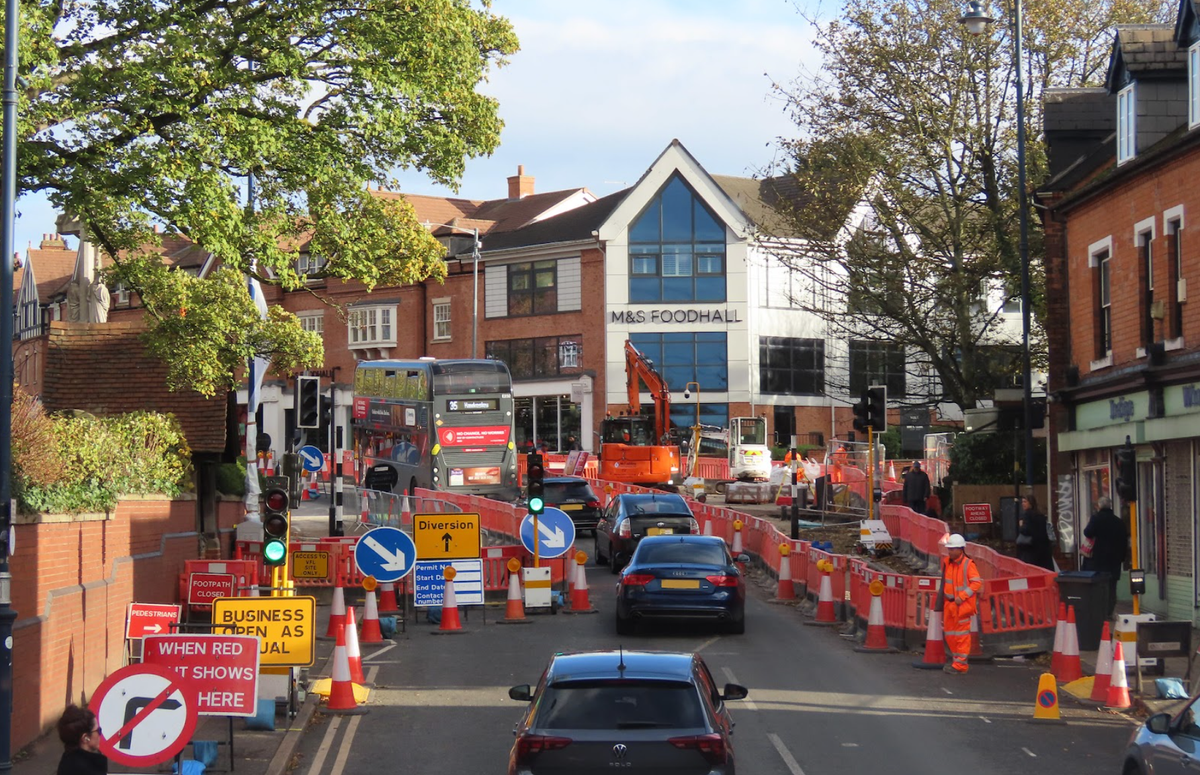
Transport schemes are mainly funded by capital money. This is one-off money and nowadays is typically grants from the government, topped up by Clean Air Zone, bus lane fines and other things like that.
This is different to potholes and running the transport network - business as usual and maintenance - which is funded by revenue money.
This week has seen the publication of two key board papers about capital funding:
- Birmingham City Council’s project pipeline from 2026 until 2029
- West Midlands Combined Authority’s project pipeline from 2027 until 2032 - “The Rosewell Review”
The Rosewell Review report answers some questions, but will not conclude until at least autumn.
How did we get to this point?
Before 2022, transport project funding tended to be through a load of different grant pots, often announced as ‘carrots’ within central government autumn budgets.
In 2021, this changed with the creation of a £1.05 billion single pot of money for the West Midlands for five years, between 2022 and 2027. This was called the City Region Sustainable Transport Settlement, or CRSTS. This caught many by surprise and created a list of projects that were top of people’s minds, but were effectively starting from scratch.
Starting from scratch to delivery appears to be a huge challenge to get over the line in five years. And is part of the reason why there are a dozen or so projects that didn’t get around to being fully delivered in time.
On delivery, projects have to go through a whole host of governance, both with the Combined Authority and Local Authorities. Ah, the dreaded business case!
There are several stages:
- Strategic Outline Business Case (SOBC) - Intention and outlining the problem
- Outline Business Case (OBC) - Options and consultation
- Full Business Case (FBC) - Precisely what will happen, when and how much
Once there’s an approved full business case, money can be released and the project can be built.
The business case process has been simplified a bit since 2022 but for smaller walking, cycling and wheeling schemes, local authorities still complain that the process to release funding is too slow.
Going back to funding, there are still random pots of funding around like the Active Travel Fund, which have been brought into a single pot of money called the Integrated Settlement. This pays for smaller projects and we don’t know for how long the government will continue giving it.
And finally, following Rishi Sunak’s cancelling of HS2 Phase 2a and redistribution of money that theoretically doesn’t exist, as well as the Labour government’s rebranding of CRSTS to Transport for City Regions, we’ve now got £2.2 billion to spend between 2027 and 2032.
£2.2 billion might sound like a lot of money! That is, until you realise that pre-commitments and overruns have taken up a good chunk of it. Take £400 million being allocated to transport improvements to enable the Sports Quarter and many millions of pounds for bus franchising. In late 2025, it was revealed that pre-commitments already meant there was only £454 million unallocated.
Any suggestion from the Government that this funding could be used to build expansive tram networks (£135 million to £233 million per mile) should surely be laughed out of the room.
This is separate from some rail schemes like the Midlands Rail Hub, which will build the Bordesley Chords and upgrade Kings Norton, Moor Street and Snow Hill Stations.
Overall - money was a mess, now there’s more of it but it’s still a bit of a mess. And we still need a list of projects that the region wants to fund and build.
The Rosewell Review
Bridget Rosewell was appointed to run a review to help prioritise the region’s schemes and make some recommendations on how to improve delivery.
It turns out the region’s wishlist is 161 projects long and will cost in excess of £5.6 billion. Which means we have a £3.4 billion gap and so need to prioritise.
The criteria for prioritisation is:
- Support for the Growth Plan and other strategies like the Local Transport Plan 5
- Cost of project and budget robustness
- Strength of business case or benefit-cost ratio
- Funding contributions: Is there any already allocated? Are there any conditions on it? Is there a shortfall?
- Investability of each project: Suitability for private or public investment? Planning status? Availability of land and need for land release? Need for remediation of land? How close to delivery?
Each of the 161 projects have ended up in five categories:
- Category 1 - High priority and mostly deliverable in the 2027-32 period
- Category 2a - Medium priority and deep into the development process
- Category 2b - Medium priority but not as deep into development
- Category 3 - High priority with start in the 2027-32 period
- Category 4 - High priority but start after March 2032
- Category 5 - Fuzzy projects that need more thought before they can be categorised
Most of the 2022-27 projects that are outstanding have ended up in categories 2a and 2b. Worryingly one or two, for example the A45 cycle lane extension, projects have ended up in category 5, despite it being due to be built shortly.
Interestingly, it seems like anything in a lower category isn’t a “no”, it’s a “keep developing until there’s a business case to get funding”. So this is truly a wish list that’s going to last for a while. As to whether this list is ambitious enough to be a long term reference point? Not really.
The Rosewell Review is going to continue over the next six months, with additional criteria to help prioritise everything in category 5. It’ll be for all of the owners of the 77 projects in that category to build the case a bit more in order to get prioritised.
Effectively, something being ‘funded’ is the business case being approved and funding being approved, not being announced in a grand package of schemes and then not materialising for a decade. In theory. And as these projects work through this new funding framework piecemeal, it’s difficult to see how it all joins together in a vision.
That lack of vision is in part because the West Midlands Local Transport Plan 5 isn’t adopted yet. But also because the Local Transport Plan will have local implementation plans. And also because we’ve not really ever seen a map of how everything fits together, besides fantasy maps close to elections.
What interesting things are in the longlist?
My highlights are, while trying to figure out what the vague names are - TfWM if you’re reading this, include descriptions please!:
- A tram extension to Sports Quarter
- Rail station improvements at Sports Quarter and around Villa Park
- Neighbourhood Major Schemes and Corridors - Aston and Nechells, Bordesley Green, Saltley and Alum Rock, Tyseley and Sparkbrook, and North West Birmingham
- Birmingham Knowledge Quarter improvements
- Southside active travel improvements
- A cycle lane from Bearwood to Selly Oak
- A cycle lane parallel to Hagley Road
- More Birmingham City Centre walking and cycling improvements
- A rail station for Castle Bromwich - but no Sutton Park line
- Bus priority - cross-city and from Hall Green to Birmingham Airport
- Changes to the East half of Birmingham’s ring road
- What appears to be a new tram depot
There are also strange things in the longlist that you might expect Network Rail, soon to be Great British Railways to pay for. For example, a new train depot.
Along with this, WMCA wants to use some capital money for business as usual costs instead of new projects. Why is that necessary?
And there are nebulous funding packages, for example a £500 million active travel programme, which could be transformational but there’s very little detail in the public domain at this time.
Again, all of this depends on further prioritisation later this year, and even if it’s a “not right now”, it’s not a “no”. But even a “not right now” could still slow down the delivery of the Birmingham Transport Plan.
Birmingham’s capital programme
The Council produces a capital programme budget as part of its budget setting process. This effectively updates the Birmingham Transportation and Highways Delivery Programme ahead of a more formal update due to Cabinet before the election.
When you overlay the spend for different years, you can see when the Council is currently planning to build things.
So, by March 2029, in theory, we should see the following things either fully built or nearing completion:
- Leftover bits of Walsall to Birmingham to Birmingham Airport Sprint
- A38 Selly Oak to Longbridge Cycle Route
- A457 Dudley Road Improvements
- Kings Heath and Moseley LTN(!?)
- Active Travel Fund Junction Improvements
- Advisory contraflow cycle lanes in the city centre
- Bike Hangars Trial
- Birmingham Cycle Revolution Phase 3
- Bordesley Green Area Connections
- Bradford Street Cycle Route
- Selly Oak High Street Cycle Route
- Junction lights on Sheepcote Street/Grosvenor Street West
- Bus Lane Enforcement Phase 2
- City centre movement and access strategy:
- Bristol Street and Wrentham Street
- Colmore Row bus gate
- Hill Street
- Lower Trinity Street
- Sheepcote Street bus gate
- City centre walking and cycling improvements for New Street, Colmore Row and Navigation Street
- City centre wayfinding totems
- More Environment and Transport Neighbourhood Fund schemes (we had hoped there might be more money available than there is)
- Vauxhall and Duddeston low traffic scheme
- Moseley Local Centre cycle route
- Great Charles Street active travel improvements
- Moor Street Gateway and Smallbrook Queensway
- James Watt Queensway Supercrossing
- Snow Hill area public realm improvements
- Sutton Gateway
- Digbeth Active Travel and Streets Programme
- A start on Digbeth Viaduct Sky Park?
- A start on changes to the ring road, including a cycle route
- More works around Curzon Street Station and its connection into the local area
- Southside public realm improvements
- Typhoo Wharf (Digbeth) public realm
Some of the items in the City Council list cross over with items in the Rosewell Review prioritisation list. There’s a chance that some might be deprioritised for now.
Summing up
It feels like an exciting time for Birmingham and the wider region, however it’s hard to see how it all comes together in one overall multi-billion pound improvement programme. What does the comprehensive transport system that enables people to leave their car at home look like? Maybe fantasy maps were good after all!
The test appears to be whether our authorities can deliver more quickly than they have been over the first years of the transport plan.
While both of these items will be discussed at meetings in the next week, it feels as though we can’t get excited over anything new for some time yet.
Page share image photo credit - “Moseley Village Station mini roundabout site on St Mary's Row” by Elliott Brown, CC BY-NC-SA 4.0