Our public transport system's name isn't the problem - let's fix everyday journey issues
The Mayor recently asked for fresh ideas to name our transport network. We want to see the current name retained and effort spent on finally fixing the service.
We want to see a city and wider region that is navigable by public transport without thought, through convenient routes, turn-up-and-go timetables, better dependability, and simpler fares and payments. People should not have to think when trying to get around the region without a car.
This is why we have supported the Combined Authority’s strategy to move towards bus franchising, its efforts to simplify delivery governance, and its project to address the complexity of fares and payments.
We understand that unified transport branding is important. The Combined Authority’s own ‘brand story’ document - recently updated under the current Mayor in 2024 - sets this out in detail and explains why it took the decision to simplify its network to a single brand.
While other mayoral strategic authorities are moving towards a network brand approach, we already have a well-established unified network brand. Transport devolution need not compel every Mayor to rebrand, especially when they have one that works well.
The brand story document also sets out explicitly that the transport network and surrounding brand needs to exist with changes to the experience of ticketing and journey planning. As franchising, municipalisation and nationalisation of our transport network has developed, we would take this further and link the need for everyday journey reliability improvements.
We understand that a brand consultancy has already been procured for £340,000 of public money, along with pre-market engagement for a website redesign anticipated to cost at least £400,000, noting that its last website transformation finished only a few years ago. We are therefore writing our response with the assumption that a level of brand rework is now inevitable.
We are writing to strongly recommend that you keep retaining the network name of Transport for West Midlands and its logo as an option on the table throughout the decision-making process, as well as bringing any final decision through public scrutiny.
We are recommending this for the following substantive reasons:
- The Transport for West Midlands network name and branding is now well-established and recognised across the region, having been rolled out across modal assets over the last decade.
- An acceptable shared regional identity is unlikely to be agreed politically across the distinct areas within the Combined Authority.
- Changing the network name and branding will not bring benefits that cannot be achieved through a lighter touch refresh of communication templates, livery design and a revised tone of voice.
- Legibility of the public transport network can now only be increased further through control of routes, timetables, fares and payments, and infrastructural changes to put passengers first.
Prominence of current network branding
Over the past 57 years, the West Midlands Integrated Transport Authority (formerly a PTE) has had five network names: WMPTE, Centro, Network West Midlands, West Midlands Network and Transport for West Midlands.

An evolution of our network name: WMPTE, Centro, Network West Midlands, West Midlands Network and Transport for West Midlands
The latest of which was rolled out over the course of the last decade, starting when the former West Midlands Trains franchise was let and last week the rollout effectively completed with the transfer of the National Express West Midlands bus operation to West Midlands Bus Limited (WMBL). We do not believe that, given temporary nationalisation of most bus services, it is a benefit to passengers to be able to recognise franchised services from WMBL or other operator services.
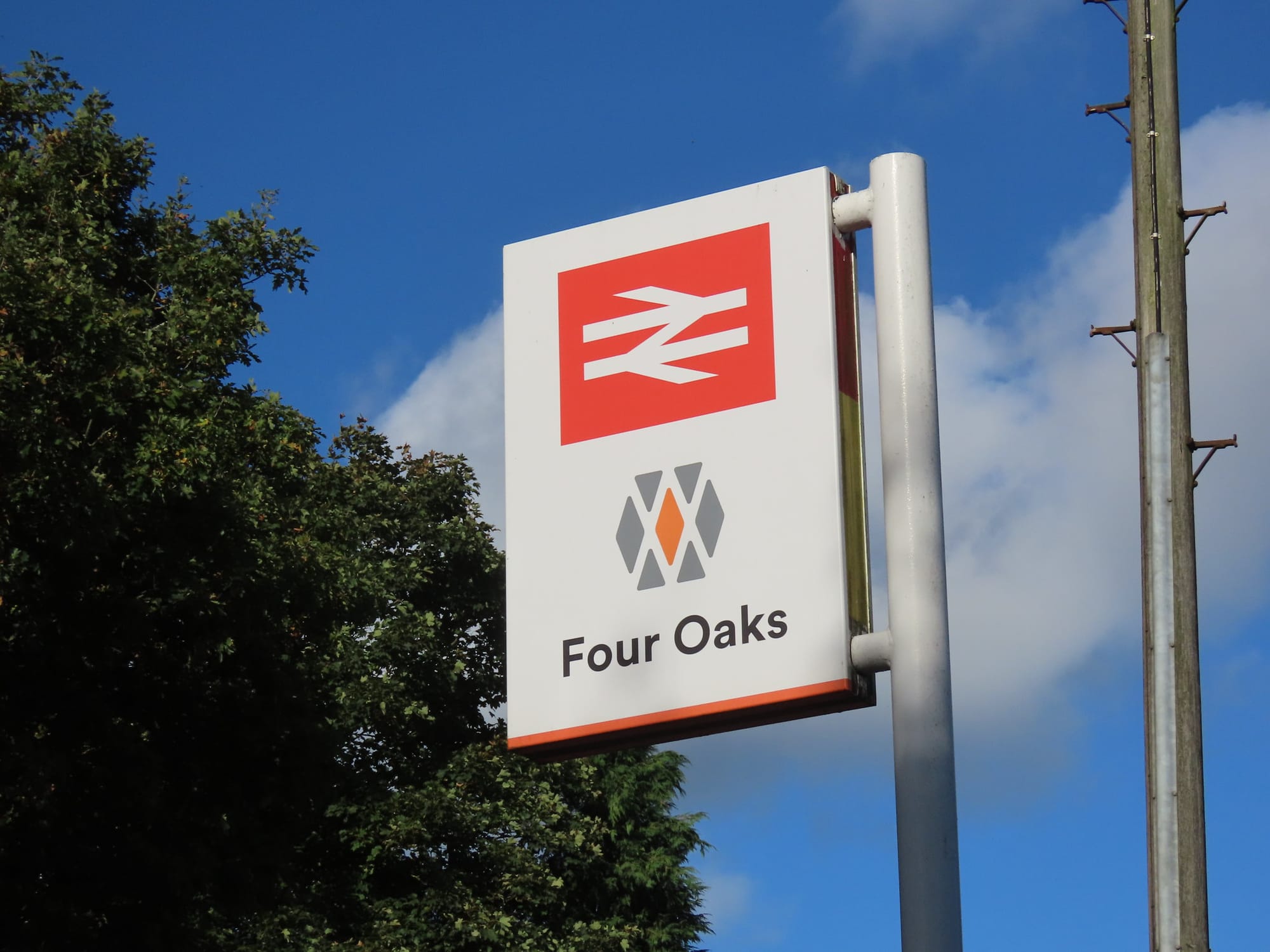
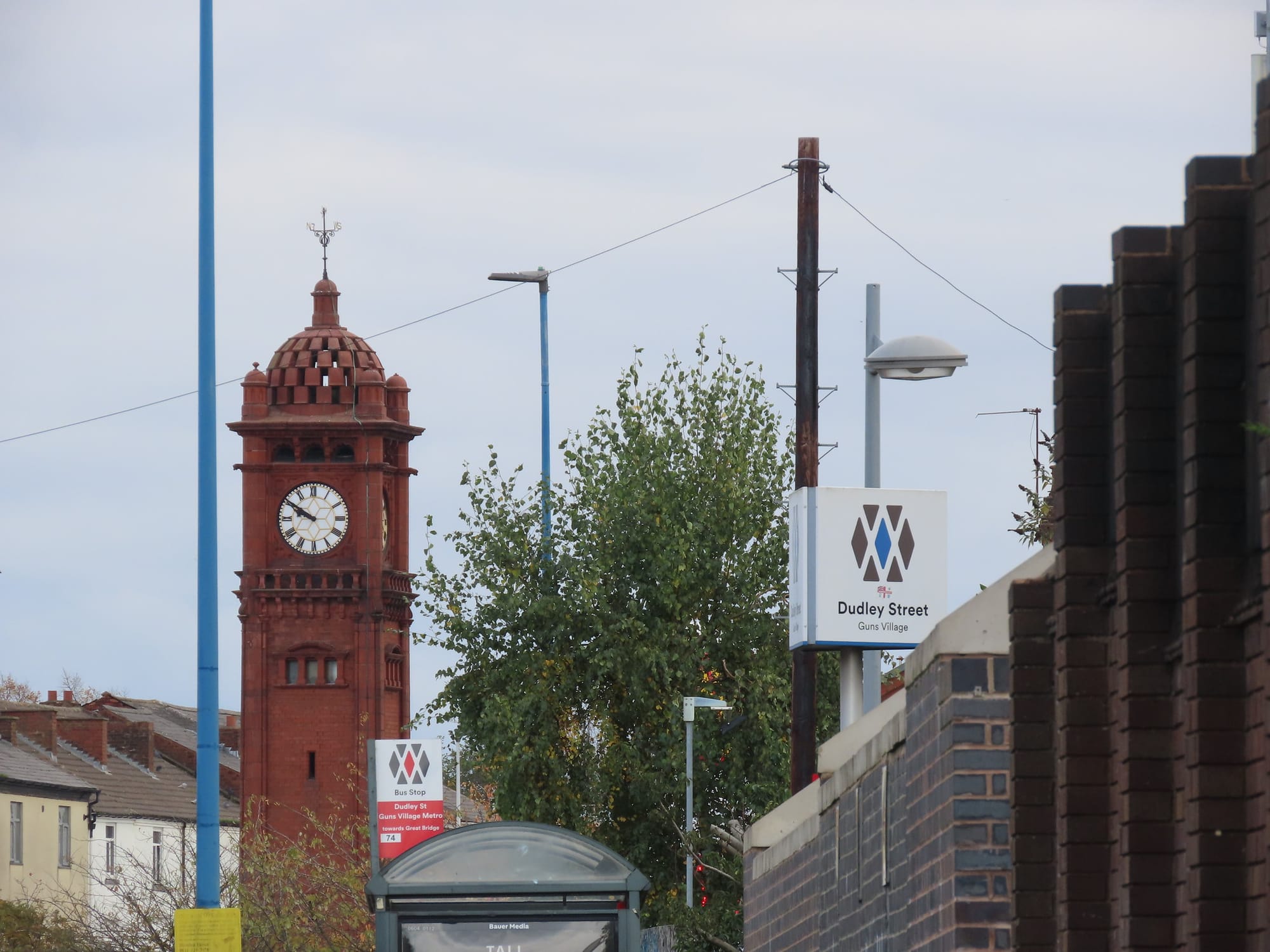
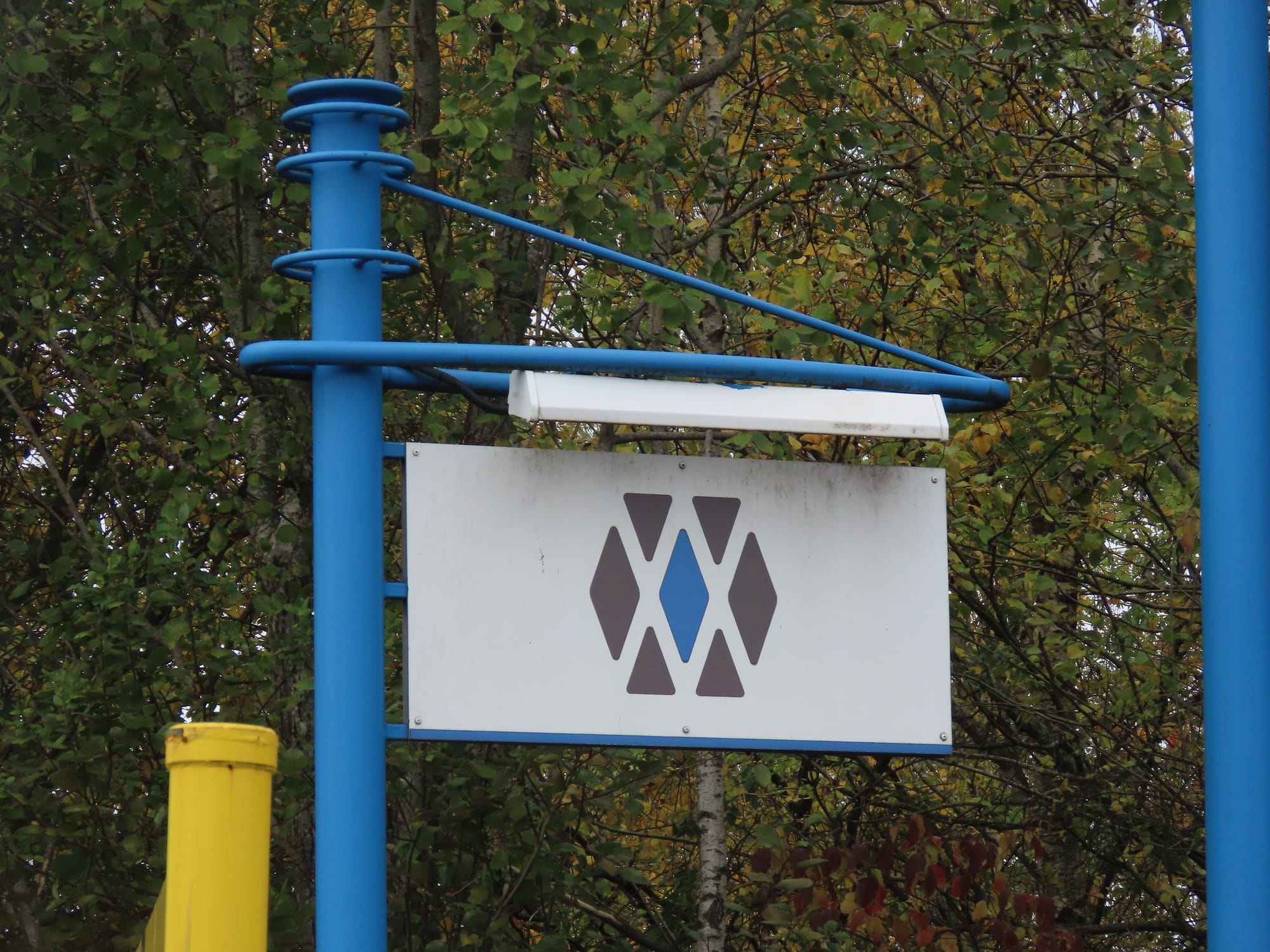
The current Transport for West Midlands logo is on nearly every street in the West Midlands. Photos by Elliott Brown.
Given that the brand mark has become an everyday feature of the region’s streets and wider transport system for some time, we need to see evidence that establishes a low level of brand awareness and association that necessitates a new name and identity. We understand that the Combined Authority’s own data shows this not to be the case.
Lack of shared identity within the region
The West Midlands Combined Authority lacks shared identity beyond the industrial past, which, as set out in the Combined Authority’s own brand documentation, is already reflected in the current branding. At 55km wide, the area has four distinct sub-regional identities: The Black Country, Birmingham, Solihull and Coventry.
A symbol relatable to a community in Tettenhall in Wolverhampton is unlikely to be shared by those from Binley in Coventry. This is before taking into account the extensive nature of the area’s transport system, which extends into non-constituent areas.
There have been several attempts to articulate a shared identity over decades of local government reorganisation, however as evidenced through the evolution of network and authority names, this has not been possible. It is therefore unlikely that a single suggestion will be acceptable to all constituent and non-constituent members of the Combined Authority.
Alternatives while retaining the current network branding
As set out in the Combined Authority’s ‘brand story’ document, the brand can only excel when passengers receive a unified experience across media channels and when on-board public transport. Transport for London hasn’t needed to outright change its brand since 2000, which was only necessitated through London government reorganisation. There is an option to retain the Transport for West Midlands network name while refreshing graphical treatments on publicity and social media and adopting a new tone of voice.
The region is receiving unprecedented and continuous investment to make its transport better. Yet Councils often communicate disparately from Transport for West Midlands about plans and improvement works, while communications issued by the Combined Authority are often overly complex - in a region where a quarter of residents have low English proficiency - while appearing distant, passive and apologetic.
Meanwhile, the emerging Bee Network, Weaver Network, and the longstanding Transport for London are all confident, authoritative, lighthearted and upbeat. An opportunity exists to harness a confident, frank and forward-looking approach that reassures passengers that the region is working together to make their everyday public transport, walking and cycling experiences better.
Refreshing design treatments and engaging a bolder tone of voice enables the Combined Authority to keep the active branding contract and without necessitating wholesale brand change.
Improving legibility through addressing everyday journey barriers
The Combined Authority recognises that growing bus ridership through franchising is contingent on a reliable and frequent service afforded by hard infrastructure improvements: updated vehicle specifications, alongside multi-modal contactless capping. The same can be said for increasing routes and services on the region’s rail network through station redevelopment, Midlands Rail Hub and HS2, and the forthcoming tram and VLR routes.
While we welcome efforts to address transport project delays caused by, according to the Mayor, a lack of “sense of jeopardy” through the Rosewell Review, we are continuing to experience hefty slippage to projects such as Cross-City Bus Priority and the long-running ‘cEMV’ (contactless card capping) ticketing transformation. These are key to addressing everyday journey barriers.
Separately, customer service has always been a barrier due to different services being operated by different people. Franchising and nationalisation means that for the first time since the 1980s, Transport for West Midlands has the opportunity to become the single entity for public transport customer service with first-contact resolution, rather than being redirected based on mode and service.
Changing the name without fixing the fundamental experience issues of trying to use public transport simply generates confusion, creates additional cost and carries reputational risk as passengers experience little everyday improvement to services.
Conclusion
We believe that this is not a use of time or money that delivers the best outcome for the region. We have set out reasons why we believe that the network brand can develop in ways without transitioning away from the Transport for West Midlands name.
While acknowledging that elements of this work are likely to progress regardless, we strongly recommend that the Combined Authority:
- Keeps the option retaining ‘Transport for West Midlands’ as the network name, along with the option of minor visual refreshes on the table - as well as presenting it as an option in any future public engagement to select a name.
- Takes any rebranding decision to proceed through the WMCA Local Scrutiny Committee for pre-decision scrutiny, which must disclose the latest brand awareness survey undertaken by WMCA.